In the hyper-competitive landscape of 2026, every marketer has access to the same AI-driven playbooks. Whether you are using Google Ads, Meta Ads, or TikTok Ads, the algorithmic advantage has largely been commoditized. If everyone has the same map, why do some brands scale to eight figures while others languish with a stagnant ROI? The answer lies in a simple, almost archaic metaphor: the story of the two gas stations. It is a lesson in the discipline of consistent execution that defines the winners of this year.
Imagine two gas stations on opposite sides of a busy highway. Both have access to the same fuel, the same pricing data, and the same flow of traffic. The owner of the first station watches a customer pull in. While the customer pumps gas, the owner is busy painting a weathered wall, planting fresh flowers by the entrance, and ensuring the squeegees are clean. On the other side of the road, the second owner watches this happen. He sees the fresh paint. He notices the flowers. He could do exactly the same thing—the paint is cheap and the seeds are available—but he simply doesn't. Over time, the first station becomes the default choice for every traveler, while the second slowly decays into a ghost town. In 2026, your Google Ads strategy 2026 is the gas station, and your willingness to do the 'unsexy' work is the fresh paint.
The Gas Station Principle: The Divergence of Success
 31:25
31:25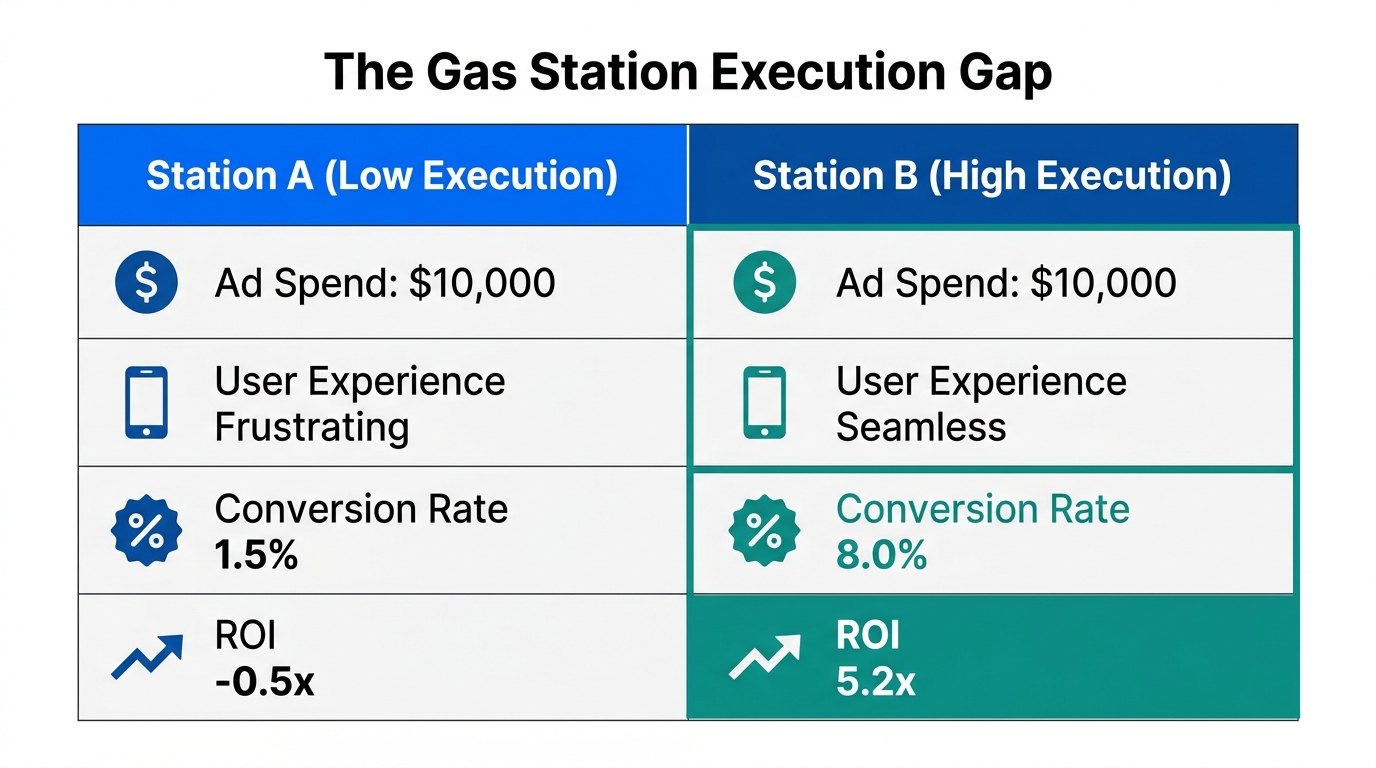
In digital marketing, we often suffer from the 'strategy trap.' We spend weeks debating attribution models or testing new ChatGPT prompts for ad copy, yet we ignore the leaky bucket of our landing pages. The Gas Station Principle suggests that massive divergence in success isn't caused by a single 'genius' move, but by the compounding of small, consistent optimizations that your competitors are simply too lazy or distracted to execute.
"In an infinite game like marketing, you don't really win or lose; the players just decide to drop out because they lack the discipline to keep the paint fresh."
Consider conversion rate optimization (CRO). In 2026, most businesses know they should be A/B testing their headlines. They might even use a tool like Framer or Webflow to build beautiful landing pages. However, the 'winner' is the brand that audits their mobile checkout experience every single Monday, identifies a 0.5-second lag in load time, and fixes it immediately. This is the marketing equivalent of painting the walls. It isn't heroic, but it is marketing execution tips in their purest form.
Google Ads as an Infinite Game
12:59Marketing is often treated like a finite game—a sprint to the next quarterly goal or a specific campaign launch. But as we've learned from the world of high-stakes investing, the most important games in life have no fixed end date. As noted in recent financial discourse, Berkshire Hathaway has thrived not by finding a thousand winners, but by sticking to a few core decisions and never 'shooting themselves in the foot.'
When you approach your Google Ads strategy 2026, you must realize that you are playing an infinite game. Many of your competitors will 'implode' because they chase 100x returns on risky keywords or unproven creative angles. The winners are those who aim to be consistently above average. If you can maintain a 27th to 47th percentile performance every single month for three years, you will eventually pop up into the top 5% of your industry simply because the 'heroic' gamblers have all dropped out.
This requires a shift in psychology. You must manage your emotions during periods of underperformance. When your CPA (Cost Per Acquisition) spikes due to a seasonal shift or an algorithm update, the 'Gas Station' owner doesn't panic and shut down the business. They go back to the desk, look at the Google Analytics data, and find the next wall to paint.
The 'Circle the Wagons' Philosophy
Warren Buffett once famously noted that out of 400 investment decisions, only 12 truly moved the needle. That is a 4% hit rate for the greatest investor of all time. In 2026, your Google Ads account likely follows the same Pareto distribution. You might have 100 campaigns, but only four are driving 90% of your profitable revenue.
The 'Circle the Wagons' philosophy means identifying these core, profitable distribution channels and protecting them with everything you have. Instead of constantly hunting for the 'next big thing' or the newest social platform, double down on the execution of your winners. This involves:
- Aggressive Protection: Ensure your top-performing search terms have 100% impression share.
- Creative Refinement: Don't just let a winning ad run; use Stormy AI to discover and source new UGC creators who can iterate on that winning hook to prevent creative fatigue.
- Funnel Deepening: If a keyword is profitable, audit the entire post-click experience. Does the landing page mention the specific keyword? Is the offer clear?
"The buy decision is important, but the paint-drying decision—the choice to stay disciplined and optimize what works—is what builds empires."
Audit: Identifying Fresh Paint and Flowers
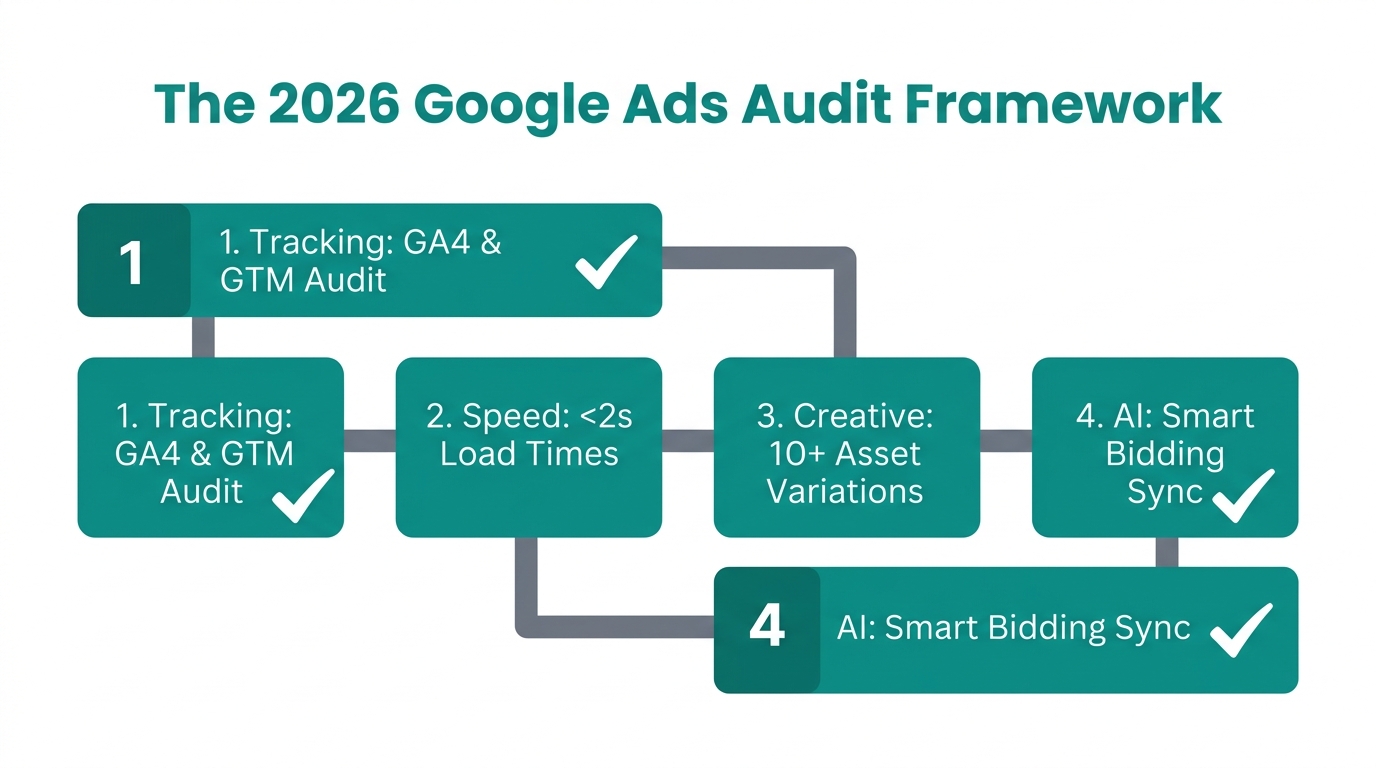
To gain a competitive advantage in marketing, you must identify where your competitors are being lazy. In 2026, 'laziness' isn't a lack of effort; it's a lack of attention to detail. Conduct a weekly audit of your 'Gas Station' using this checklist:
| Element | The 'Lazy' Competitor | The 'Winning' Gas Station |
|---|---|---|
| Ad Copy | Uses generic AI-generated templates. | Personalized, high-intent copy that mirrors the user's specific pain point. |
| Landing Page | Standard template with slow load times. | Sub-1 second load speeds on Shopify or custom stacks. |
| Social Proof | Old testimonials from 2024. | Fresh, dynamic UGC video reviews sourced from platforms like Stormy AI. |
| Offer | Standard 10% discount. | Tiered bundles and value-add incentives based on customer lifetime value (CLV). |
Playbook: A 2026 Checklist for Disciplined Execution
30:22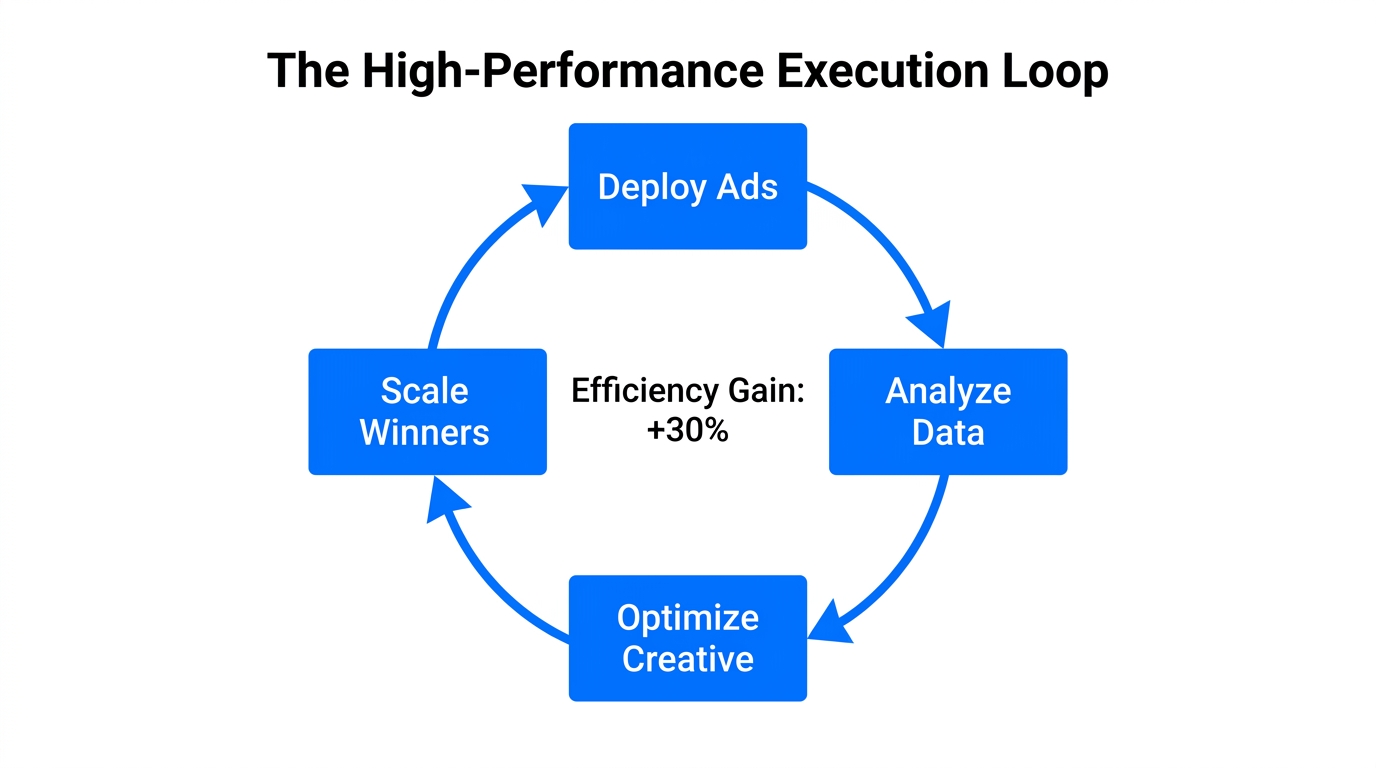
If you want to turn a modest ad budget into a compounding growth engine this year, follow this sequential playbook for conversion rate optimization and execution.
Step 1: Eliminate the 'Losers'
Before you hunt for winners, stop hitting the ball out of bounds. Audit your search terms in Google Ads. Negative out any keyword that has spent 2x your target CPA without a conversion. Avoiding the bottom 10% of performance is the fastest way to move into the top quartile.
Step 2: Optimize for the 'Boring' Metrics
Everyone talks about ROAS, but few focus on Site Speed and Offer Clarity. Use tools like PageSpeed Insights. If your landing page takes more than 2 seconds to load on a mobile device, you are essentially throwing 30% of your ad spend into the trash. Fixing this is your 'fresh paint.'
Step 3: Build a Creative Engine
In 2026, creative is the new targeting. You cannot win with static images or boring corporate videos. You need a steady stream of User-Generated Content (UGC). Use an AI-powered discovery tool like Stormy AI to find creators who actually fit your niche. Don't just hire 'influencers'; find people who can speak authentically about your product. This is how you 'plant flowers' that attract customers.
Step 4: The 'Paint Drying' Hold
Once you have a profitable campaign, resist the urge to tinker with it every day. The 'paint drying' decision is the most difficult one. Let the data accumulate. As noted in the HubSpot growth guides, over-optimization is a leading cause of campaign failure. Give the Google algorithm 7-14 days to stabilize after a major change.
"When the time comes to buy—or in this case, to scale—you probably won't want to. Do it anyway."
Conclusion: The Winner's Discipline
The gap between the 2026 winners and losers isn't a gap in knowledge; it is a gap in marketing execution tips and discipline. Anyone can read a blog post about Google Ads strategy 2026, but very few will actually go through the tedious process of auditing every search term, testing every hook, and shaving milliseconds off their page load times.
Success this year is about playing the infinite game. It is about circling the wagons around your core winners and ensuring that your 'gas station' is always the one with the fresh paint and the clean windows. When you combine this level of execution with the right tools—like using Stormy AI to handle your creator discovery and outreach—you create a compounding growth engine that is nearly impossible for lazier competitors to overcome.
Stop looking for the next 'growth hack' and start looking for the paint bucket. Your 2026 results depend on it.