Tracking AI Engine Optimization (AEO): Using Triple Whale and Northbeam to Measure 2026 LLM Traffic
Learn how AI Engine Optimization (AEO) and platforms like Triple Whale and Northbeam track the 4,700% surge in ChatGPT and Perplexity sales for 2026 ecommerce.
The era of traditional SEO is officially over. In 2026, the battle for customer attention isn't just happening on a Google results page; it’s happening inside the conversational interfaces of ChatGPT, Perplexity, and Claude. We are witnessing a 4,700% surge in AI-referred traffic [source], a shift that has forced high-growth DTC brands to adopt a new playbook: AI Engine Optimization (AEO). If your brand isn't being recommended by an LLM when a customer asks, "What is the best sustainable cookware for a professional chef?", you are losing revenue you can't even see yet.
For modern operators, tracking this traffic is the greatest challenge since the iOS 14.5 rollout. Fortunately, tools like Triple Whale and Northbeam have evolved into sophisticated AI visibility engines. Managing this messy back-office data is where an AI ecommerce employee like Stormy AI becomes essential, monitoring brand mentions and reporting on AI-driven sales while you focus on high-level strategy.
Understanding AEO: The New SEO for 2026
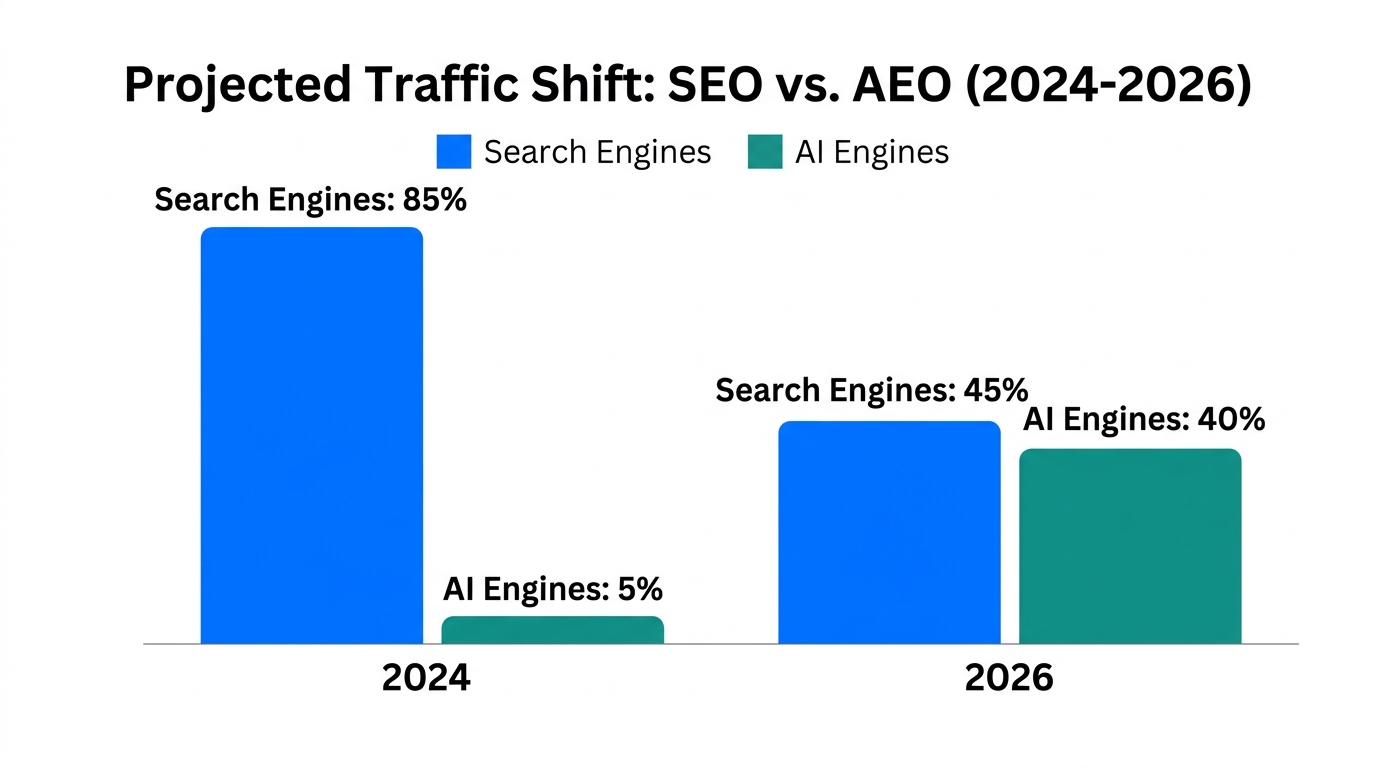
AI Engine Optimization (AEO) is the process of making your brand’s data accessible and authoritative for Large Language Models (LLMs). While SEO focuses on keywords and backlinks for crawlers, AEO focuses on semantic relevance and entity authority. In 2026, the global ecommerce analytics market has reached $30.32 Billion, largely driven by the need to measure these non-linear customer journeys.
Brands are no longer just optimizing for "best pans"; they are optimizing for the AI's training data. This requires a robust data infrastructure. Stormy AI can help here by automatically importing CSVs from your various platforms into a centralized spreadsheet to compare how different AI-referred cohorts are performing compared to your standard social ads.
"AI is no longer experimental; it's how brands protect margins. Brands needed real-time strategic advisors, not just data tools." — AJ Orbach, CEO of Triple Whale.
Triple Whale vs. Northbeam: Tracking the AI Frontier
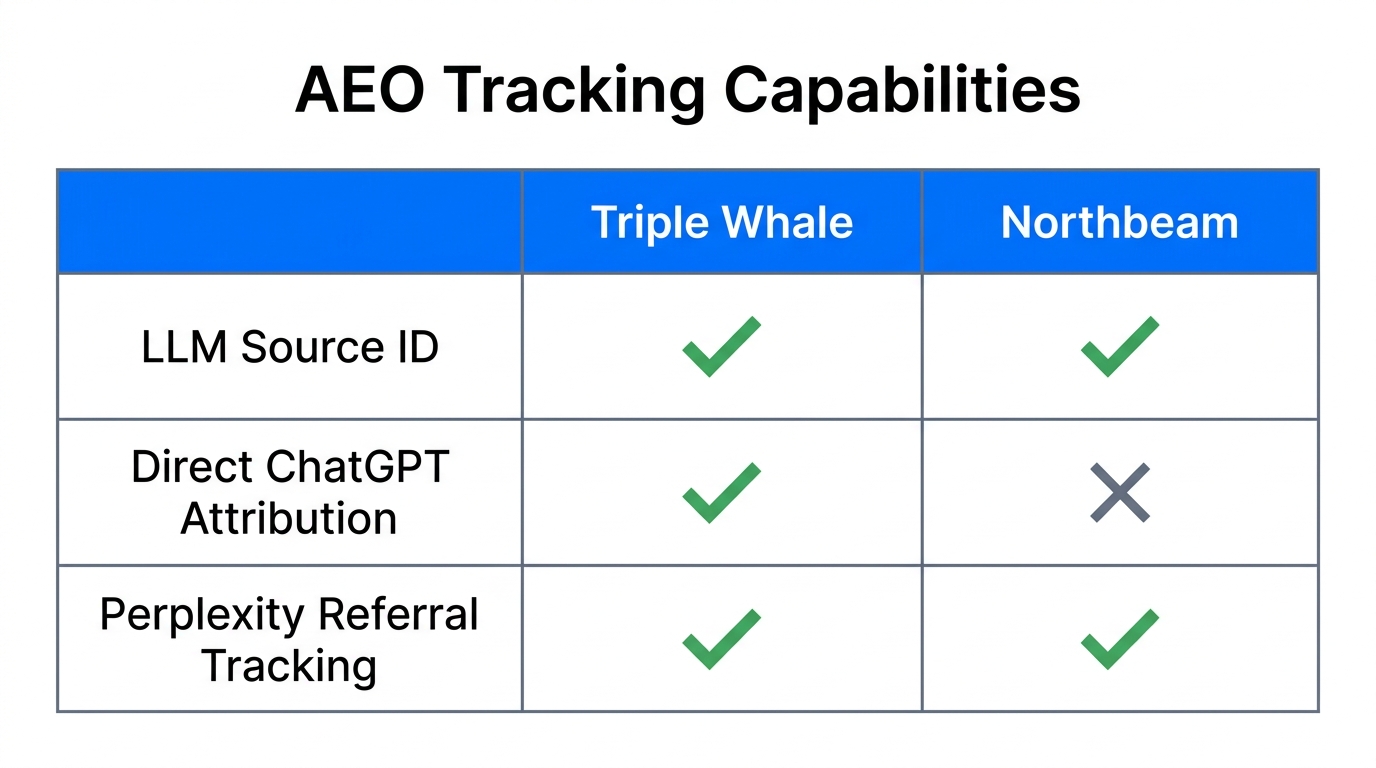
Both platforms have sprinted to capture the AEO market, but they approach the problem from different angles. Picking the right one depends on your scale and technical requirements.
Triple Whale: The Acquisition of Anteater
In early 2026, Triple Whale made waves by acquiring Anteater, a specialized tool for tracking AI visibility. This allows brands to link "AI mentions" directly to Shopify orders. It provides a dashboard showing how often your brand is cited in ChatGPT or Perplexity search results and calculates the resulting AI Attribution.
Northbeam: Advanced Multi-Touch Attribution (MTA)
Conversely, Northbeam focuses on the complexity of the model. Their "Northbeam Apex" feature feeds 1st-party data back into ad platforms, but it also uses sophisticated statistical modeling to isolate Perplexity referred traffic. Northbeam is preferred by omnichannel brands doing $40M+ in revenue who need to know if an AI search was the first touch or a mid-funnel assist.
| Feature | Triple Whale | Northbeam |
|---|---|---|
| Best For | Shopify brands ($1M–$40M) | Omnichannel ($40M+) |
| AI Tracking | Anteater Native Integration | Advanced MMM+ Modeling |
| Setup Time | 1–2 Weeks | 4–8 Weeks |
| Primary Metric | AI Visibility & Mentions | Incremental Lift |
The Technical Setup: Tracking ChatGPT Sales
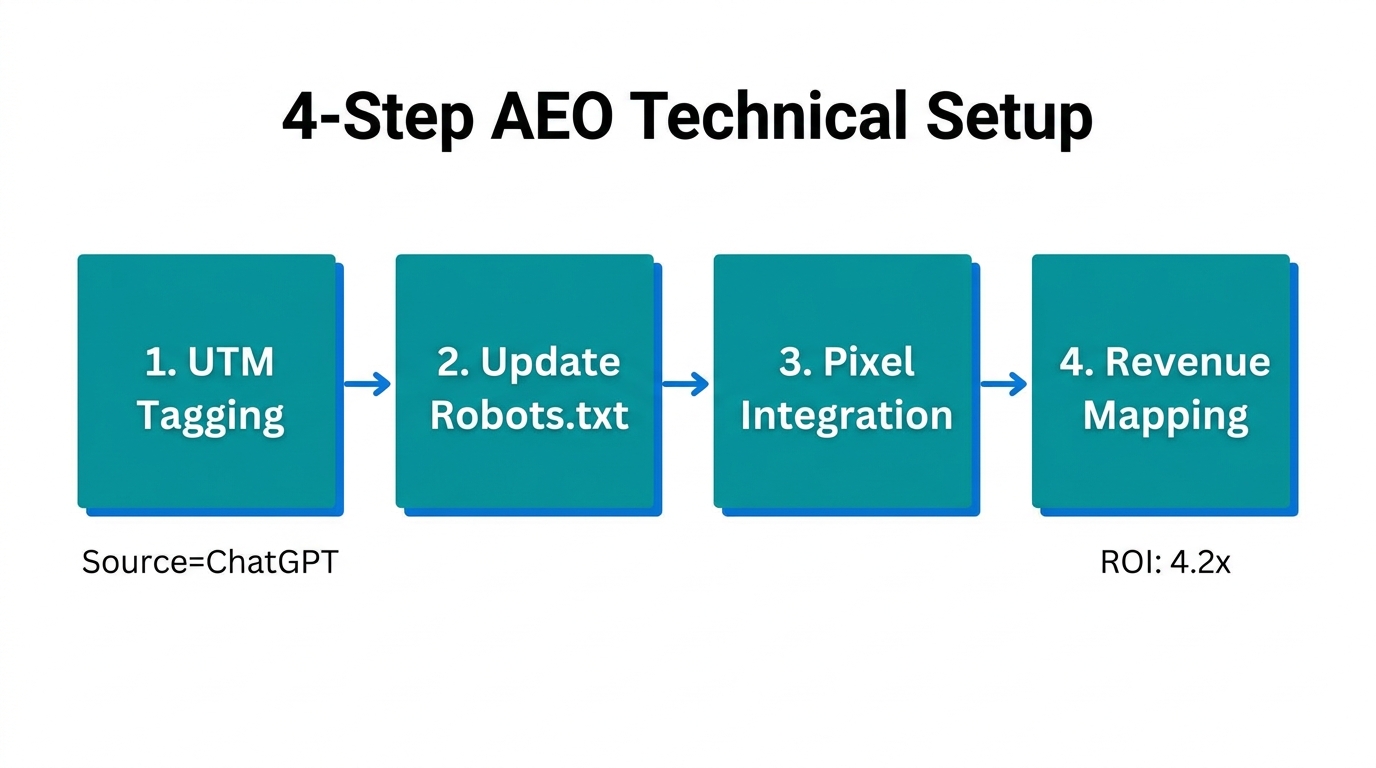
Tracking traffic from generative AI isn't as simple as checking a UTM tag. LLMs often strip referral data or act as "dark social." Here is how to set up your 2026 AEO tracking playbook:
Step 1: Implement Server-Side Tracking
Standard browser pixels often fail to catch the handoff from an AI interface to your store. Use a tool like Elevar or Triple Whale's Pixel to ensure server-side events are firing for every session. This helps capture the unique user agents associated with LLM browsers.
Step 2: Connect Post-Purchase Surveys
Because AI traffic can be "anonymous," your best data source is the customer. Triple Whale’s post-purchase survey (PPS) module is critical. Include an option: "Did an AI assistant (like ChatGPT) help you find us?". Stormy AI can monitor these survey responses and flag any sudden spike in AI-referred customers, prompting you to investigate which specific prompt is trending.
Step 3: Monitor Brand Mentions via AI Agents
You cannot manually search ChatGPT all day. An AI ecommerce employee like Stormy AI can use its browser tool to periodically check how your brand is being described in top AI search engines. If a competitor is being ranked higher for a key category, Stormy can draft an email to your content team or agency to update your site's structured data.

Strategies for Improving AI Visibility
Once you can track the sales, you need to grow the volume. AEO marketing strategy is about feeding the models what they want: structured, high-authority, and consistent data.
- Structured Data (JSON-LD): Ensure every product page on Shopify has flawless schema markup. LLMs use this as a primary source for product specs and pricing.
- The "Entity" Strategy: Build mentions on high-authority sites that LLMs are trained on, such as Reddit, Quora, and major news outlets. Attn Agency analysts suggest that AI visibility is often a byproduct of a strong PR and creator strategy.
- Real-Time Inventory Signals: If you are out of stock, LLMs will stop recommending you. Stormy AI monitors your inventory levels across Shopify and Amazon Ads, flagging stockout risks before they negatively impact your AI search ranking.
"Neither tool is a 'source of truth.' Triple Whale wins on operator UX; Northbeam wins on model sophistication. Picking the wrong one wastes $12,000 a year." — Dror Aharon, CEO of COREPPC.
Using AI Agents to Automate AEO Reporting
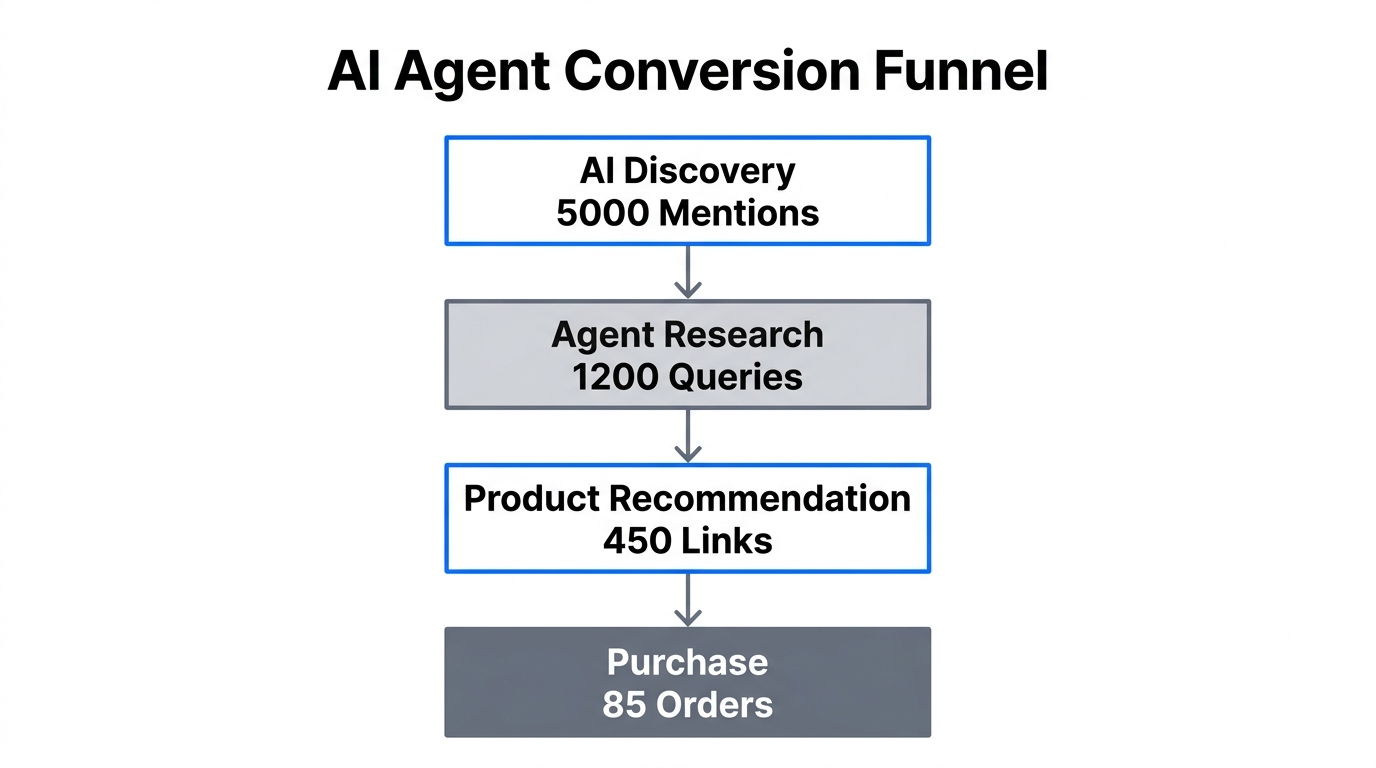
Data without action is just a hobby. In 2026, the best brands use "Agentic Commerce" to close the loop. Instead of spending 10 hours a week in spreadsheets, founders are letting Stormy AI handle the heavy lifting.
For example, you can set a scheduled task for Stormy to wake up every Monday, pull the AI visibility report from Triple Whale, compare it against your Marketing Efficiency Ratio (MER) in Northbeam, and drop a polished XLSX summary into your inbox. If your Perplexity referred traffic drops by more than 15%, Stormy can automatically alert your SEO agency via email.
Conclusion: The Bottom Line on AEO in 2026
The transition from SEO to AEO is the defining marketing shift of 2026. With 4,700% growth in AI referrals, you can no longer afford to treat ChatGPT or Perplexity as "other" traffic. Platforms like Triple Whale provide the immediate, operator-friendly visibility needed for Shopify brands, while Northbeam offers the deep modeling required for high-spend, complex attribution.
However, simply having the tools isn't enough. You need an autonomous teammate like Stormy AI to monitor the signals, update the spreadsheets, and handle the follow-ups. By combining world-class attribution with AI-driven operations, you can ensure your brand is not just seen by AI, but recommended by it. The brands that win in 2026 will be the ones that stop "managing" data and start employing AI to act on it.