The Ultimate Stackline Tutorial 2026: Mastering Amazon Analytics for Enterprise Brands
Learn how to master the Stackline ecosystem in 2026 with this technical tutorial. Automate Amazon analytics, map COGS, and use AI for boardroom-ready reports.
In 2026, the Amazon marketplace has evolved far beyond basic tracking and manual keyword bidding. With Amazon U.S. e-commerce sales reaching a staggering $440 billion in 2025, representing over 35% of the total online retail market, the stakes for enterprise brands have never been higher. We have officially entered the "Advisor Era" of retail intelligence, where static dashboards are replaced by autonomous agents. While Stackline remains the gold standard for enterprise data, many brands still struggle to translate its massive data sets into actionable growth. That is where an AI ecommerce employee like Stormy AI comes in, acting as the bridge between raw intelligence and back-office execution.
The State of Amazon Analytics in 2026
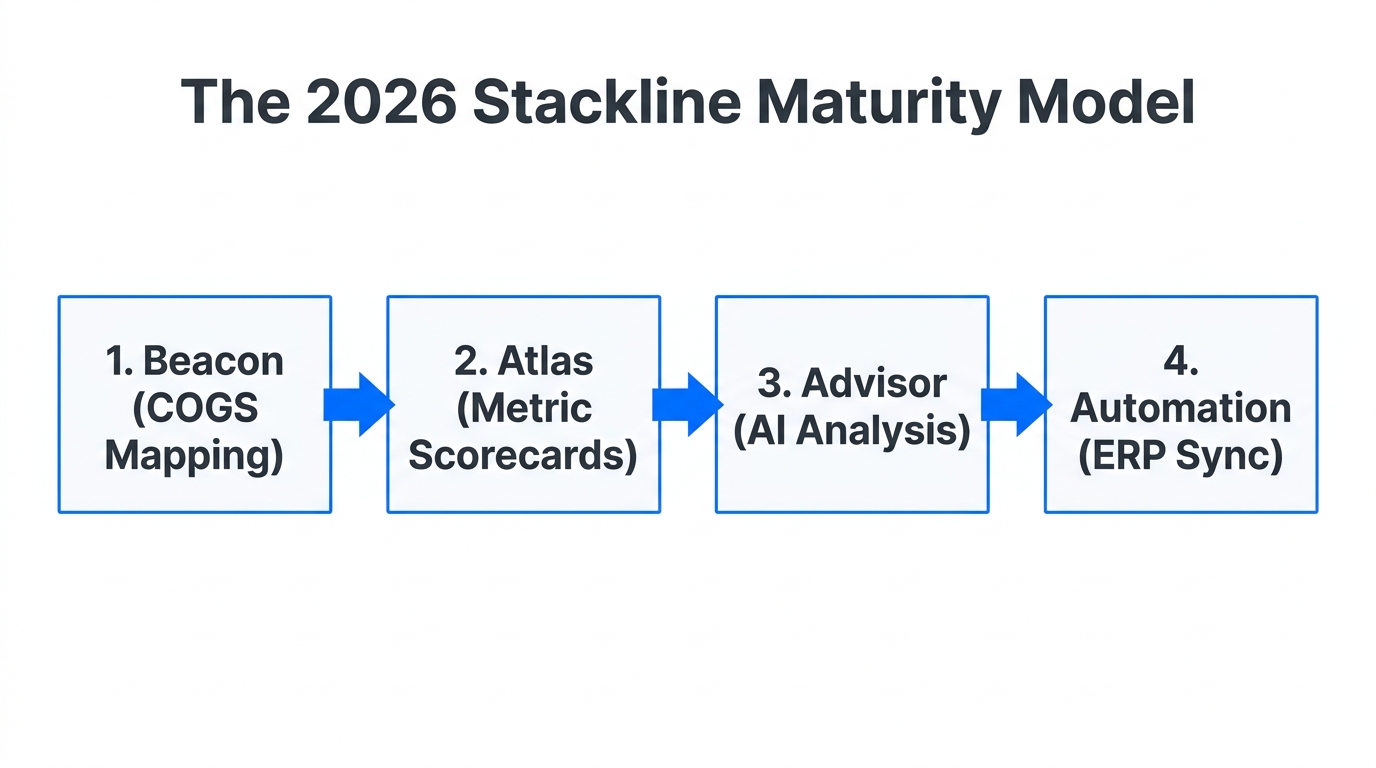
As we move through 2026, the focus for top-tier sellers has shifted from simple "ACoS-only" monitoring to SKU-level EBITDA tracking and Agentic Engine Optimization (AEO). With Amazon's advertising revenue hitting $68.5 billion, the competitive edge now belongs to teams that can execute with precision. In this environment, Stormy AI handles the messy back-office tasks—like monitoring inventory, drafting restock POs, and flagging stockout risks—while you leverage Stackline for high-level strategy.
"The competitive advantage in 2026 has shifted from who has the most data to whose team can execute on it with the most precision." — Daniel McIntosh, VP Customer Success at Profitero.
Step 1: Account Initiation & Mapping COGS with Beacon
The foundation of any Stackline tutorial is ensuring your financial data is accurate. Without internal COGS (Cost of Goods Sold), your profit metrics are merely guesses. You need to connect your Amazon Seller Central or Vendor Central APIs directly to Stackline Beacon.
- Connect APIs: Navigate to the settings menu in the Stackline dashboard and select "Integrations." Provide your Amazon, Walmart, and Target API credentials.
- Import COGS: Use the Beacon module to upload a CSV of your product manufacturing and shipping costs. This step is critical for calculating true net profit.
- Map SKUs: Ensure every Amazon ASIN is mapped to your internal SKU system.
An AI ecommerce employee like Stormy AI can streamline this by importing arbitrary CSVs from your suppliers and cross-referencing them against your Shopify or Amazon listings to ensure your master spreadsheet stays updated in real-time.
Step 2: Configuring the Atlas "Weekly Scorecard"
The Atlas module is the heart of Stackline's retail intelligence. To avoid "dashboard paralysis," enterprise brands should focus on a high-level Weekly Scorecard that tracks these three essential metrics:
- Featured Offer (Buy Box) Rate: Set automated alerts for any dip below 95%. A loss here often indicates a pricing war or inventory issue.
- Share of Voice (SOV): Track your brand's presence in the top 20 category keywords.
- Market Share: Compare your category percentage directly against your top three competitors.
Case studies from Deoleo show that integrating this level of reporting gave them the agility to increase sales volume by 350% YoY by making weekly campaign adjustments.
| Feature | Stackline | Pacvue | Perpetua |
|---|---|---|---|
| Best For | Global Enterprise Brands | Mid-to-Large Brands | Growth-Stage Brands |
| Omnichannel | Full (Amazon, WM, Target, Kroger) | Limited (Amazon/WM) | Limited (Amazon/WM) |
| AI Support | Advisor AI (Conversational) | Rule-based | AI "Always On" |
| Pricing | High ($5,000+/mo) | Pacvue pricing | Perpetua pricing |
Step 3: Boardroom-Ready Presentations with Advisor AI
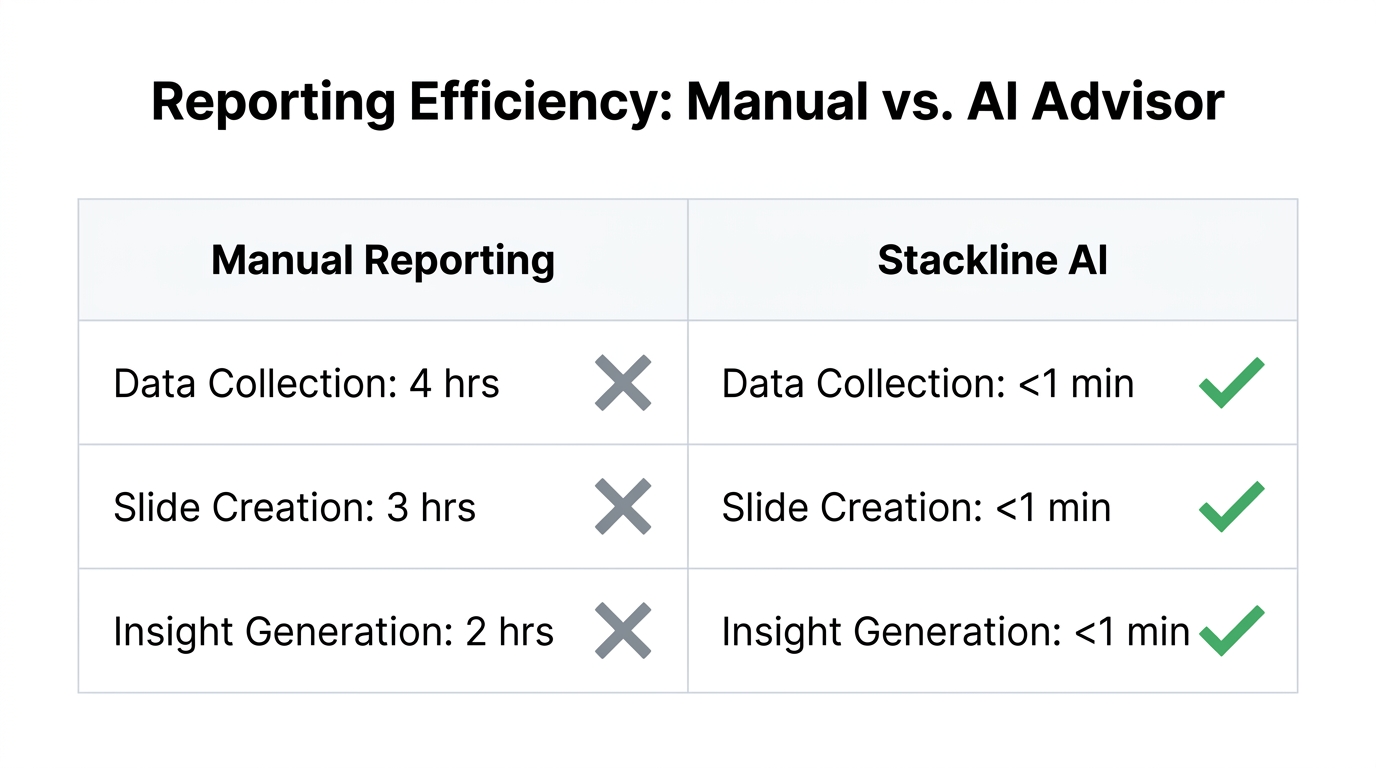
One of the most significant launches in April 2026 is Advisor Presentations. This tool allows users to generate full PowerPoint presentations from natural language prompts. Instead of spending 4-6 hours manually pulling charts, you can simply ask: "Summarize our Q1 market share loss to Competitor X and suggest three mitigation tactics."
Stackline's Advisor will then:
- Analyze historical market data.
- Identify specific SKUs where volume was lost.
- Draft slides with charts and strategic commentary in under five minutes.
"Static dashboards are dead. In 2026, if your data doesn't talk back to you and build your reports, it's already obsolete."
Step 4: Setting Up Adaptive Automation in Ad Manager
In 2026, retail media is no longer platform-specific. Stackline Ad Manager now offers Adaptive Automation, which allows for cross-platform budget shifting. If your Google Ads or Amazon ROAS drops below a pre-set threshold, the system can automatically shift that spend to Walmart or Target where conversion might be cheaper.
While Stackline automates the bidding, Stormy AI can be tasked to monitor these shifts, flagging when budgets are being exhausted too quickly and building weekly performance reports that compare spend, revenue, and TACOS across all platforms in a shared workbook.
Step 5: Implementing Real-Time Webhooks for ERP Actions
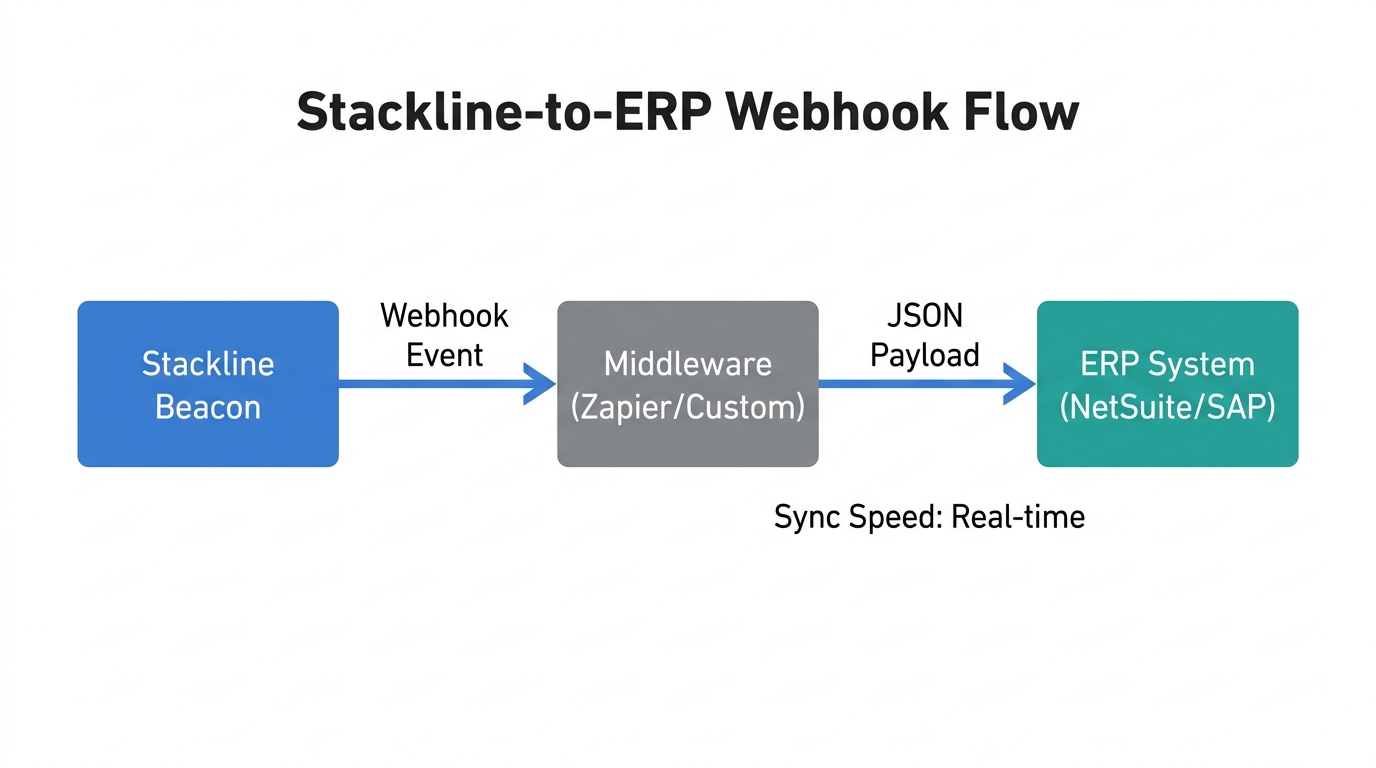
For true enterprise-scale automation, you must connect Stackline's real-time webhooks to your external ERP systems like NetSuite or SAP. This allows for immediate action when the platform detects a Buy Box Loss or a Stockout.
- Scenario: A top-selling SKU goes out of stock on Amazon.
- Action: Stackline triggers a webhook to your ERP.
- Result: Your ERP automatically pauses related marketing campaigns and triggers a warehouse transfer.
This type of integration can lead to a median ROI within 60–90 days and has been shown to reduce aged inventory costs by up to $18,000 monthly.
"Agentic Engine Optimization (AEO) is the new SEO. It's about being the brand that the AI recommends, not just the one that shows up in search."
The 2026 Frontier: Agentic Engine Optimization (AEO)
The newest challenge for Amazon sellers is ranking within AI shopping assistants like Amazon Rufus and ChatGPT. Stackline's AI Visibility tool, launched in early 2026, measures how often your brand is cited in response to conversational queries. To optimize for this, brands should:
- Audit AI Rank: Identify the top 50 questions shoppers ask in your category.
- Content Injection: Update your A+ Content and descriptions with natural language phrases that AI agents can easily index.
By leveraging Stormy AI to handle the heavy lifting of customer support and creator follow-ups, your team can focus on these high-level optimizations that define the next generation of e-commerce.
Conclusion: Building Your 2026 Intelligence Stack
Mastering Stackline in 2026 requires more than just a login; it requires a commitment to automated precision. By following this tutorial—from mapping COGS in Beacon to implementing ERP webhooks—you position your brand to dominate the Amazon marketplace. Remember that while Stackline provides the intelligence, an AI ecommerce employee like Stormy AI provides the labor, keeping your spreadsheets updated and your operation running 24/7 in the messy back office.