Dominating Topical Authority: A 2026 Surfer SEO Audit Strategy for Shopify Content Growth
Master Shopify topical authority in 2026 with our Surfer SEO audit guide. Learn to build pillar clusters, automate metadata, and boost conversions by up to 30%.
In 2026, the e-commerce landscape is no longer about who has the most products, but who owns the most topical authority. As AI-driven search engines like ChatGPT, Gemini, and Perplexity become the primary gatekeepers of consumer discovery, Shopify brands are facing a new reality: if your store isn’t seen as a definitive expert in your niche, you don’t exist. Recent data shows that over 70% of e-commerce marketers have pivoted to a Shopify SEO strategy powered by autonomous agents to maintain their competitive edge. The goal is no longer just ranking for a single keyword; it is about building a comprehensive semantic web that proves to AI models that your brand is the most trusted source for a specific category.
The New Era of Shopify Content Marketing in 2026
Search has evolved beyond simple blue links. Today, AI drives over 65% of all search engine tasks, including crawling, intent mapping, and content scoring. For Shopify merchants, this means that traditional SEO checklists are obsolete. To dominate, you need to align with how Large Language Models (LLMs) interpret information. This requires a shift from sporadic blog posts to a rigorous Pillar and Spoke content model that establishes deep Shopify topical authority.
"Topical authority is the currency of 2026. If your content doesn't connect the dots between product and purpose, AI search bots will bypass you for a competitor who does."
Conducting a Topical Cluster Check: The Pillar & Spoke Audit
The first step in your Shopify content marketing 2026 strategy is auditing your existing content to identify gaps in your "clusters." A topical cluster consists of a central "Pillar" page (usually a high-value collection or a comprehensive guide) surrounded by "Spoke" content (blog posts, FAQs, and UGC videos) that link back to the pillar. Without strong internal linking, your site looks like a collection of random pages rather than a cohesive knowledge base.
Tools like Byword.ai can now audit your existing blog architecture to see where internal links are missing. For example, if you sell vegan skincare, your pillar might be "The Ultimate Guide to Vegan Skincare," while your spokes include "How to use Vitamin C," "Vegan Sunscreen Reviews," and "Nightly Routines for Sensitive Skin." If these spokes don't link back to the pillar—and to each other—you are leaking link equity and confusing search crawlers.
Using Surfer SEO for Intent Mapping: Aligning with 2026 Search Behavior
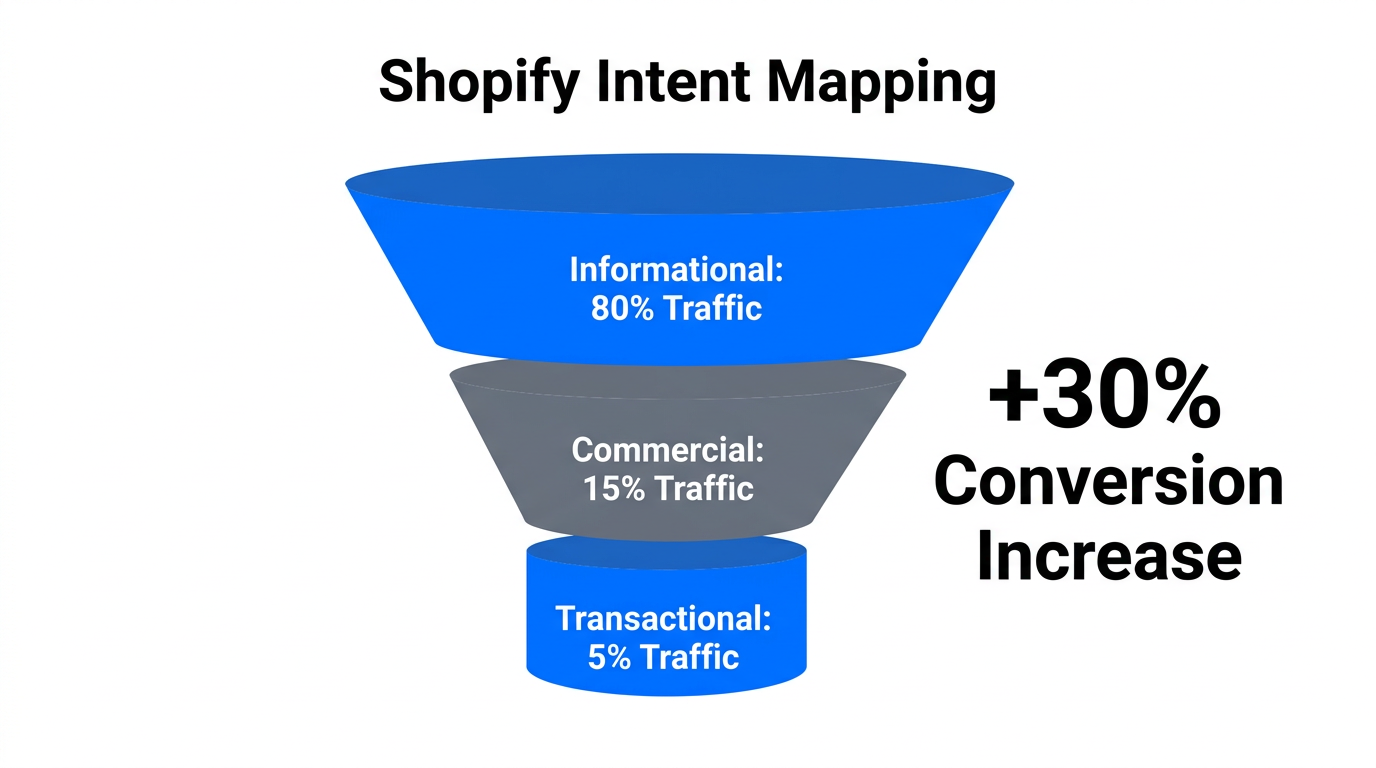
In 2026, search intent is more nuanced than ever. Users aren't just looking for "running shoes"; they are looking for "best carbon-plated running shoes for marathon training under $200." Using an AI SEO audit tool like Surfer SEO allows you to perform an Intent Mapping Audit. This ensures that your product descriptions and blog posts match what the user is actually trying to accomplish.
- Informational Intent: High-level educational content (e.g., "What is retinol?").
- Commercial Intent: Comparison-based content (e.g., "Retinol vs. Bakuchiol").
- Transactional Intent: Direct buying signals (e.g., "Buy organic retinol serum").
Surfer SEO analyzes the top-ranking results in real-time to determine the exact semantic density required for each intent. If your product page is too wordy with informational fluff, it may fail to convert. Conversely, if your blog post is too "salesy," it won't rank for educational queries. By leveraging Surfer SEO, you can ensure every piece of content serves a specific stage of the 2026 buyer journey.
| Feature | Surfer SEO | Legacy Tools | Strategic Benefit |
|---|---|---|---|
| Semantic Scoring | Real-time AI Analysis | Keyword Density % | Higher ranking in Generative Search |
| Intent Mapping | Automated | Manual Analysis | Reduced bounce rates |
| Content Audits | Actionable Steps | Generic Checklists | Faster Shopify topical authority growth |
The Cost of 'Tool Sprawl': Why Consolidating Your AI Stack Matters
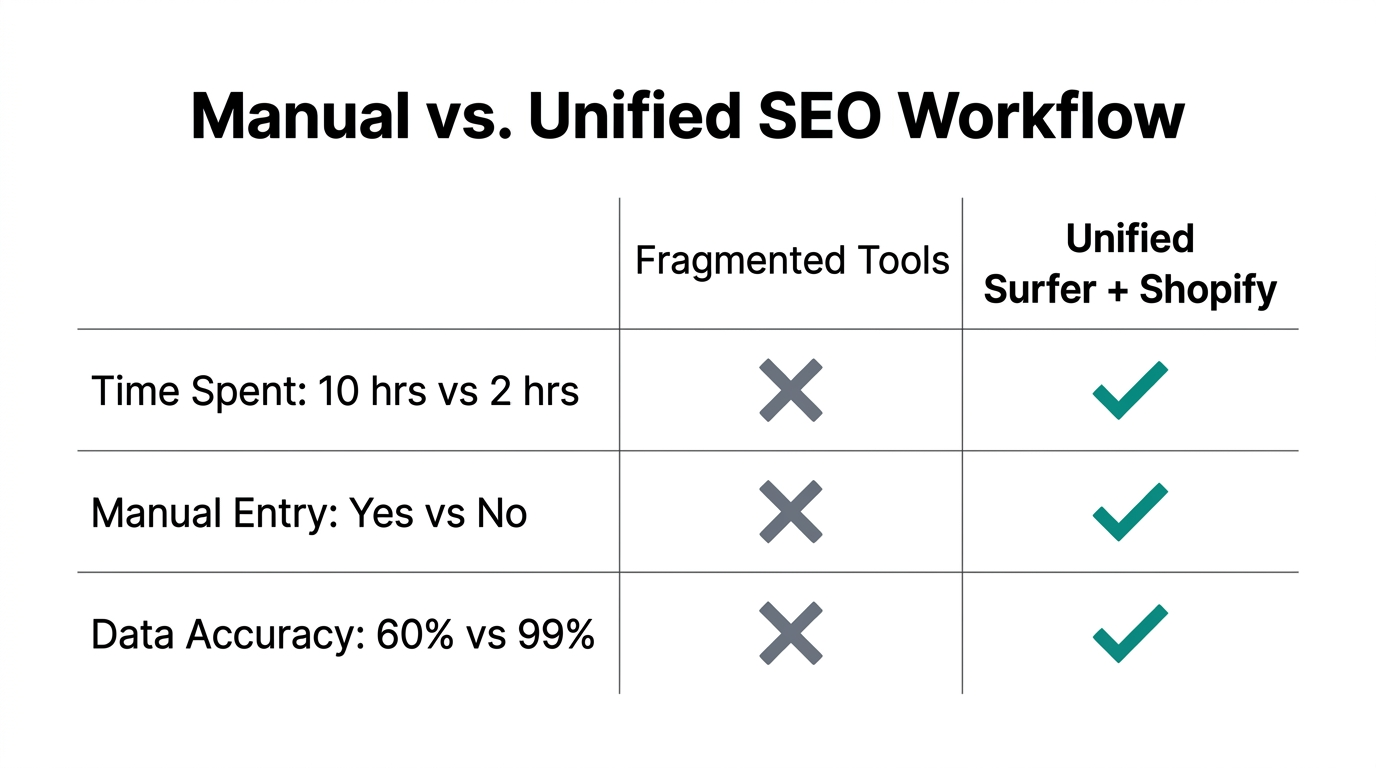
A common mistake in 2026 is "Tool Sprawl." Merchants often install five different AI SEO apps, which leads to code bloat and slows down site speed—a critical ranking factor. According to research from the Charle Agency, excessive app installations can cause conflicting metadata overwrites, essentially confusing search engines about which version of your data is correct.
Instead of fragmented tools, move toward Unified Business Intelligence platforms. This consolidation keeps your Shopify liquid code clean and ensures that your AI SEO audit tool isn't fighting with your conversion optimization scripts. To further streamline your workflow, especially when scaling your influencer and UGC efforts, platforms like Stormy AI can help you discover and manage the creators who generate the content that fuels your topical clusters, all without adding unnecessary bloat to your store's backend.
"Site speed is no longer just a technical metric; it's a user experience requirement that AI search bots weigh heavily when recommending brands."
Automating Bulk Metadata Fixes with SEO HERO
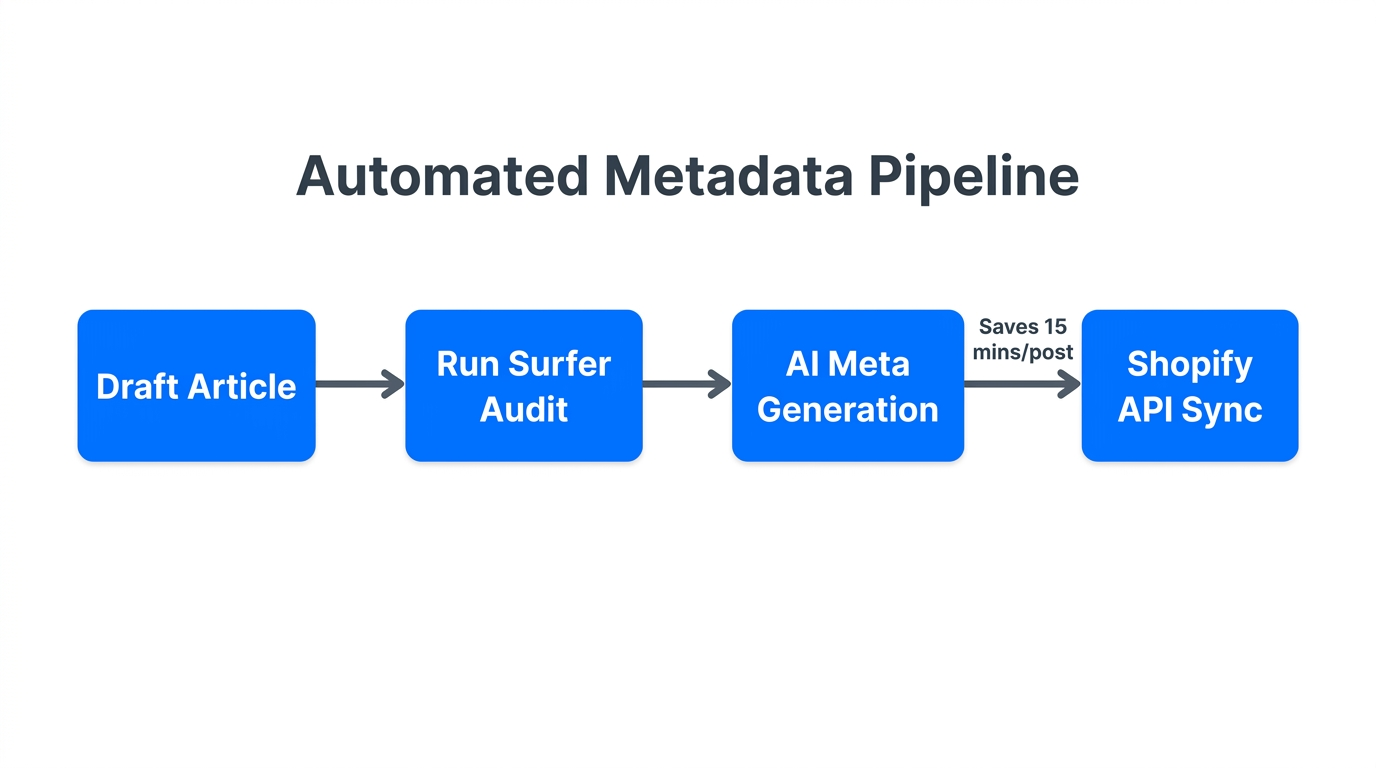
Technical SEO in 2026 is about scale. Manually updating meta titles and descriptions for 10,000 SKUs is impossible. This is where SEO HERO comes in. It allows for bulk metadata fixes without losing semantic uniqueness. The danger of using basic AI for bulk rewrites is creating "semantically identical" content, which Google’s Helpful Content systems often flag as low-value.
SEO HERO uses sophisticated algorithms to ensure that while the process is automated, the output remains distinct for every product. This is crucial for maintaining a healthy Shopify SEO strategy. Additionally, ensure your store utilizes proper schema. Implementing AI-validated schema markup can lead to a 30% increase in clicks and conversions because it helps search engines display rich snippets like ratings, prices, and stock levels directly in the search results via Schema.org integration.
Scaling Organic Distribution via AI-Validated Content Scoring
Once your technical foundation is solid and your clusters are mapped, you must scale. In 2026, content volume still matters, but only if it passes the semantic density audit. Use Surfer SEO to score your content before it goes live. High-scoring content is more likely to be picked up by LLMs for "Brand Radar" mentions.
Real-world examples show the power of this approach. Brands like Doe Beauty have used AI-driven audits and Shopify Flow to automate routine tasks, saving $30,000 per week in manual labor. Similarly, Peter Sheppard Footwear saw a 30% increase in revenue by integrating AI-driven audits that resolved customer objections in real-time. By combining UGC sourcing through Stormy AI with a rigorous Surfer SEO audit, you create a content flywheel that drives sustainable organic growth.
Your 2026 Shopify SEO Audit Playbook
- Inventory Your Clusters: Use Byword.ai to find disconnected "Spoke" pages.
- Verify Crawlability: Check your
robots.txtto ensure GPTBot andOAI-SearchBotare not blocked. - Audit Schema: Use the Shopify AI SEO Booster to verify all 9 critical schema types.
- Map Intent: Run your top 20 pages through Surfer SEO to align with 2026 buyer intent.
- Fix Metadata: Use SEO HERO for bulk updates while maintaining unique brand voice.
Conclusion: Building for the Future of Search
Dominating Shopify topical authority in 2026 requires a blend of human creativity and AI-powered precision. By moving away from tool sprawl and focusing on a unified pillar and spoke strategy, you position your brand as the definitive leader in your niche. Whether it is through automating technical fixes with SEO HERO or refining content with Surfer SEO, the goal is clear: provide the most helpful, semantically rich experience for both humans and AI models alike. Start your audit today to secure your market share for the rest of the decade.