How to Set Up a Shopify Store with AI in 2026: The Complete Agentic Commerce Playbook
Learn how to launch an agent-ready Shopify store in 2026 using UCP, Horizon themes, and Stormy AI. The definitive guide to the one-hour agentic commerce company.
The era of "destination ecommerce" is officially over. In 2026, we no longer build websites just for humans to click through; we build "agentic nodes" that allow AI co-pilots to discover, negotiate, and transact on behalf of consumers. As Shopify moves toward its projected $14 billion revenue mark this year, the platform has transitioned from a simple CMS into a full-scale Agentic Commerce Operating System. If you are launching a brand today, the goal isn't just a pretty storefront—it's achieving "one-hour company" status, where your entire infrastructure is set up, optimized, and handed off to an AI employee in a single afternoon.
The State of Shopify and Agentic Commerce in 2026
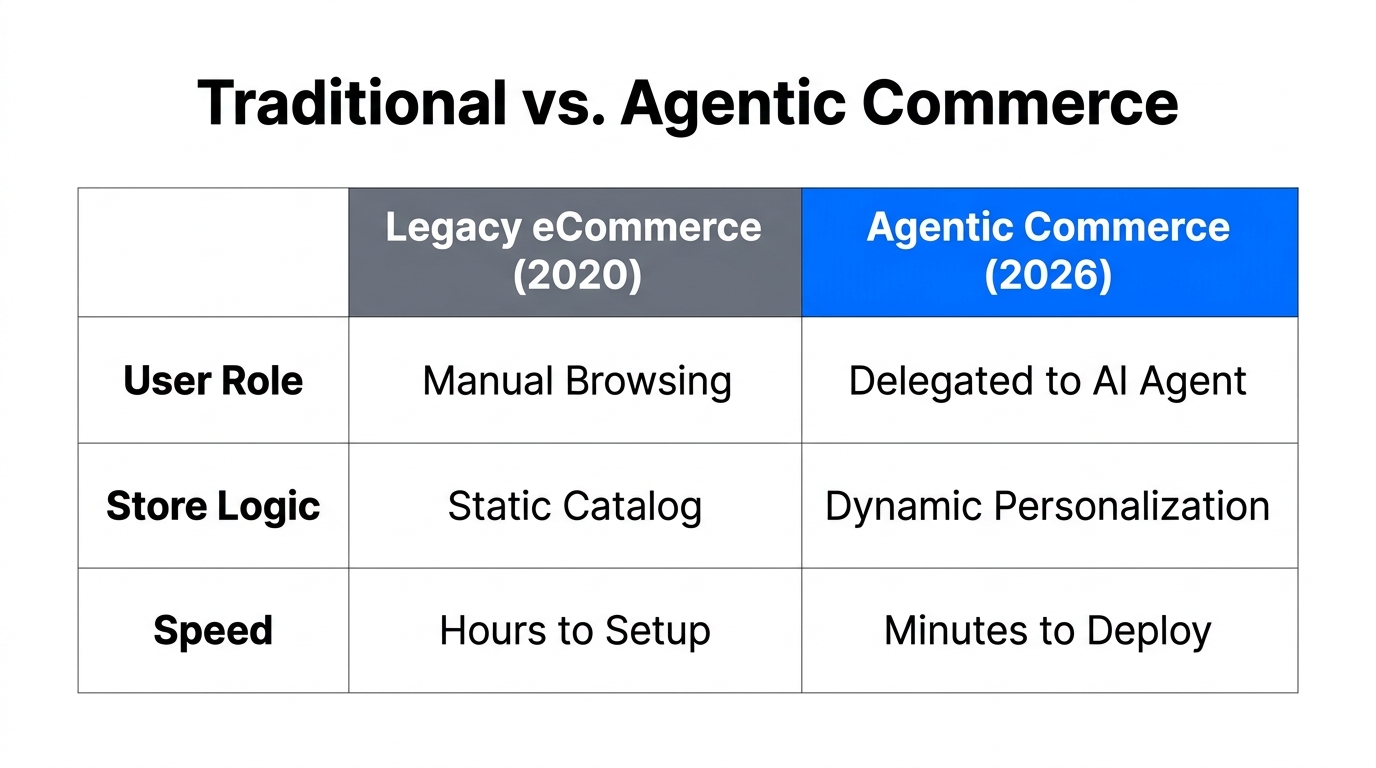
As of April 2026, Shopify holds nearly 30% of the US ecommerce market. But the real story lies in how people are buying. Data from the 2025 BFCM period showed a record $14.6 billion in global sales, with a massive shift toward hands-free, agent-led transactions. In fact, 23% of Americans have now made at least one purchase via an AI agent like ChatGPT or Gemini without ever visiting the brand's URL.
Setting up a store today requires a fundamental shift in strategy. You aren't just optimizing for Google SEO; you are optimizing for GEO (Generative Engine Optimization). This means making your data "agent-readable" through the Universal Commerce Protocol (UCP). Below is your tactical playbook for building a store that thrives in the agent economy.
"Every Shopify store should be agent-ready by default. We are building the infrastructure for the era where AI agents do the shopping." — Tobi Lütke, CEO of Shopify
Step 1: Configuring the Universal Commerce Protocol (UCP)
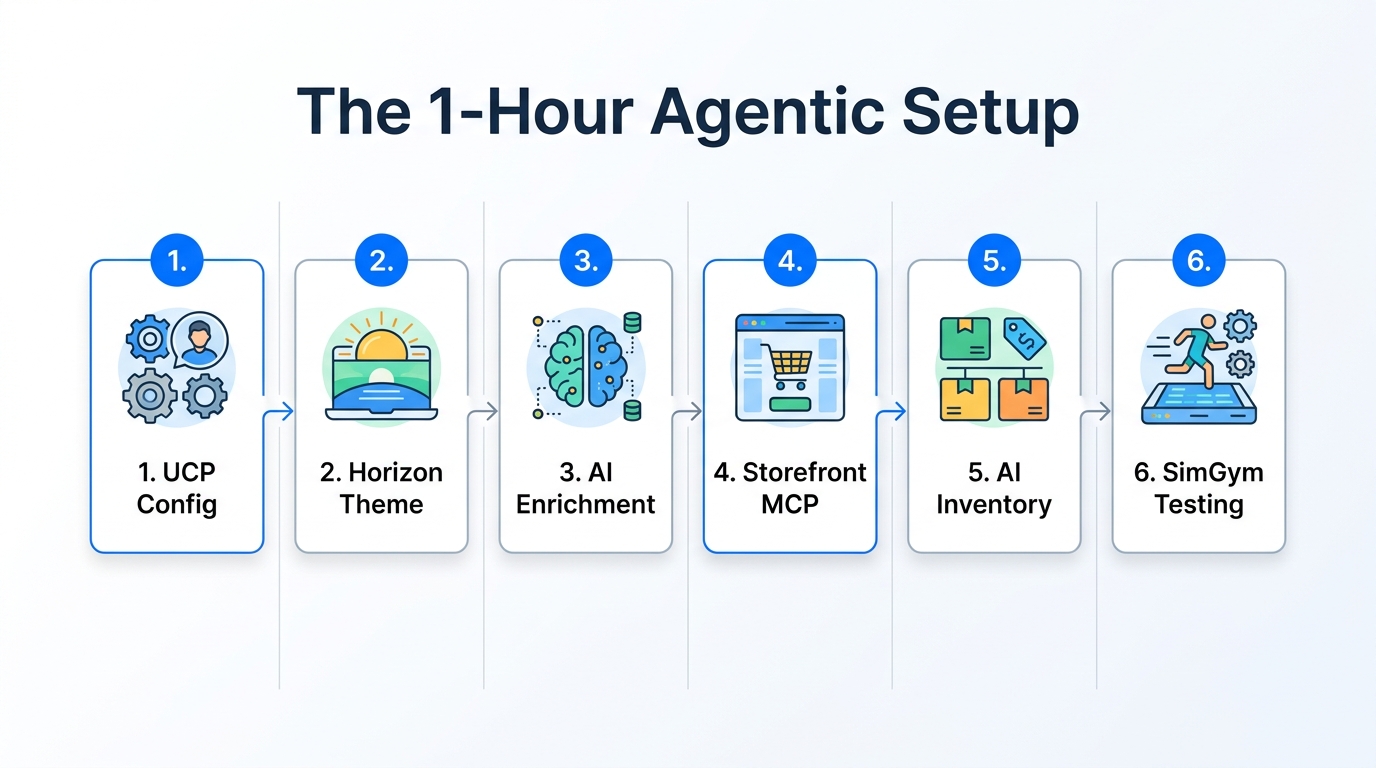
The Universal Commerce Protocol (UCP) is the backbone of 2026 commerce. Co-developed with Google, it allows AI agents to "negotiate" with your store's backend. This is what enables a user to tell their phone, "Find me the best eco-friendly running shoes under $150," and have the transaction completed instantly.
To configure UCP, navigate to Settings > AI Channels in your Shopify Admin. You will need to activate two primary layers:
- The Discovery Layer: This allows agents to browse your live inventory, check real-time stock levels, and view current discount codes.
- The Checkout Layer: This allows the agent to securely attach the user's payment method and complete the order via the Storefront MCP (Model Context Protocol) server.
By enabling these, your products become eligible for "Zero-Click Discovery," where the AI handles the entire funnel from search to shipping confirmation.
Step 2: Designing via the Horizon Theme Foundation
Gone are the days of manual Liquid coding or dragging-and-dropping static blocks. The Horizon Theme Foundation, released in late 2025, is an AI-native theme architecture that uses Nested Theme Blocks. This allows you to "vibe code" your store's aesthetic using simple natural language prompts.
Instead of hiring a designer, you can prompt the Horizon system directly: "Adjust this theme for a minimalist luxury brand using a deep emerald and gold palette, focusing on high-resolution video storytelling for our hero section." The system will dynamically reconfigure the component-driven structure to match your brand identity.
| Feature | Traditional Manual Setup (2024) | AI-Driven Setup (2026) |
|---|---|---|
| Time to Launch | 2–4 Weeks | 60–120 Minutes |
| Design Method | Static Templates/Code | Text Prompts (Horizon) |
| Testing | Manual A/B Testing | Synthetic Simulation (SimGym) |
| Primary Search | SEO (Keywords) | GEO (Agent Discovery) |
Step 3: Persona-Based Enrichment with Shopify Magic
In 2026, "bland" AI descriptions are heavily penalized by search algorithms like Google's Andromeda update. To succeed, you must use Shopify Magic to create high-converting, persona-based descriptions. Instead of generic specs, tell Shopify Magic who your customer is: "Write a description for this leather tote targeting professional women in London who value durability and ethical sourcing."
However, beware of "content hallucinations." As expert reports suggest, a "Human-in-the-loop" QA process is essential. While AI does 95% of the work, your brand's unique story and E-E-A-T (Experience, Expertise, Authoritativeness, and Trustworthiness) signals must be verified by a human to maintain high trust scores with AI crawlers.
"The winners in 2026 are those who fix their data foundations first. AI is only as good as the product taxonomy it has to work with." — McKinsey Retail Report 2026
Step 4: Activating the Storefront MCP Server
The Model Context Protocol (MCP) is the technical bridge that lets Large Language Models (LLMs) understand the "context" of your store. Without an active MCP server, an AI agent might see your product but won't understand complex variants (like size/color combinations) or shipping constraints. Activation is now a single-click process under the Developer Settings in Shopify, making your store "readable" to the global network of AI agents.
Step 5: Automating the Back Office with an AI Employee
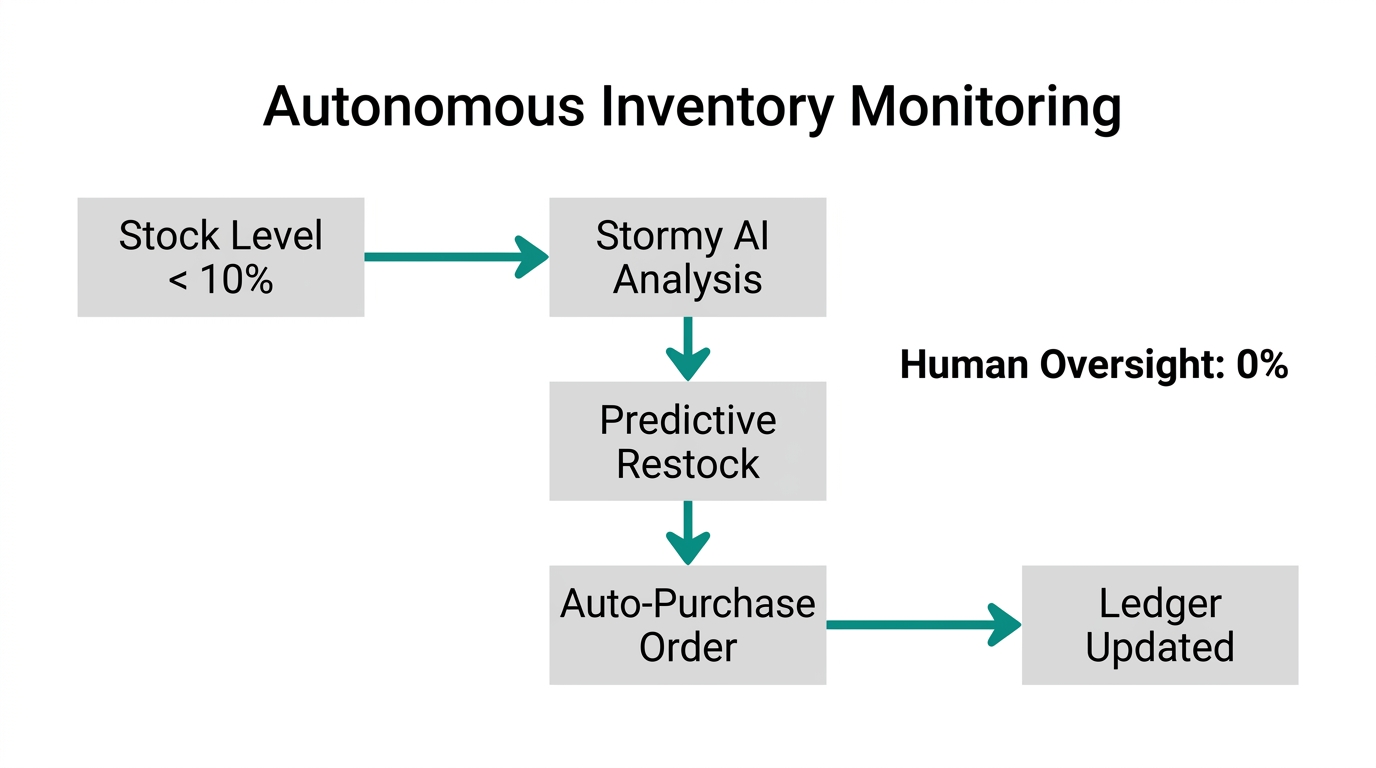
Once the storefront is live, the real work begins: inventory management, supplier follow-ups, and ad optimization. In 2026, lean founders don't do this themselves; they hire an AI ecommerce employee like Stormy AI.
Stormy AI is an autonomous agent that connects directly to your Shopify, Amazon, and TikTok Shop accounts. Here is how Stormy handles the "messy" back office while you sleep:
- Inventory Pulse: Stormy monitors your SKU levels across all marketplaces. If a product is at risk of stocking out, Stormy doesn't just send an alert—it drafts a restock Purchase Order in a dynamic spreadsheet and emails your supplier for a lead-time update.
- Ad Audits: Stormy pulls performance data from Meta Ads Manager and Google Ads every morning. It compares spend vs. revenue and flags underperforming campaigns in a shared workbook, even suggesting budget reallocations based on real-time ROAS.
- Supplier & Creator Follow-ups: If a creator hasn't posted their affiliate content on TikTok Shop, Stormy AI detects the delay and sends a polite follow-up email, tracking the entire conversation in your CRM.
Step 6: Stress-Testing with SimGym
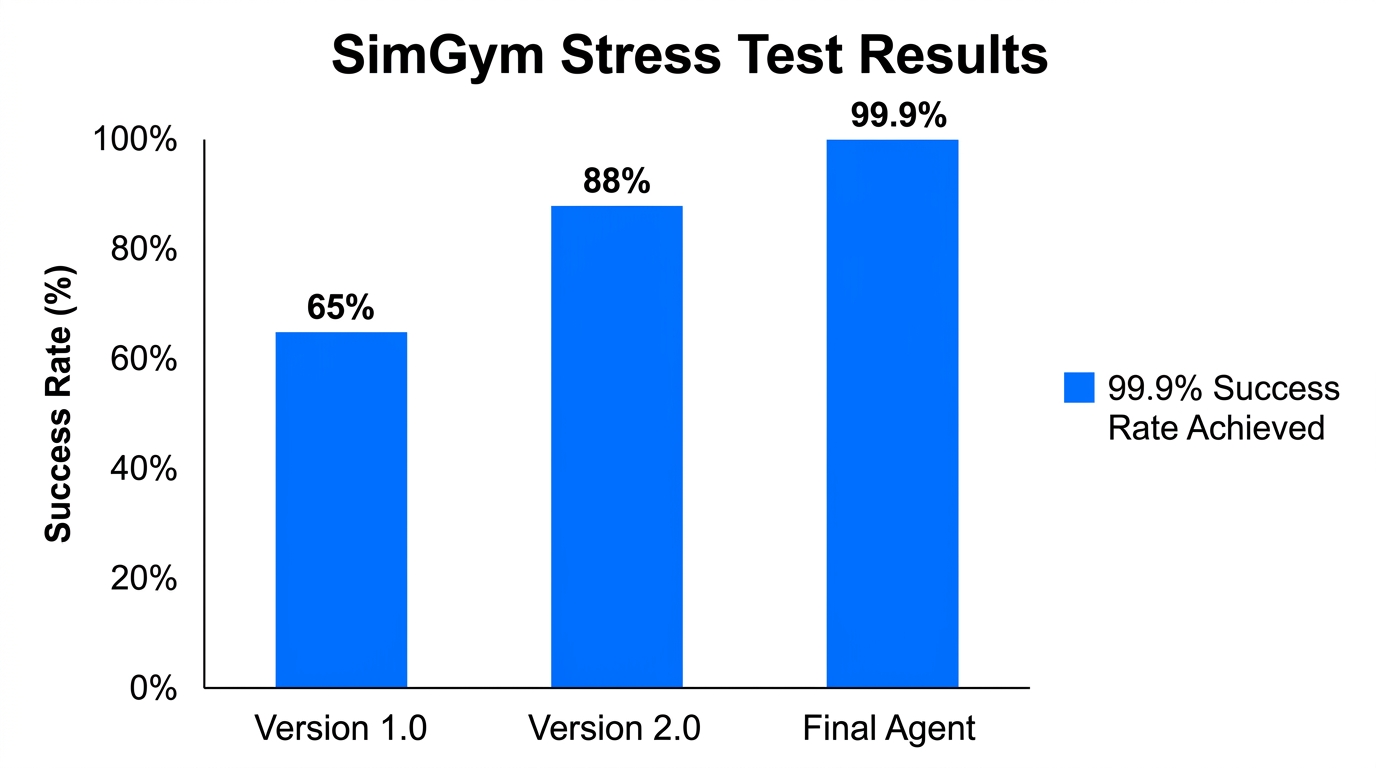
Before driving real traffic, use SimGym (found under Online Store > Navigation > SimGym). This tool uses "Synthetic Shoppers"—AI personas that simulate 10,000 unique customer journeys on your store. SimGym will identify friction points, such as a confusing checkout step or a slow-loading high-resolution video, allowing you to fix issues before they cost you revenue.
"The one-hour company isn't just about speed; it's about building a business that runs with zero daily human input."
The Future of the One-Hour Company
Setting up a Shopify store in 2026 is no longer about mastering HTML or spending weeks on design. It is about configuring the right protocols and hiring the right AI agents to manage the ops. By leveraging the Universal Commerce Protocol and an AI employee like Stormy AI, you can move from an idea at 9:00 AM to a fully autonomous, revenue-generating business by lunch.
As the agent economy continues to expand, the most successful brands will be those that stop acting like web designers and start acting like system architects. The tools are here, the infrastructure is agent-ready, and the "one-hour company" is no longer a myth—it's the new standard for modern ecommerce.