Automating Shopify Semantic Search and Schema for 2026 AI Agents
Learn how to automate Shopify semantic search and structured data to prepare your store for 2026 AI shopping agents and boost AI-driven order volume by 15x.
By mid-2026, the traditional e-commerce storefront has undergone a radical transformation. We are no longer just building websites for human eyes; we are building data infrastructures for AI Shopping Agents. These autonomous bots—powered by the latest iterations of LLMs—don't just browse; they compare, decide, and execute checkouts without a human ever clicking a "Buy Now" button. Since January 2025, Shopify has reported a 15x increase in orders originating directly from AI platforms like ChatGPT, Gemini, and Perplexity.
If your store isn't speaking the language of these agents through automated schema and semantic data, you are effectively invisible to the fastest-growing segment of the market. In this guide, we will break down how to automate your Shopify store's technical SEO to ensure your products are the first choice for the AI-driven economy of 2026.
The Rise of AI Agents: Preparing for Autonomous Checkout
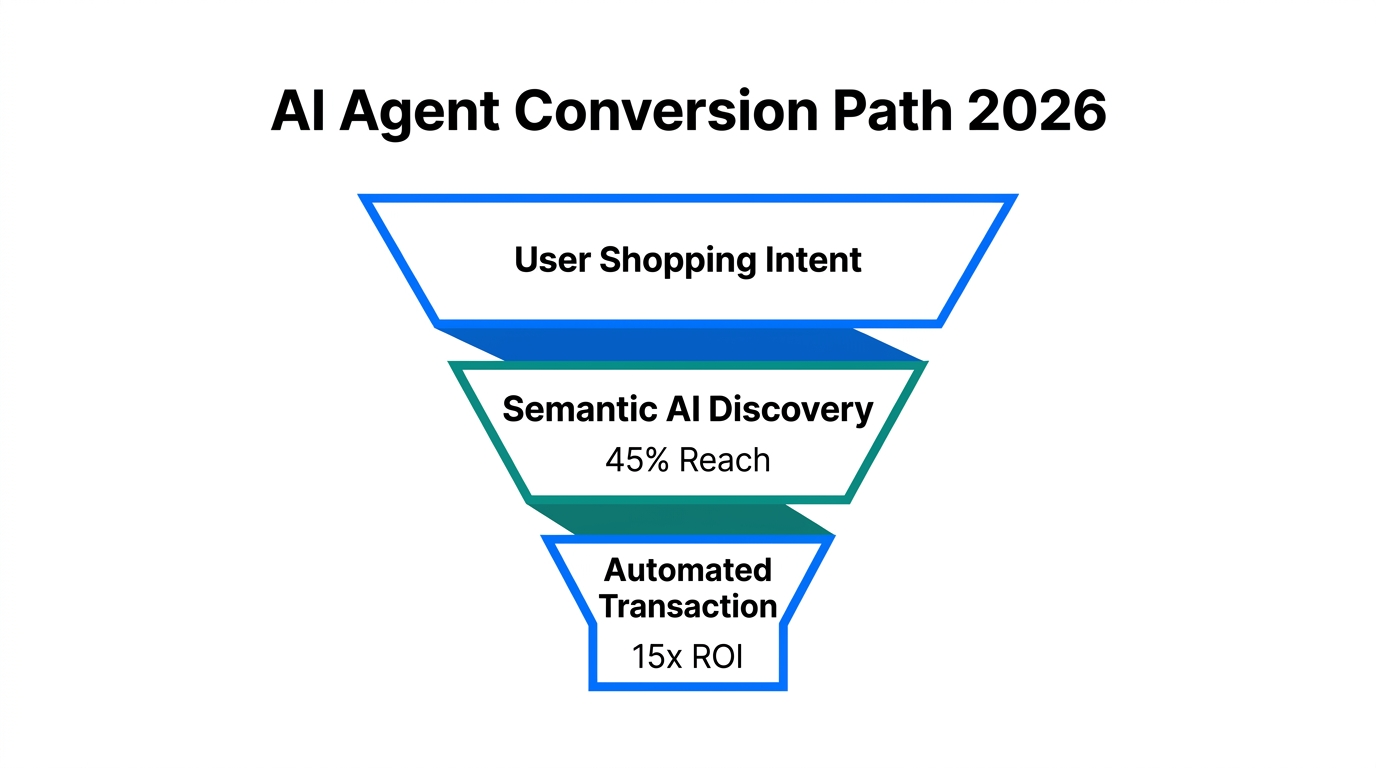
In 2026, the customer journey often begins and ends within an AI interface. These AI Shopping Agents operate on logic rather than aesthetics. While a human might be swayed by a beautiful hero image, an agent is looking for specific data points: availability, shipping latency, material composition, and real-time pricing. Marketers using AI tools to bridge this data gap are already seeing massive returns, saving an average of 13 hours per week on routine reporting and data entry.
To capture this traffic, your Shopify store must move beyond "Blue Links" and optimize for AI Overviews (AIO). Research from BrightEdge shows that URLs cited in AIO results are 25.7% "fresher" than traditional search results, meaning your data needs to be updated in real-time. This is where Stormy AI's philosophy of automation comes into play—just as we automate creator discovery, your store must automate its data delivery to search engines.
"The shift from 'search results' to 'answer engines' means your product isn't a webpage anymore—it's a set of verified facts that an AI can trust."
Semantic Data Overhaul: From Keywords to Entities
The 2025 mandatory rollout of Shopify Semantic Search fundamentally changed how products are indexed. We have moved from a keyword-matching model to an entity-based model. In the old world, you optimized for "waterproof hiking boots." In 2026, you optimize for the entities: [Durability], [Material: Gore-Tex], [Use Case: Alpine], and [Brand Authority].
AI models interpret these entities to determine high-conversion intent. If an AI agent is tasked with finding "the best sustainable boots for a rainy Iceland trip," it won't just look for those words. It will look for products that have Structured Data linking them to the concepts of sustainability and waterproofing. This is known as Generative Engine Optimization (GEO).
- Entity Linking: Connect your products to known concepts using specialized vocabularies like Schema.org.
- Intent Mapping: Use AI to analyze search queries and adjust your product descriptions to answer "Buying Intent" rather than just describing features.
- Contextual Relevance: Ensure your blog content, such as gift guides, uses internal links that an AI can follow to understand product relationships.
Automating JSON-LD: Live-Patching with Alli AI
Manually coding JSON-LD schema for thousands of SKUs is a recipe for disaster. One misplaced comma can break your entire rich result eligibility. In 2026, the gold standard is live-patching. Tools like Alli AI and JSON-LD for SEO allow you to inject product, review, and FAQ schema across your entire catalog without touching a single line of Liquid code.
This automation is critical for Answer Engine Optimization (AEO). When an AI agent asks a question like "Does this product have a lifetime warranty?", it scans your schema. If that information is locked in an image or a buried paragraph, the agent moves on to a competitor who has it structured in their JSON-LD.
| Feature | Manual Workflow | Automated AI Workflow |
|---|---|---|
| Schema Accuracy | Prone to human error | 100% Validated |
| Update Speed | Weeks for large catalogs | Real-time |
| AIO Visibility | Low / Inconsistent | High / Optimized |
| Resource Cost | High Developer Hours | Low Subscription Cost |
Bulk Deployment: Scaling Reviews and FAQ Schema
For large Shopify stores, the challenge is scale. How do you ensure 10,000 products all have unique, helpful FAQ schema? The 2026 playbook involves a four-phase automated workflow:
Phase 1: Technical & Site Speed Audit
Before the agents can read your data, they have to be able to crawl it. Use tools like PageSpeed Insights and TinyIMG to automatically compress images and remove bloated scripts. AI-driven speed optimization is now standard; a slow site is a dead site for AI crawlers.
Phase 2: Bulk On-Page Fixes
Export your product data using Matrixify and run it through the ChatGPT API to identify "thin content." You can generate thousands of meta tags and entity-rich descriptions in minutes, then re-import them to your store. This keeps your content "fresh," which is a top ranking factor for AI Overviews.
"The most successful Shopify brands in 2026 don't write descriptions; they engineer data points that AI agents can verify."
The 3-App Limit: Managing Tech Stack Bloat
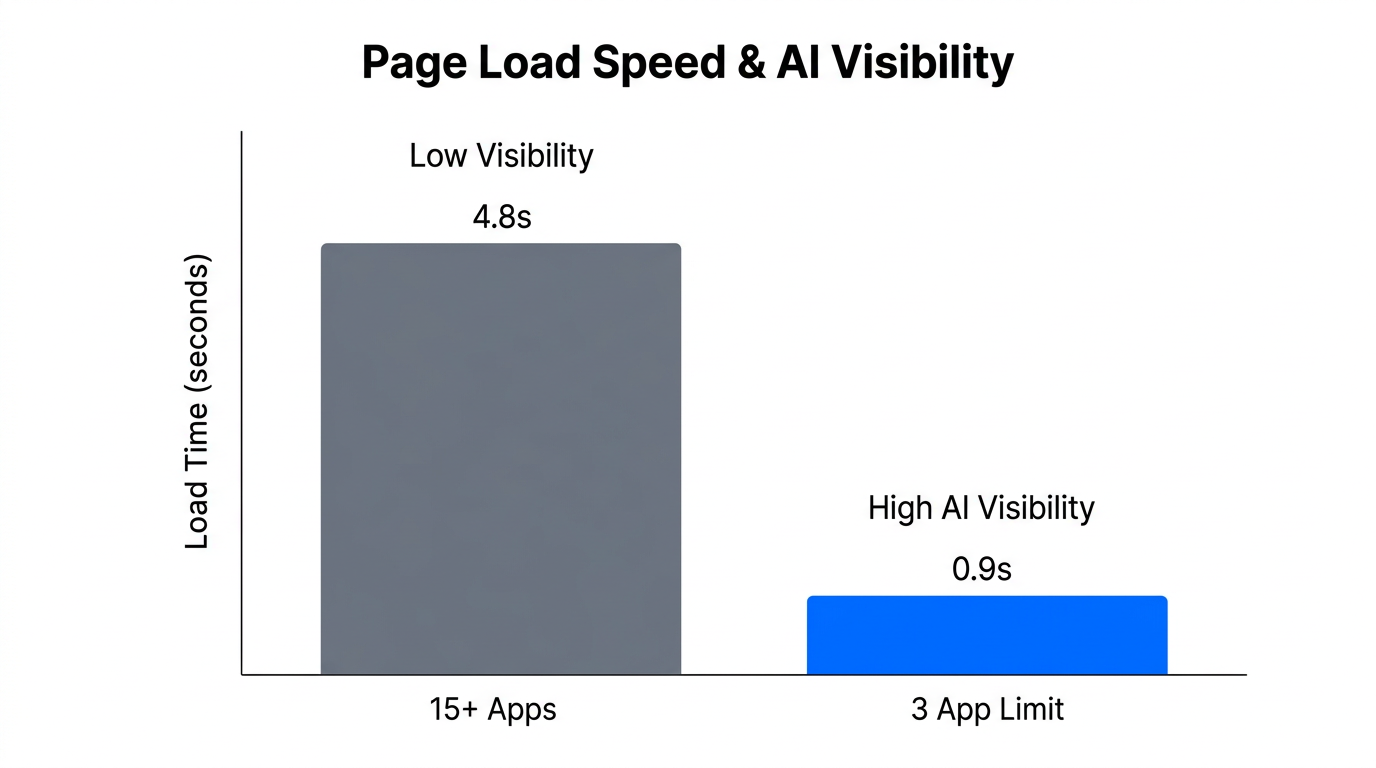
One of the most common mistakes in 2026 is "Automating Chaos." Installing too many Shopify apps to handle different parts of your SEO will slow down your Liquid rendering, causing false negatives in AI crawlers. These crawlers often fail to render JavaScript correctly, meaning they might miss your meta tags if they take too long to load.
Industry experts recommend the "3-App Limit" for SEO. Choose one tool for technical audits (like SearchPie), one for schema deployment (like Alli AI), and one for speed optimization (like TinyIMG). This prevents code conflicts and ensures your site remains lightning-fast for both humans and bots.
Automating Internal Linking for Semantic Relevance
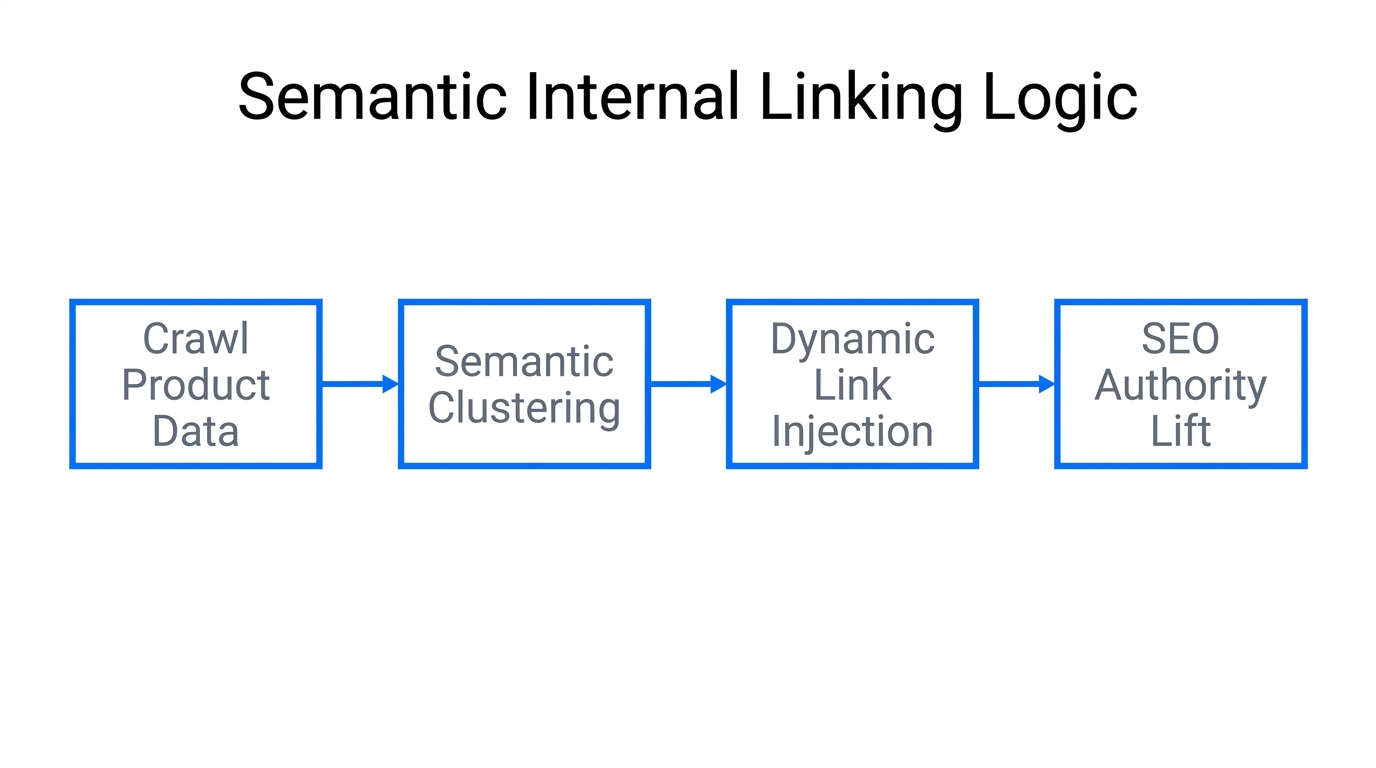
AI agents use internal links to understand the hierarchy and relationship between your products. In 2026, we use tools like SEOpilot AI to automatically scan new blog posts and insert links to high-priority products based on semantic relevance. This creates a "web of context" that helps search engines like Google and Bing understand your store's authority in a specific niche.
For example, if you are a fitness brand using Stormy AI to find creators for a UGC campaign, you can take the content those creators produce, turn it into blog posts, and use automated linking to drive AI agents directly to the featured products. This connects the top-of-funnel discovery to the bottom-of-funnel checkout automation.
Conclusion: Future-Proofing for the Agentic Economy
The transition to AI-driven e-commerce is not a trend; it is a fundamental shift in how commerce works. By automating your Shopify semantic search and schema, you are positioning your store to thrive in an environment where AI agents make the majority of purchasing decisions. The AI-enabled e-commerce market is projected to reach $31.18 billion by 2030, and those who act now will capture the lion's share of that growth.
Start by auditing your technical foundation, streamlining your app stack, and embracing entity-based data structures. Whether it's through Stormy AI for creator management or Airefs for tracking AI search visibility, the goal remains the same: automate the routine so you can dominate the creative.