Shopify Generative Engine Optimization (GEO): Winning the 2026 AI Search Race
Master Generative Engine Optimization (GEO) for Shopify in 2026. Learn how to win citations in Google AI Overviews, ChatGPT, and Perplexity to drive ecommerce growth.
In 2026, the traditional "ten blue links" of the Google search results page have officially become a relic of the past. For Shopify merchants, the battlefield has shifted from ranking #1 for a keyword to becoming the primary citation in an AI-generated answer. This paradigm shift, known as Generative Engine Optimization (GEO) and Answer Engine Optimization (AEO), is no longer a future-proof strategy—it is a survival requirement. Since January 2025, Shopify has reported a staggering 15x increase in orders originating directly from AI search platforms like ChatGPT, Perplexity, and Google Gemini.
As the AI-enabled e-commerce market scales toward $8.65 billion this year, brands that fail to adapt their technical and content strategies for AI agents risk becoming invisible. This guide outlines the exact playbook for winning the 2026 AI search race by transitioning your Shopify store from basic SEO to high-performance GEO.
Understanding AEO vs. Traditional SEO for Shopify Brands
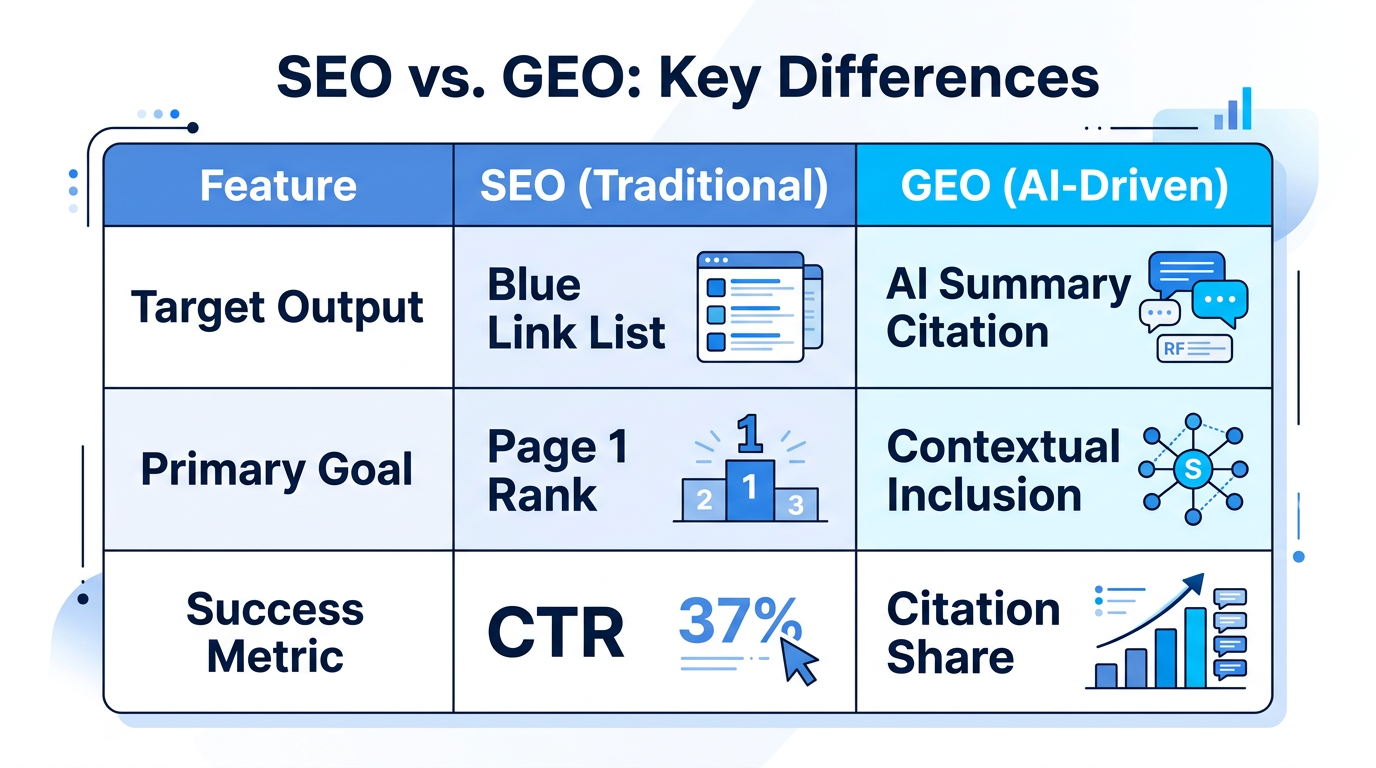
Traditional SEO focuses on optimizing for algorithms that match keywords to web pages. In contrast, Answer Engine Optimization (AEO) focuses on optimizing for Large Language Models (LLMs) that synthesize information to provide direct answers. While SEO is about visibility, AEO is about authority and synthesis.
| Feature | Traditional SEO (2020-2024) | Generative Engine Optimization (2026) |
|---|---|---|
| Primary Goal | High keyword rankings | Citation in AI Overviews (AIO) |
| Content Focus | Keywords & Backlinks | Semantic Depth & Data Accuracy |
| Search Intent | Navigational/Informational | Agent-Assisted Conversion |
| Success Metric | Click-Through Rate (CTR) | Citation Share & Agent-Readiness |
For a Shopify store, this means your product descriptions, blog posts, and reviews must be structured in a way that an AI agent—like Google Gemini—can parse and recommend within a conversational interface. Marketers who have already integrated these AI-first workflows are saving an average of 13 hours per week, allowing them to focus on strategy rather than manual data entry.
"The goal is no longer to be a destination, but to be the source of truth that AI agents use to fulfill a user's request."
Content Freshness: The 25.7% Competitive Advantage
One of the most critical findings in recent SEO research is the correlation between content recency and AI visibility. Data from Digitaloft shows that URLs cited in Google AI Overviews are 25.7% 'fresher' than those appearing in traditional SERPs. AI engines prioritize real-time data because they aim to provide the most current answer possible to the user.
For Shopify brands, this means static product pages are a liability. You must automate real-time content updates to stay relevant. This includes:
- Dynamic Price Updates: Ensuring your schema reflects live pricing and stock levels via Shopify Plus automation.
- Automated Review Summaries: Using AI to synthesize the latest 50 customer reviews into a "Pros and Cons" section that LLMs can easily scrape.
- Seasonal Content Refreshes: Using tools like Surfer SEO to programmatically update blog content based on current search trends.
Capturing AI Search Traffic: ChatGPT, Perplexity, and Gemini
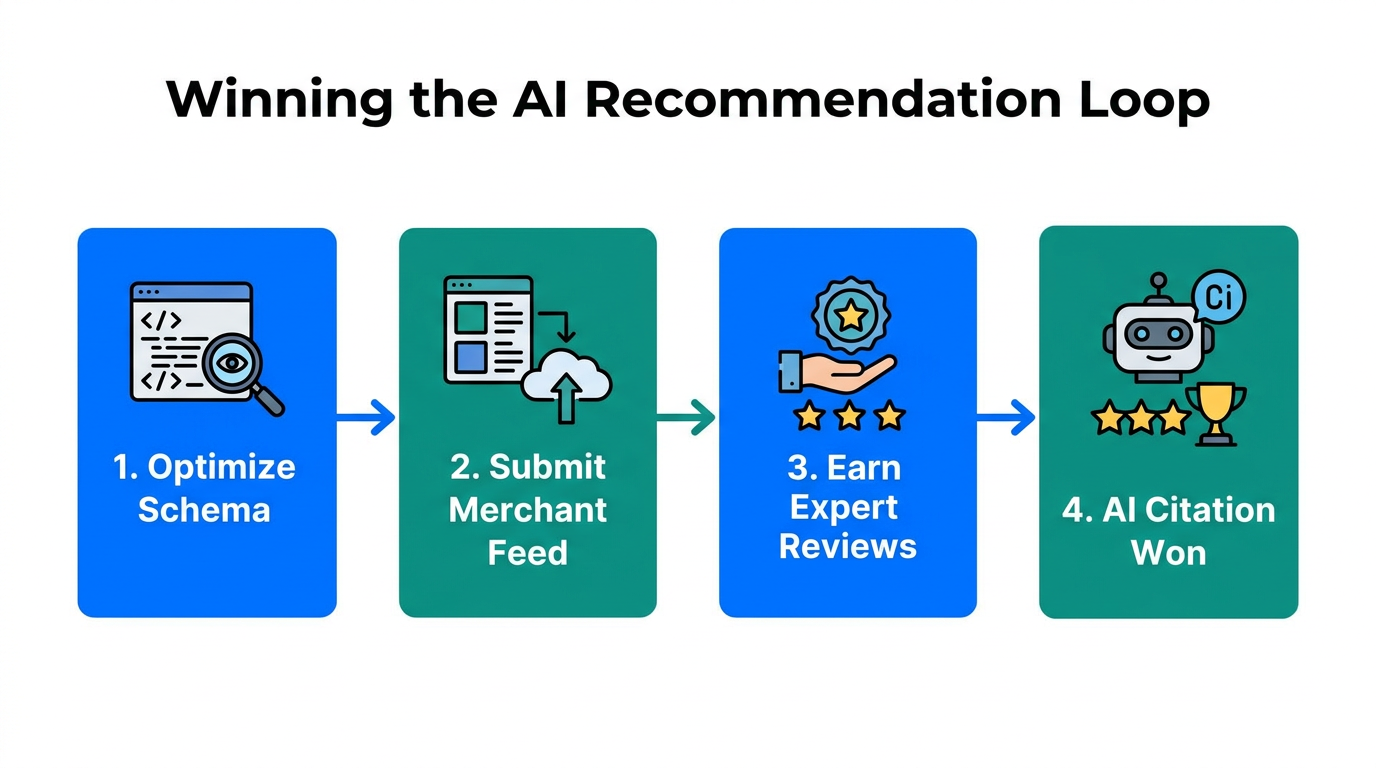
To appear in product recommendations on platforms like Perplexity, your Shopify store must provide high-density semantic information. These engines don't just look for keywords; they look for contextual evidence that your product is the best fit for the user's specific problem.
Step 1: Deploy Advanced Schema
Standard product schema is no longer enough. You need to implement comprehensive JSON-LD that includes Product, Offer, Review, AggregateRating, and FAQ schema. Tools like JSON-LD for SEO can automate this, ensuring that AI agents can verify your product's specifications without needing to guess.
Step 2: Optimize for Semantic Search
Shopify's mandatory rollout of Semantic Search in 2025 changed how stores process internal queries. To win external AI search, your content must use natural, conversational language. Instead of just listing "Waterproof Hiking Boots," your content should explain "why these are the best waterproof hiking boots for narrow feet in rainy climates." This level of detail helps AI engines match your product to long-tail, high-intent conversational queries.
Step 3: Source UGC for Social Proof
Generative engines heavily weigh user-generated content (UGC) and third-party mentions to determine brand authority. Sourcing high-quality UGC from creators through platforms like Stormy AI provides the external signals and "social buzz" that AI engines look for when validating a brand's reputation. When dozens of creators are talking about your product on TikTok or LinkedIn, it increases the likelihood of your brand being mentioned in a ChatGPT recommendation.
"AI agents are essentially automated researchers; they look for consensus across the web before making a recommendation."
Measuring Success: Transitioning to Citation Share and Agent-Readiness
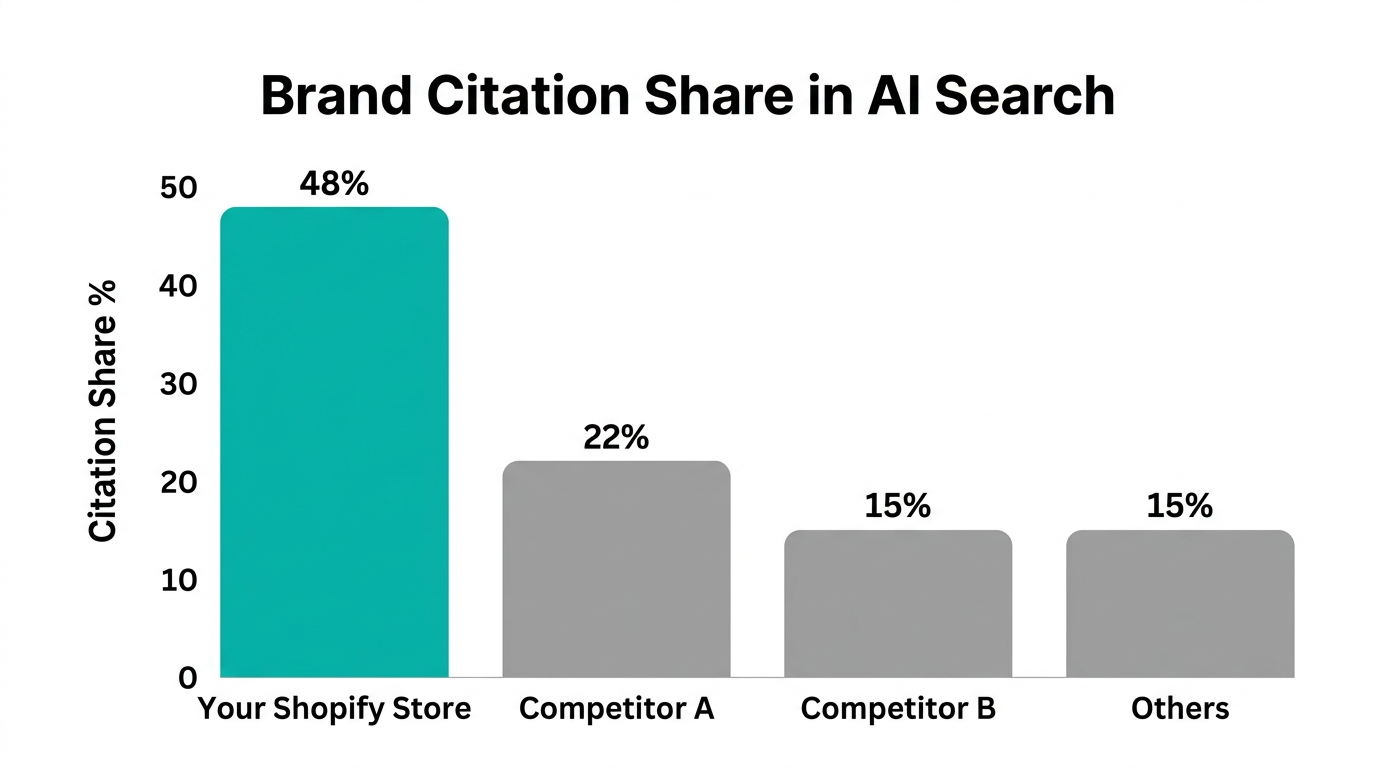
In the world of GEO, traditional tracking tools are becoming secondary. You can no longer rely solely on rank tracking. Instead, Shopify merchants should focus on two new metrics:
- AI Citation Share: The percentage of time your brand is mentioned or linked as a source in AI-generated answers for your target topics.
- Agent-Readiness Score: A technical audit of how easily an autonomous AI agent can navigate your site, interpret your data, and potentially initiate a checkout.
Platforms like Airefs are leading the way in tracking these new metrics. By monitoring your citation share, you can identify which content pieces are effectively feeding the LLMs and which ones are being ignored.
Case Study: The 32% Boost from Context-Aware Alt-Text
Image search is a massive component of the AI search landscape. In 2025, a major Shopify Plus brand utilized Caseo.ai to generate context-aware alt-text for over 7,000 product images. Unlike traditional alt-text that simply describes the image, context-aware alt-text explains the relevance of the product within a specific scenario.
The results were immediate:
- Accessibility Score: Improved to 100%.
- Image Search Traffic: Increased by 32% within 60 days.
- AI Visibility: The brand began appearing in "Visual Overviews" in Google search, where AI synthesizes product images into a curated shopping grid.
This demonstrates that AI-driven technical audits are not just about fixing errors—they are about enriching your site's data for the next generation of searchers.
Common GEO Mistakes to Avoid
While the urge to automate everything is strong, there are significant pitfalls that can damage your brand's E-E-A-T (Experience, Expertise, Authoritativeness, and Trustworthiness).
- Automating Chaos: If your site structure or product taxonomy is messy, using AI to generate content will only "multiply the confusion" for search engines.
- The 3-App Limit: Over-automation via too many Shopify apps can slow down your Liquid rendering and hurt your PageSpeed Insights score. Stick to a "3-App Limit" for core SEO functions.
- Neglecting Search Intent: AI can generate grammatically perfect text that fails to answer the user's specific "buying intent," leading to high bounce rates.
The 2026 Shopify GEO Playbook
Winning the AI search race requires a fundamental shift in how you view your Shopify store. It is no longer just a storefront; it is a structured database designed to feed the world's most advanced AI engines. By focusing on semantic depth, real-time freshness, and robust schema, you can ensure your products are the ones being recommended when a user asks their AI assistant for the "best solution" to their needs.
Start by auditing your technical foundation with tools like SearchPie and enriching your brand's authority through strategic UGC partnerships. The brands that embrace GEO today are the ones that will dominate the search landscape of tomorrow. To scale your creator discovery and build the authority needed for AI citations, explore how Stormy AI can streamline your influencer marketing and UGC strategy.