In 2026, the definition of "good support" has undergone a radical transformation. We have officially moved past the era of the "deflection bot"—those frustrating popup windows that merely pointed customers toward a buried FAQ page. Today, high-growth brands are deploying autonomous AI agents that don't just talk; they act. These digital employees are now capable of executing complex workflows like processing returns through the Shopify Refunds API or modifying shipping addresses via the Draft Orders API, often before a human agent even sees the ticket.
For the lean ecommerce team, this shift is a survival requirement. With the global AI customer service market projected to reach $15.12 billion this year, according to market research from Dante AI, the gap between retailers using legacy support and those using autonomous agents is widening into a canyon. An AI ecommerce employee like Stormy AI handles the messy back-office tasks of support—like checking carrier statuses and updating spreadsheet logs—allowing founders to focus on product and scale. In this guide, we will break down the exact steps to transition your store from manual ticketing to a fully autonomous resolution engine.
The Shift from Chatbots to Autonomous AI Agents in 2026
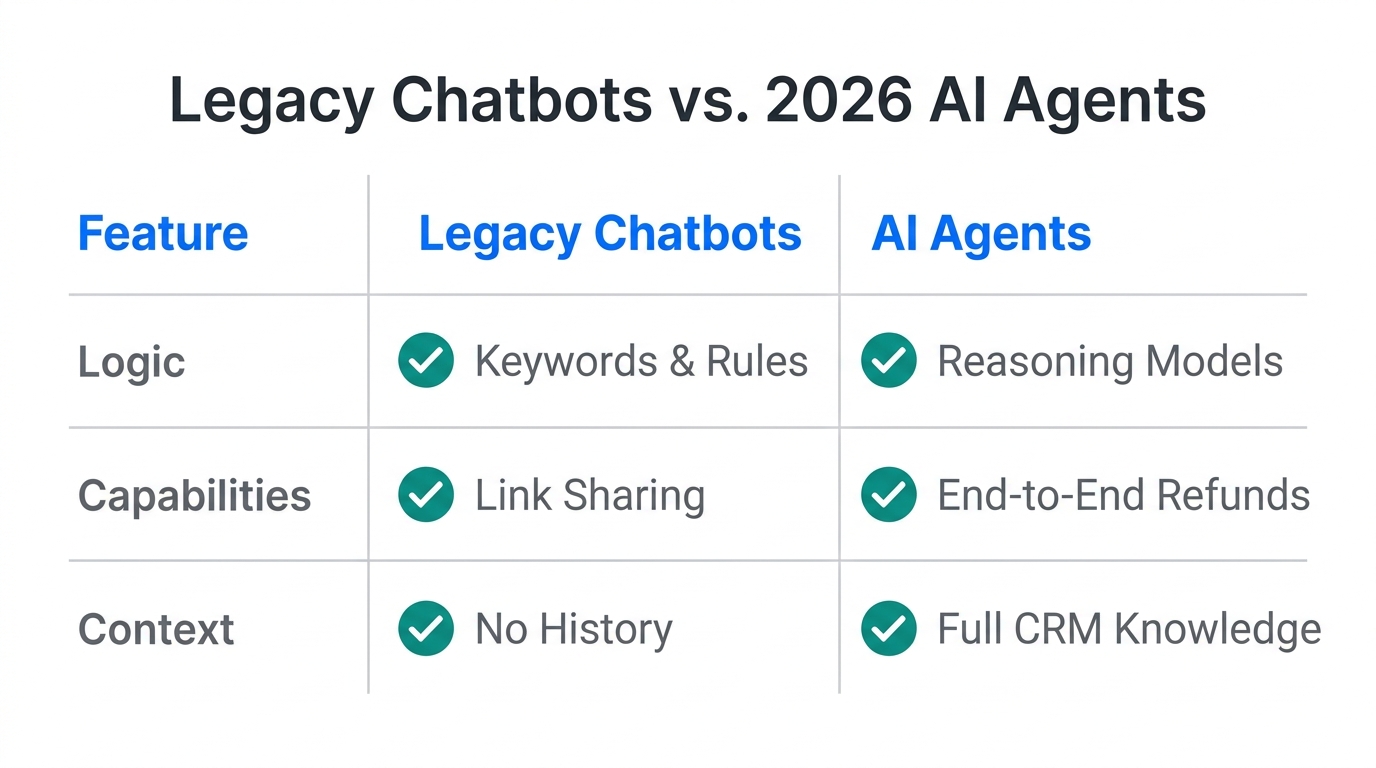
The biggest mistake Shopify store owners make is treating AI as a simple question-and-answer machine. In 2026, 80% of routine queries are expected to be resolved end-to-end without any human intervention, a massive jump from the simple deflection rates of 2024. This is the difference between "Agentic AI" and traditional chatbots. A traditional bot would tell a customer their package is delayed; an autonomous agent will see the delay, check the Shopify inventory for a replacement, and draft a reshipment order automatically.
"The trade-off in 2026 is no longer between human vs. bot, but between deflection (shooing customers away) and resolution (taking action)."
According to research from Lorikeet AI, the cost per resolution for an AI-native platform sits between $1.00 and $3.00, while an agent-assisted contact averages $13.50. This 10x efficiency gain isn't just about saving money—it's about meeting the modern customer's expectation for instant, zero-friction resolution. As Shopify's 2026 Commerce Trends Report notes, 67% of online retailers have already adopted some form of ecommerce AI to stay competitive.
Step-by-step Audit of Shopify Knowledge Bases for AI Training
AI is only as good as the data it consumes. The "Garbage In, Garbage Out" rule is the number one cause of AI failures in ecommerce. If your FAQ says you have a 30-day return policy but your internal policy changed to 14 days, your AI agent will confidently hallucinate the wrong answer, leading to brand damage.
Before turning on any automation, follow this 2026 audit playbook:
- Clean the Slop: Remove any outdated macros from Gorgias or Zendesk. If you haven't reviewed a help article in 6 months, assume it is wrong.
- Structure for Semantics: 2026 search behavior has moved toward semantic intent. Instead of just keywords, ensure your knowledge base answers natural language questions like "What if my dog chewed the box?" or "Do you ship to military bases?"
- Grounding in Real-Time Data: Use tools like eesel AI or Alhena AI that query your live catalog. This prevents the agent from recommending out-of-stock items or quoting old prices.
Once your knowledge is clean, an AI agent can monitor these documents and flag you if an incoming customer query contradicts your stored policies, acting as a quality-control teammate for your help desk.
Setting up 'Agentic' Workflows: WISMO and WISMR Automation
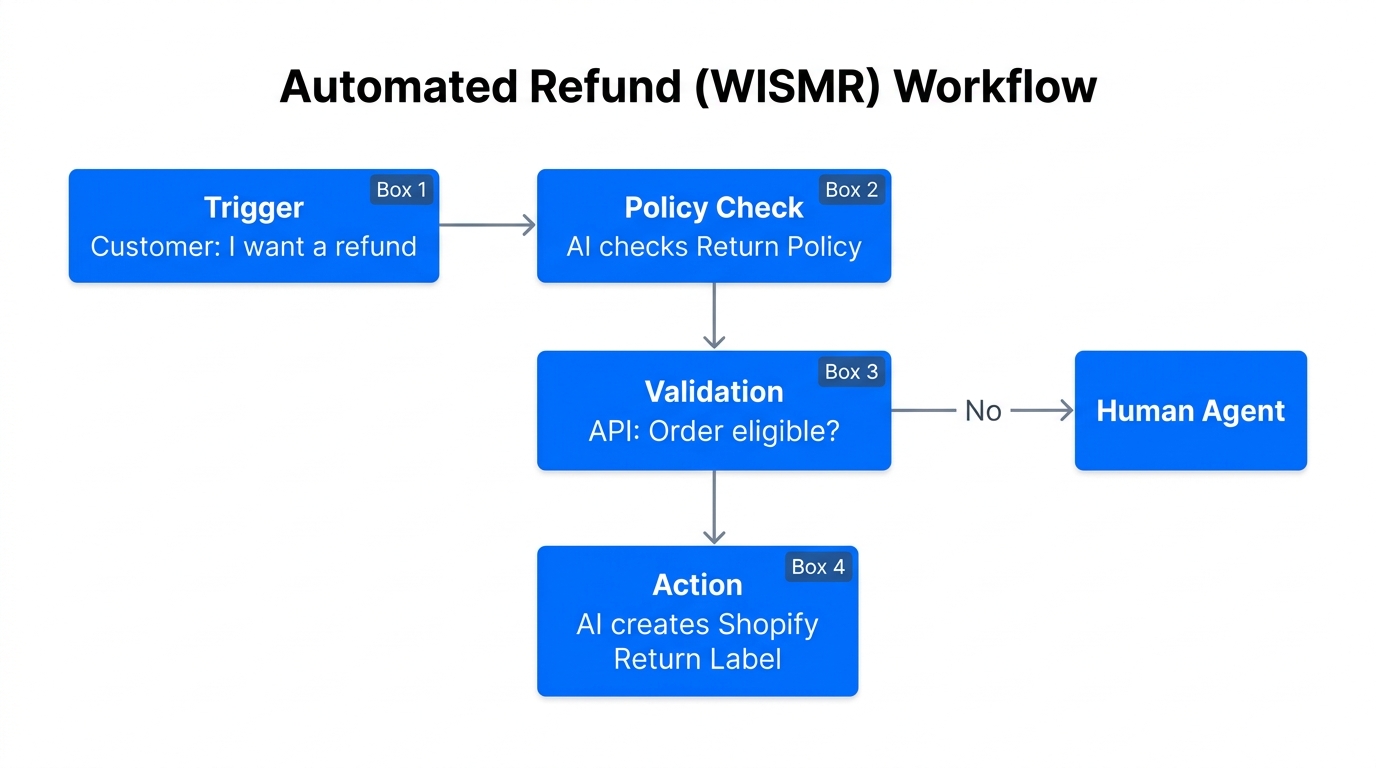
WISMO (Where Is My Order) and WISMR (Where Is My Refund) typically account for 40-60% of total ticket volume. Automating these two categories alone can liberate your support team from the drudgery of copy-pasting tracking numbers.
| Workflow | Traditional Method | Autonomous Agent (2026) |
|---|---|---|
| WISMO | Agent looks up order in Shopify, checks carrier, emails customer. | AI connects to AfterShip, checks real-time status, and sends updates. |
| WISMR | Agent confirms return receipt, manually triggers refund in Shopify. | AI verifies return delivery status via API and automatically issues refund. |
| Address Change | Agent manually edits Shopify order (if not shipped). | AI checks fulfillment status; if unfulfilled, edits Draft Order API instantly. |
To implement WISMR, your agent needs access to the Shopify Refunds API. In the 2026 stack, a tool like Tidio's Lyro or PandaChat can be configured to check if a return package has been scanned as "Received" by your warehouse. If the condition is met, the AI executes the refund. This moves response times from hours to seconds, which has been shown to increase customer satisfaction by 40% in fashion brands.
"Automation saves an average of 14 hours per week per support agent. That's time reclaimed for revenue-generating activities."
Integrating AI with Shopify Metafields and AfterShip for Real-Time Tracking
Generic AI doesn't know your products; integrated AI does. By connecting your support agent to Shopify Metafields, you can store specific instructions (e.g., "this item is fragile," "requires signature," or "contains batteries") that the AI can use to provide more accurate shipping estimates.
Integrating with AfterShip or PluginHive allows your AI to see what the customer sees—and more. It can identify if a package is stuck in customs and proactively reach out to the customer with an apology and a discount code for their next order. This predictive service prevents the ticket from ever being created in the first place.
For instance, Stormy AI can be set to wake up every morning, scan your tracking dashboards for any package that hasn't moved in 48 hours, and drop those specific order numbers into a support spreadsheet for your team to investigate before the customer even notices a delay.
Establishing Human-in-the-Loop Thresholds for Complex Billing Disputes
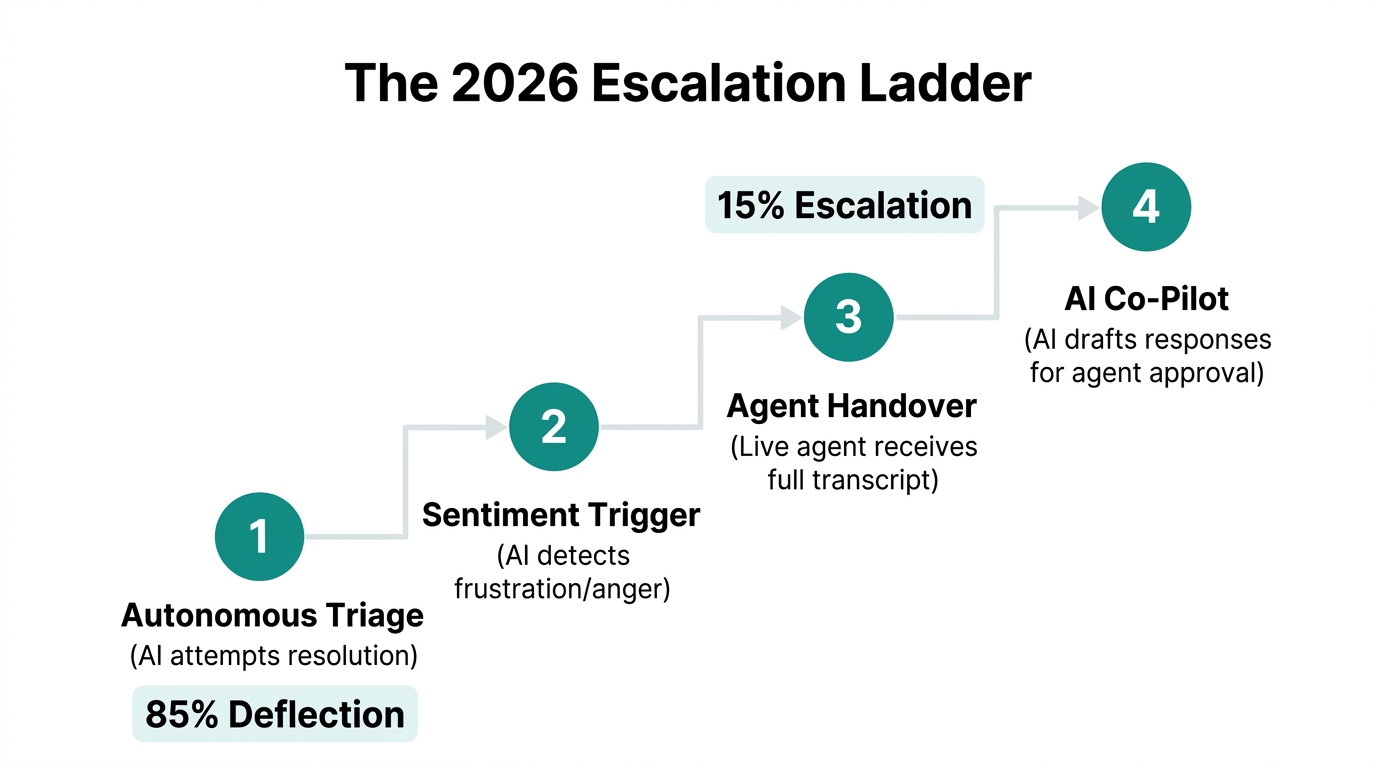
Total automation is a recipe for disaster. Customers still value human empathy for high-stakes issues. 60% of customers still fear reduced access to real people for emotionally charged problems like billing disputes or damaged heirloom items, according to CoSupport AI.
You must establish clear escalation thresholds. An autonomous agent should hand off to a human when:
- Negative Sentiment: The AI detects "angry" or "frustrated" keywords.
- High Order Value: Any dispute over a certain dollar amount (e.g., $500+).
- Legal/Safety Risks: Mention of skin reactions, manufacturing defects, or legal threats.
- Billing Complexity: Double charges or subscription cancellation failures.
When an escalation occurs, an AI agent can summarize the entire AI-to-customer transcript, find the relevant order details in Shopify, and present a clean "cheat sheet" to the human agent, reducing the time needed to resolve the complex case.
The 2026 Bottom Line: Efficiency and Sales Lift
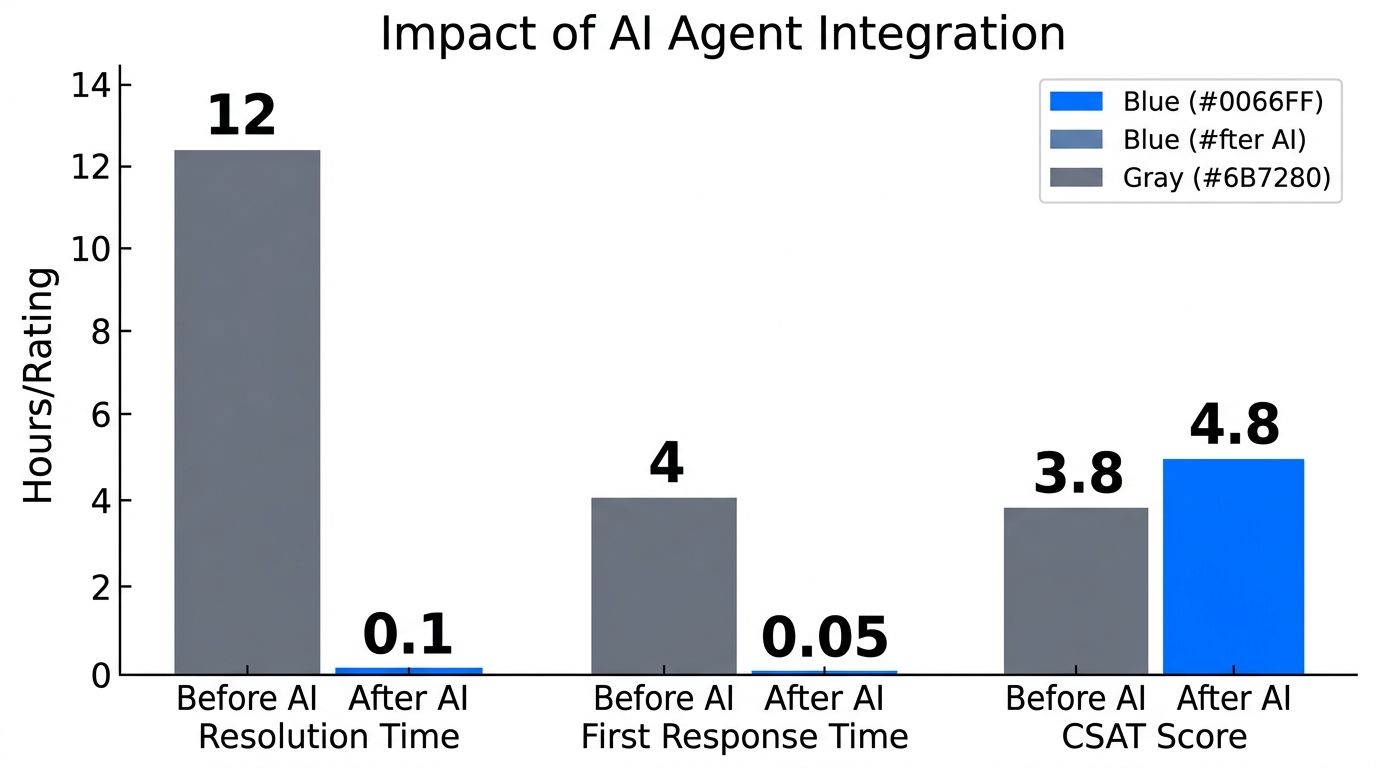
The results of moving to an autonomous support model are no longer theoretical. Retailers using AI-driven proactive engagement report a 67% increase in sales through better product discovery, as noted by Envive AI. Furthermore, high-performing AI agents are now resolving 87% of inquiries end-to-end, allowing stores to scale their revenue without scaling their headcount.
As you plan your 2026 resolution playbook, remember that the goal isn't just to "reduce tickets." The goal is to build a brand that is so responsive and efficient that support becomes a competitive advantage. By integrating Shopify APIs with autonomous agents like Stormy AI, you aren't just automating a help desk—you're hiring a 24/7 digital workforce that never sleeps, never gets tired, and never forgets a customer's order number.
Ready to start? Begin by auditing your help docs and choosing one high-volume category—like WISMO—to automate this week. Your customers (and your sleep schedule) will thank you.