Shopify Collective Tutorial 2026: How to Source Local Suppliers and Automate Back-Office Ops
Learn how to use Shopify Collective in 2026 to source US-based suppliers and use AI ecommerce employees like Stormy AI to automate your inventory and back office.
In 2012, a 19-year-old named Ben Francis was delivering pizzas for $7 an hour while trying to build a supplement startup in his parents' garage. He couldn't afford to buy inventory upfront, so he built a website, listed products he didn't own, and triggered other retailers to ship them whenever a sale came in. That humble beginning was the start of Gymshark, a brand now worth over a billion dollars. Ben didn't start with a warehouse; he started with a low-risk model that allowed him to test the market before committing. Fast forward to 2026, and the game has evolved. While the core concept of low-overhead retail remains powerful, the days of sourcing questionable products from overseas are over. Today, the most successful brands use Shopify Collective to partner with local, established brands, and they use AI teammates to handle the messy back-office logistics.
Why the Old Dropshipping Model Died (and What Replaced It)
Discover why relying on outdated dropshipping methods is no longer a viable strategy.
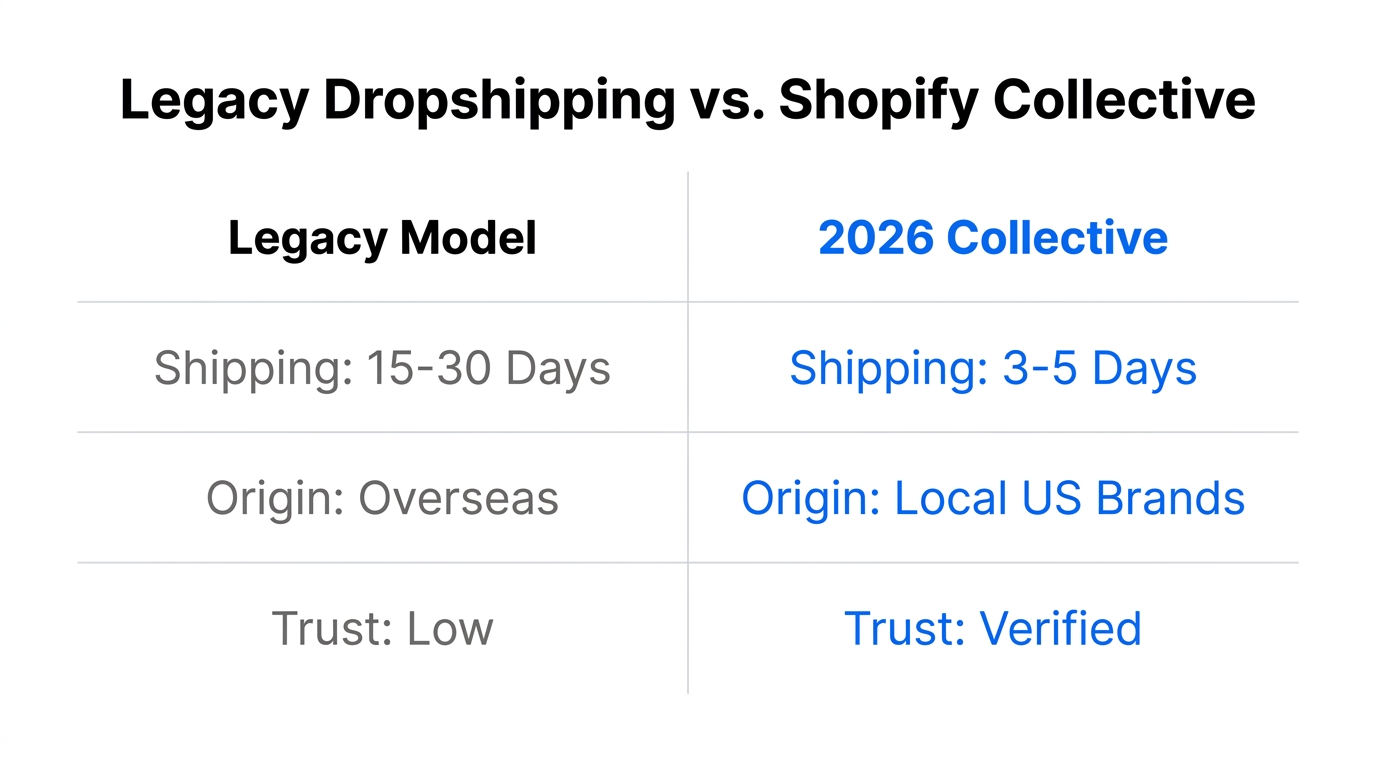
If you are still trying to run the 2018 AliExpress playbook in 2026, you've likely noticed it’s no longer working. Customers in 2026 have zero tolerance for six-week shipping windows, inconsistent quality, or products that look nothing like the listing. Many founders, including AC Hampton, learned this the hard way—losing tens of thousands of dollars to chargebacks and disputes before realizing that trust is the only currency that scales in modern ecommerce.
"The quality of what you put in front of people will make or break you before you ever spend a single dollar on ads."
The solution is Shopify Collective. This tool allows you to partner with real, US-based brands already on the Shopify ecosystem. You add their products to your store, they fulfill the order directly from their local warehouse, and you keep a 30-40% margin. It provides the same low-risk benefits of the old model but with the quality control and shipping speeds required to compete in 2026. However, managing these premium partnerships requires a level of operational discipline that manual spreadsheets can't handle. This is where an AI ecommerce employee like Stormy AI comes in, acting as your back-office manager to monitor these suppliers and ensure your store stays in sync.
Step 1: Navigating the Shopify Collective Interface
Learn how to navigate the platform to find and vet potential product listings.To get started, you must have an active Shopify plan and install the Collective app. Once inside, you’ll find a curated discovery area that recommends suppliers based on your niche. This isn't a random directory; these are established brands with proven track records. When browsing, you need to look for three specific data points on every listing:
- Rating: Higher ratings indicate better fulfillment reliability and product quality.
- Import Type: Look for "Instant Import" if you want to go live immediately.
- Profit Margin: Most Collective brands offer between 30% and 40%, but this can vary.
If you've identified a trending item on TikTok Shop or through creator outreach, use the search bar within Collective to see if the brand is available for partnership. This allows you to capitalize on trends using authentic, high-quality products rather than cheap knockoffs.
Step 2: Instant Import vs. Request Access Strategies
Deciphering the difference between instant product imports and those requiring manual supplier approval.Not all suppliers on Shopify Collective operate the same way. Understanding the two primary sourcing strategies is critical for building a stable catalog of US-based dropshipping suppliers 2026.
| Sourcing Method | Speed to Market | Barrier to Entry | Best For... |
|---|---|---|---|
| Instant Import | Minutes | None | Testing trends and rapid scaling. |
| Request Access | 2-5 Days | High | Exclusive partnerships and niche brands. |
For most new stores, the Instant Import route is the fastest way to get your first $10,000 month. You can select a product like "The Prohibition Soap" or fitness gear from 6:00 AM Run and have it live on your site in clicks. However, as you scale, you should move toward "Request Access" brands. These suppliers are more selective about who represents their brand, which means less competition for you and a more defensible market position.
"The gap between what you can find on Collective and what's available on generic platforms is your competitive edge."
Step 3: Calculating Your Cut: The 30-40% Margin Model
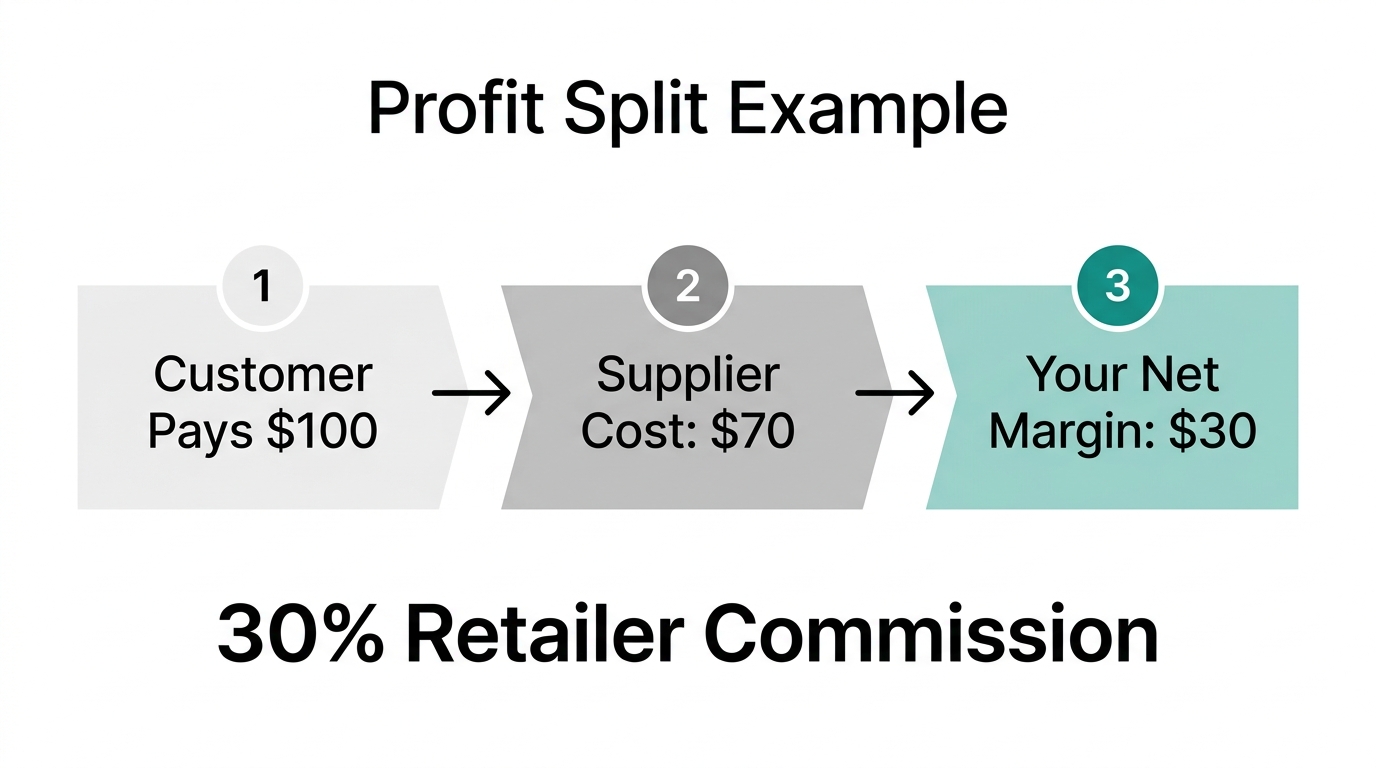
One of the biggest advantages of this Shopify Collective tutorial is the transparency in pricing. When you sell a product for $60, the transaction is automatically split. The supplier receives their cost and fulfillment fee, and you keep your 30-40% margin. For a $60 item at a 30% margin, you are pocketing roughly $18 per sale without ever touching a box or printing a label.
To reach a $10,000 monthly profit, you need to generate roughly 20 sales per day. This is highly achievable when you aren't fighting the uphill battle of 14-day shipping times. Because these suppliers are often local (for example, many are based in states like Delaware or California), your customers receive their orders in 3-5 days. This leads to higher repeat purchase rates and fewer customer support headaches.
Step 4: Automating the Back-Office with AI Employees
The challenge with Shopify Collective is that you are often dealing with multiple small-to-medium businesses rather than one giant warehouse. This creates a "messy back office" where you need to track inventory levels across dozens of different brands. If a brand in Delaware runs out of stock, but your Shopify store still says it's available, you're headed for a customer service nightmare.
Shopify Inventory Monitoring AI
This is where ecommerce back office automation becomes your superpower. You can ask Stormy AI to act as your inventory management manager. Stormy can connect to your Shopify and monitor the stock levels of your Collective suppliers in real-time. If a supplier's stock drops below a certain threshold, Stormy doesn't just send you a notification—it can automatically update your listing status or flag the risk in a shared workbook so you can pivot your ad spend.
Automated Supplier Follow-Ups
In 2026, speed is everything. If a supplier is late fulfilling an order, your reputation is on the line. Stormy AI can monitor your outbound orders. If an order hasn't been marked as shipped within 48 hours, Stormy can draft a polite follow-up email to the supplier's contact, asking for a status update. This ensures your partners stay accountable without you having to manually check every tracking number.
"You shouldn't be the person sending 'Where is the tracking number?' emails. Your AI employee should be doing that while you sleep."
Step 5: Setting Up Your First Automated Workflow
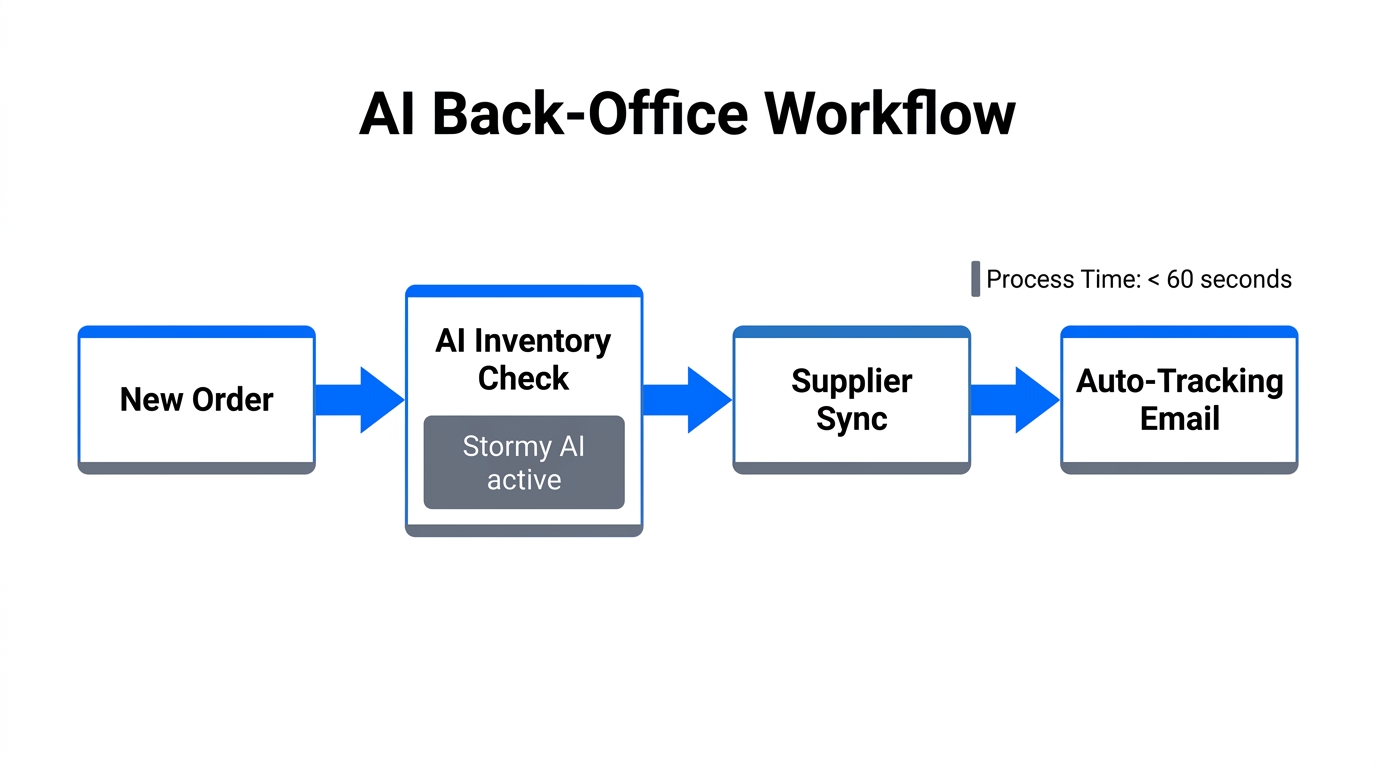
To achieve automated supplier management Shopify, follow this playbook to integrate your sourcing with your AI operations:
- Source: Import 3-5 products from Shopify Collective with 35%+ margins.
- Connect: Link your Shopify store to Stormy AI.
- Instruct: Give Stormy a simple natural-language prompt: "Every morning at 8 AM, check all Shopify Collective orders. If any are unfulfilled after 2 days, draft an email to the supplier and add the order ID to my 'Escalation' spreadsheet."
- Monitor: Let Stormy pull your campaign performance from Meta Ads Manager or Google Ads and compare it against your Collective margins to see your real-time ROAS.
By delegating the "boring parts" of the business—the inventory checks, the supplier pings, and the data entry—to an AI employee, you transition from a "operator" to a "founder." This is how people like those using Stripe Atlas to launch their ventures have managed to build financial freedom with Shopify. They didn't work harder; they built a smarter system.
The Future of Lean Ecommerce in 2026
The barrier to entry for ecommerce has never been lower, but the barrier to longevity has never been higher. Sourcing through Shopify Collective allows you to offer high-quality, local products that customers love, while using an AI ecommerce employee like Stormy AI ensures that your back office doesn't crumble as you scale. Shopify inventory monitoring AI and automated workflows are no longer optional—they are the standard for any brand aiming to hit $10,000 a month and beyond.
Don't get stuck in the 2018 mindset. Move your sourcing to Collective, hire an AI teammate to handle the logistics, and focus your energy on what actually moves the needle: finding your next winning product and connecting with your customers.