Scaling Local Service Businesses via Narrative Meta Ads in 2026
Discover the 2026 playbook for scaling local service growth by moving from Google Search to narrative Meta Ads using fear-and-solution frameworks and VSLs.
In the rapidly evolving digital landscape of 2026, the traditional playbook for local service providers—relying solely on high-intent search traffic—is hitting a ceiling. While platforms like Google Ads remain a cornerstone for capturing users actively looking for a solution, the most explosive scaling local service growth this year is happening elsewhere. Forward-thinking businesses are transitioning from capturing demand to creating it through narrative-driven social advertising, according to recent social media trend reports.
This shift requires a fundamental change in how we think about Meta Ads for local business. It is no longer enough to post a static image of your service and wait for the phone to ring. To break through the noise in 2026, you must master narrative ad creative that demonstrates both the visceral fear of a problem and the immediate relief of your solution.
The Google Search Ceiling: Scaling Until It Breaks
Understand why search ads plateau and when to start scaling into social platforms.
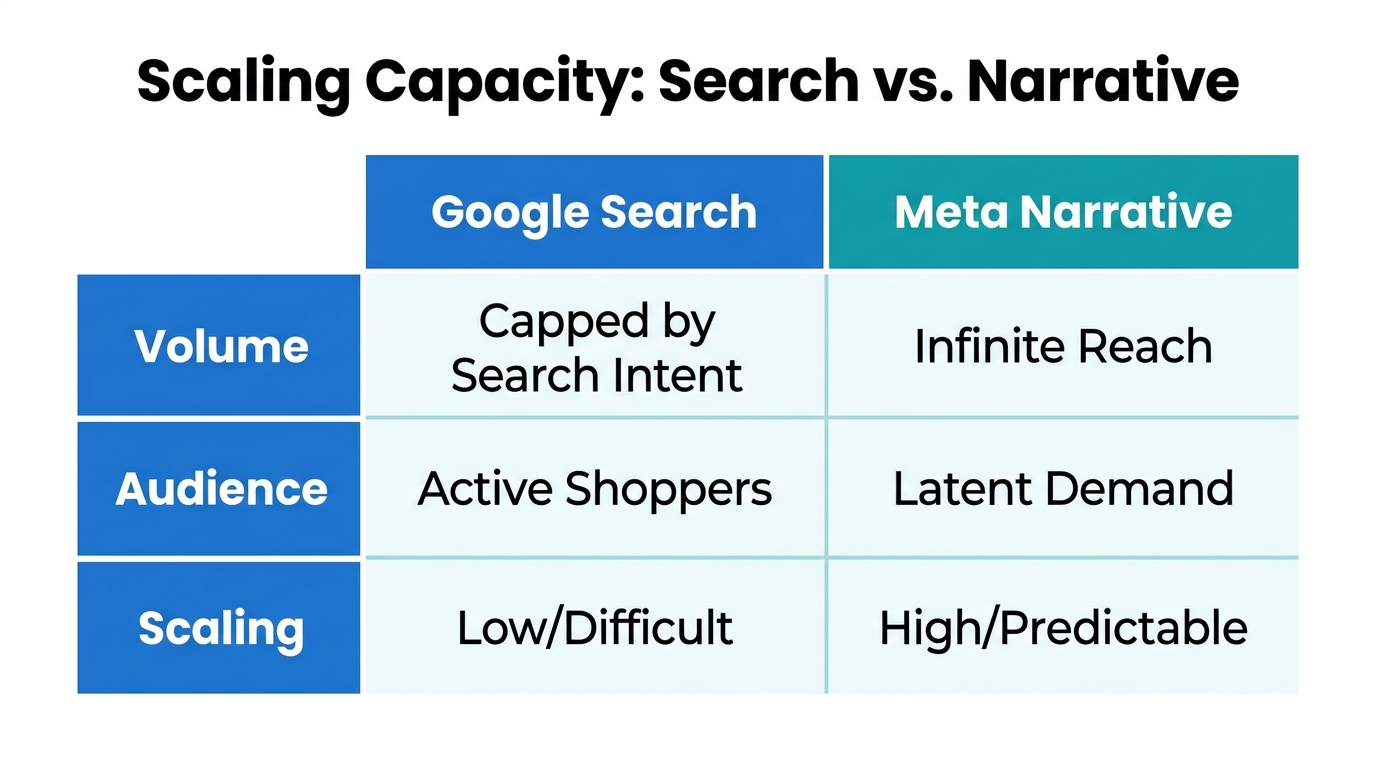
Before diversifying into social media, every local service business must first max out their high-intent channels. If you are currently spending $3,000 per month on Google Ads and seeing a 3:1 return on ad spend (ROAS), the first question isn't how to start on Meta—it's how to get to $10,000 or $20,000 on Google. As seen in recent case studies from the Hormozi Hotline, many businesses prematurely jump to new platforms before they have truly exhausted their current winning channel.
However, once you reach that ceiling where every additional dollar in search spend leads to diminishing returns, you face a new challenge: demand exhaustion. There are only so many people in a 20-mile radius searching for "security bollards" or "recruiting services" at any given moment. To scale further, you must reach the people who need your service but aren't actively searching for it yet. This is where Meta Ads Manager becomes your primary growth engine.
The Shift to Narrative Creative: Demonstration Over Declaration
Moving beyond search by leveraging narrative-driven Meta ads for local service growth.In 2026, the most effective narrative ad creative for local services mimics the raw, authentic feel of organic content. Gone are the days of highly polished, high-production commercials that feel like 'ads.' Instead, the winning formula is iPhone-shot demonstration. If you provide a tangible service—whether it's home security, landscaping, or HVAC—you have a visual product that can be demonstrated using tools like CapCut for quick mobile editing.
"Advertising works. It’s not that Meta Ads don't work; it’s that your creative is likely failing to bridge the emotional gap between the problem and the solution."
Consider the "Carjack Ad" model. Instead of a static photo of a security pole, show a 45-second narrative: A masked thief attempts to drive a car off a driveway, only to be stopped dead by a heavy-duty metal bollard. The thief runs off; the car is saved. This demonstration of the problem (fear of theft) and the solution (the bollard) creates instant urgency. You are not just selling a pole; you are selling the avoidance of a nightmare.
| Feature | Traditional Static Ads | 2026 Narrative Ads |
|---|---|---|
| Focus | Feature/Price | Problem/Demonstration |
| Production | Professional/Stock | Raw/iPhone/Authentic |
| Psychology | Passive Interest | Urgency/Fear-and-Solution |
| Platform | Facebook Feed | Reels/Stories/TikTok |
Implementing the 'Fear and Solution' Framework
How to use fear-based hooks to stop the scroll and offer immediate solutions.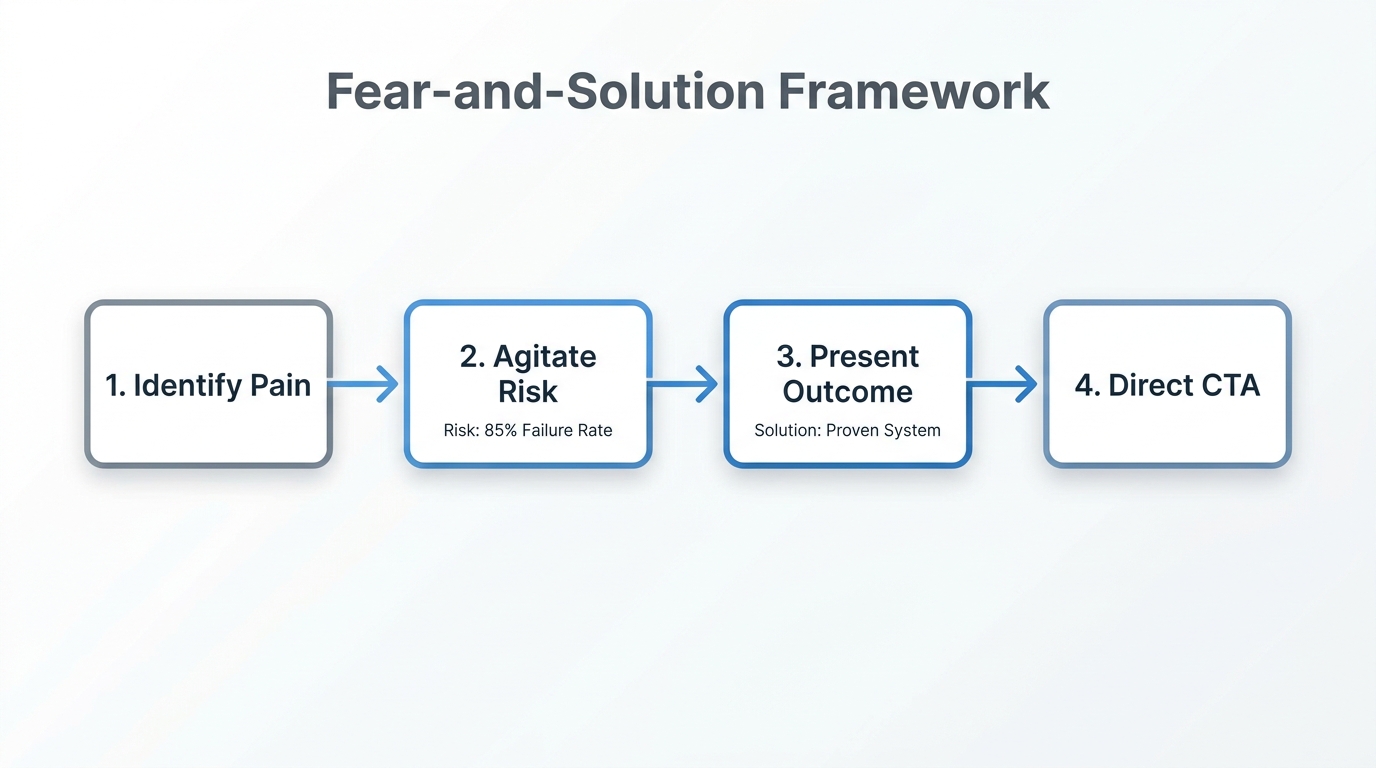
To master customer acquisition strategy 2026, your short-form video content must follow a specific psychological arc. This is especially true for local services where trust is the primary barrier to entry. Your video should be under 60 seconds and follow this sequence:
- The Hook (0-5s): Visual proof of the pain point. Use a local statistic or a visceral image of what happens when your service is missing.
- The Narrative (5-30s): A quick demonstration. Show the 'before' and 'after' or the 'thwarted attempt' (in the case of security).
- The Plan (30-45s): Explain how simple it is to get started. "Send us a photo, we give you a quote, we install in 24 hours."
- The Call to Action (45-60s): A clear directive to DM or click for an assessment.
For businesses struggling to find the right faces or voices for these demonstrations, using UGC (User-Generated Content) is a powerful shortcut. Platforms like Stormy AI enable local businesses to quickly find and vet creators who can film these narrative demonstrations in an authentic way, ensuring the content resonates with a local audience on TikTok Ads Manager and Meta.
"The key to scaling is not just getting more views, but getting the right views to take an action through a narrative they can't ignore."
The 'Microwave' Strategy: Heating Up Cold Traffic
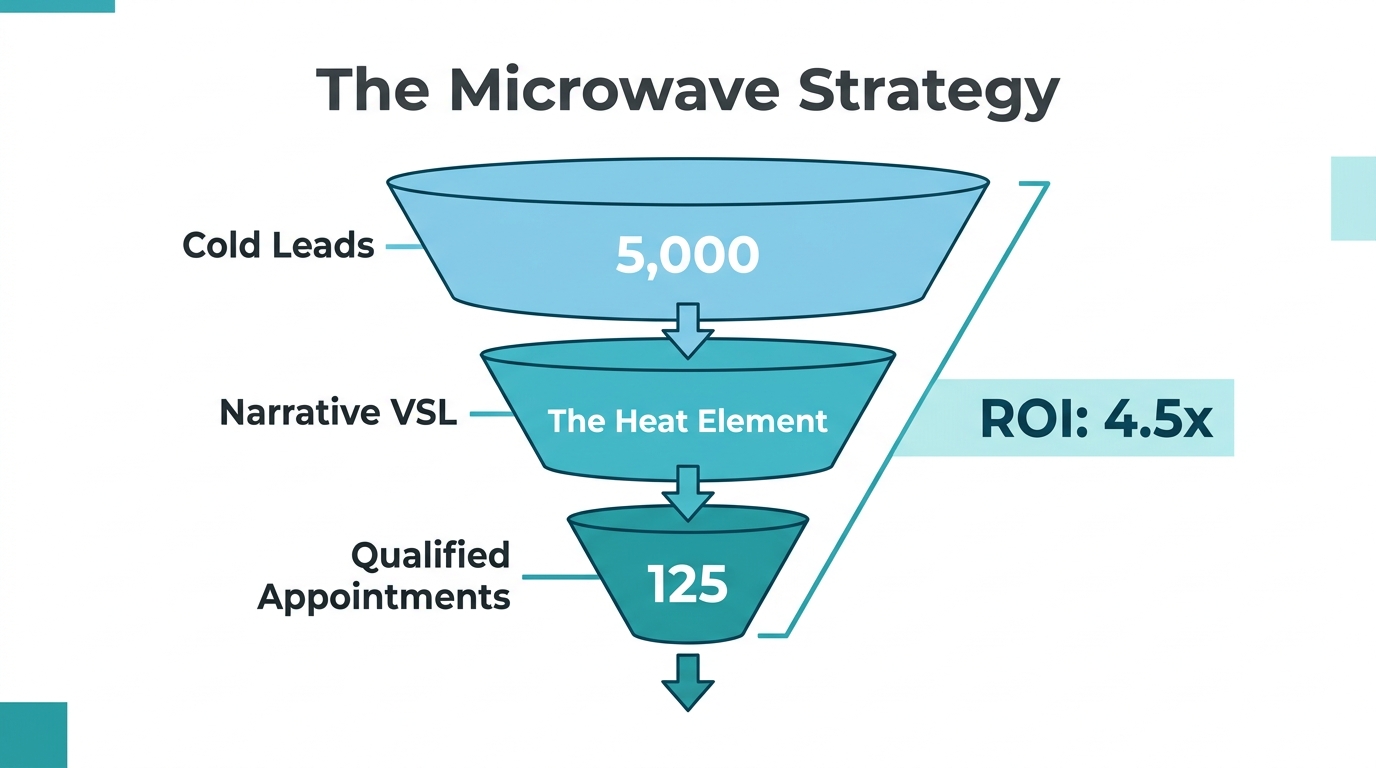
One of the biggest issues local businesses face when moving from Google to Meta is the conversion gap. Referral leads might close at 98%, but cold traffic from a Facebook Reel might only close at 20%. This is because cold traffic hasn't been "pre-sold" by a friend or a high-intent search query. You need a microwave—something to heat them up fast.
This is where a 7-minute VSL (Video Sales Letter) or a high-value PDF comes into play. When a lead clicks your ad, they shouldn't just be dropped onto a generic contact form. Instead, guide them through a short sequence that covers:
- A promise of what they will learn or gain.
- The three biggest objections they likely have (broken down as FAQs).
- Social proof and evidence of your success.
- A clear next step: The 'Deposit-on-Phone' process.
Reducing No-Shows: The Deposit-on-Phone Process
The strategy of using a small deposit to ensure high-quality lead commitment.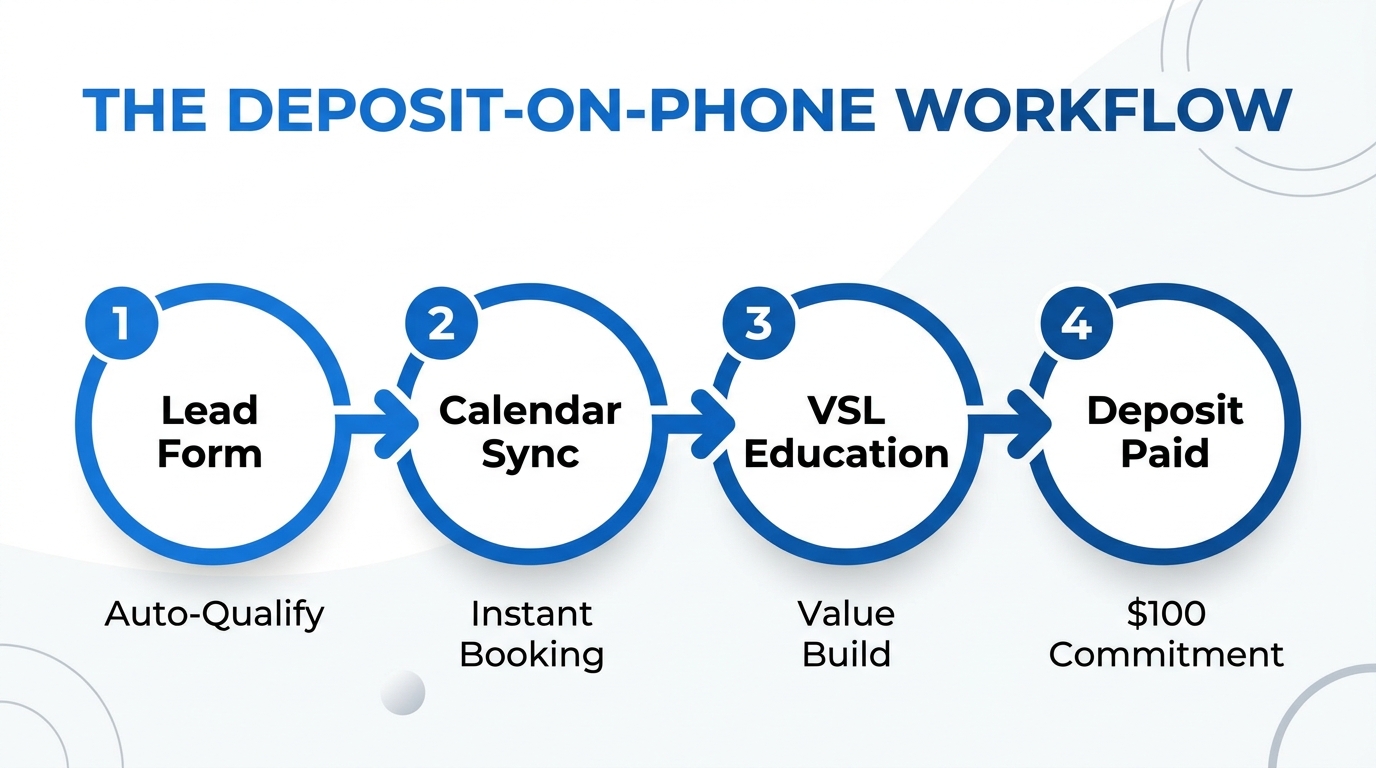
High lead volume is useless if it results in a calendar full of no-shows. In 2026, the gold standard for scaling local service growth is the deposit-on-phone sales process. Instead of offering free site visits—which often lead to wasted time and low commitment—move to a virtual assessment model.
Have the customer send photos of the job site via text or WhatsApp. Perform the quote over the phone and ask for a commitment deposit (e.g., $100 or 50% of the ticket) right then and there. Frame the deposit as a commitment to the schedule rather than a fee. If you're using Stripe or another payment processor, you can easily take this over the phone to lock in the job.
If you find that your margins are healthy (around 50%) but you’re still feeling the friction of "paused roles" or "no-shows," remember the advice from the Hormozi Hotline: Reframe your business model's quirks as features, not bugs. If your contingency model is driving you crazy, use the leverage of your high demand (generated by your narrative Meta ads) to dictate better terms, like penalty fees for wasted time or upfront retainers.
Conclusion: Building the 2026 Growth Engine
Scaling a local service business in 2026 requires more than just technical SEO and basic search ads. It requires becoming a narrative-driven marketer who can interrupt a user’s scroll and present a solution they didn't even know they were looking for. By maxing out your Google spend, transitioning to narrative-driven demonstration ads on Meta, and implementing a 'microwave' VSL process, you can break through the local ceiling.
Ready to find the creators who can help you build these high-converting narrative ads? Use Stormy AI to discover and outreach to the influencers and UGC creators who will turn your local service into a viral, high-demand brand. Stop waiting for the search volume to find you—go out and create it.