Scaling Influencer GTM: Why Enterprise Brands Are Switching Between Upfluence and Grin in 2026
Discover why enterprise brands are evolving their 2026 influencer GTM strategy by shifting between Upfluence and Grin, while layering in Stormy AI for automated scale.
In 2026, the influencer marketing landscape has officially transcended the 'experimentation' phase. With the global market valued at a staggering $32.55 billion and projected to hit $40.51 billion by year-end, according to Mordor Intelligence, the stakes for enterprise Go-To-Market (GTM) strategies have never been higher. Large-scale brands are no longer just looking for a database of names; they are seeking a sophisticated infrastructure that balances creator discovery, relationship management, and high-velocity outreach. This pursuit has led to a strategic reshuffling in the enterprise tech stack, specifically a movement between legacy giants like Upfluence and Grin, and the rising dominance of autonomous layers like Stormy AI.
The Evolution of Influencer GTM in 2026
The core challenge for 2026 isn't just finding influencers—it's managing the sheer scale of collaboration. As 86% of US marketers integrate influencer marketing into their core mix, as reported by Sprout Social, the bottleneck has shifted from 'who' to 'how.' Enterprise brands are navigating a transition from a "database-first" model to an "AI-agent-first" model, where efficiency in recruitment is the primary competitive advantage.
The Upfluence Strategy: Leveraging 'Live Capture' for Affiliate Scale
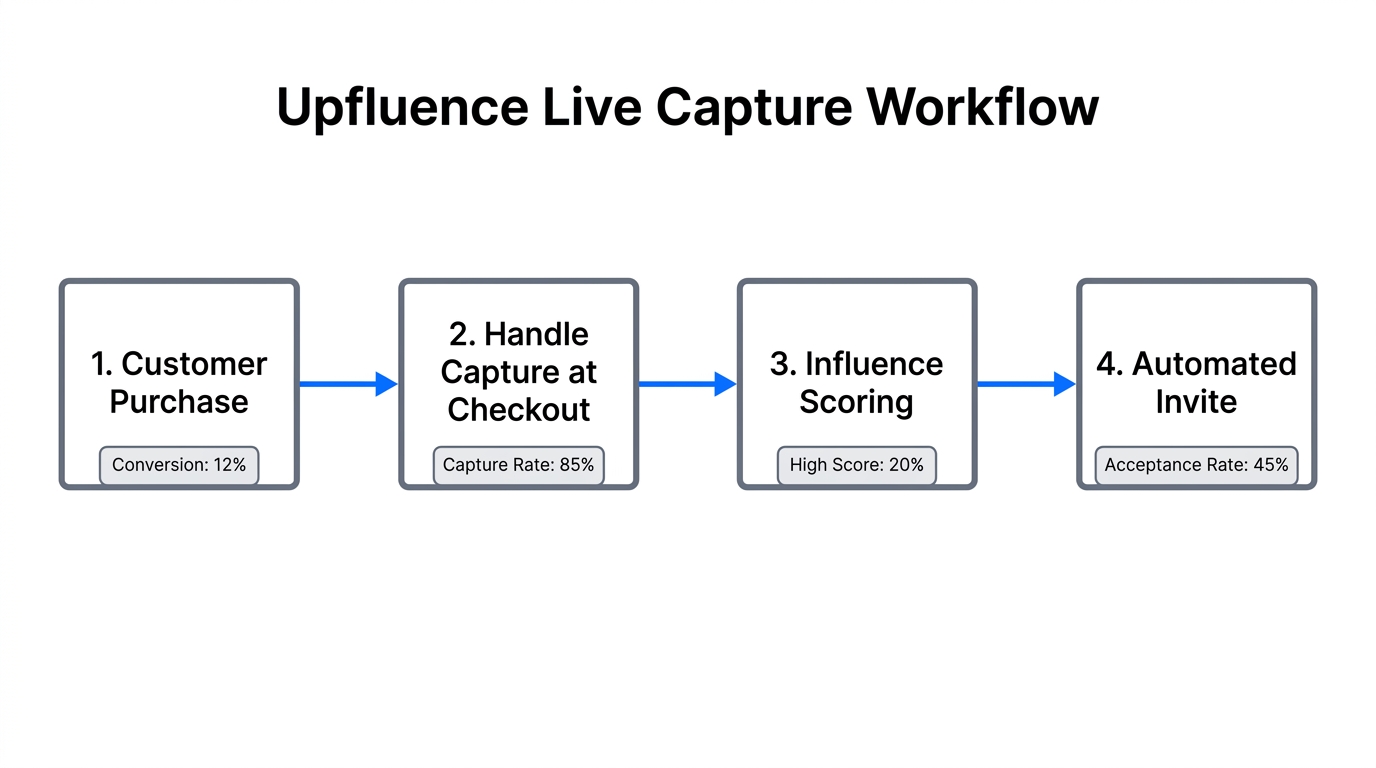
For many years, Upfluence has held the crown for discovery-heavy workflows. Their 2026 strategy leans heavily into their 'Live Capture' tool. This feature allows enterprise brands to automatically scan their own customer base to identify buyers with significant social influence, effectively turning customers into brand ambassadors overnight. In an era where 61% of brands prioritize micro-influencers over celebrities, recruiting your own fans is a massive shortcut to authenticity.
However, while Upfluence’s modular pricing (starting at $478/mo for mid-market) makes it accessible, enterprise users often find the audience analysis to be basic compared to high-fidelity vetting tools. Brands often start with Upfluence to build their initial 'customer-as-creator' pipeline before migrating to more robust CRM systems as their roster grows past 500+ active partners.
"The days of vague brand awareness are over. CMOs in 2026 must demonstrate that influencer marketing yields tangible results comparable to search or social ads."
Why Enterprise Brands are Scaling Influencer Programs with Grin
As programs mature, the demand for relationship-focused CRMs often leads brands to Grin. Grin has positioned itself as the "Performance CRM" for the Shopify and DTC elite. Their latest 2026 updates focus on Predictive ROI modeling, allowing marketing teams to forecast ROAS before a single contract is signed. This is critical for enterprise budget allocation, where every dollar must be defended to the CFO.
Despite its power, Grin faces significant friction in 2026. Users on platforms like Capterra and Reddit have criticized the platform for its 12-month lock-in contracts, which often exceed $25,000 per year. Furthermore, the loss of certain first-party Instagram data search features has left a gap that brands are now filling with more agile AI solutions.
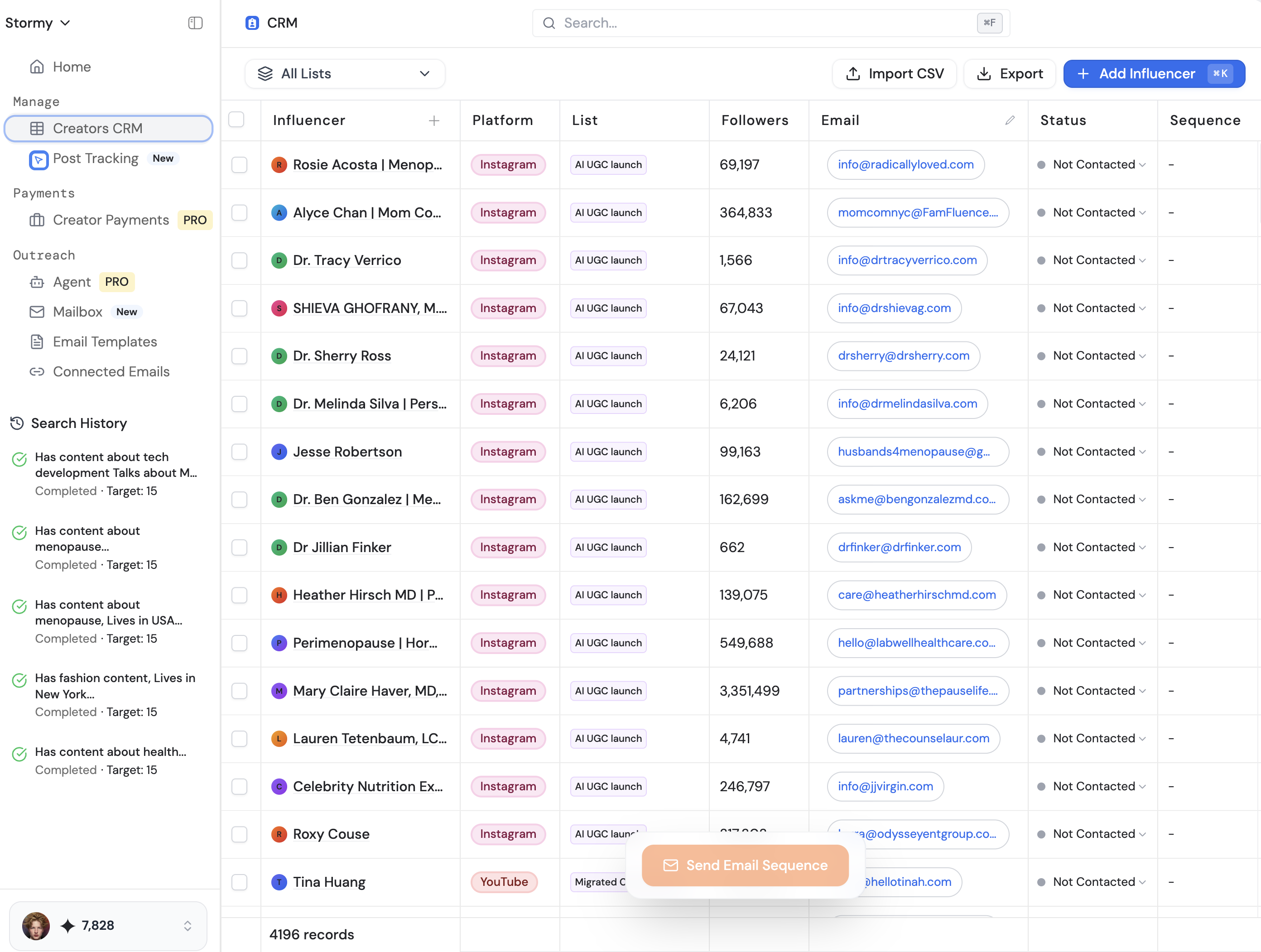
The Stormy AI Layer: Automating the High-Volume Funnel
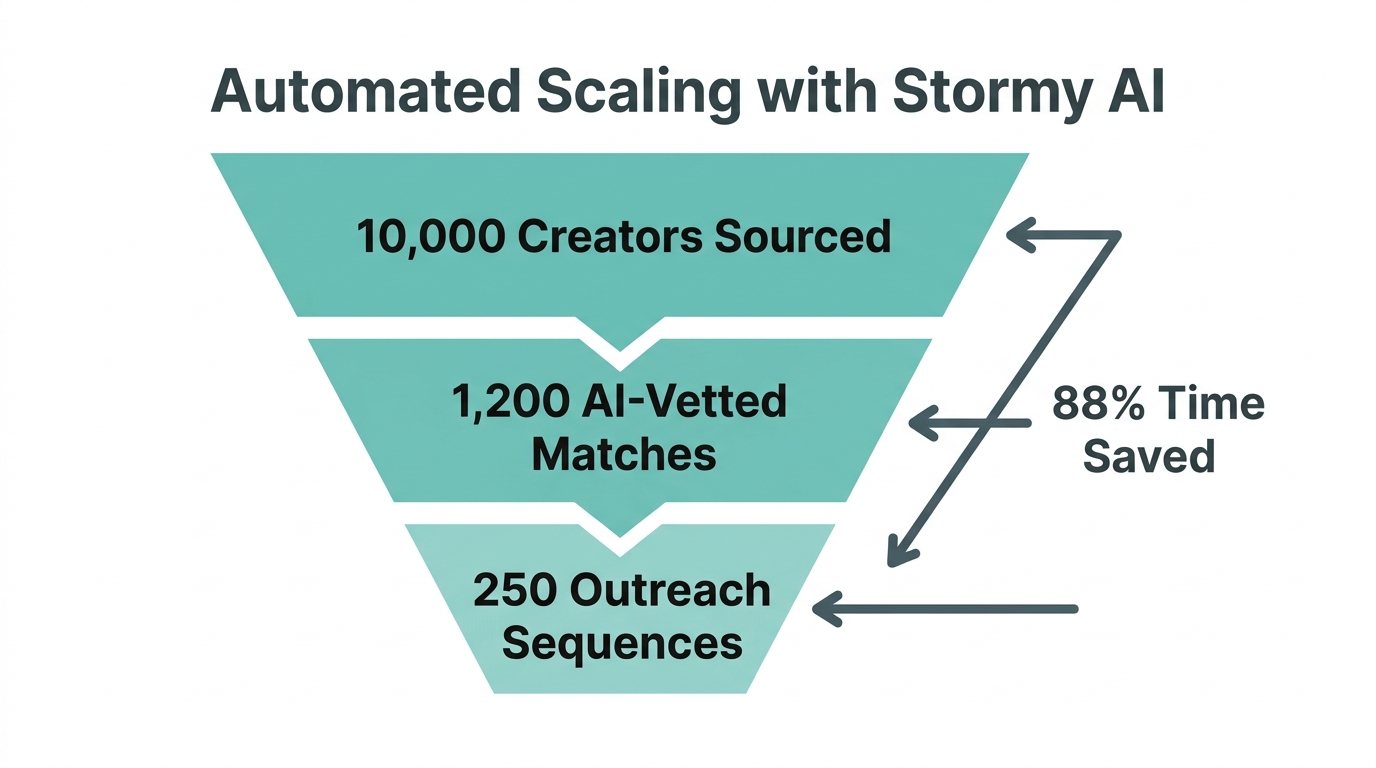
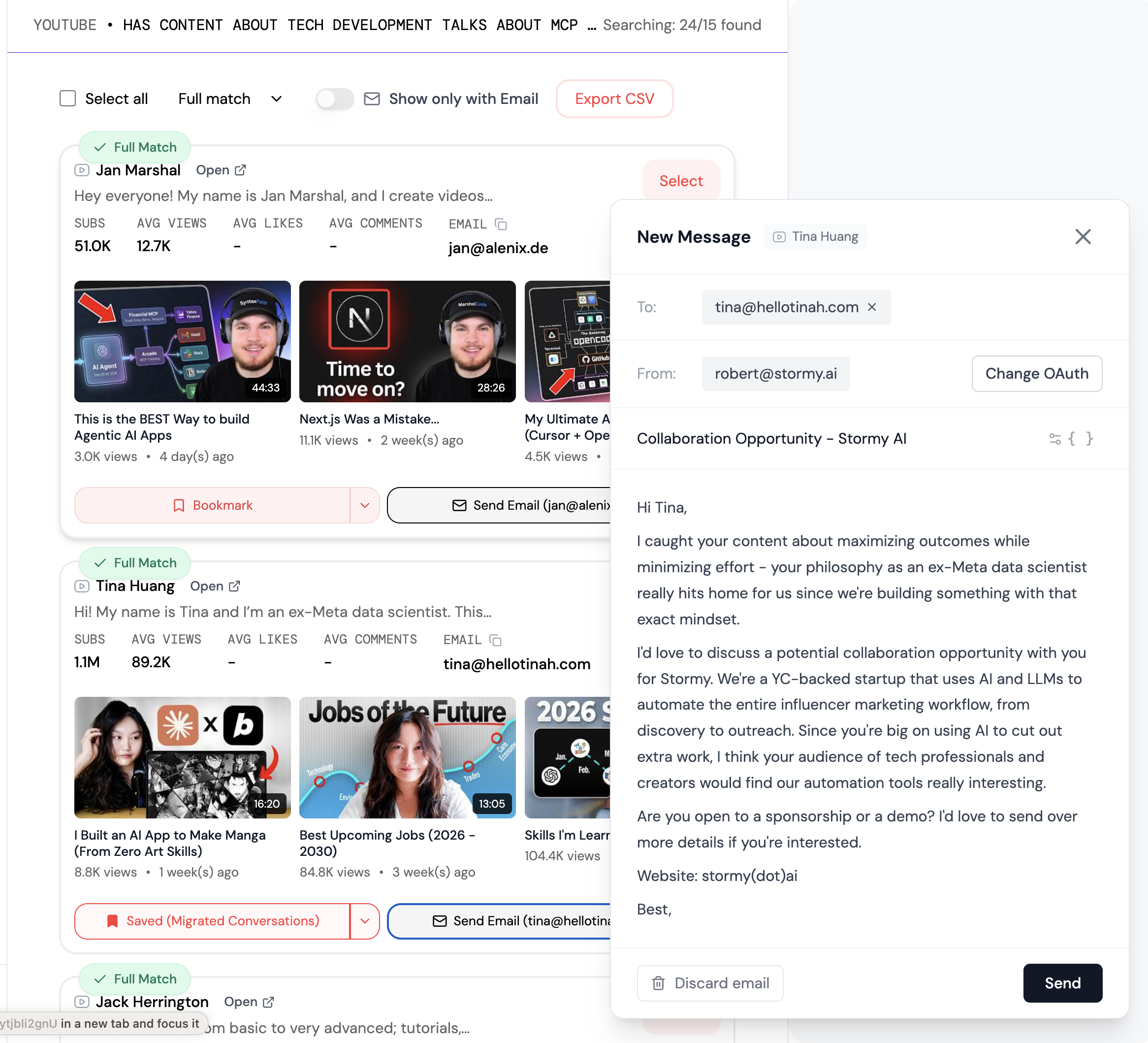
The missing piece in the Grin vs Upfluence for enterprise debate is recruitment velocity. Even with a great CRM, manual back-and-forth communication remains the #1 resource drain for brands managing 1,000+ creators. This is where Stormy AI has disrupted the market. Unlike legacy tools that simply provide a list, Stormy AI functions as an autonomous AI recruitment agent.
Using the "Mantis" update, Stormy AI can manage negotiation threads across multiple channels simultaneously. While your team sleeps, the AI discovers creators, vets them for engagement fraud, and secures rates that are often 20-30% lower than manual negotiations by utilizing historical market data. For enterprise brands, this is the difference between a team of five managers and a single director overseeing an AI-driven engine.

Enterprise Data Transparency: Modash, Hyperr, and Grin
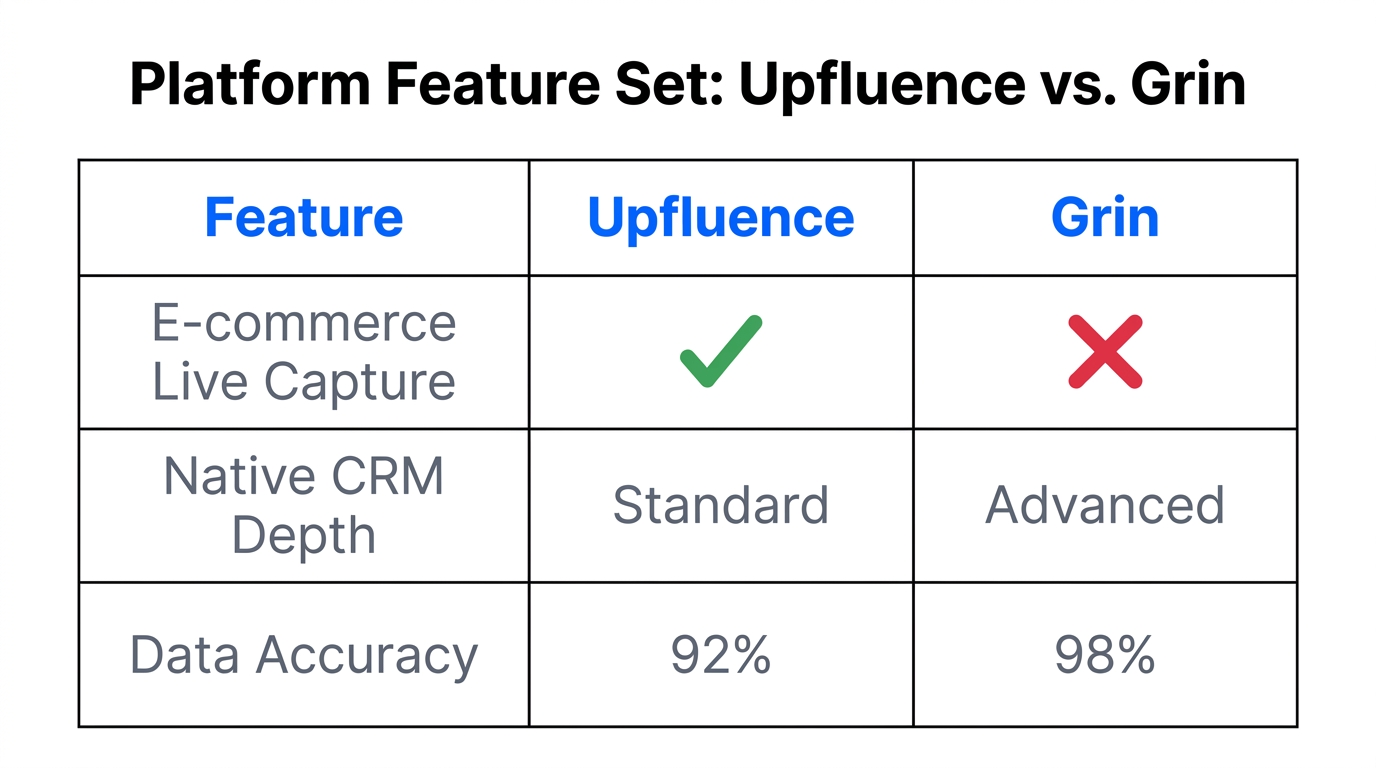
Data transparency is the battleground of 2026. For brands requiring massive volume, Modash offers a database of 350M+ profiles, making it a favorite for manual vetting teams. However, for teams that require verified, first-party data, Hyperr has emerged as a strong alternative. When comparing these to the 2026 influencer GTM strategy, the choice often comes down to the "depth vs. speed" trade-off.
| Feature | Grin | Upfluence | Stormy AI |
|---|---|---|---|
| Primary Focus | DTC/Shopify CRM | Discovery & Affiliates | Autonomous AI Agency |
| Recruitment | Manual/Collaborative | Customer-led (Live Capture) | Fully Automated AI Agent |
| Negotiation | Manual Workflow | Email Templates | Autonomous (Mantis Engine) |
| 2026 Pricing | $25k+ Annual | Modular ($478+/mo) | $40 - $100/mo (Credit-based) |
Solving the 2026 Attribution Crisis with Layered Amplification
The number one technical challenge in 2026 remains attribution. As 56% of marketers struggle to prove ROI, according to the HubSpot State of Marketing Report, leading brands are moving away from "last-click" models. The winning strategy this year is Creator-Led Paid Ads. This involves identifying high-performing organic content and boosting it through Meta Ads Manager or TikTok Ads Manager. By layering paid amplification on top of organic creator trust, brands are seeing up to 5x ROAS improvements.
To track this effectively at scale, enterprise teams use the Stormy AI post tracking section to monitor real-time engagement and identify which creator assets are prime for ad spend. This integration of organic and paid is the hallmark of a sophisticated influencer GTM strategy 2026.
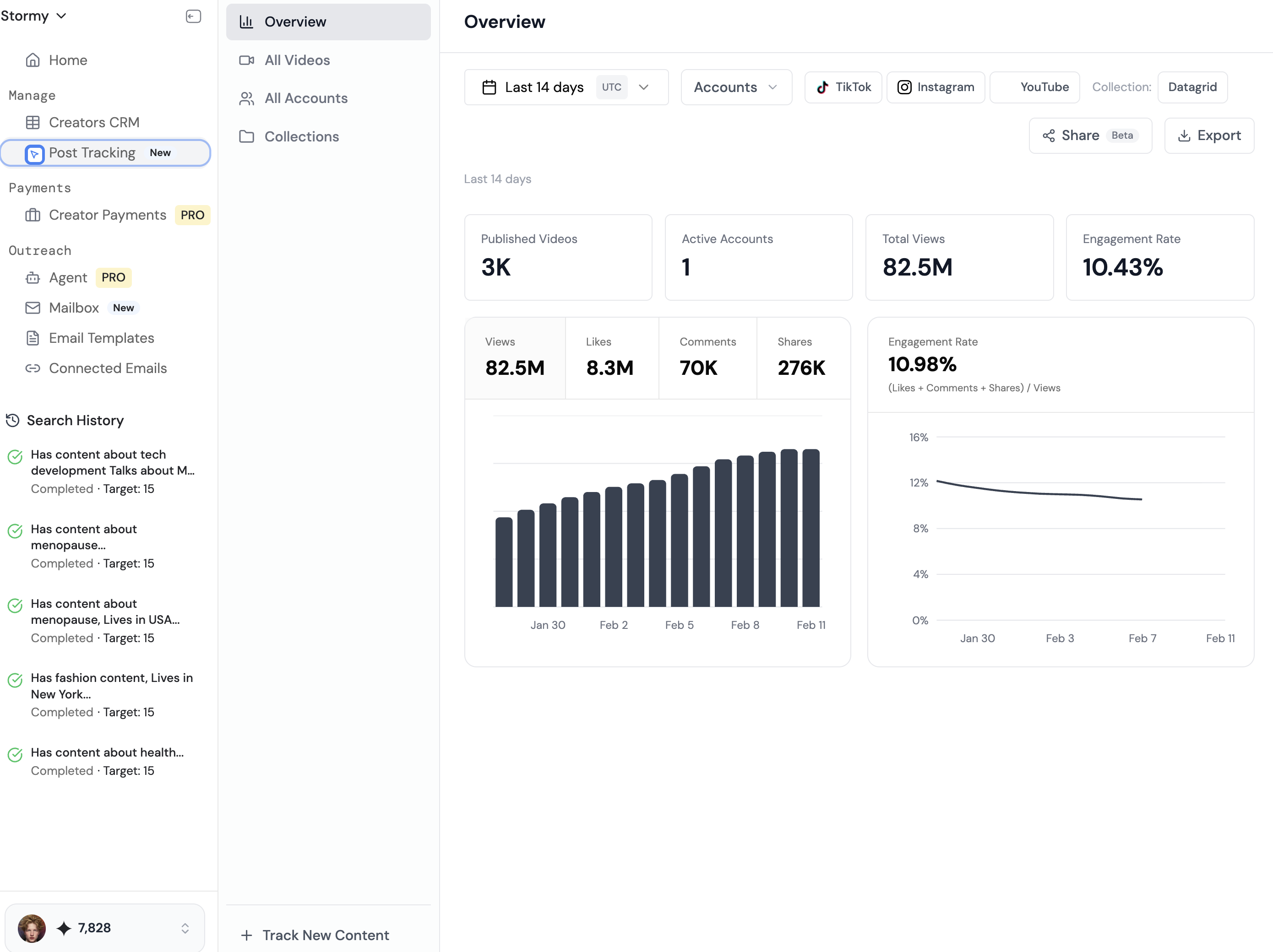
"Stormy AI doesn’t just find creators; it recruits them. It’s the difference between buying a list and hiring an entire recruiting department that never sleeps."
The 2026 Enterprise Playbook: Step-by-Step
Step 1: Activate Your Customers
Use Upfluence to identify existing customers with high social authority and invite them into a low-friction affiliate program.Step 2: Automate High-Volume Outreach
Connect your Shopify inventory to Stormy AI. Let the AI agent find, vet, and negotiate with 500+ new micro-influencers per month to build a massive content engine.Step 3: Forecast and Manage with Grin
Once creators reach a certain revenue threshold, move them into Grin to manage long-term contracts and utilize predictive ROI modeling for quarterly planning.Step 4: Amplify Top Performers
Use tools like Archive.com to capture content automatically, then run creator-whitelisted ads on the top 10% of posts to drive scale.
Conclusion: The Hybrid Future of Influencer Marketing
In 2026, the choice isn't just Grin vs Upfluence for enterprise; it's about how you layer these technologies to eliminate manual bottlenecks. While Upfluence excels at discovery and Grin provides the CRM backbone for elite relationships, Stormy AI provides the essential automation layer that allows lean teams to function like massive agencies. By combining these tools, enterprise brands can finally stop chasing 'awareness' and start building a high-performance creator ecosystem that drives predictable, scalable revenue.