In 2026, the barrier to entry for launching a Direct-to-Consumer (D2C) brand has never been lower, yet the barrier to profitability has never been higher. As customer acquisition costs (CAC) continue to fluctuate on platforms like Meta Ads Manager and TikTok Ads Manager, the margin for error has evaporated. You can no longer afford to launch a product based on a "hunch." To scale e-commerce revenue today, you must act like a market analyst, reverse engineering the success of your competitors before you even finalize your first production run.
The New Era of Market Intelligence: Moving Beyond Public Records
 20:56
20:56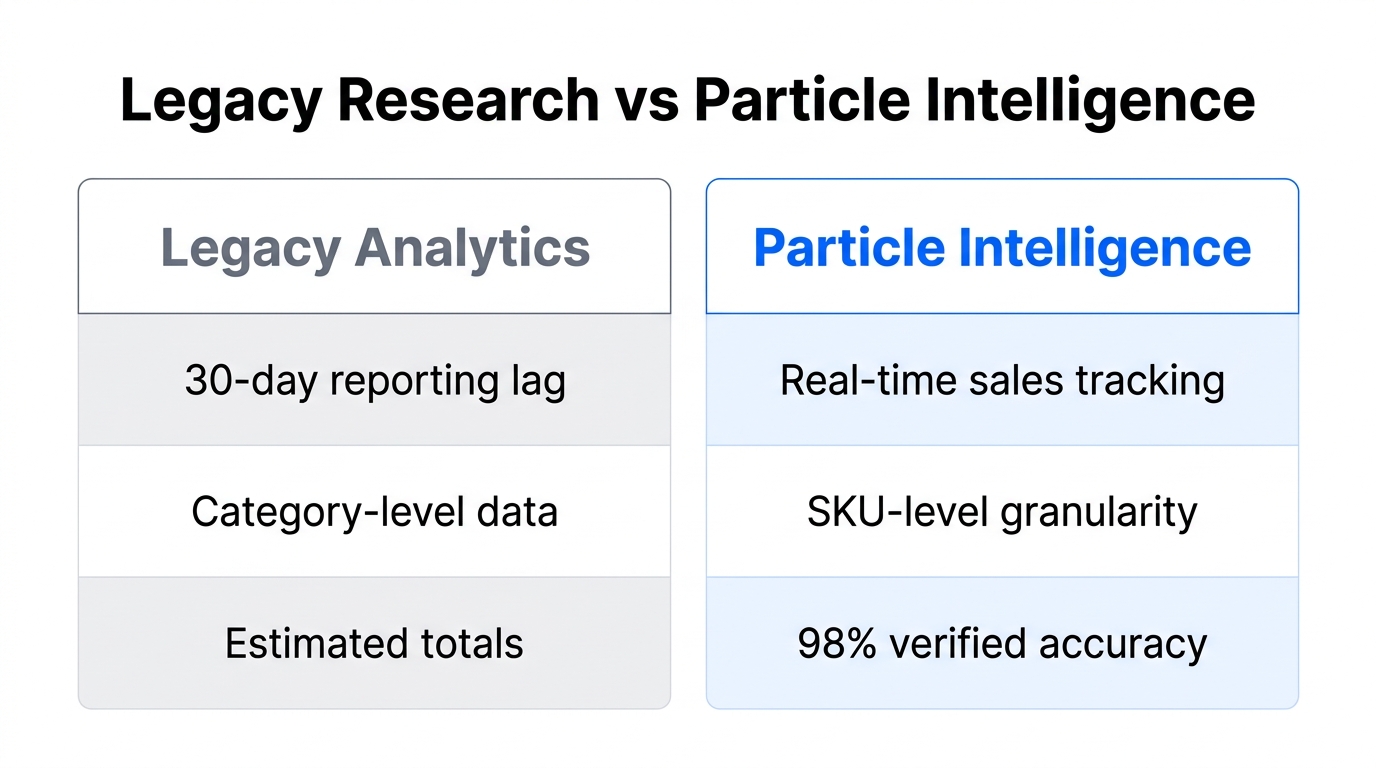
Historically, understanding a competitor's health required waiting for quarterly earnings reports or making educated guesses based on social media engagement. That changed with the rise of Particle e-commerce analytics. For private brands that don't disclose financial records, Particle provides a window into their actual sales volume over time.
By typing a brand URL into Particle, growth marketers can see not just aggregate revenue, but a breakdown of sales by category and individual SKU. This level of e-commerce market intelligence allows you to see the exact moment a competitor's new product launch gains traction—or when a once-dominant incumbent begins to fade. As brand expert Ashwin Ramasamy notes, the goal is to evaluate opportunities so you don't build something only to realize there is zero market demand.
The SKU Concentration Playbook: The 80/20 Rule in Action
15:40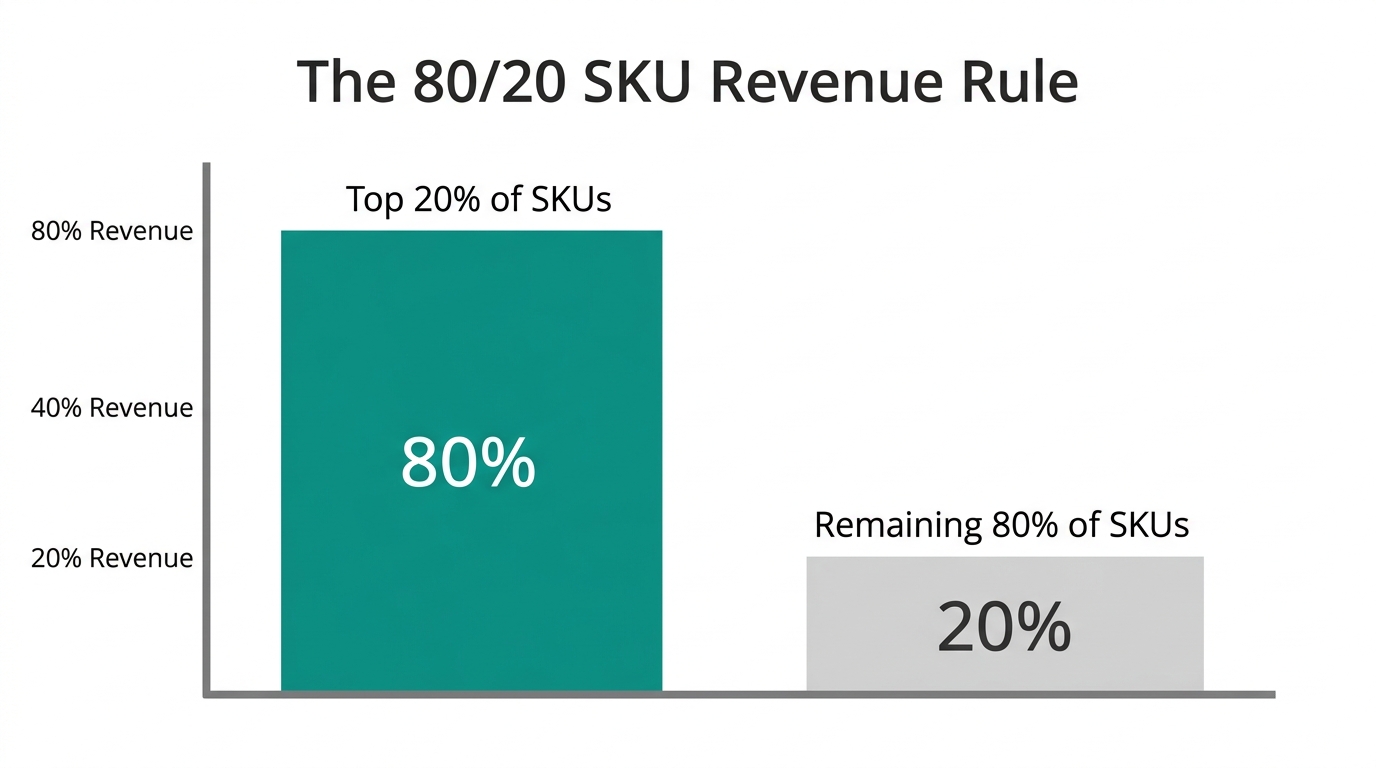
One of the most common mistakes new e-commerce founders make is "innovation for innovation's sake." They believe that to compete with a giant like Vital Proteins or Liquid IV, they need to offer twenty different flavors or variations. The data from competitor sales tracking tells a different story.
When you analyze top-performing brands on Particle, a recurring pattern emerges: 90% of a company's revenue often comes from their top four SKUs. In the supplement world, this usually means chocolate and vanilla; in the electrolyte space, it's often lemon-lime and berry. By identifying these high-velocity product profiles, you can simplify your supply chain and focus your marketing dollars on the variations that consumers actually want to buy.
"Don't launch a crazy concoction flavor as your first move. Look at the biggest players—if they are all selling chocolate and vanilla, you should probably just make a better chocolate and vanilla."
| Strategy Component | The "Blind Launch" Approach | The "Particle-Informed" Playbook |
|---|---|---|
| SKU Count | 12-15 variations at launch | 3-4 core high-velocity SKUs |
| Inventory Risk | High (dead stock in niche flavors) | Low (backed by competitor sales data) |
| Marketing Focus | Diluted across the entire catalog | Hyper-targeted on proven winners |
| Supply Chain | Complex and expensive | Lean and optimized |
Cross-Channel Validation: Syncing Particle, TikTok Shop, and Amazon
While Particle e-commerce analytics gives you the D2C perspective, a truly robust SKU optimization strategy requires cross-channel validation. In 2026, consumer behavior is fragmented across TikTok Shop, Amazon, and brand websites. To get the full picture, you must triangulate these data points.
For instance, a product might be trending on TikTok Shop due to a specific influencer's viral video, while Amazon sales data might show a steady, 100K+ monthly purchase rate for the same category. If you see a product category like magnesium glycinate exploding on Amazon—indicated by the "100K+ bought in last month" badge—and then confirm high daily sales on Particle, you've found a high-probability winner.
Tools like Ahrefs can further validate this by showing search volume trends. If "magnesium for sleep" is seeing a rising seasonal trend in June and July, and the keyword difficulty is manageable, you have a clear SEO and product roadmap. This data-driven D2C growth tactic is how modern brands like Moon Juice and Lemme dominate their respective niches.
Drilling Into 'Flavor Trends' and Consumer Taste
16:11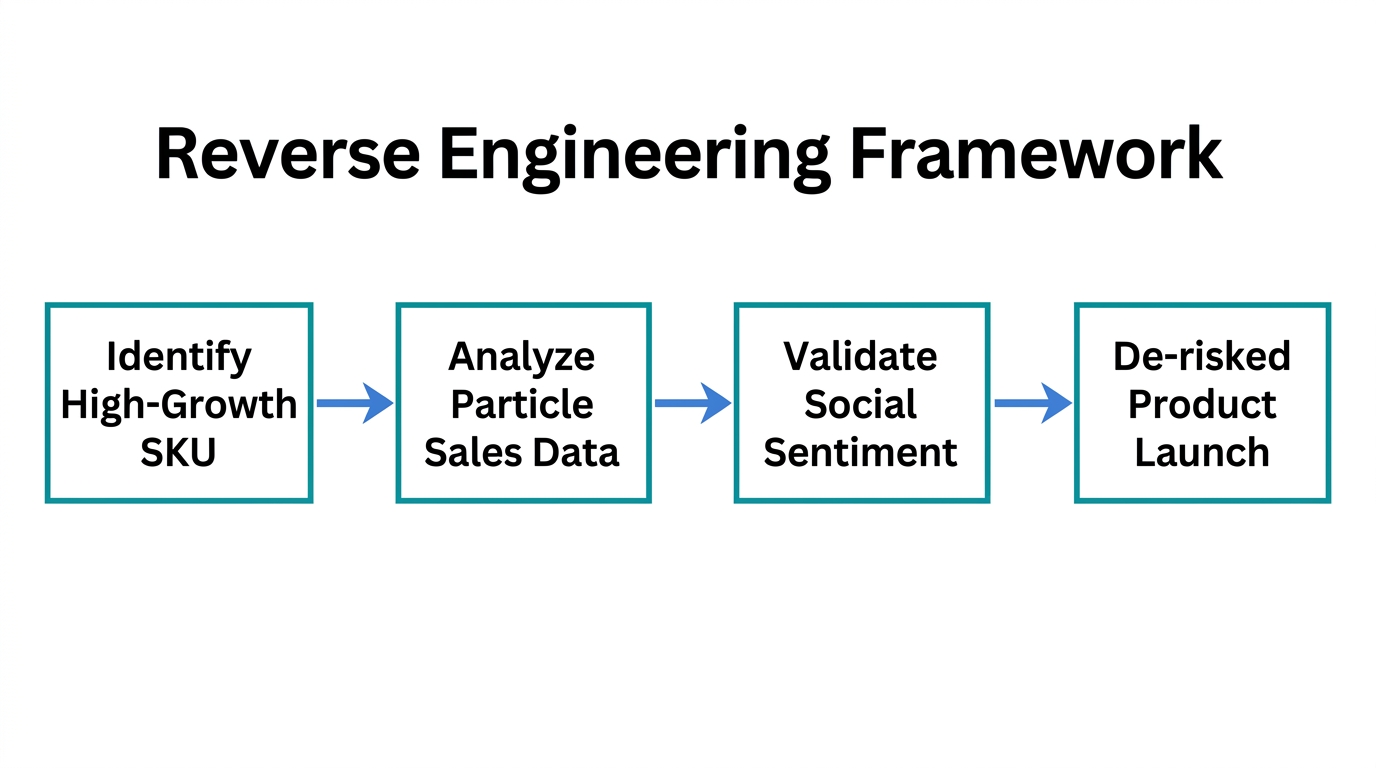
In 2026, "taste" has become the ultimate moat. However, taste isn't just about the flavor profile—it's about the visual and psychological positioning of the product. By auditing competitors, you can see if a category is suffering from "Millennial Blanding" (minimalist, white bottles) or if it's moving toward the vibrant, high-saturation aesthetic favored by Gen Z.
Analyze the content quality scoring of successful brands. Are they winning because of a Huberman Lab-style clinical endorsement, or because of a "lifestyle" play like Courtney Kardashian’s Lemme? If you notice that older demographics are being ignored in a category—such as pimple patches for adults over 65—there is an opportunity to use high-end branding to capture an underserved market with high disposable income.
"First-time founders focus on product; second-time founders focus on distribution and the data that drives it."
From Data to Execution: The Role of AI in Creator Discovery
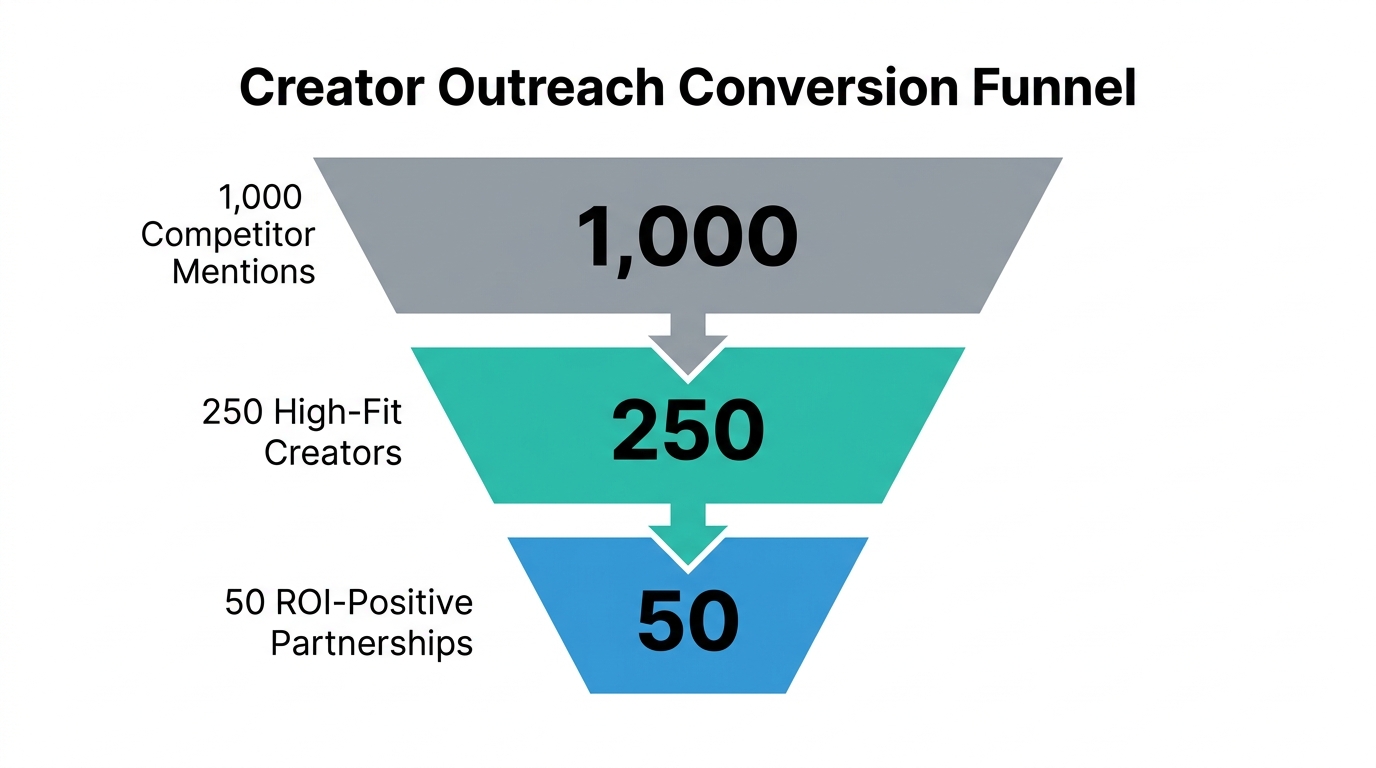
Once you have used e-commerce market intelligence to identify your winning SKUs and target demographic, the next step is distribution. In 2026, this means influencer-led growth. Finding the right creators to represent your new "Particle-validated" product is where most brands stall.
This is where platforms like Stormy AI become essential. Once you know your target audience (e.g., "Gen Z women interested in magnesium"), you can use Stormy's AI search engine to find creators who already have the trust of that demographic. Instead of manually vetting profiles, you can paste a creator's URL into Stormy to detect fake followers and analyze audience quality instantly.
By pairing the market intelligence from Particle with the automated outreach of Stormy AI, you create an autonomous growth engine. You identify the 20% of SKUs that drive the market, and then use AI agents to contact hundreds of relevant creators to seed those products at scale.
Conclusion: Building a Data-Backed D2C Powerhouse
The days of launching a brand on a whim are over. Scaling e-commerce revenue in 2026 requires a surgical approach to data. By using Particle e-commerce analytics to reverse engineer competitor sales, applying the SKU concentration playbook to minimize risk, and validating your findings across TikTok and Amazon, you position yourself for long-term success.
Remember, the goal is not to be the most innovative company in the world—it is to be the most informed. Use competitor sales tracking to find where the money is already flowing, and then use tools like Stormy AI to capture that demand through hyper-personalized influencer outreach. Success in 2026 isn't about working harder; it's about using e-commerce market intelligence to work smarter.