Scaling E-commerce AOV with Shopify Magic and Rebuy Engine: The 2026 Personalization Guide
Learn how to use Shopify Magic and Rebuy Engine in 2026 to increase average order value (AOV) through AI-driven personalization and automated post-purchase flows.
In the competitive e-commerce landscape of 2026, the standard "order confirmation" email has undergone a radical transformation. No longer just a digital receipt, it has become the most valuable real estate in the customer journey. Brands that treat the post-checkout phase as a passive logistical step are leaving millions on the table. Today, leading retailers are leveraging predictive behavioral modeling to move from reactive templates to proactive revenue engines. According to recent benchmarks from Top Growth Marketing, automated post-purchase flows are generating up to 30x more revenue per recipient than traditional one-off campaigns. The secret lies in the synergy between Shopify Magic and Rebuy Engine, two powerhouses that use AI-driven product recommendations to drive immediate increases in Average Order Value (AOV).
The Economics of AOV: Why Post-Purchase Personalization is Non-Negotiable
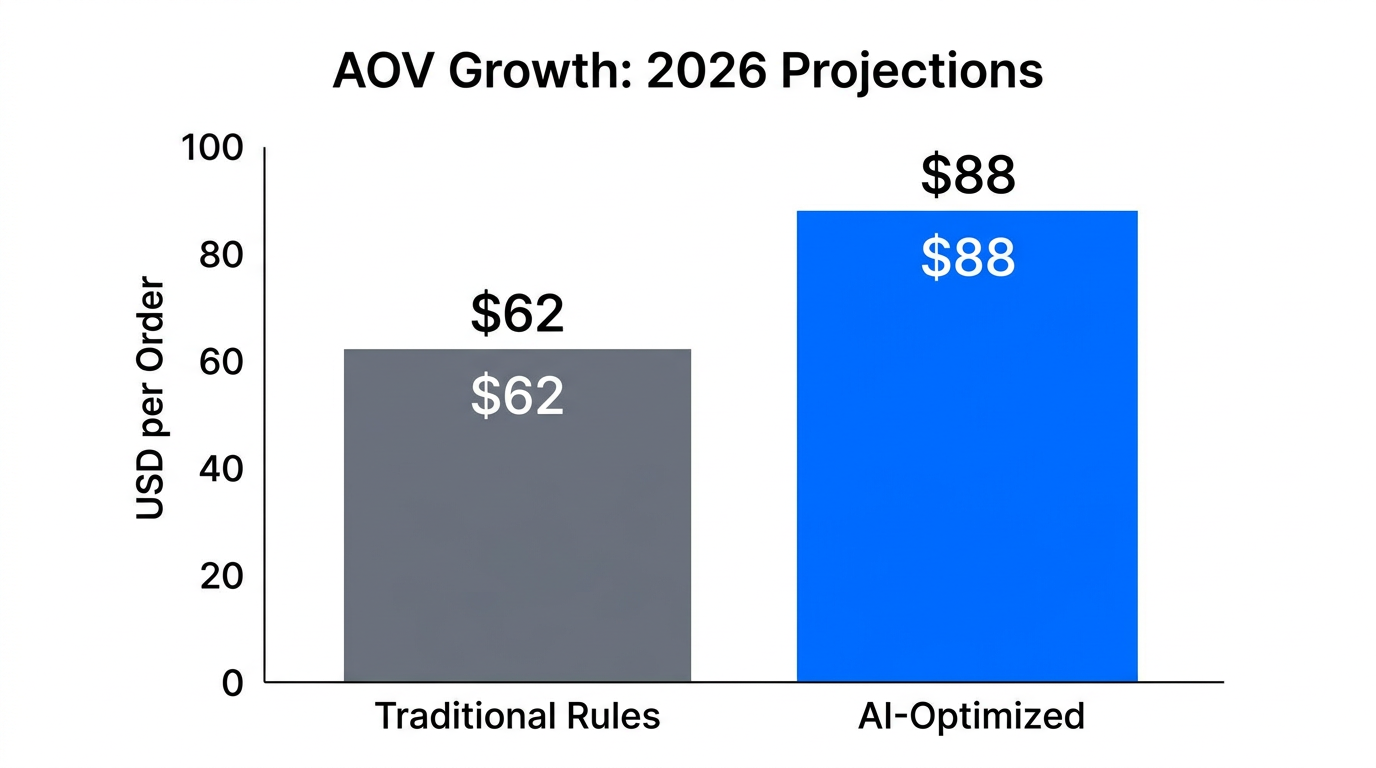
As we navigate 2026, the cost of customer acquisition (CAC) continues to climb, making retention the ultimate lever for profitability. AI-driven email flows now achieve 332% higher click rates and 52% higher open rates compared to static, non-personalized messages. The math is simple: it is significantly cheaper to upsell an existing buyer within seconds of their first transaction than it is to hunt for a new one.
By mid-2026, nearly 90% of digital-first e-commerce teams have embedded AI directly into their marketing workflows. This isn't just about efficiency; it's about relevance. When a customer sees a recommendation that feels tailor-made for their specific purchase, the psychological barrier to "adding one more thing" vanishes. This is where tools like Shopify Magic and Rebuy Engine become indispensable.
Implementing Shopify Magic for High-Converting Follow-Ups
One of the biggest hurdles in scaling personalization is content creation. Writing a unique email for every possible product combination is impossible for human teams. Shopify Magic solves this by using generative AI to create automated, high-converting product descriptions and email body copy. Instead of a generic "You might also like this," Shopify Magic analyzes the attributes of the item just purchased and generates dynamic copy that explains exactly why the next item is the perfect companion.
For example, if a customer buys a high-end espresso machine, Shopify Magic doesn't just suggest coffee beans; it can generate a sequence highlighting a specific roast that matches the machine’s pressure profile. This level of contextual commerce ensures the brand voice remains consistent while the offer remains hyper-relevant. However, the 2026 standard requires a human-in-the-loop approach. Sending unedited AI copy can lead to a "robotic" disconnect, which erodes customer trust. The most successful brands use Shopify Magic as a foundational draft, then apply a final polish to ensure the brand's unique personality shines through.
"The key to scaling AOV isn't just about showing more products; it's about using AI to articulate the value of the next purchase before the customer even realizes they need it."
Rebuy Engine: Deploying Dynamic 'Pairing' Upsells
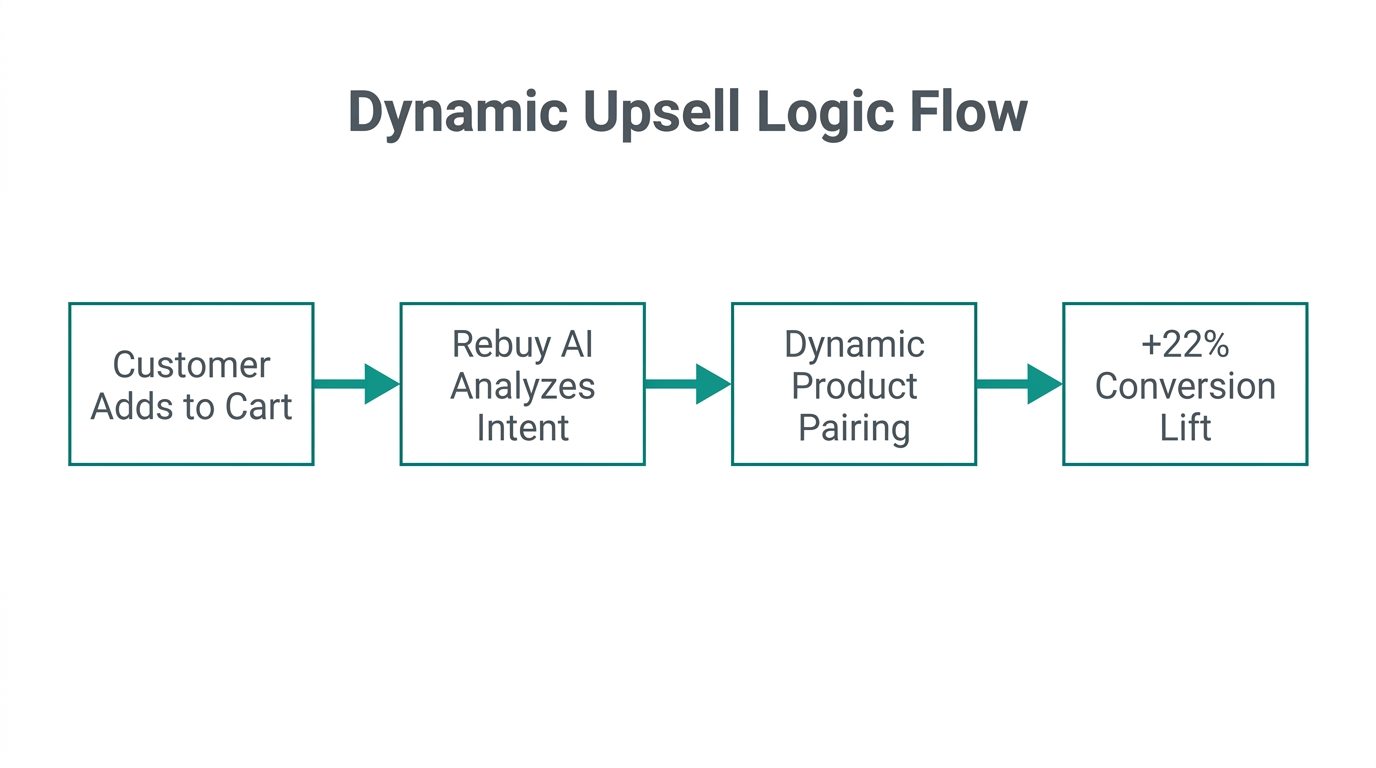
While Shopify Magic handles the "words," Rebuy Engine provides the "brains" behind the product selection. Rebuy’s AI-powered personalization engine analyzes millions of data points to identify "Frequently Bought Together" patterns in real-time. By deploying these dynamic pairing upsells directly into the order confirmation email, brands can see an AOV lift of up to 25%.
| Feature | Shopify Magic | Rebuy Engine |
|---|---|---|
| Primary Function | Generative AI Copy & Imagery | Predictive Product Recommendations |
| Best Use Case | Automating email body text | Smart-cart & post-purchase cross-sells |
| Revenue Impact | Increases CTR via relevance | Increases AOV via bundle logic |
The beauty of Rebuy is its ability to handle complex logic. It doesn't just look at what people bought; it looks at what people didn't buy during their session. If a user spent five minutes looking at a specific accessory but ultimately didn't add it to their cart, Rebuy can prioritize that exact item in the confirmation email with a limited-time "complete your set" discount.
The ASOS Strategy: Driving a 75% Increase in CTR
Global fashion giant ASOS set the gold standard for post-purchase engagement by implementing AI-powered "You Might Also Like" product blocks. According to data from CleverTap, this strategy resulted in a staggering 75% increase in click-through rates. ASOS doesn't just guess what you want; their AI considers your sizing history, style preferences, and even the current weather in your location to recommend the next piece of an outfit.
This approach transforms the post-purchase email into a curated discovery feed. When the recommendations are that accurate, customers stop viewing them as advertisements and start viewing them as concierge services. In 2026, this is the hallmark of a high-growth brand: shifting the perception from "selling" to "serving."
The Nike Model: Seasonal Trends and Athletic Activity
Nike has taken predictive analytics a step further by integrating seasonal trends and past athletic activity into their cross-selling logic. By analyzing when a customer typically hits the pavement or the gym, Nike uses predictive alerts to anticipate when a runner's shoes are nearing their 300-mile limit. As noted by Withum, these hyper-personalized alerts reach the customer exactly when they are most likely to convert, often before the customer even begins their search for a replacement.
"Predictive analytics is the bridge between a customer's past behavior and their future needs. Brands like Nike don't wait for a search; they create the prompt."
For brands looking to replicate this, the focus should be on Zero-Party Data. Use interactive quizzes or post-purchase surveys to gather data on how the customer intended to use the product. If they bought a tent, are they a casual backyard camper or a high-altitude mountaineer? Tools like Stormy AI can help you identify UGC creators who specialize in these specific niches, allowing you to include authentic "how-to" videos in your follow-up emails that feature the products Rebuy is recommending.
From Reactive to Predictive: The EDONO Evolution
The next frontier in 2026 is EDONO (Expected Date of Next Order). Static 30-day or 90-day win-back rules are dead. Modern AI platforms like Replenit analyze individual consumption cycles. If a customer uses a skincare bottle faster than the average user, the AI triggers the replenishment email specifically 5 days before their predicted run-out date.
This level of precision reduces churn by 15-30%, according to Klaviyo research. When you combine the timing of EDONO with the persuasive power of Shopify Magic’s copy, you create a "perfect storm" of conversion that feels helpful rather than intrusive. Brands like Raleon have utilized these predictive segments to identify customers with a high probability to purchase, resulting in a 957% increase in revenue per recipient.
Avoid the Pitfalls: When AI Goes Wrong
Despite the power of AI, there are several traps that can derail your AOV strategy. Data quality remains the most significant hurdle. AI is only as good as the information it processes. Failing to clean email lists or correct "ghost" profiles leads to inaccurate predictions and wasted ad spend.
- Excessive Cadence: Because AI makes it easy to generate content, brands often spam customers. Use AI to optimize when you send, not just how much you send.
- Blunt Rules: Avoid static win-back rules. A customer who buys luxury watches doesn't need a weekly follow-up, whereas a customer buying protein powder might.
- Robotic Tone: Always review AI-generated copy. The goal is to sound like a smart friend, not a cold database.
The 2026 AOV Scaling Playbook
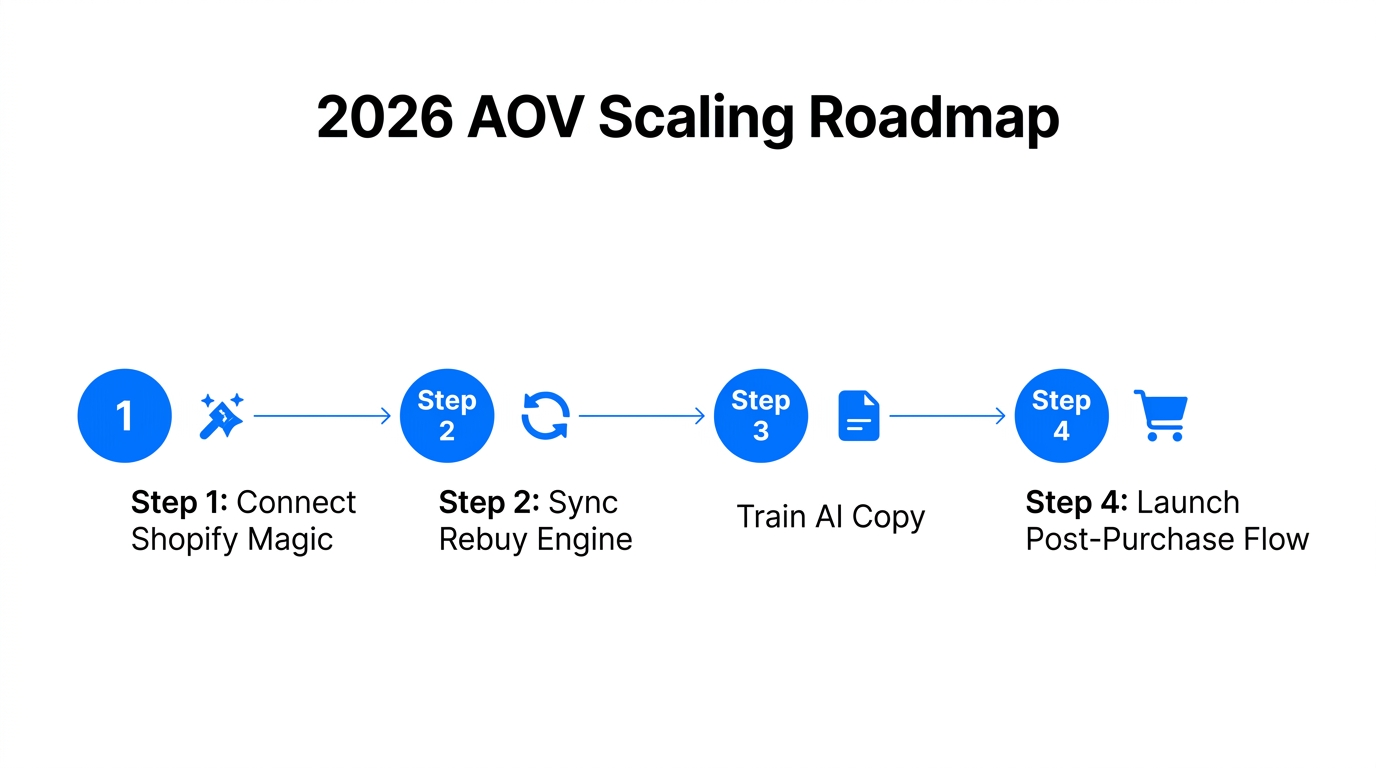
To implement this strategy today, follow these four steps:
- Audit Your Confirmation Emails: Move beyond the receipt. Ensure your order confirmation has at least one dynamic product block powered by Rebuy.
- Activate Shopify Magic: Set up automated follow-up sequences for your top 5 products. Use Shopify Magic to draft descriptions that focus on benefits and usage guides rather than just features.
- Integrate Social Proof: Use Stormy AI to discover creators who have already made UGC for your products. Embed these videos next to your upsell recommendations to provide the social validation needed to close the second sale.
- Monitor and Iterate: Use predictive tools like Remarkable AI to flag at-risk customers whose engagement has dropped by 40% or more, and hit them with a high-value, AI-personalized win-back offer.
Conclusion: The Future is Hyper-Personalized
Scaling AOV in 2026 is no longer about throwing more products at a customer and hoping something sticks. It is a precise science driven by Shopify Magic’s generative capabilities and Rebuy Engine’s predictive logic. By following the playbooks of giants like ASOS and Nike, and avoiding the trap of unedited, robotic content, e-commerce brands can build deeper relationships and significantly higher lifetime value. The tools are here; the data is available. The only question is whether your brand is ready to stop being reactive and start being predictive.