Scaling Your Creator Economy Brand with OpenClaw: The One-Person Business Playbook
Learn how to use OpenClaw for creators to scale a one person business AI 2026 model. Master autonomous influencer marketing and agentic workflows today.
The landscape of the creator economy has shifted fundamentally in 2026. We are no longer in the era of the 'solopreneur' who burns out while juggling editing, outreach, and analytics. Instead, we have entered the age of the One Person Company (OPC), where a single individual orchestrates a fleet of autonomous digital employees to achieve what used to require a twenty-person agency. At the heart of this revolution is OpenClaw, the open-source autonomous operating system that has turned AI agents from simple chatbots into proactive growth engines. With the global AI agents market projected to hit $11.55 billion by the end of 2026 according to Grand View Research, the race is on to automate the 'middle-man' and build brands that scale while the founder sleeps.
Hiring Your First 'Digital Employees': The Agentic Shift
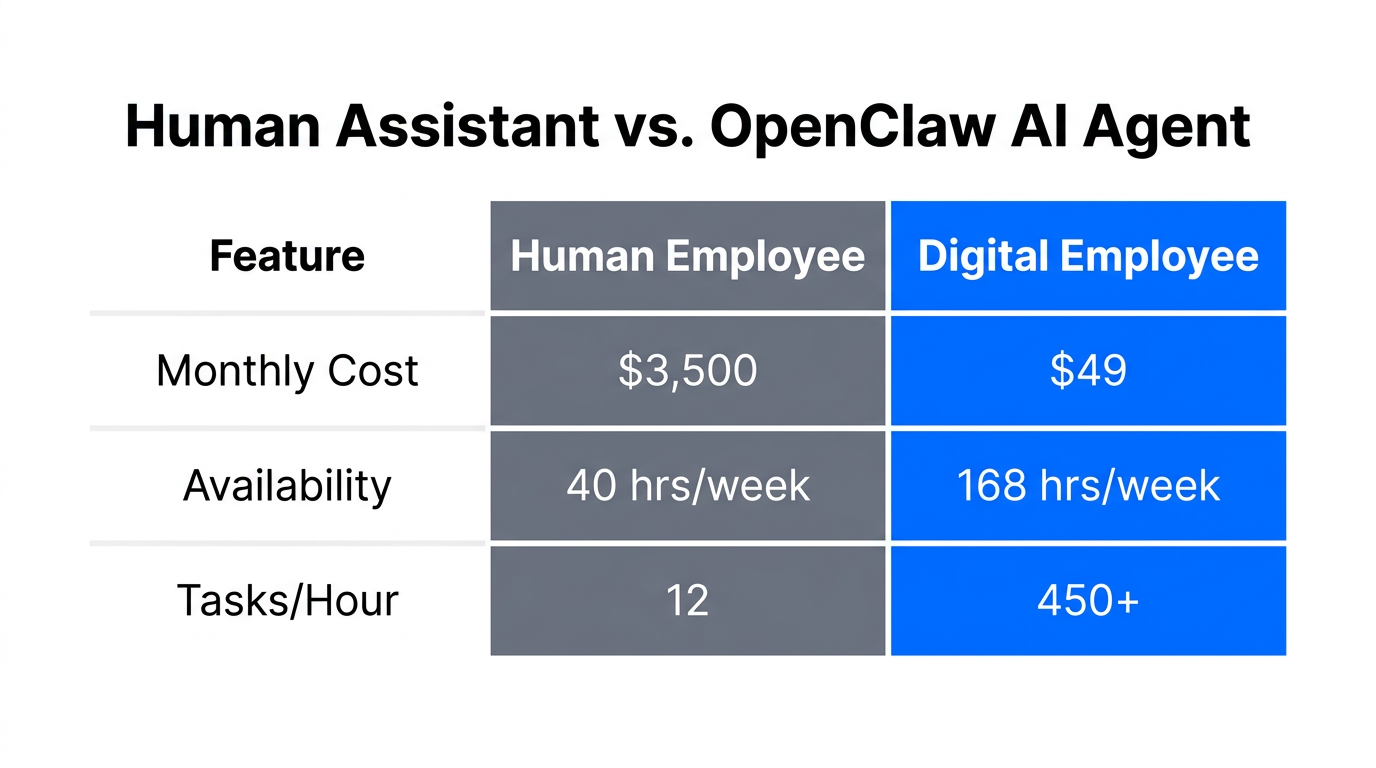
In 2026, forward-thinking creators don't see AI as a writing tool; they see it as a workforce. OpenClaw for creators allows for the deployment of specialized agents that function as SDRs (Sales Development Representatives), SEO specialists, and Social Media Managers. Unlike the rigid automation of the past, these agents possess reasoning and planning capabilities, allowing them to adapt to changing market conditions without human intervention. As noted by Wharton professor Ethan Mollick, these aren't just software scripts—they are digital employees that require a 'soul' or a defined set of constraints to operate effectively.
"The next wave of AI productivity comes from agents that can correct their own mistakes and operate autonomously across the web, not just respond to prompts in a chat box."
According to Gartner, 40% of enterprise applications now feature these task-specific agents, but for the one-person business, the impact is even more dramatic. By delegating routine tasks like data cleaning and initial research to 'small' models and reserving frontier models for strategy, creators can reduce overhead by 12.2% while speeding up campaign development by 73%, a benchmark highlighted by Vellum AI. This shift is what enables the one person business AI 2026 model to compete with established media houses.
The $1.4M OPC Movement: Government-Backed Autonomy
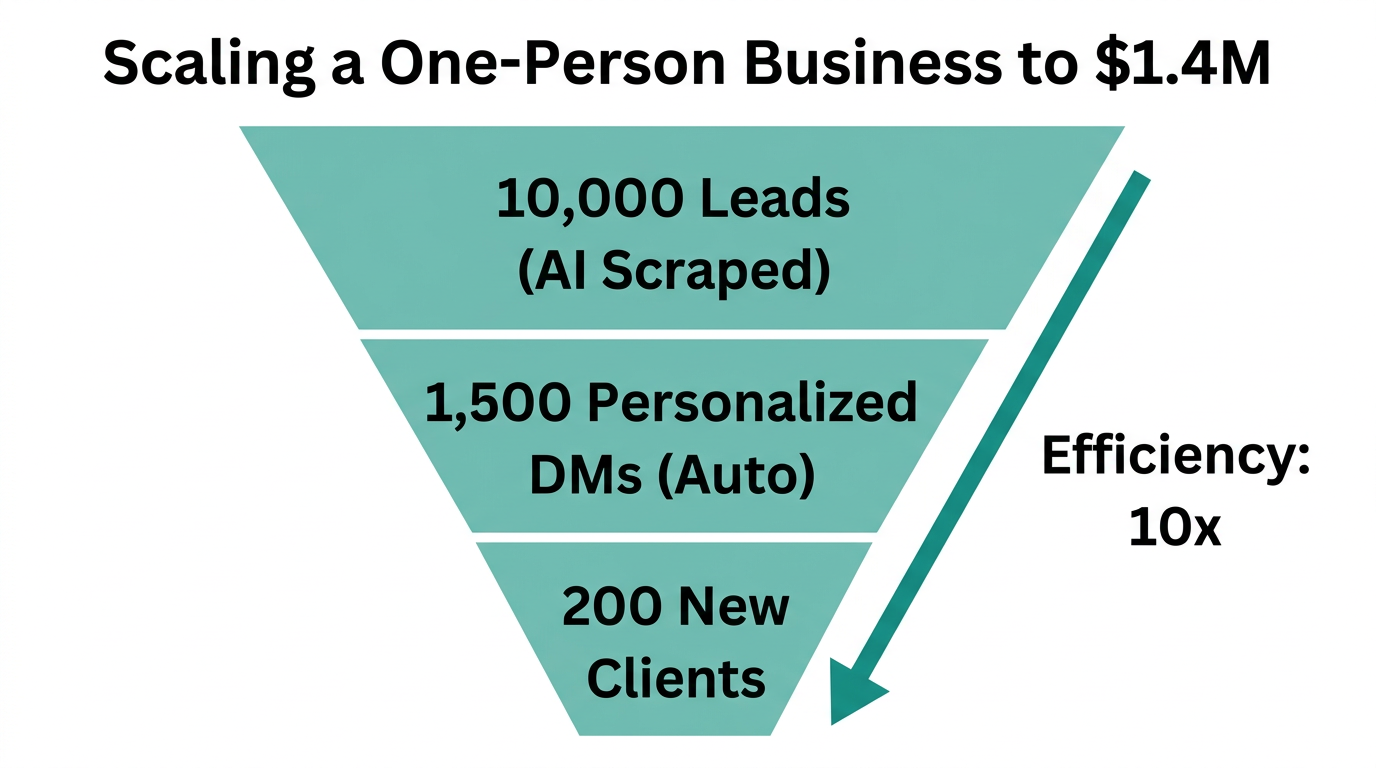
The trend toward hyper-efficient, autonomous small businesses isn't just a grassroots movement; it’s becoming state policy. In March 2026, the Shenzhen government released a draft to provide $1.4 million (10M RMB) in funding for 'One Person Companies' that utilize OpenClaw and agentic workflows to run entire operations autonomously. This 'OPC Movement' [source: South China Morning Post] validates the belief that the future of the economy lies in small, high-leverage nodes rather than bloated corporations. These businesses use OpenClaw agentic workflows to handle everything from supply chain management on Shopify to autonomous influencer marketing.
Automating the 'Middle-Man': Influencer Discovery and Outreach
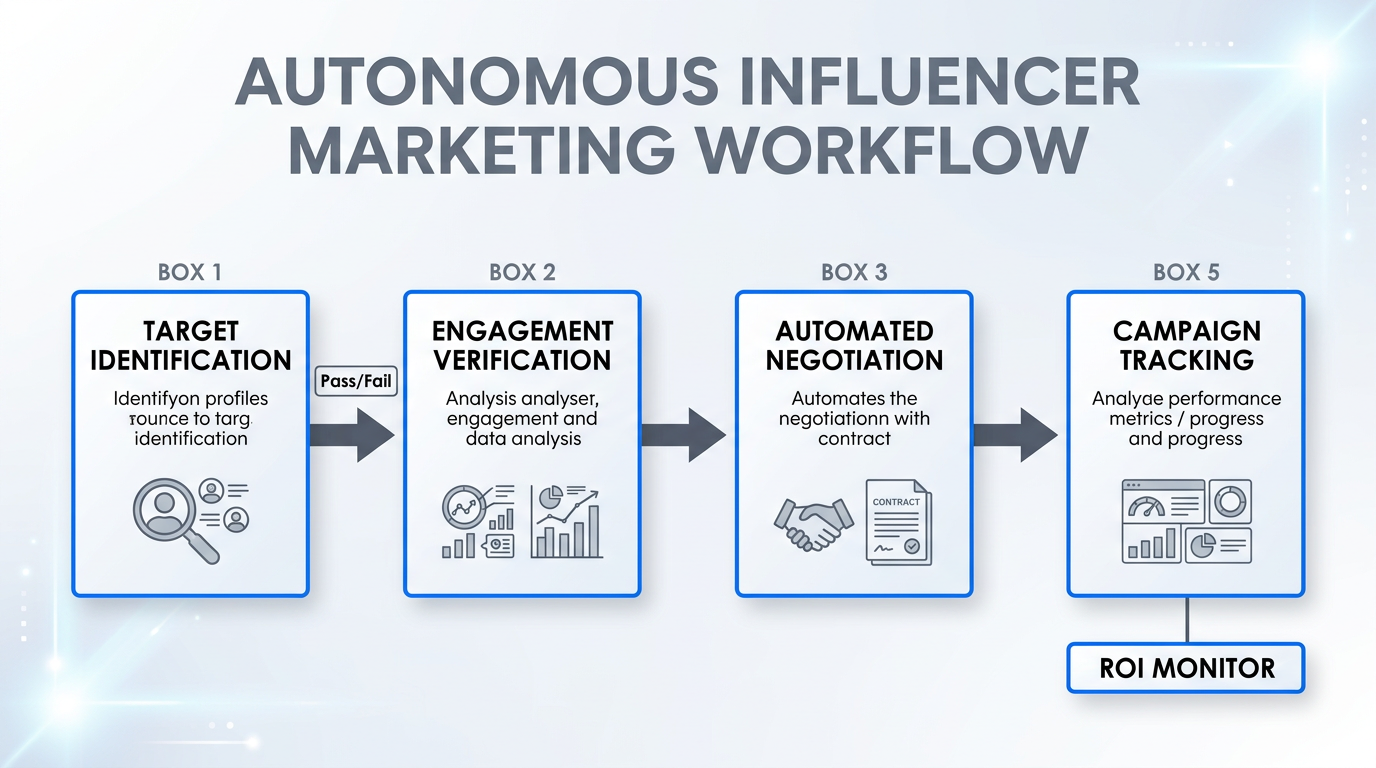
One of the most time-consuming aspects of scaling a brand is creator discovery and outreach. In the past, this required hours of manual searching on TikTok or Instagram. In 2026, autonomous agents handle the entire funnel. For example, platforms like Stormy AI streamline creator sourcing and outreach by providing an AI search engine that finds the perfect influencers based on natural language prompts. When paired with OpenClaw, you can set an agent to take the leads found in Stormy, draft personalized intros based on the creator's latest three videos, and manage the follow-up sequences automatically.
| Feature | RPA (Zapier/UiPath) | AI Chatbot (ChatGPT) | AI Agent (OpenClaw) |
|---|---|---|---|
| Logic | Rigid If-Then | Text Generation | Reasoning & Planning |
| Interface | App-specific | Chat UI | Cross-platform Browser |
| Persistence | Stateless | Session-based | Long-term Memory |
| ROI (2026) | Moderate | High (Efficiency) | Exponential (Autonomy) |
This level of automation isn't just about saving time; it's about accuracy. By using a 'Scraping Skill' to monitor competitor pricing and sentiment, an OpenClaw agent can trigger a 'Content Skill' to draft a reactive LinkedIn post the moment a gap in the market is detected. This autonomous influencer marketing strategy ensures your brand is always first to the conversation. Success stories like GMBMantra show that automating these 'middle-man' tasks can reclaim 50+ hours per week for the founder.
Setting Up the Heartbeat: The 24/7 Autonomous Brand Engine
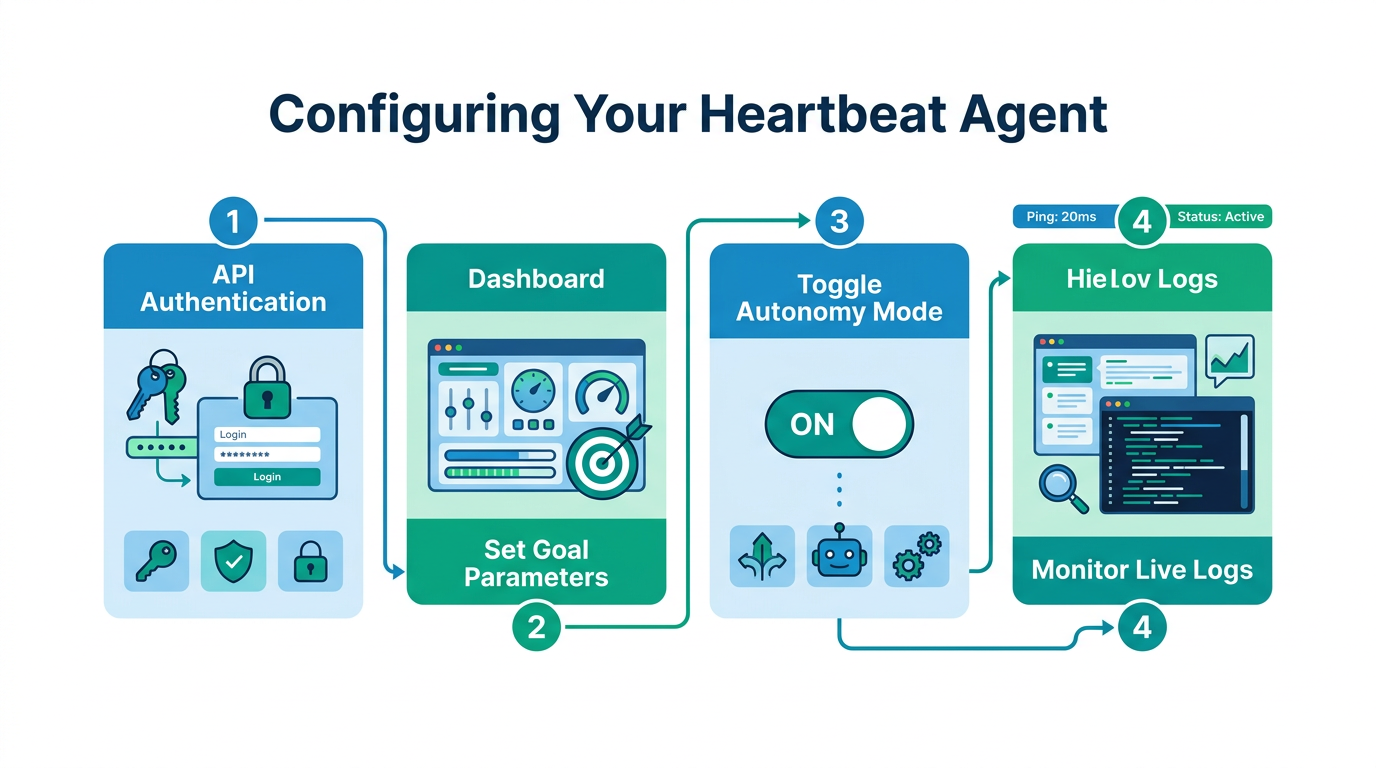
To truly scale a one-person business, your brand engine cannot rely on you being awake. OpenClaw agents in 2026 utilize a 'heartbeat' mechanism. This is a proactive check that occurs every 30 minutes, where the agent scans for new tasks, monitors social media mentions, or checks for incoming emails. As explained by HelloPM, this prevents the agent from being a 'passive' tool and turns it into an 'active' employee.
Step 1: Isolation and Security
Never run your agents directly on your primary machine. Use a dedicated VPS (Virtual Private Server) from providers like DigitalOcean or a Mac Mini M4. As per NXCode, running OpenClaw inside a Docker container with restricted permissions is essential to prevent 'ClawHavoc' style attacks where malicious scripts might try to harvest local data.
Step 2: Configuring the Heartbeat
Set your agent to check for 'intent signals' every 30 minutes. This could be monitoring TikTok Ads Manager for CPA spikes or searching for new guest post opportunities. This ensures your brand is responsive even when you are offline.
Step 3: Human-in-the-Loop Checkpoints
To avoid the 'soulless' backlash common in early 2026, implement mandatory checkpoints. Your agent should draft the content but send a Slack or WhatsApp notification for your final approval before posting. This maintains the 10% 'human touch' that keeps a brand authentic while the AI handles the 90% grunt work.
"The demand in 2026 is for an AI that does things while you sleep, not one that just answers your questions." — Peter Steinberger, OpenClaw Founder
Avoiding the 'Soulless' Backlash: The SOUL.md Protocol
As AI agents become more prevalent, consumers have developed a sixth sense for 'uncanny' or generic automated content. In early 2026, several major brands saw a 12% drop in brand sentiment due to overly automated holiday campaigns. To prevent this, elite one person business AI 2026 practitioners use the SOUL.md protocol. This is a file within the OpenClaw directory that defines the agent's personality, hard limits, and ethical boundaries.
- Define the Voice: Your SOUL.md should specify the tone (e.g., "Professional but witty, like a smart friend in marketing").
- Set Hard Limits: "Never approve a budget increase over 10% without human approval" or "Never mention a competitor by name."
- Contextual Awareness: Use the Model Context Protocol (MCP) to ensure the agent only pulls relevant data from your CRM or internal docs, avoiding 'context flooding' that leads to hallucinations.
By using Composio or similar tools to manage agent permissions, you ensure that your scaling with digital employees strategy doesn't result in a PR nightmare. Authentic growth in 2026 requires the efficiency of an agent and the soul of a creator.
Conclusion: The Orchestrator Advantage
The transition to a one-person business powered by OpenClaw isn't just about saving money—it's about reclaiming your time to focus on high-level strategy and creative vision. By deploying OpenClaw for creators, you move from being the worker to being the orchestrator. Whether you're leveraging Stormy AI for creator discovery or setting up complex OpenClaw agentic workflows for SEO, the goal remains the same: a brand that grows autonomously. As we move through 2026, those who master the art of the 'digital employee' will be the ones who lead the next generation of the creator economy.