Scaling Content ROI: Using AI-Driven UGC Pairing for Instagram Shopping
Boost your creator economy ROI 2026 with AI-powered UGC pairing for Instagram Shopping. Learn how to automate tagging and drive 4x engagement like Fashion Nova.
As we navigate the mid-point of 2026, the boundary between social media discovery and e-commerce execution has completely dissolved. We no longer live in an era of "scroll and search"; we are firmly entrenched in an era of agentic commerce. The global social commerce market has surged to a staggering $2.11 trillion this year, fueled by a 29% CAGR that shows no signs of slowing down, according to Mordor Intelligence. For brands, the challenge is no longer just getting eyes on a product—it is about scaling the ROI of every single pixel. This is where AI-powered UGC pairing becomes the ultimate lever for growth.
Instagram remains the titan of this movement, generating an estimated $37.2 billion in social commerce revenue over the last year, as reported by Dataopedia. With over 130 million users tapping on shoppable posts every month, the opportunity for conversion is massive. However, manually tagging every customer photo or creator post is a relic of the past. Today’s market leaders are using shoppable content automation to transform raw community content into high-converting storefronts instantly.
The New Standard of Social Commerce ROI
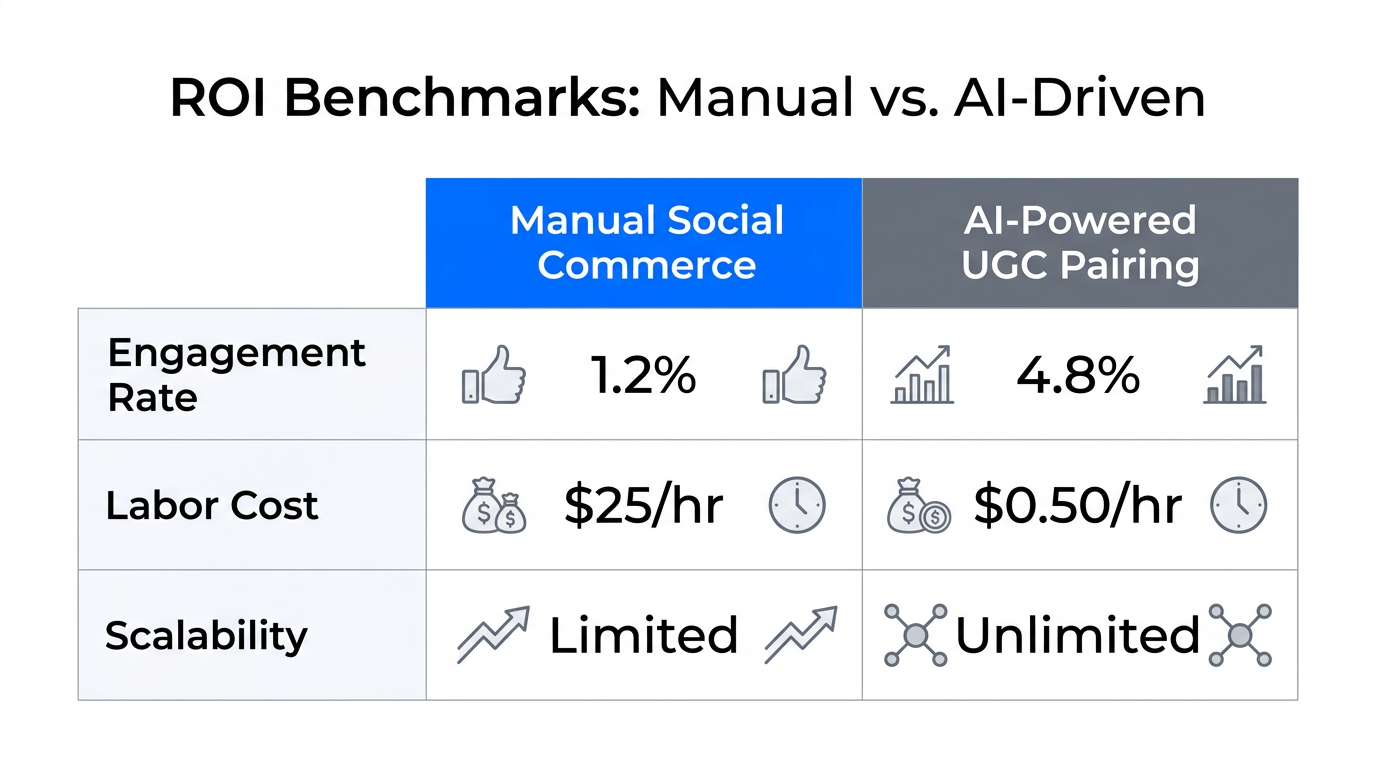
The traditional content production cycle—hiring photographers, booking studios, and editing for weeks—is too slow for the current 2026 algorithm. Modern consumers, particularly Gen Z (49%) and Millennials (46%), prefer authentic, user-generated content (UGC) over polished studio shots. This demographic shift is the primary driver behind why 70% of Instagram users now actively engage with shopping features, according to Capital One Shopping.
By leveraging AI to scan tagged customer content and automatically pair them with product catalog IDs, brands are achieving a level of efficiency previously thought impossible. Tools like Pixis.ai are now leading the charge in predictive virality, allowing brands to see which UGC pieces are likely to trend before they even peak, enabling real-time budget reallocation to high-momentum content.
"2025 marked a decisive shift... shoppers began asking AI instead of typing keywords. In 2026, shopping will turn predictive and culturally aware." — Dani Nadel, President of Feedvisor via Forbes
The Fashion Nova Model: Efficiency at Scale

Perhaps the most cited success story in shoppable content automation is Fashion Nova. By adopting an AI-powered hybrid system for UGC, they managed to cut their image production costs to a mind-blowing $0.03 per image. To put that in perspective, a traditional studio shoot could easily cost hundreds of dollars per final asset. According to research by MagicUGC, this transition didn't just save money—it increased engagement by 4x.
The system works by using computer vision to identify specific clothing items in customer-uploaded photos. Once identified, the AI automatically links the item to the brand's SKU library and generates a shoppable tag. This creator economy ROI 2026 strategy ensures that every time a customer posts a "fit check," it becomes a functional entry point for new sales without any manual intervention from the marketing team.
| Metric | Traditional Content Model | AI-Driven UGC Model |
|---|---|---|
| Cost Per Asset | $150 - $500 | $0.03 |
| Production Speed | Days/Weeks | Seconds |
| Engagement Rate | Standard (1-2%) | 4x Increase |
| Authenticity Score | Low (Polished) | High (Real People) |
Increasing AOV with Community-Led Feeds

Beyond simple tagging, brands are using community-led shoppable feeds to drive a higher Average Order Value (AOV). When a potential customer sees a single product in a studio shot, they see an item. When they see a community feed powered by StoryStream, they see a lifestyle and a complete outfit. This visual context is a powerful psychological trigger for cross-selling.
Take the case of Sweaty Betty. By using AI-powered tools to curate and display community content as shoppable feeds on their site and social channels, they saw a 12% increase in AOV. Seeing how "real people" style different pieces together encourages shoppers to buy the full look rather than just a single garment. This strategy bridges the gap between the inspiration found on social media and the transactional reality of the checkout page.
"Omnichannel isn’t optional anymore; it’s the foundation for trust. In 2026, we will see test runs of autonomous transactions driven by AI agents." — Mark Andreev, COO of Exactly.com via Financial IT
The Playbook: Implementing Shoppable Content Automation
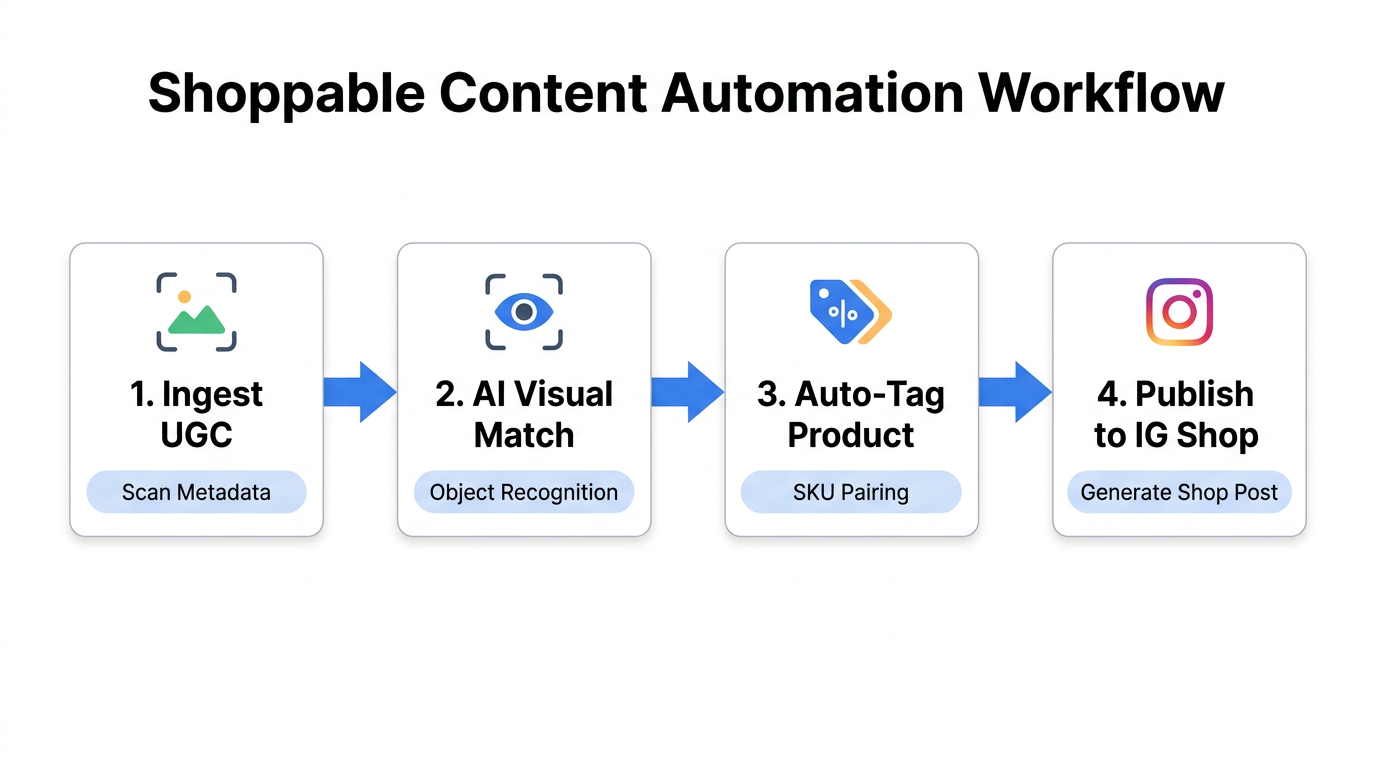
To replicate these results, brands need a structured approach to AI-powered UGC. Following this playbook will help you scale your Instagram Shopping conversion without bloating your team’s workload.
Step 1: Discover High-Quality Creators
The foundation of any UGC strategy is the creators themselves. In 2026, finding creators who align with your brand's aesthetic and target demographics is best handled by platforms like Stormy AI. By using natural-language AI search, you can identify thousands of niche creators who already have an affinity for your category, ensuring the content they produce feels organic and tag-ready.
Step 2: Automate the Tagging Process
Once you have a steady stream of tagged content coming in, use a tool like Pixis or StoryStream to scan these images. The AI identifies the products in the frame and cross-references them with your Shopify or Adobe Commerce catalog. This removes the manual bottleneck and allows for "Shop the Look" features to be live within minutes of a post going up.
Step 3: Deploy Conversational Funnels
Don't stop at the tag. Use Instagram DM Chatbots to automate the "comment-to-checkout" flow. By using a tool like Smax.ai, you can set a trigger so that when a user comments "LINK" or "NEED" on a UGC post, the AI instantly sends a personalized shopping link to their DMs. This reduces friction and prevents the customer from getting lost in the "link in bio" maze.
Navigating Ethics & Influencer Conflicts
As we automate more of the creator economy, ethical considerations around shoppable content automation have come to the forefront. One major pitfall for brands in 2026 is the "automated tagging conflict." If an AI scans a post from a high-tier influencer and automatically tags a product, it may inadvertently violate that influencer's existing brand deals with competitors.
According to Social Media Today, there is growing creator frustration regarding how platforms and brands use AI to monetize their content without explicit permission for every specific tag. To avoid this, brands should:
- Maintain a "Whitelisted" Database: Only allow automated tagging for customers and creators who have signed a specific UGC usage agreement.
- Be Transparent: 54% of consumers want to know when they are interacting with AI, according to My Amazon Guy. Clearly labeling AI-curated feeds helps maintain brand trust.
- Avoid Over-Automation: As seen with Valentino's AI experiments, content that looks "too artificial" can lead to backlash. Always keep a human in the loop for final quality checks.
"Relying on AI to generate captions can lead to 'hallucinated' product features or a robotic tone that erodes brand trust." — Insights from Hashmeta
The Future of Automated Commerce
Looking ahead to the remainder of 2026, we expect to see even deeper integrations of Visual Search. Users will soon be able to upload a screenshot from any app into Instagram and have Meta’s AI find the exact products or similar alternatives within the Instagram Shopping ecosystem, bypassing keyword search entirely, as detailed by Accio.
For brands, the message is clear: Scale through automation or get left behind. By pairing the human creativity of UGC with the analytical speed of AI, you can create a shopping experience that is not only high-converting but also deeply resonant with the modern consumer. Use tools like Stormy AI to seed your content ecosystem, and then let AI-driven tagging and conversational funnels handle the heavy lifting of conversion.