In 2026, the era of the manual wholesale order—characterized by fragmented email threads, PDF purchase orders, and frantic phone calls—is officially over. For mid-market brands, the shift to automated B2B ecommerce is no longer a luxury but a survival requirement. As of this year, more than 50% of new bookings on BigCommerce now come through B2B channels. The complexity of modern wholesale requires a sophisticated technical stack: a headless frontend for speed, a robust B2B portal for self-service, and an autonomous AI employee to handle the messy back-office logistics that human teams can no longer keep up with.
The 2026 B2B Landscape: Why Wholesale is Moving Online
The global ecommerce platform market is projected to reach $13.92 billion in 2026, and a massive portion of that growth is driven by business-to-business transactions. Brands that once relied on sales reps to manually enter orders are finding that their customers—modern procurement managers—expect a "consumer-like" experience. They want to log in, see their specific pricing, check real-time inventory, and reorder with one click.
This shift isn't just about the storefront; it's about operational efficiency. By moving away from manual quotes, companies like AHP Dental & Medical have seen online transactions jump from 25% to 75% of total sales. However, scaling these operations requires more than just a checkout button. It requires an integrated system that monitors stock levels across high-volume accounts and automatically triggers supplier restocks the moment a wholesale customer clears out a SKU.
"When product discovery begins with a prompt, not a homepage, the quality of your data determines whether you get purchased or ignored." — Travis Hess, CEO of Commerce.com (formerly BigCommerce)
Transitioning from Manual Quotes to an Automated B2B Portal
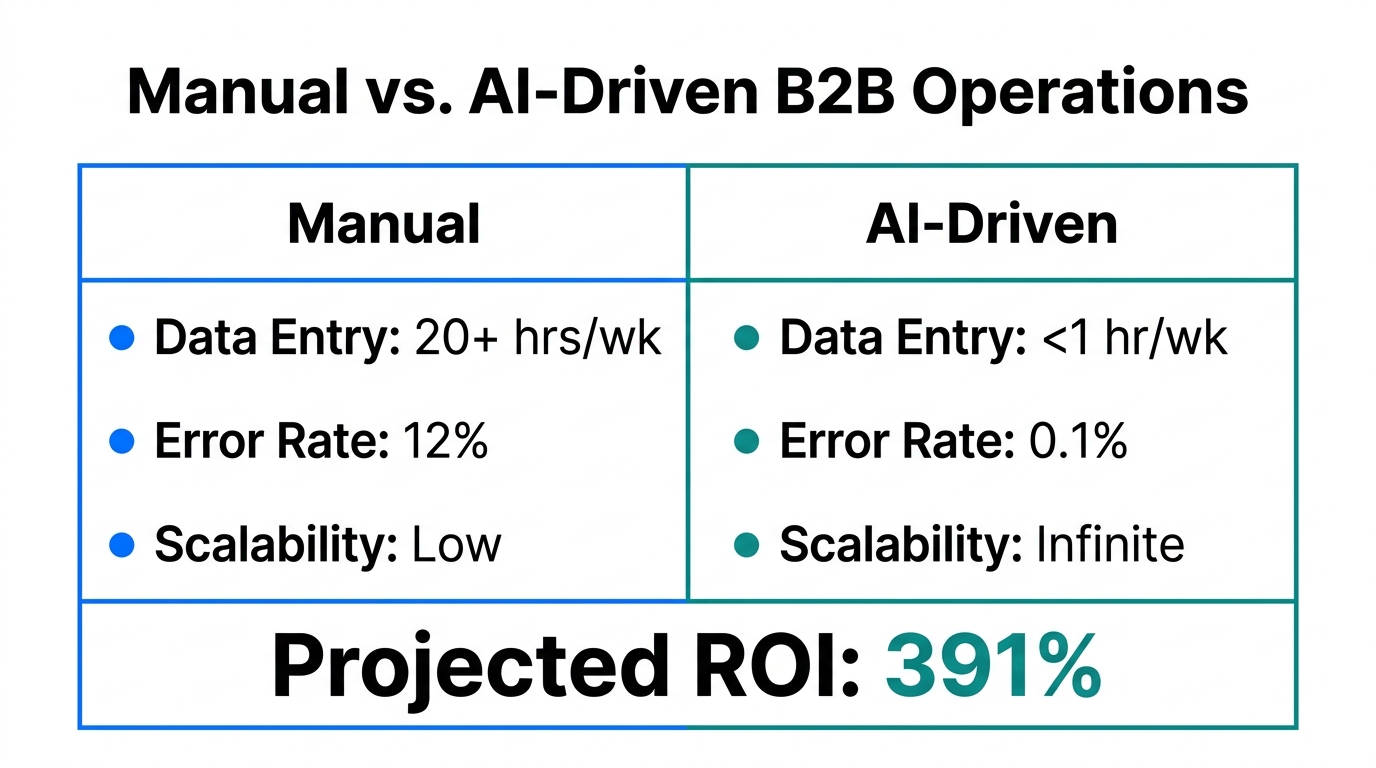
The first step in any BigCommerce B2B Edition tutorial is dismantling the "email-and-invoice" culture. Manual quote approvals are the leading cause of friction in B2B sales. In 2026, the B2B Edition allows you to create a self-service portal where buyers can manage their own company structures, assign roles (like Junior Buyer vs. Senior Approver), and generate quotes instantly.
Step 1: Define Buyer Roles and Permissions
Start by mapping your customer's organizational chart into the BigCommerce dashboard. You can set up "Company Accounts" that allow a head of procurement to see all orders placed by their team. This transparency reduces customer service inquiries by nearly 30%.
Step 2: Automate the Quote-to-Order Lifecycle
Instead of a rep drafting a PDF, the customer builds a cart and clicks "Request a Quote." The system automatically checks against their pre-negotiated price list. If the quote meets pre-approved margins, it can be auto-approved, moving straight to fulfillment without a human ever touching it. For larger, complex orders, an AI agent can monitor the incoming quote queue, flag high-value requests for immediate sales team attention, and even draft the initial follow-up email to the buyer.
Managing Complex Catalogs and Variant Constraints
One of the biggest hurdles in wholesale is the sheer volume of SKUs. B2B products often have dozens of configurations—size, material, bulk quantity, and technical specs. While BigCommerce supports up to 600 variants per product on its standard engine, merchants using Multi-Storefront (MSF) to run separate B2B and B2C stores face a 250-variant limit per product.
To manage this complexity in 2026, you must prioritize structured data. 2026 is the year of "Agentic Commerce," where AI agents (like those from OpenAI or Google) crawl your store to fulfill orders for other businesses. If your variants aren't cleanly mapped, these agents will fail to find your products. Using tools like Feedonomics to enrich product attributes is essential. Stormy AI then acts as the supervisor, auditing these variants daily to ensure no listings are suppressed or missing critical bulk-pricing data that could stall a wholesale deal.
| Feature | BigCommerce B2B Edition | Shopify B2B (Plus) |
|---|---|---|
| Base Pricing (2026) | Scale/Performance Plans | $2,300+ /mo |
| Custom Price Lists | Native & Granular | Requires Shopify Plus |
| Transaction Fees | 0% (w/ Approved Providers) | 0.5% - 2% (if not on SP) |
| Variant Limits (MSF) | 250 Variants | Varies by API level |
Driving 24% Higher Productivity with Custom Price Lists
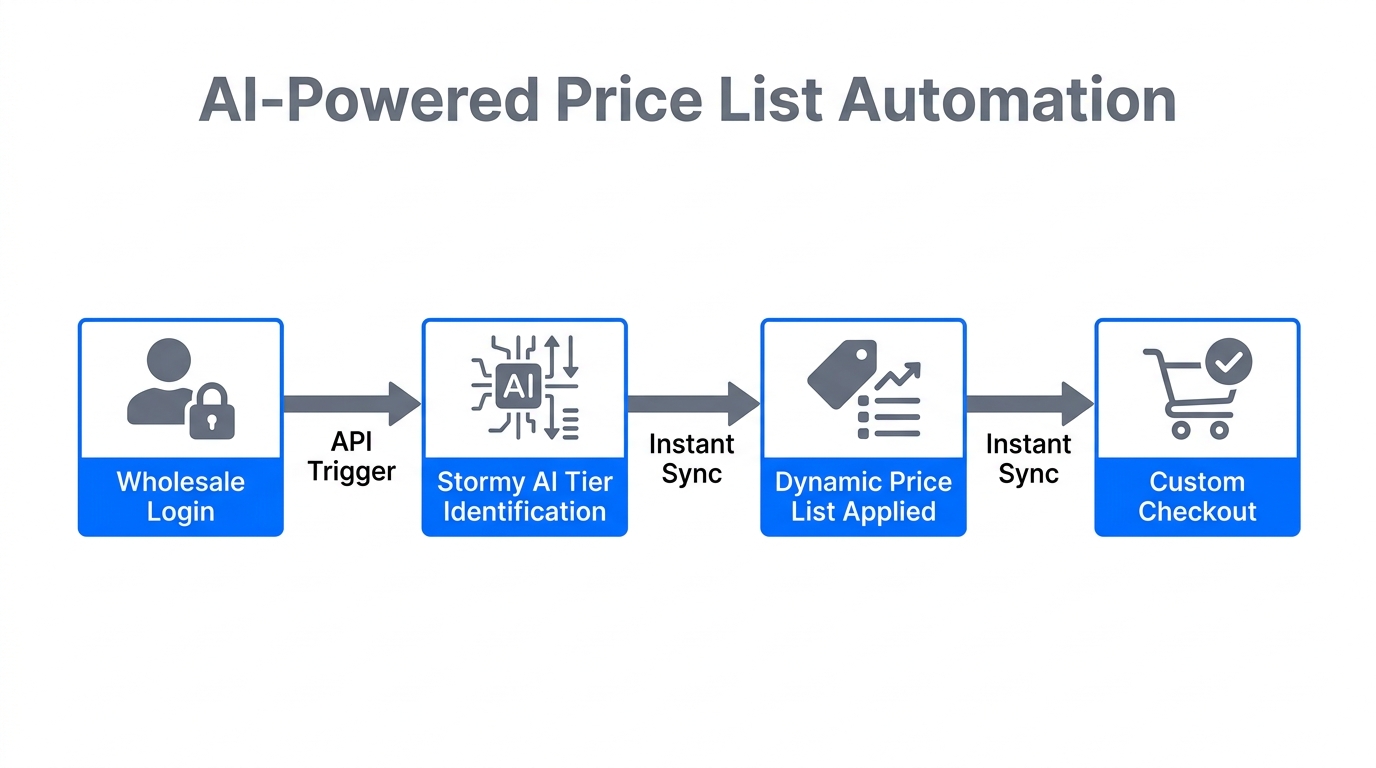
Research shows that setting up custom price lists and automated buyer roles can improve sales team productivity by 24%. In a traditional setup, a sales rep spends half their day verifying if "Customer A" is entitled to a 15% or 20% discount. In 2026, the B2B portal setup guide emphasizes the use of API-driven price lists that update dynamically based on the buyer's volume or contract status.
By delegating these routine checks to the platform, your sales team can focus on proactive outreach rather than order entry. This is where an AI ecommerce employee like Stormy AI shines. Stormy can connect to your BigCommerce store and your CRM (like HubSpot or Salesforce), identifying wholesale accounts that haven't ordered in 60 days. It then drafts a hyper-personalized outreach email for the sales rep to approve, ensuring no high-value account churns due to neglect.
"The 24% productivity gain isn't about working faster; it's about removing the $20/hour tasks from your $100,000/year sales talent."
Stormy AI: The Secret Weapon for Wholesale Inventory Ops
The most dangerous moment for a B2B brand is the stockout. If a wholesale customer tries to place a $50,000 reorder and sees "Out of Stock," they don't just wait—they find a new supplier. Managing inventory for B2B is significantly harder than D2C because one order can wipe out three months of supply.
This is why automated inventory monitoring for B2B is the cornerstone of the 2026 playbook. Stormy AI operates as an autonomous teammate that runs in the background of your BigCommerce store:
- Real-Time Monitoring: Stormy checks inventory levels against historical wholesale demand, not just total stock. It flags items that are "low" based on the needs of your top 10 accounts.
- Supplier Follow-ups: When stock hits a reorder point, Stormy doesn't just alert you. It can draft a restock PO, email your supplier, and politey follow up every two days until the supplier confirms the shipment date.
- Spreadsheet Sync: Stormy maintains a living spreadsheet of every SKU, lead time, and shipment status, ensuring the sales team always knows exactly when fresh stock is hitting the warehouse.
The 2026 Technical Stack: Building on Catalyst
If you are migrating or launching in 2026, do not use the legacy Stencil themes. The industry standard has shifted to BigCommerce Catalyst, a headless framework built on Next.js 14. Catalyst provides the sub-second load times required for massive B2B catalogs while offering 90+ Lighthouse scores out of the box.
To deploy a B2B-ready storefront, developers now use a simple CLI command: npm create @bigcommerce/catalyst@latest. This ensures your store is ready for the Agentic Commerce Suite, allowing AI buyers to interact with your store manifest located at /.well-known/ucp.
Conclusion: Scaling Your Wholesale Engine
Scaling B2B sales on BigCommerce in 2026 is a balancing act between powerful platform features and autonomous AI operations. By implementing the B2B Edition, you solve the frontend friction of quotes and custom pricing. By integrating automation, you solve the back-office friction of inventory monitoring and supplier management.
The goal is a lean, high-output wholesale operation where humans handle the relationships and AI handles the repetitions. Start by auditing your manual workflows—every emailed PO and every manual inventory check is a leak in your profit margin. Plug those leaks with automation today to capture the 391% ROI that modern B2B ecommerce offers.