Reverse-Engineering Winning Ad Campaigns with ChatGPT 4o: 2026 Strategy Guide
Learn how to use ChatGPT 4o's vision capabilities and competitor ad analysis to remix winning frameworks into high-ROAS assets in this 2026 marketing guide.
In the high-stakes world of performance marketing in 2026, the difference between a struggling brand and a category leader often comes down to one metric: creative velocity. We’ve entered an era where "the ad is the targeting," meaning the quality and relevance of your visual content do more to find your audience than any manual toggle in Meta Ads Manager. But how do you consistently produce high-converting creative without a Hollywood budget? The answer lies in reverse-engineering winning frameworks using the multimodal power of ChatGPT 4o.
By utilizing advanced inspiration tools and AI image reference prompting, brands can now take a competitor's multi-million dollar creative strategy and remix it into a unique, brand-aligned asset in less than two minutes. This isn't just about copying; it's about understanding the psychology of why an ad works and using AI to adapt that success for your specific product. Whether you are scaling a niche e-commerce store or managing a global brand, mastering ChatGPT 4o for business is the ultimate shortcut to a higher Return on Ad Spend (ROAS).
"The game right now is looking for an aesthetic that isn't being used in your space and remixing it. It shortens the time to value and gives you ideas you wouldn't otherwise have had."
The 2026 Performance Marketing Landscape: Creative as the New Targeting
As we navigate 2026, the old methods of granular audience segmenting have largely been replaced by AI-driven discovery. Platforms like TikTok Ads Manager now rely on the creative itself to signal which users are most likely to convert. This shift means that performance marketing is now a game of rapid experimentation. You don't know if a woman looking left versus a woman looking right will be the difference between a 1.6 ROAS and a 2.8 ROAS until you test both.
Using Stormy AI, marketers can source the right creators and UGC style to feed into these AI models, ensuring the human element remains at the core of the machine-generated output. When you combine high-quality creator assets with ChatGPT's ability to iterate on layouts and aesthetics, you unlock a level of scale that was previously impossible.
Sourcing High-Performing Inspiration: Beyond the Meta Ad Library
Learn how to source high-performing ad inspiration using the Sora explore page.
Before you open ChatGPT, you need a starting point. While the Meta Ad Library is a fundamental tool, professional performance marketers in 2026 are using dedicated inspiration hubs that tag and categorize successful frameworks. Tools like Foreplay and Creative OS allow you to search for ads that have been running for 30+ days—a clear indicator of profitability.
Another emerging source of "alpha" is the Sora explore page. While Sora is primarily known for video, its underlying model produces hyper-photorealistic imagery and provides the exact prompts used by world-class creators. By scrolling through these galleries, you can identify aesthetics (like "vintage film" or "hyper-realistic desert") that are currently trending outside your industry and bring them into your niche.
- Foreplay: Best for saving and organizing competitor ad frameworks.
- Creative OS: Ideal for finding editable templates and proven layout structures.
- Sora Explore: Perfect for identifying cutting-edge visual aesthetics and prompt engineering ideas.
The 'Reference Image + Product Image' Prompt Formula
Master the formula for combining product shots with professional reference imagery.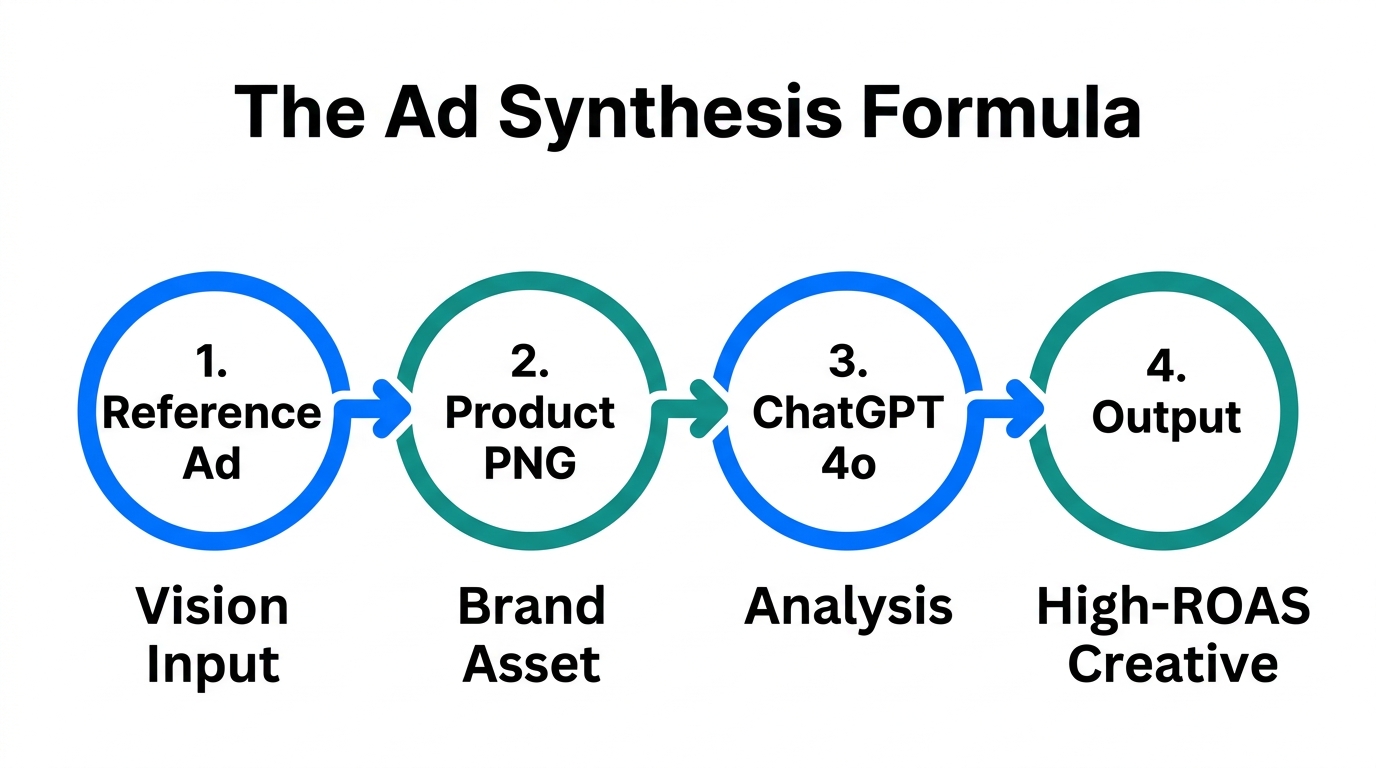
One of the biggest mistakes marketers make when using AI image reference prompting is over-complicating the text. Because ChatGPT 4o is a multimodal language model, it understands intent far better than older, prompt-heavy models. The most effective strategy is the Source + Subject methodology.
The formula is simple: provide an Inspiration Ad (the layout you want to copy) and a Custom Product Image (your actual brand asset). Then, give a direct instruction like: "Recreate the layout of this inspiration ad but replace the product with my provided product image. Adjust the background colors to match my brand's palette."
| Input Type | Purpose | Example Source |
|---|---|---|
| Inspiration Image | Defines layout, typography, and hierarchy. | A winning Ridge Wallet ad. |
| Product Image | Defines the central subject and brand identity. | Your raw 4K product photography. |
| Direct Prompt | Bridges the two images with specific logic. | "Place product X in layout Y." |
"A picture is worth a thousand words—that is literally the case with ChatGPT 4o. Reference images replace the need for 500-word prompts."
Ethical Remixing: The Case of AG1 vs. Rise
Explore the ethics and techniques behind remixing successful ad concepts for AG1.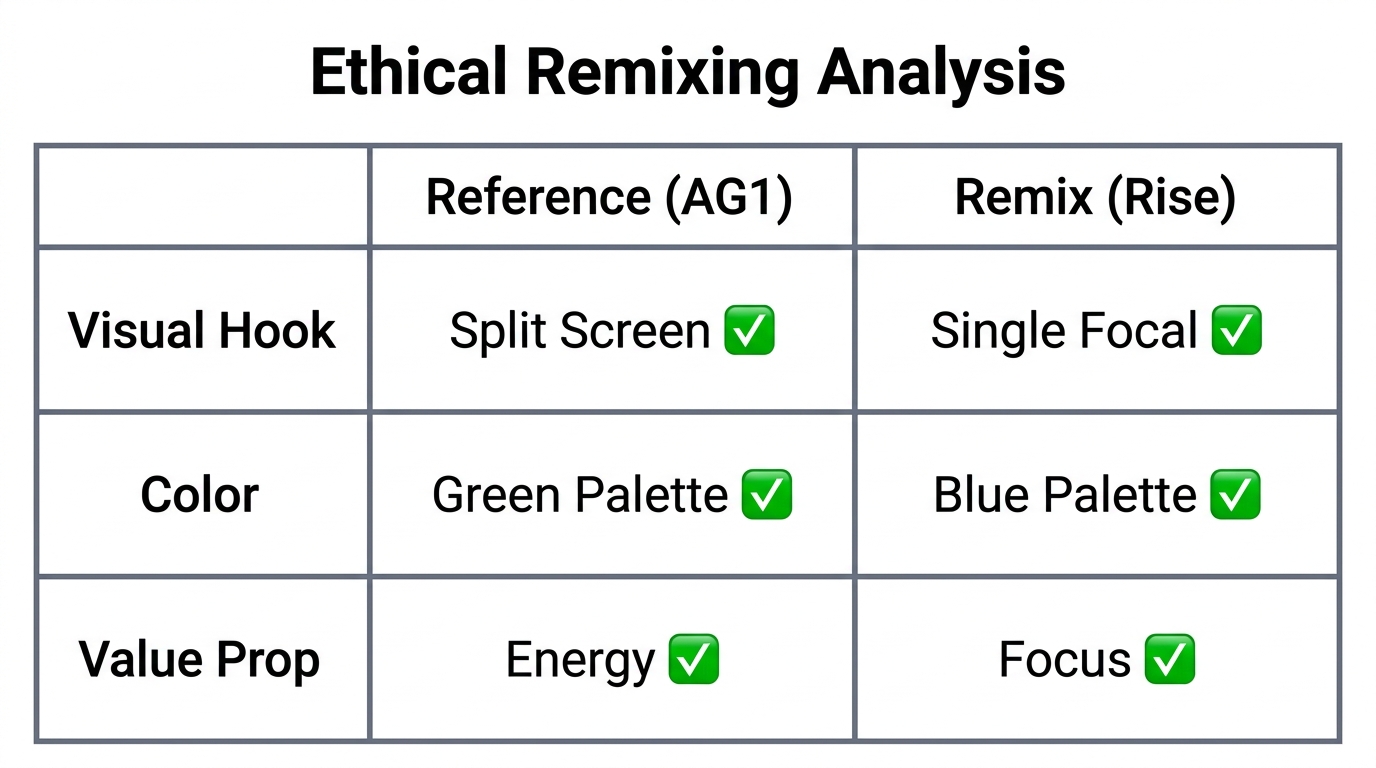
A common concern in the marketing community is whether remixing competitor ads is "dirty." In the world of competitor ad analysis, however, this has been standard practice for decades. Before AI, agencies would manually recreate competitor layouts in Figma or Canva. AI simply makes this process accessible to everyone.
Take the example of Athletic Greens (AG1) and Rise. If Rise has a winning ad layout featuring a specific gradient and pricing callout, AG1 can use ChatGPT 4o to ingest that layout, swap in their green powder pouch, and adjust the background to their signature "forest green" aesthetic. The resulting ad is brand-new and unique to AG1, but it inherits the proven psychological conversion triggers of the original framework.
Internal Knowledge vs. Reference Images: When to Use Which?
Not every ad requires a reference image. ChatGPT 4o has massive internal knowledge of global brands. If you are referencing Nike, Adidas, or Apple, you can simply name the brand in your prompt. The model already understands their typography, color theory, and "vibe."
However, if your brand is relatively new or has less than millions in monthly ad spend, you must provide a reference image. The AI cannot guess your specific brand nuance. For smaller businesses, providing a screenshot of your website’s hero section or a recent photoshoot is essential for maintaining brand consistency.
The Seasonal Pivot: Turning Black Friday into Christmas in 60 Seconds
One of the most powerful use cases for performance marketers is the seasonal refresh. Historically, changing a "Black Friday" campaign into a "Christmas" or "Valentine's Day" campaign required a complete reshoot or hours of Photoshop work.
With ChatGPT 4o, you can simply upload your winning Black Friday ad and prompt: "Keep the layout and product position exactly the same, but change the theme to a cozy Christmas aesthetic with subtle holiday decorations and updated copy for a 30% off holiday sale." This allows you to extend the life of a high-performing creative framework across the entire calendar year without your ROAS dipping due to creative fatigue.
"There is massive alpha in targeting short news-cycle moments. AI allows brands to react to Twitter trends with high-quality ads in minutes, not days."
The 2026 AI Ad Playbook: A Step-by-Step Guide
Follow a live demonstration of the AI ad playbook using ChatGPT 4o.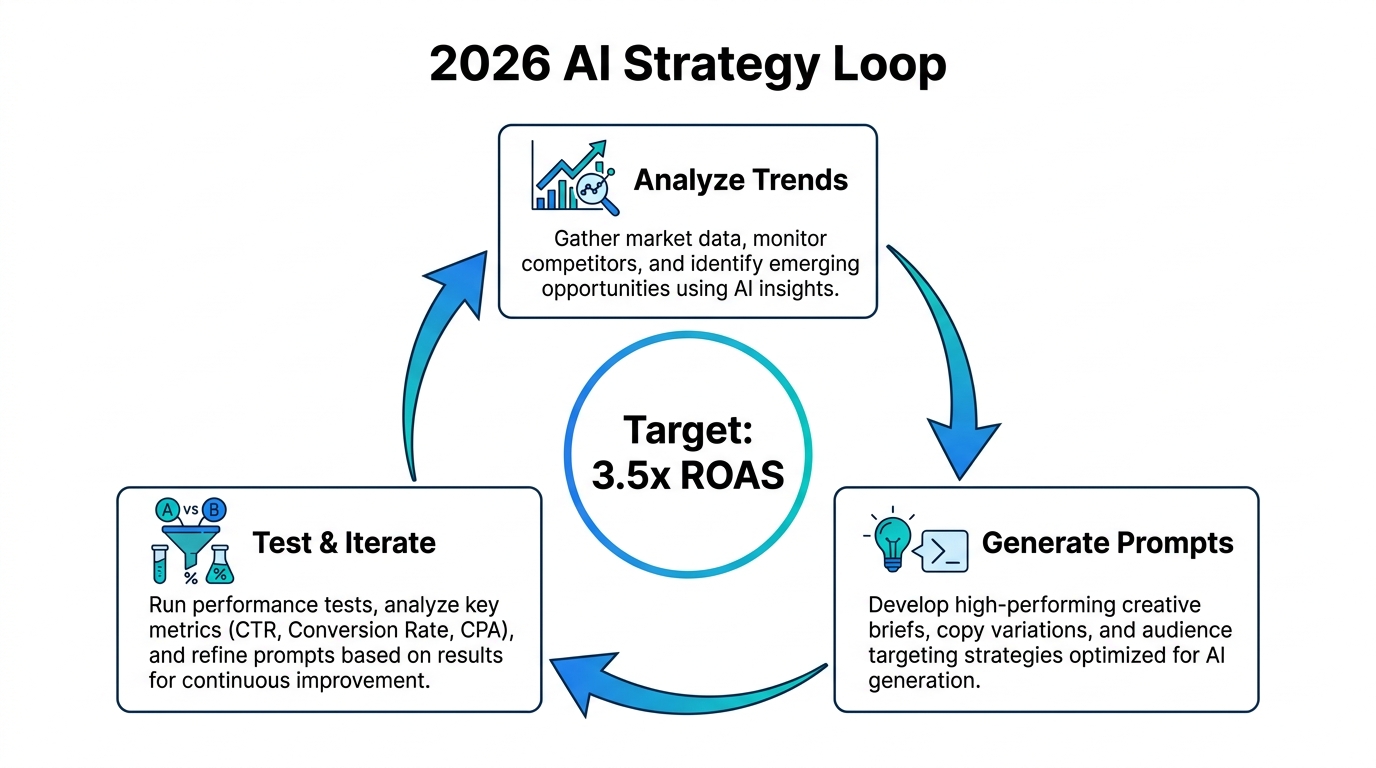
Step 1: Capture the Ingredients
Take screenshots of three things: your brand logo/typography, your primary product image, and a high-performing competitor ad you want to emulate. If you are a high-end brand like Patek Philippe or Rolex, capture images that represent that "luxury vibe."
Step 2: Define the Context
Tell the AI who you are. "I am a design agency for the AI age. We work with billion-dollar brands like Salesforce and Slack. Use the attached screenshots to understand our aesthetic."
Step 3: Execute the Remix
Upload the competitor reference ad and prompt: "Generate a digital ad for my brand using the layout of this reference image. Ensure the copy highlights our work with major tech companies and maintain a futuristic, luxury feel."
Step 4: The "New Chat" Refinement
If the first result isn't perfect—for example, if the AI added a weird artifact or the text is slightly off—start a brand new chat. Copy your prompt, add the correction (e.g., "remove the watch from the man's wrist"), and upload the original images again. AI models can sometimes get "stuck" on their own mistakes in a long conversation; a fresh chat often yields a cleaner result.
The Future of AI-Powered Creative
As we move further into 2026, the barrier to entry for world-class advertising continues to fall. By mastering the reference image plus product image formula, you are no longer limited by your design skills or your production budget—you are only limited by your ideas.
To truly dominate your category, combine these AI generation techniques with a robust sourcing strategy. Using a platform like Stormy AI to find creators who can provide the high-quality raw footage and product shots for your AI to remix is the winning formula for 2026. Stop guessing what works and start reverse-engineering the winners today.