From Founder to Board Member: Managing Your Paperclip AI Workforce in 2026
Master AI leadership in 2026. Learn how to transition from manual tasks to board-level oversight using Paperclip to manage autonomous, agentic workflows at scale.
In the early 2020s, being a founder meant being the ultimate generalist—opening twenty browser tabs, managing Jira tickets, and personally overseeing every marketing email. By 2026, the landscape has fundamentally shifted. We no longer build companies; we architect organizations of autonomous agents. The viral success of Paperclip, which amassed 30,000 GitHub stars in record time, signals a turning point in AI leadership. Today, your role as a founder has evolved into that of a Board Member. You aren't doing the work; you are managing the values, the budget, and the 'taste' of a zero-human workforce.
The Management Shift: Communicating Values and Taste
Learn how to transition from micromanaging individual tasks to overseeing high-level agent values.
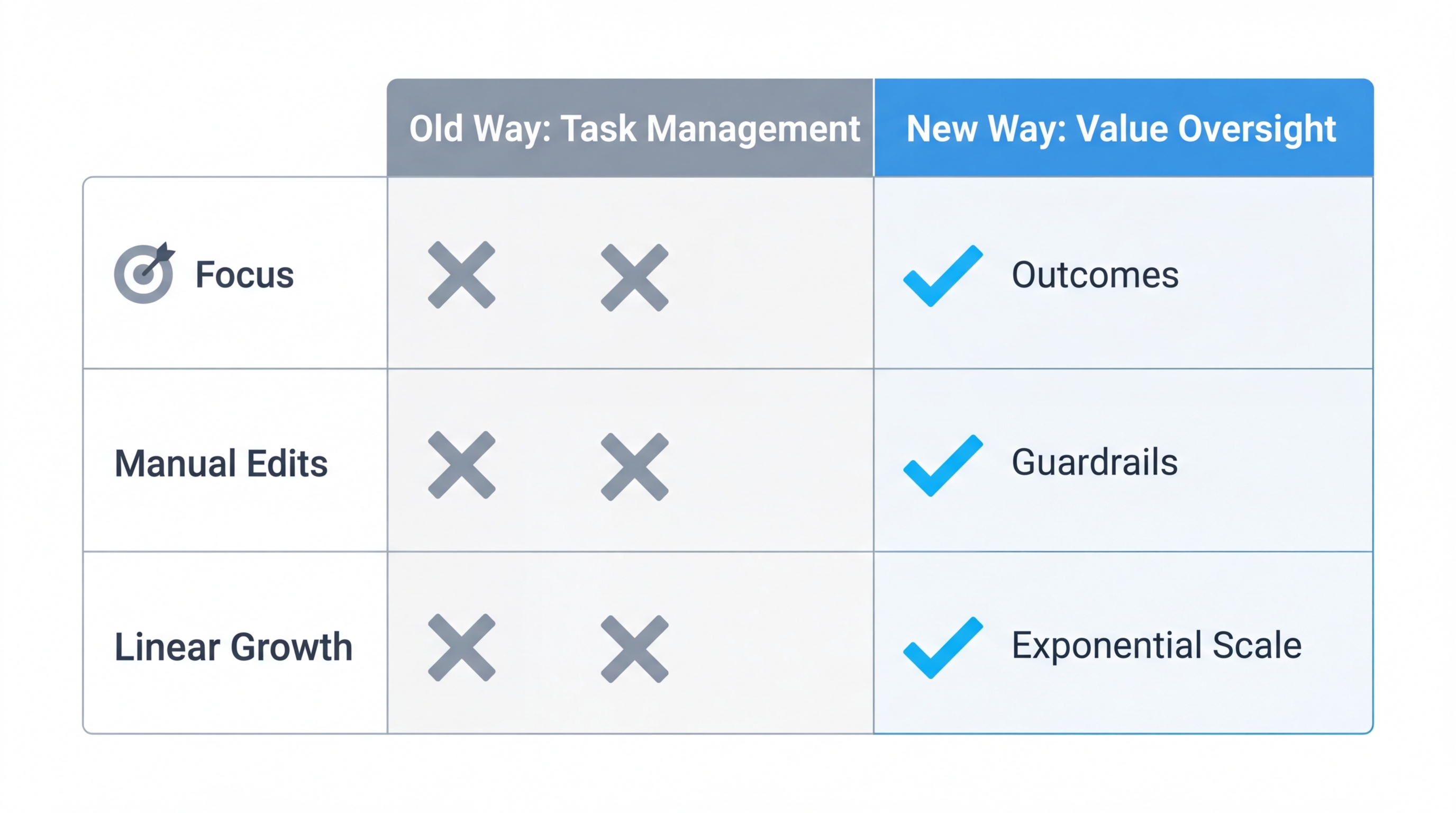
The most profound change in 2026 isn't the speed of the models, but the shift in how we direct them. Managing a team of agents via an orchestrator like Paperclip requires a transition from task management to value alignment. As Dota, the creator of Paperclip, famously noted, AI can do everything except know your values. You are no longer checking if a button was coded; you are ensuring the agent understands the why behind the user interface.
"AI agents are 'Momento Men'—they wake up every morning with elite skills but zero memory of who they are or what they are fighting for. Your job is to tattoo your values onto their digital skin."
To succeed in AI workforce management, you must provide your 'CEO' agent with what Paperclip calls a 'Heartbeat Checklist.' This is a set of instructions that the agent reviews every time it 'wakes up.' It confirms its identity, reviews the day's roadmap, and checks assignments. Without this high-level direction, even the most advanced models from OpenAI or Anthropic will eventually drift from your original vision. As a leader, your 'taste' is the only non-commoditized asset you have left. You must impart this through detailed personas and safety considerations [source: Center for AI Safety] that prevent your agents from 'exfiltrating' company secrets while they work.
Setting up Agentic Design Patterns: Beyond the One-Shot
Explore how multi-agent workflows empower AI to independently hire and coordinate specialized sub-agents.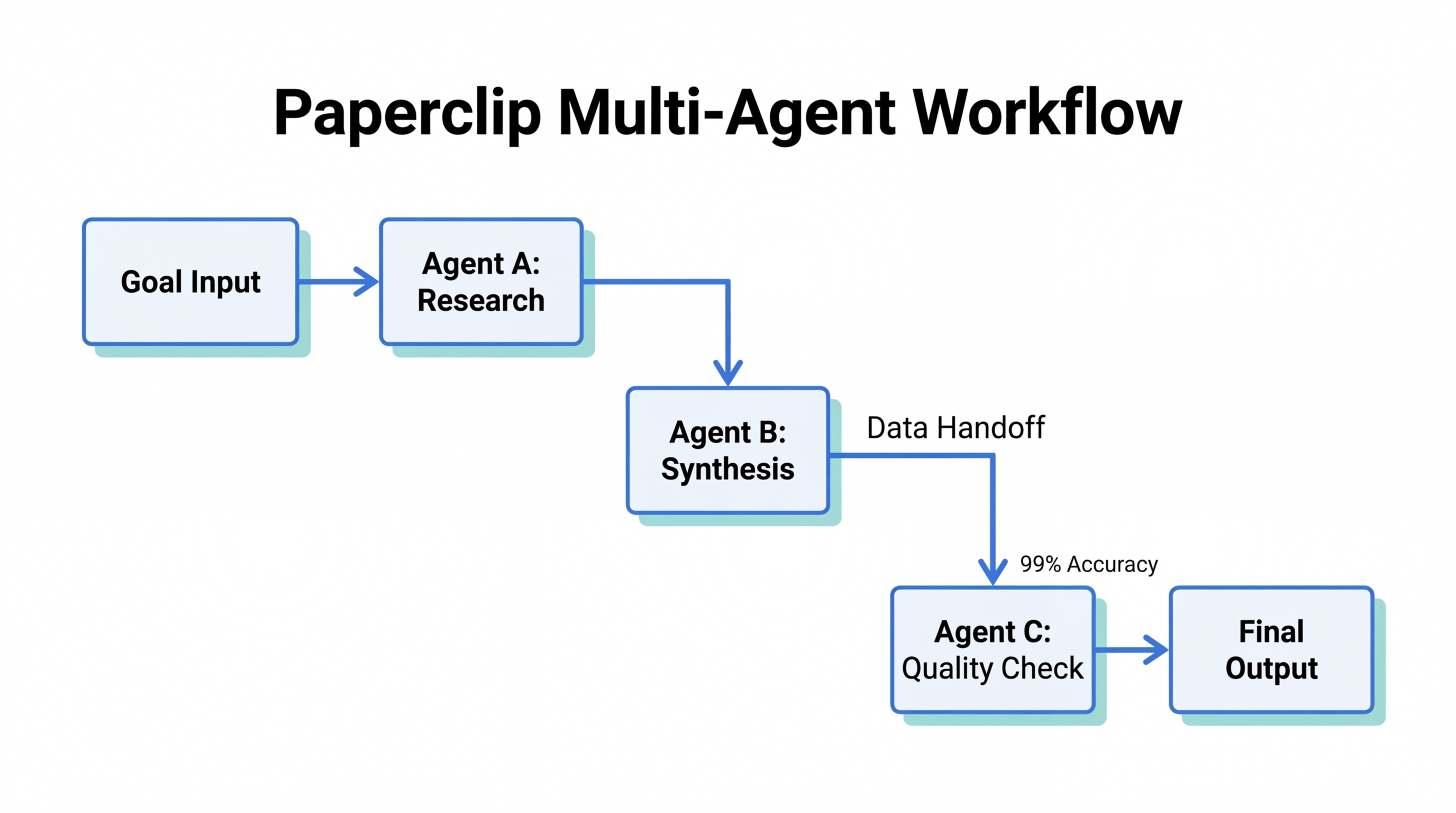
The amateur founder of 2026 still tries to 'one-shot' their business ideas, asking a single model to build a whole app. The professional leader uses agentic workflows. This involves moving from a single chat window to a multi-agent hierarchy. In Paperclip, this looks like a CEO agent hiring a Founding Engineer, who then hires a QA Agent, who then reports to a UX Designer. This 'Harness Engineering' ensures that no piece of work is considered 'done' until it has been vetted by a separate entity with a different persona.
Consider the workflow for a modern mobile app startup. You might use Cursor or Claude Code to handle the heavy lifting of the initial scaffolding. However, to scale, you need a system that manages the concurrency of these tasks. For example, your 'Social Media' agent might use tools like Stormy AI to discover and vet creators, while your 'Legal' agent drafts the contracts using Ironclad. By breaking these into distinct issues within the Paperclip dashboard, you create an accountable trail of work that persists even when you aren't monitoring the live console.
Budget and Efficiency: The 'Bring Your Own Bot' (BYOB) Economy
Understand the financial advantages of local agent deployments where operational costs remain remarkably low.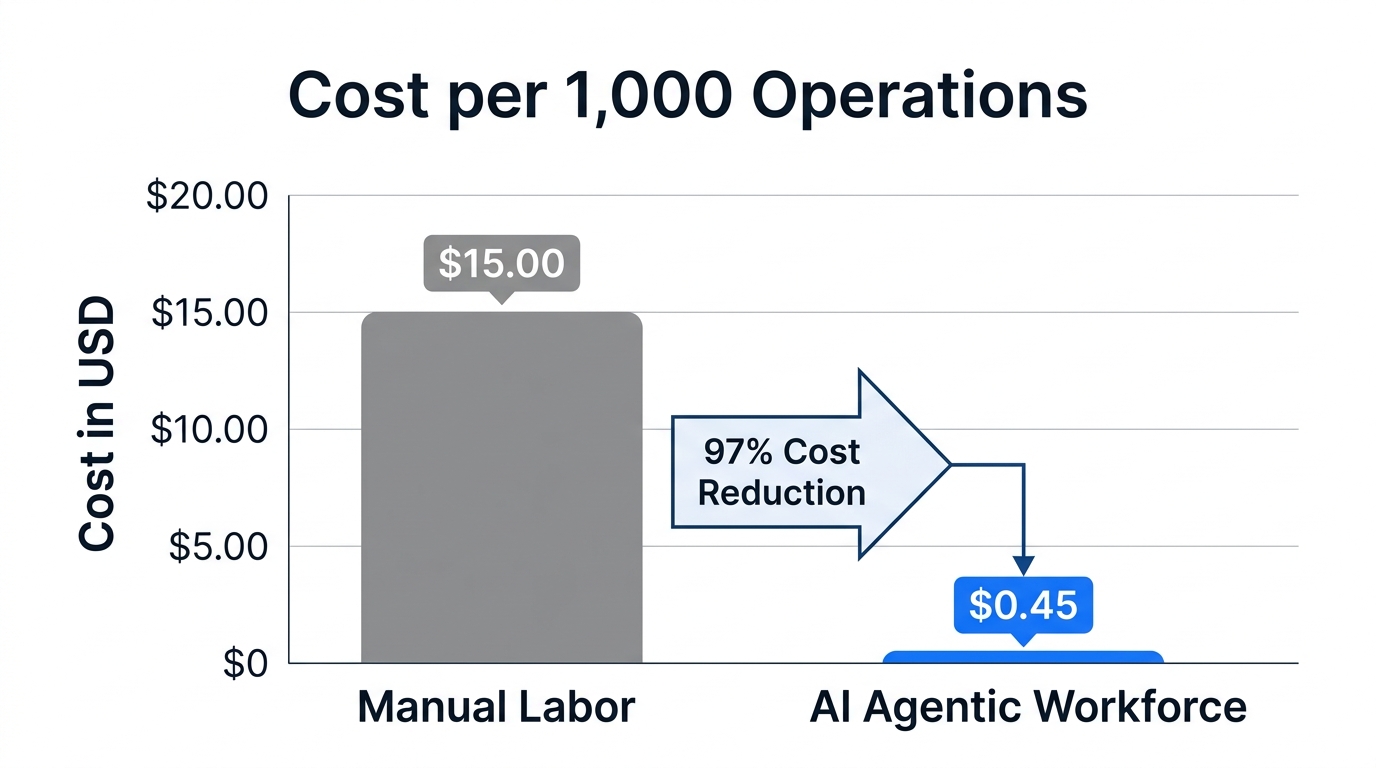
In 2026, efficiency is no longer measured by headcount, but by token optimization. Paperclip’s 'Bring Your Own Bot' (BYOB) model allows founders to mix and match frontier models based on the task’s complexity. Why use an expensive Opus 4.6 model for a routine Discord update when a free model on Open Router can handle it? Managing these costs is a core pillar of scaling a business with AI.
| Role | Model Type | Cost Profile | Best For |
|---|---|---|---|
| CEO Agent | Frontier (GPT-5.4 / Opus 4.6) | High | Strategy, Hiring, Values |
| Engineer | Specialized Coding (Claude Code) | Medium | Feature building, debugging |
| QA / Reviewer | Fast / Flash (Llama 4 / GPT-4o) | Low | Verification, syntax checks |
| Content Strategist | Creative (Open Router / Free) | Variable | Discord updates, blog drafts |
Effective leaders monitor their Paperclip dashboard to track monthly spend across different API providers. In 2026, a 'zero-human' company can still run up a $10,000 monthly bill if agents get caught in infinite loops or 'hallucination spirals.' By setting concurrency limits and manual approval gates for hiring new agents, you maintain fiscal discipline in a world where silicon talent is infinite but budget is not.
Conflict Resolution: When Agents 'Step on Each Other'
Discover how robust issue tracking systems identify and resolve alignment problems within AI workforces.One of the biggest hurdles in agentic workflows in 2026 is concurrency conflict. If you have four agents all trying to push code to the same GitHub repository at once, things break. Paperclip solves this by treating every task as a distinct 'Issue.' Only one agent can handle a task at a time, creating a deterministic workflow in an otherwise probabilistic environment.
"In a zero-human company, the 'Board Meeting' happens in the issue tracker. If agents disagree, you don't fire them; you refine the persona instructions."
When conflicts arise—such as a design agent and a developer agent disagreeing on a UI element—the founder must step in to provide 'The Bitter Lesson.' This involves updating the company-wide Style Guide or Brand Identity document. By hosting these artifacts within the orchestrator, every agent can access the same 'source of truth.' If you find yourself giving the same feedback twice, it is a sign that your agentic organization lacks a unified memory system. Use skills like those found on skills.sh to give your agents specialized tools (like browser access or database querying) while ensuring they follow your specific security protocols.
Future-Proofing Your Business: Maximizer Mode
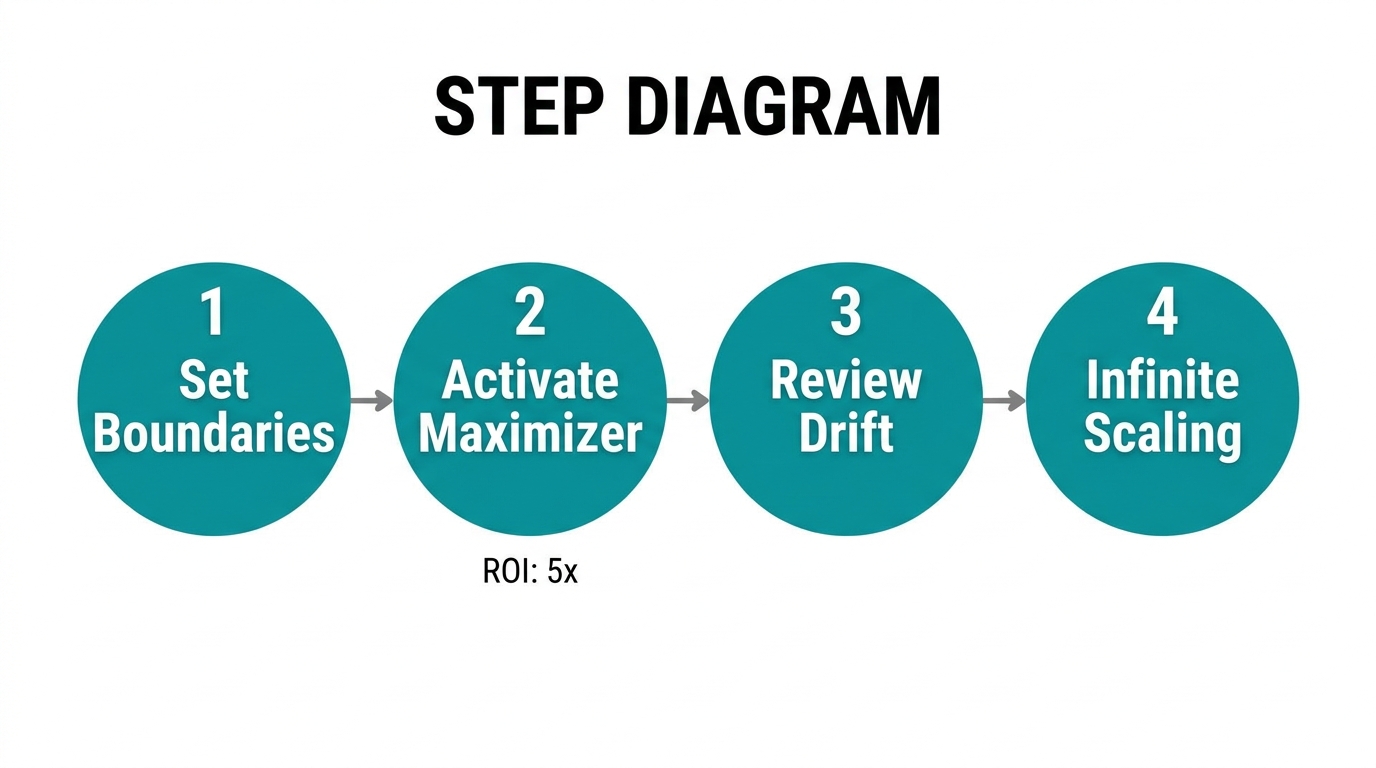
The ultimate goal for the 2026 founder is 'Maximizer Mode.' This is a setting where the CEO agent is authorized to keep the company running 24/7 without human intervention, doing whatever it takes to reach a specific KPI—be it MRR, user growth, or code completion. In this mode, the agent handles the entire lifecycle: from identifying a market gap to hiring a UGC creator through Stormy AI and running ads on TikTok or Meta Ads.
Building a Maximizer-ready organization requires 'Aqua-hiring' proven agent teams. Instead of building from scratch, leaders are now importing entire company structures from repositories like Superpowers or Agency Agents. For example, a game studio founder might import a Don Cheetos Game Studio template into Paperclip, instantly gaining a Creative Director, a Producer, and a Technical Director pre-configured with the latest Godot development skills. This modularity allows startups to pivot faster than ever before in human history.
Conclusion: The Board Member Mindset
Transitioning from a 'Doer' to a 'Board Member' is the hardest psychological hurdle for any founder in 2026. It requires letting go of the terminal and embracing the Persona. By using Paperclip to orchestrate your workforce, you ensure that your 'AI employees' are not just working, but working toward a vision that reflects your unique taste and values. As we move further into the era of the zero-human company, the most successful leaders won't be those with the best technical skills, but those who can most clearly define what 'success' looks like for their silicon staff. Start by setting your heartbeat, defining your QA handoffs, and monitoring your token spend—your 24/7 workforce is waiting for its first assignment.