In 2026, the traditional search bar is no longer the king of ecommerce. We’ve entered the era of Agentic Commerce, where consumers don’t scroll through pages of blue links; they talk to AI shopping agents like Amazon’s Rufus and Google’s Gemini to make decisions for them. This shift has fundamentally changed how we scale brands. If your product listings aren't 'agent-readable,' you’re effectively invisible to the millions of shoppers delegating their buying decisions to AI. While your competitors are still keyword-stuffing for 2024, the winning brands this year are focusing on semantic context, signal-driven discovery on TikTok Shop, and conversational ad placements.
The Dawn of Agentic Commerce: Beyond the Search Bar
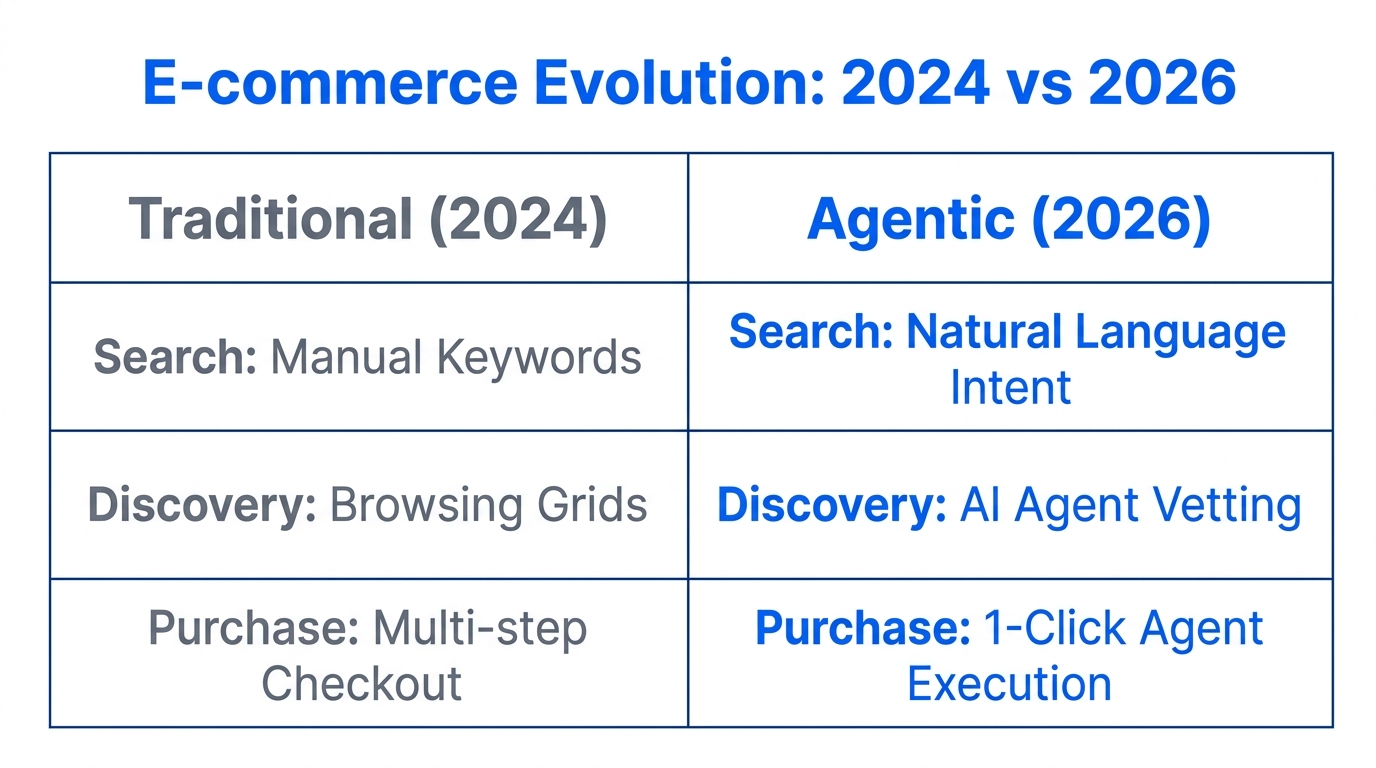
By the start of 2026, the ecommerce landscape underwent a massive transformation known as "The Great Orchestration." We moved away from a retailer-by-retailer tactic toward a unified, signal-driven ecosystem. According to research from Skai, retail media has officially become the 'operating system' of commerce, uniting media, merchandising, and AI discovery.
Consumers now start their journeys by asking questions like, "Which espresso machine is best for a small apartment with a $300 budget?" instead of typing "espresso machine." Winning in 2026 requires your product data to be the primary answer provided by these AI agents. This isn't just about SEO; it’s about appearing in the conversational flow of a purchasing assistant that already knows the user’s preferences, past purchases, and budget constraints.
"Retail media is no longer a bespoke cottage industry—it's a programmatic standard where AI agents decide which brands survive the discovery phase."
Optimizing for 'Agent-Readability': The New SEO
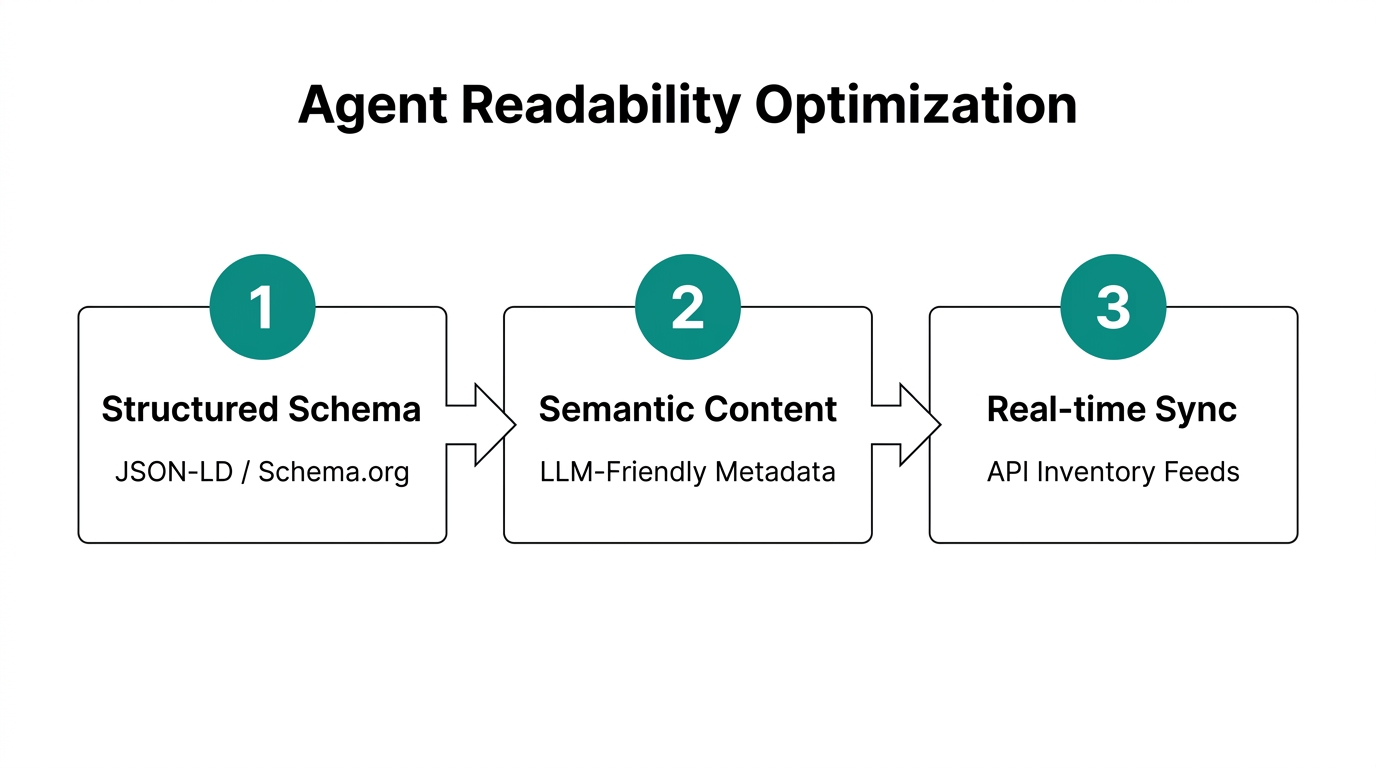
To win with Amazon Rufus or Google Gemini, your listings must move beyond simple keywords. AI agents look for semantic context—the deep meaning behind your product features and how they solve specific user problems. If your listing says "waterproof boots," Rufus might ignore it for a query about "snow trekking gear." If your listing explains the insulation rating, sole grip on ice, and ankle support for uneven terrain, the agent identifies the fit.
The Semantic Shift Playbook
- Structured Data is King: Use every available attribute field in Amazon Seller Central. AI agents ingest these structured data points to build their recommendation models.
- Answer-Based Bullet Points: Frame your features as answers to common customer questions. Instead of "5000mAh Battery," use "Provides 2 full charges for iPhone 15, making it perfect for long flights."
- Natural Language Reviews: AI agents weight customer reviews heavily. They look for recurring phrases that indicate real-world utility. An AI ecommerce employee like Stormy AI can summarize recurring problems in your reviews so you can update your listing data to address them before the agent de-prioritizes you.
Rufus Ad Integration: Bidding on Conversation
In Q4 2025, Amazon officially launched sponsored placements within Rufus. Unlike traditional Sponsored Products that appear on a search results page, Rufus ads are dynamically generated based on the conversational context. This means the ad copy might change depending on what the user just asked the AI.
To scale these ads, you need a hybrid strategy. You aren't just bidding on "dog food"; you're bidding on the intent of a shopper asking for "organic dog food for senior labs with joint pain." High-intent conversational placements have seen conversion rates climb to 20%+ for Prime members this year, significantly higher than traditional search ads.
| Feature | Amazon Ads (Rufus) | Google Ads (Gemini/AI Max) |
|---|---|---|
| User Intent | High: Transaction-focused conversations. | Mixed: Research and discovery-led. |
| ROI Average | 5.2x | 4.1x |
| Data Ownership | Low (Amazon-walled garden). | High (Direct-to-Consumer focus). |
| Ad Placement | Inside the chat interface. | AI Overviews and Search results. |
Managing these dynamic bids is a full-time job. This is where Stormy AI steps in as your autonomous teammate. Stormy can pull campaign performance from Amazon Ads and Google Ads every morning, compare the ROAS across conversational vs. search placements, and flag underperforming campaigns in a shared spreadsheet for your approval.
TikTok Shop and the 'Discovery' Surge
While Amazon and Google dominate the bottom of the funnel, TikTok Shop has become the 2026 leader in Discovery Commerce. 35% of U.S. consumers now shop or browse on TikTok weekly. The shift here is from "query-based" (searching for a product) to "signal-driven" (the algorithm knowing you want a product before you do).
Success on TikTok Shop in 2026 relies on shoppable video and creator affiliates. The TikTok algorithm tracks signals like watch time, engagement, and "save" rates to determine which products to surface in the "For You" feed. The secret to scaling is high-volume creator outreach.
"In 2026, the product doesn't find the customer; the customer's behavioral signals trigger the product's appearance."
Scaling a creator program manually is impossible for a lean team. You can ask Stormy AI to discover creators across TikTok Shop and newsletters, store their rates in a creator CRM, and send hyper-personalized outreach. Once the posts are live, Stormy tracks the affiliate posts, refreshes your leaderboard, and sends polite follow-ups to creators who haven't posted their content yet.
The 2026 Hybrid Playbook: Driving Google Traffic to Amazon
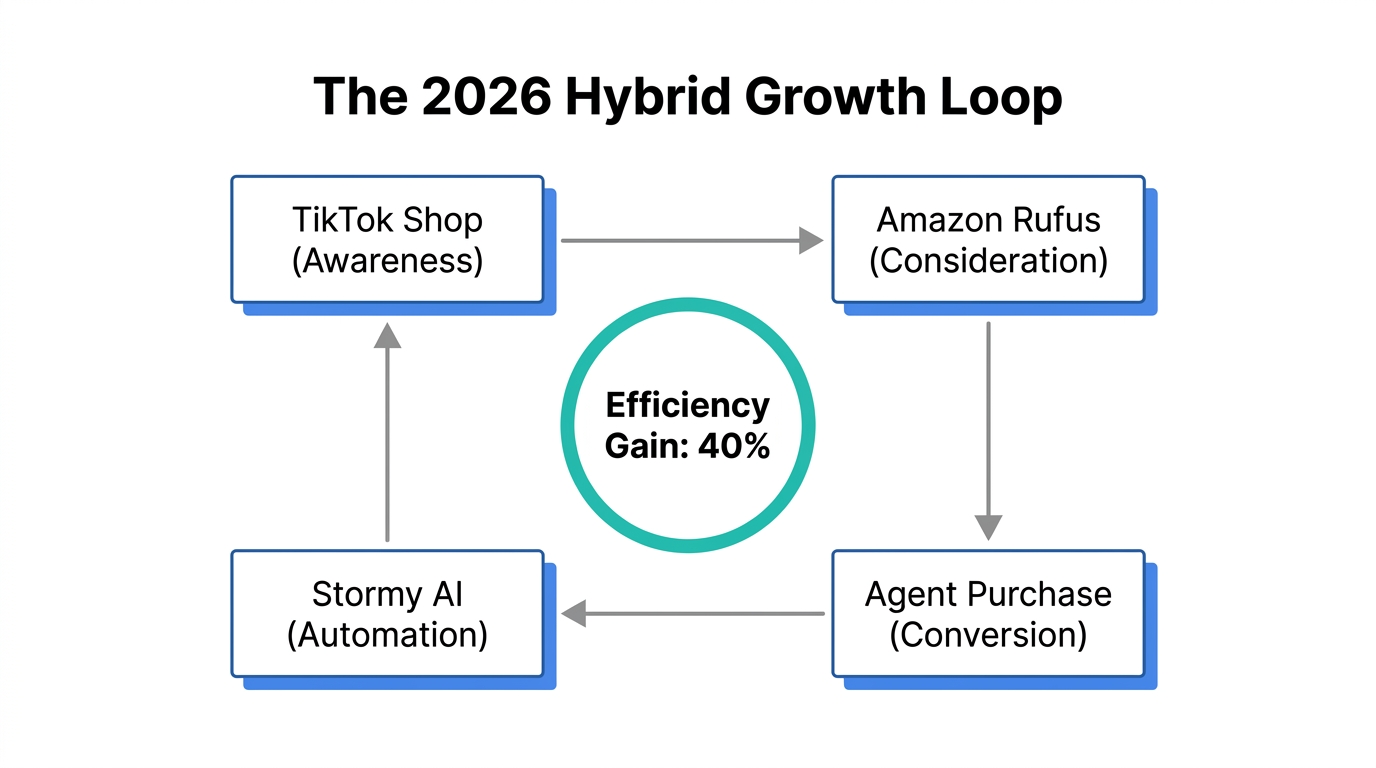
One of the most effective strategies this year is using Google Ads to drive traffic directly to Amazon. The Amazon A10 algorithm now gives 3x more ranking weight to sales originating from external traffic. This makes external traffic mandatory for organic ranking.
Step 1: Selection & Deep Linking
Choose 3–5 high-margin products with at least 50 reviews and a 4.2-star rating. Use a tool like Pacvue or URLgenie to ensure your Google ads open the Amazon app directly. If you don't use deep links, you face an 80% bounce rate as users get stuck on a mobile web login screen.
Step 2: Attribution & Subsidies
Generate Amazon Attribution tags to track which Google keywords lead to actual sales. By doing this, you can enroll in the Brand Referral Bonus program, which gives you a 10% credit on sales driven from external traffic—essentially subsidizing your Google Ads spend.
Step 3: Automated Monitoring with Stormy AI
As you scale ad spend across multiple channels, your back office can become messy. Stormy AI acts as your AI ecommerce employee, keeping the operation running in the background:
- Inventory Pulse: Stormy monitors inventory levels across Shopify and Amazon and flags stockout risks before your ads waste budget on out-of-stock items.
- Supplier Follow-ups: If a shipment is late, Stormy sends a polite email to the supplier on a schedule you define, ensuring you have the stock to back up your scaling efforts.
- P&L Reporting: Every week, Stormy pulls spend from Meta, Google, and TikTok and drops a polished P&L report into a shared workbook so you know exactly what your TACOS (Total Advertising Cost of Sale) looks like.
Winning the Era of Agentic Commerce
Optimizing for AI shopping agents isn't a