Building an AI Workforce: How to Deploy OpenClaw for Shopify Marketing Automation via MCP
Learn how to build a self-hosted AI workforce using OpenClaw and the Model Context Protocol (MCP) to automate Shopify marketing, theme edits, and customer analysis in 2026.
In 2026, the era of "deterministic" marketing automation—where rigid if/then rules governed your customer journeys—is officially over. We have entered the age of Agentic Commerce, a shift so profound that Shopify President Harley Finkelstein calls it the biggest shift in technology since the internet. Today, high-growth merchants are no longer just using tools; they are deploying autonomous AI workforces. With orders attributed to AI-powered search rising 11x since early 2025, the ability to build and control your own AI agents is no longer a luxury—it is a competitive necessity.
This playbook provides a technical, step-by-step guide for growth marketers to deploy OpenClaw, the disruptive open-source framework that crossed 100,000 GitHub stars earlier this year. By leveraging the Model Context Protocol (MCP) and tools like Adzviser, you can create a digital employee that doesn't just send emails, but actually manages your Shopify store, monitors sentiment, and optimizes your ad spend 24/7.
The Infrastructure: Deploying OpenClaw for 24/7 Operations
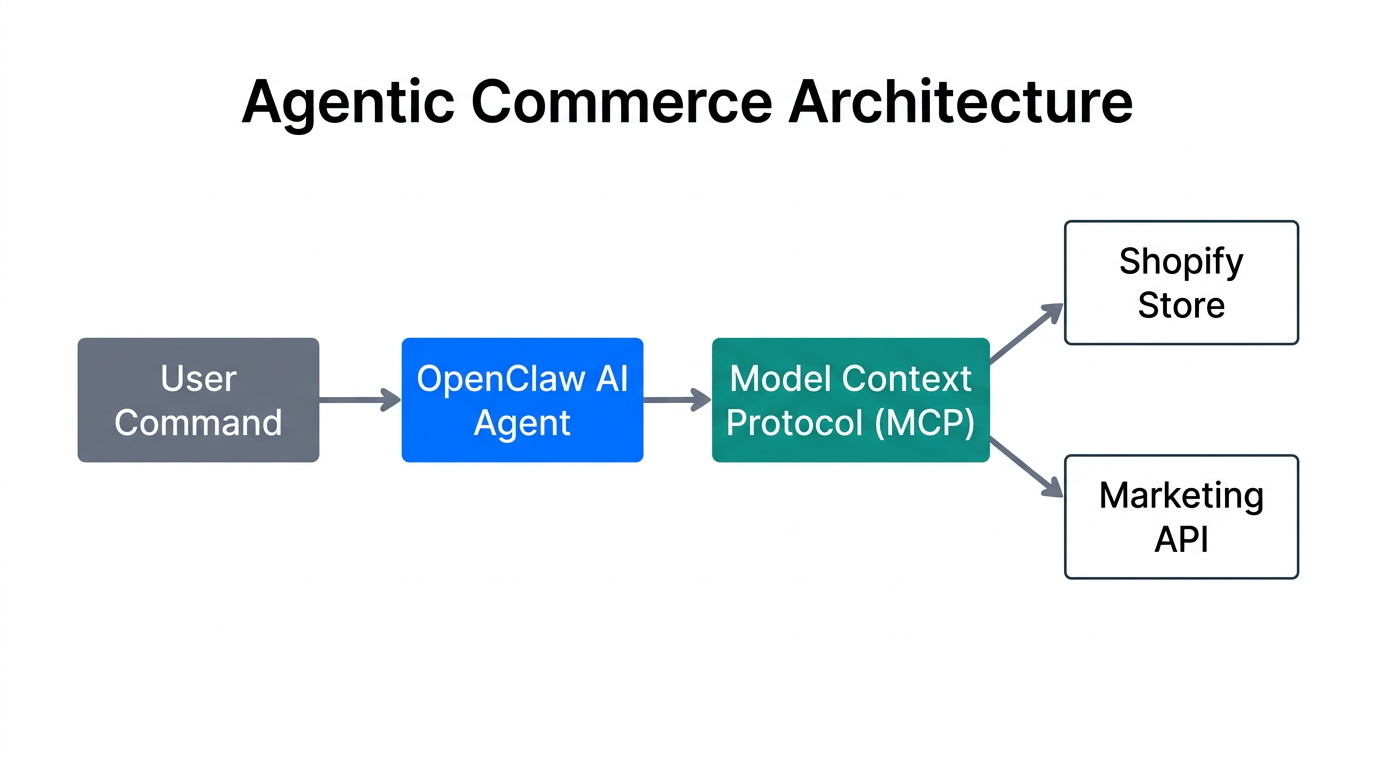
To move beyond simple chat interfaces and into true autonomous fulfillment, your AI agent needs a permanent home. Running OpenClaw on a local laptop is fine for testing, but for production-grade Shopify automation, you must deploy on a Virtual Private Server (VPS). This ensures your "digital employee" stays online even when your laptop is closed, avoiding the "runaway loop" errors that occur with intermittent connections.
Step 1: Provisioning Your VPS
For a reliable setup, choose a provider like DigitalOcean or Tencent Cloud. A standard instance with 4GB RAM and 2 CPUs (roughly $20/mo) is sufficient to handle multi-agent orchestration. Use Docker to containerize your OpenClaw environment, which simplifies dependency management and allows for rapid scaling.
"The transition from search-and-click to autonomous fulfillment is redefining the e-commerce moat. In 2026, your first-party data is the only sustainable advantage you have left."
Bridging the Data Gap: Adzviser and the Model Context Protocol
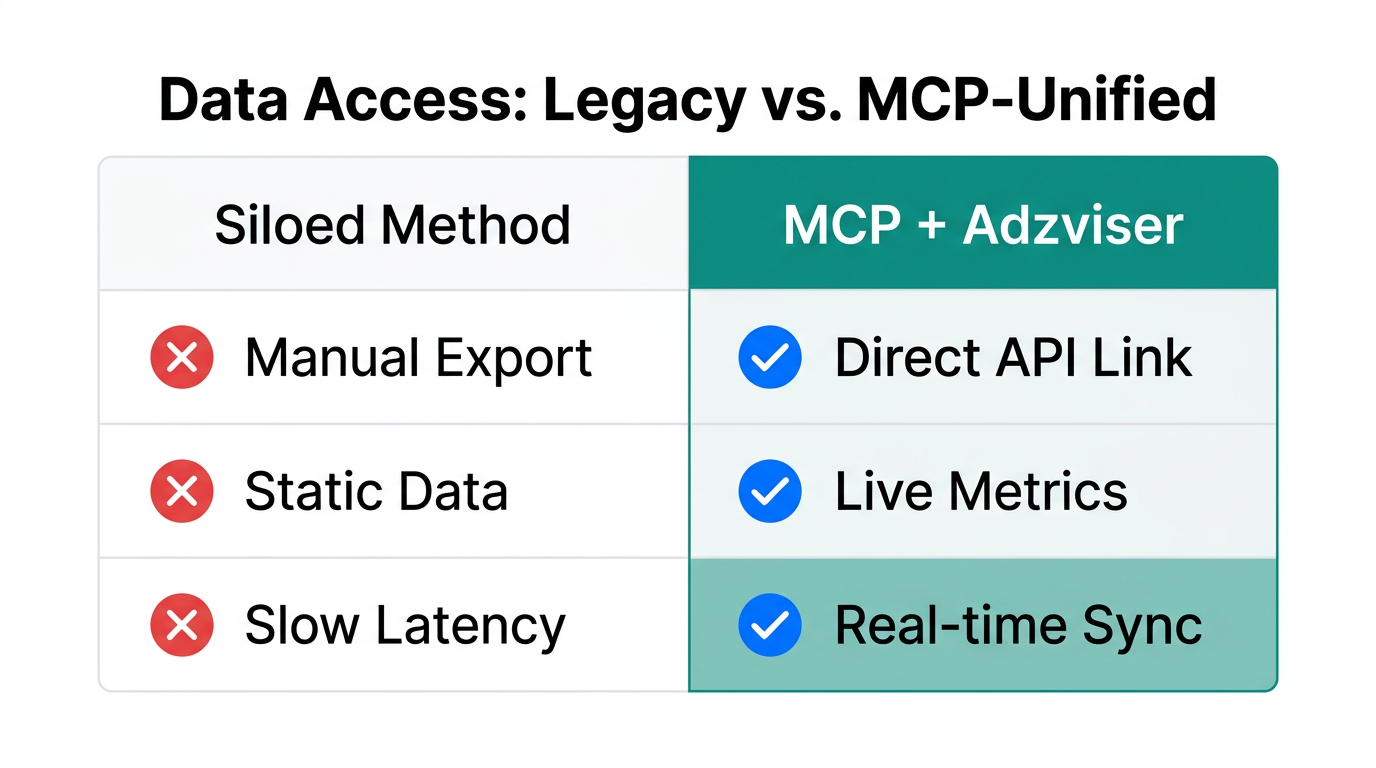
The biggest hurdle in AI automation has traditionally been data silos. If your agent cannot see your Shopify sales alongside your Meta ad spend, its decisions will be flawed. This is where the Model Context Protocol (MCP) becomes transformative. MCP acts as a standardized "connector" that allows AI models to securely read from and write to external data sources without custom, brittle API integrations for every single task.
To implement this, we recommend using Adzviser as your MCP bridge. Adzviser creates a unified workspace where Shopify, Google Ads, and Meta data are translated into a format OpenClaw can understand. This setup allows your agent to perform complex queries like: "If my ROAS on Meta drops below 2.0 and inventory for Product X is above 500 units, draft a flash-sale email in Klaviyo."
Configuring the Adzviser MCP Setup
- Create an account at Adzviser and connect your Shopify store.
- Generate an MCP Connection String from the Adzviser dashboard.
- In your OpenClaw configuration file (`config.yaml`), add the Adzviser endpoint under the `mcp_servers` section.
- Test the connection by asking OpenClaw to "summarize yesterday's sales performance compared to ad spend."
| Feature | OpenClaw (Self-Hosted) | Klaviyo (SaaS) | Enrich Labs (Specialist AI) |
|---|---|---|---|
| Logic Type | Agentic (Natural Language) | Deterministic (If/Then) | Specialist (AI Employees) |
| Data Control | Full Sovereignty | Vendor Lock-in | Managed Service |
| Cost Basis | Infrastructure + Tokens | Per Contact (Scales High) | Monthly Retainer |
| Best For | Experimental/Custom Workflows | Retention Marketing | Brands without Dev Teams |
The 'Shopify Manager Skill': Safe Store Edits
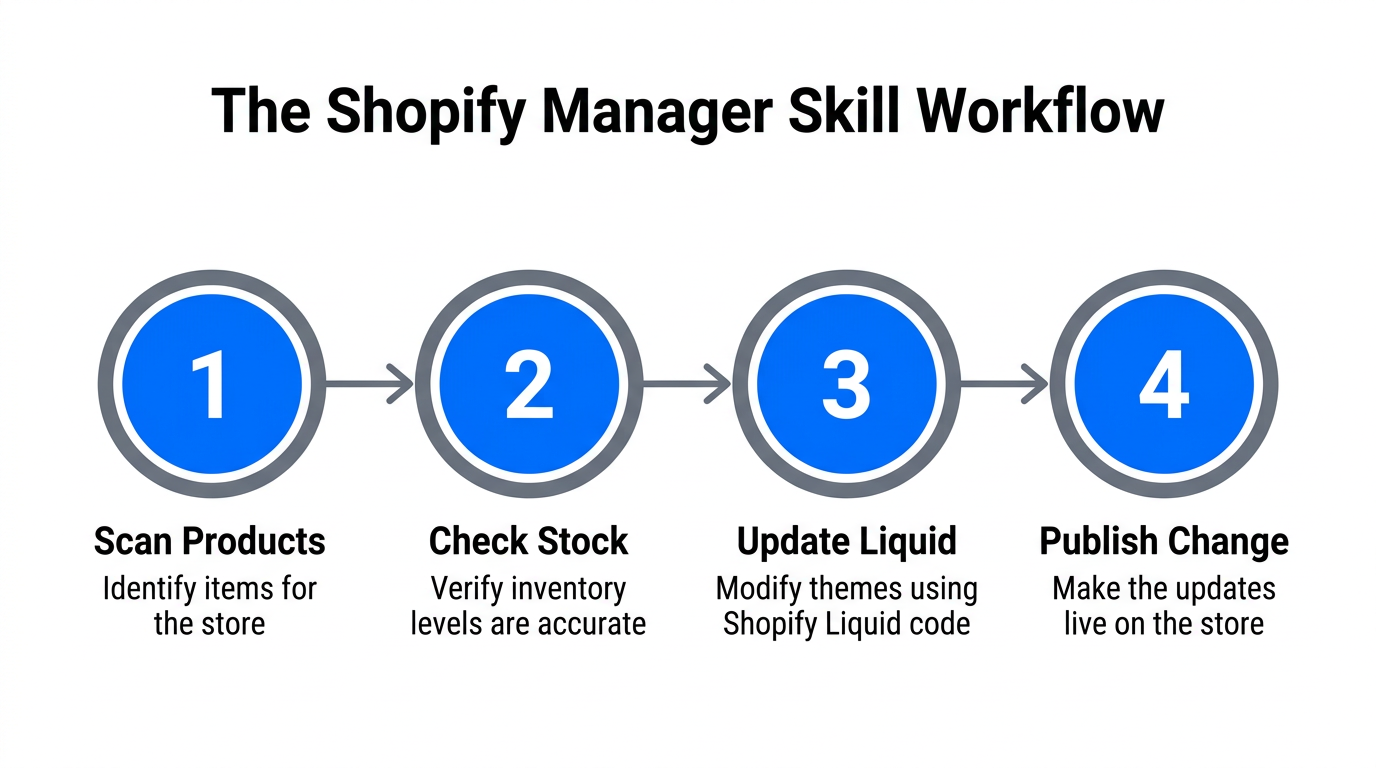
One of the most powerful features of the OpenClaw ecosystem is the shopify-manager skill. Unlike basic integrations that might accidentally break your live site, this skill uses a duplicate-and-preview workflow. This is essential for maintaining store stability while allowing AI to optimize your site copy or layout based on real-time performance data.
When you trigger a storefront optimization task, the agent clones your current live theme, applies the AI-generated edits to the copy, and generates a private preview URL. You (the human manager) receive a notification to approve the changes. Only after your approval does the agent publish the theme to live. According to OpenClaw's GitHub documentation, this prevents the "financial hallucinations" that occurred in early 2025 where agents occasionally set product prices to $0 by mistake.
"The shopify-manager skill isn't just about speed; it's about building a fail-safe environment where AI can experiment without risking your brand's reputation or revenue."
Orchestrating Multi-App Workflows with n8n
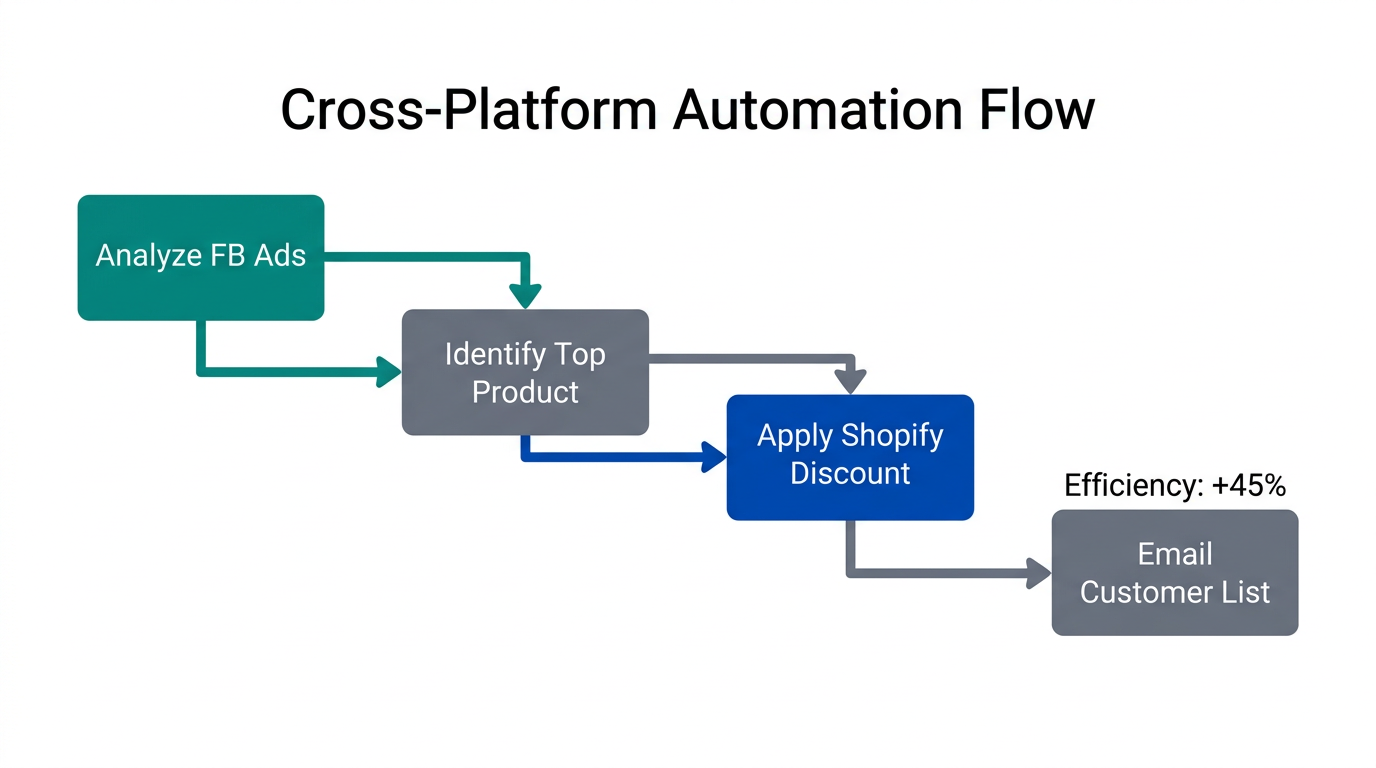
An AI agent is only as good as the apps it can talk to. To build a truly autonomous marketing workforce, you need to route OpenClaw's decisions through a workflow orchestrator like n8n. This allows for complex, multi-stage logic that spans your entire tech stack.
For example, you can build a Sentiment Response Engine:
- Trigger: A new review is posted on Shopify.
- AI Action: OpenClaw analyzes the review sentiment via the Adzviser MCP.
- Routing: If the sentiment is negative, n8n triggers a support ticket in Gorgias and alerts the team in Slack.
- Routing: If the sentiment is positive, OpenClaw drafts a personalized thank-you email in Klaviyo for human review.
This level of automation ensures that your customers feel heard while your team only focuses on high-stakes interactions. For brands looking to scale these relationships even further, platforms like Stormy AI can be integrated into the workflow to find and vet influencers who match the positive sentiment of your most loyal customers, turning happy buyers into brand ambassadors automatically.
Security Best Practices: Hardening Your AI Workforce
With great power comes significant risk. In early 2026, the AI agent community was rocked by CVE-2026-25253, a critical Remote Code Execution (RCE) vulnerability that allowed attackers to hijack agent connections. Furthermore, the ClawHub marketplace was found to contain malicious skills designed to exfiltrate Shopify API keys.
To harden your OpenClaw instance, follow these steps:
- Use Environment Variables: Never hardcode your Shopify API keys or Adzviser credentials into your scripts. Use a `.env` file and ensure it is included in your `.gitignore`.
- Set Token Spending Limits: To avoid the "runaway bill" phenomenon—where an inefficient agent spends thousands in API tokens overnight—set strict usage caps at both the LLM provider level (OpenAI or Anthropic) and within OpenClaw itself.
- Implement Human-in-the-Loop (HITL): For any action that involves spending money or modifying your live store, require a manual approval step via a webhook to Slack or email.
"Security in the age of agentic commerce isn't a checkbox; it's a constant process of auditing your digital employees just as you would audit a human ones."
Conclusion: The Future is Unified
Building an AI workforce for Shopify in 2026 is about more than just efficiency; it's about data moats. By self-hosting OpenClaw and using the Model Context Protocol, you ensure that your customer data remains your own, while gaining the ability to act on that data at a speed impossible for human teams alone. Merchants who embrace this "agentic" transition today—optimizing for the Universal Commerce Protocol (UCP) and automating their tactical execution—will lead the market for the rest of the decade.
Ready to start building? Begin by securing your Shopify data via Adzviser and deploying your first OpenClaw node. For high-growth brands looking to supercharge their creator strategy alongside their AI automation, Stormy AI provides the essential search and discovery tools to fuel your agents with the best influencer partnerships in the industry. The future of commerce is autonomous—it’s time to put your AI to work.