The OpenClaw Playbook: Replacing Your $2,400/mo VA with Autonomous Shopify Agents in 2026
Learn the OpenClaw playbook 2026 to replace expensive VAs with autonomous Shopify AI agents. A complete guide to enterprise agentic commerce and store automation.
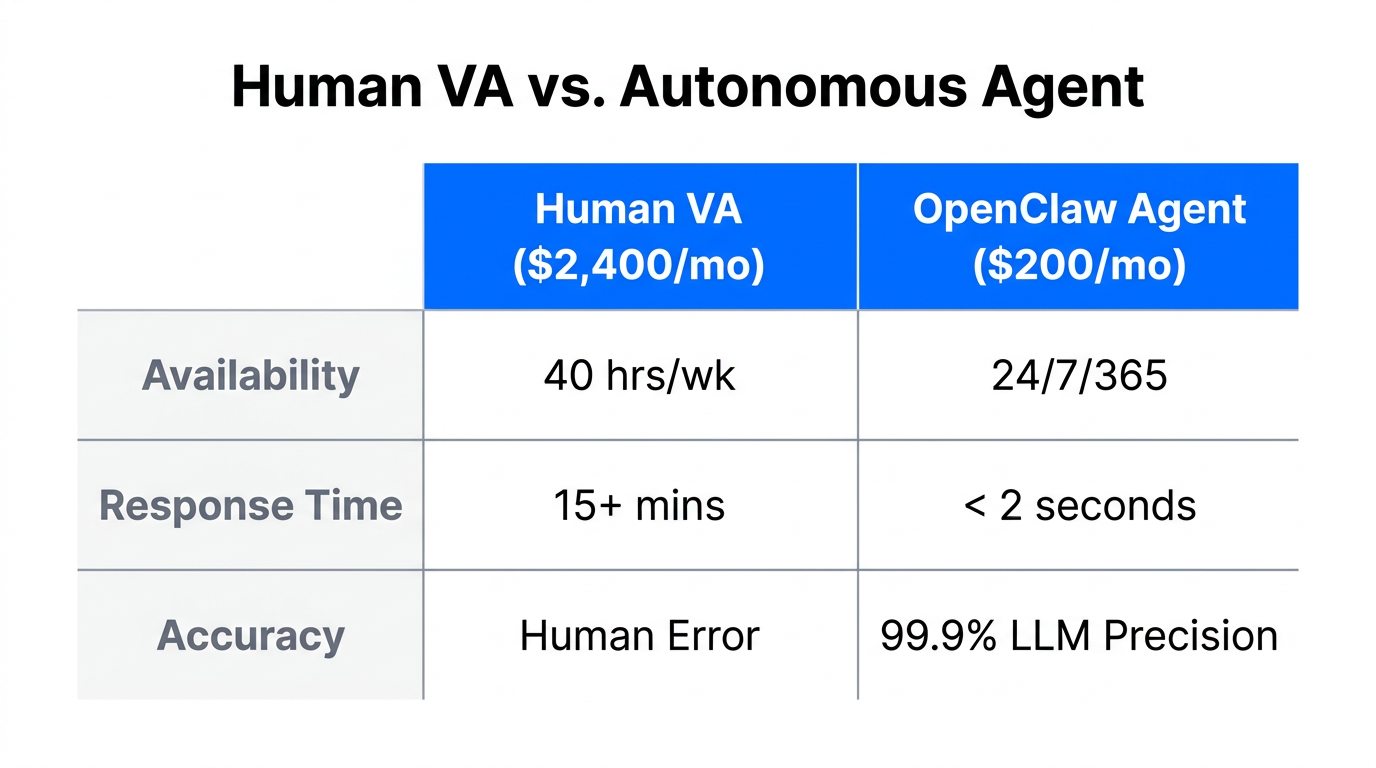
In 2026, the traditional Shopify operational model has hit a wall. For years, scaling a store meant hiring a fleet of Virtual Assistants (VAs) across different time zones to handle support tickets, influencer outreach, and inventory management. But the math no longer adds up. A standard VA costs roughly $2,400 per month, works in shifts, and is prone to human error. Enter the OpenClaw playbook 2026: a methodology for deploying autonomous "Clawbots" that manage your entire tech stack for less than the price of a monthly Shopify subscription. Recent data from Stormy AI shows that brands adopting agentic GTM platforms have seen a 55% increase in operational efficiency and a 35% reduction in costs.
This isn't just about chatbots. We are witnessing the shift from Direct-to-Consumer (DTC) to Business-to-Agent (B2A) commerce. In this new era, your store doesn't just wait for a customer to click a button; it proactively manages its own health, negotiates with influencers, and even optimizes its own metadata to ensure it is recommended by other AI agents. According to Marketing Interactive, OpenClaw has reached over 274,000 GitHub stars as of March 2026, cementing its place as the backbone of autonomous commerce.
"The agent economy is a genuinely new channel. It reduces friction to near zero because the agent supports decisions that are already forming in the consumer’s mind."
The Architecture of an Autonomous Store Manager
To understand why Shopify AI agents are outperforming human teams, we have to look at their logic. Traditional automation tools like Zapier are reactive—they wait for a trigger to perform a single, rigid action. OpenClaw agents, however, are endowed with reasoning capabilities. They operate with system-level access to browse, negotiate, and execute transactions across your store’s entire ecosystem.
The core of this revolution is the Model Context Protocol (MCP). This allows an AI brain (like GPT-5 or Claude 4) to "understand" the structure of your Shopify store as if it were a human expert. Instead of just pushing data from point A to point B, the agent can look at a declining sales trend, cross-reference it with competitor pricing via a web scrape, and autonomously adjust your discount codes to maintain your 14.2% conversion rate—a benchmark for agent-led sessions according to the Shopify Engineering Blog.
Building Your 2026 Agentic Tech Stack
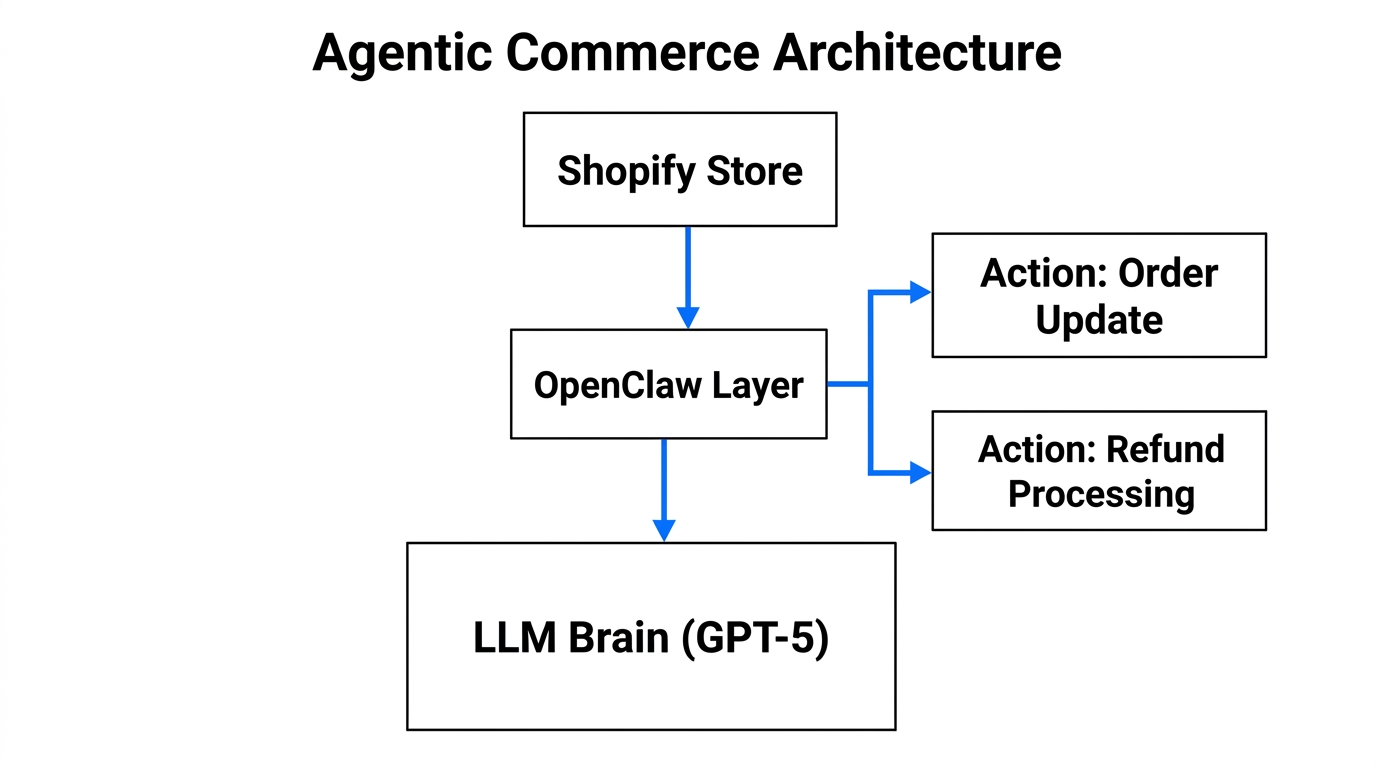
Deploying an autonomous store manager requires more than just a Shopify account. You need a connectivity layer, a secure host, and a reasoning engine. For most enterprise-level brands in 2026, the stack looks like this:
- Connectivity: Composio acts as the primary bridge, providing the Shopify MCP Connector that lets the agent read and write store data.
- Analytics: Adzviser provides a secure server for real-time sales reporting, ensuring the agent has accurate data to make decisions.
- Hosting: Tencent Cloud Lighthouse is the preferred choice for 24/7 uptime, offering dedicated OpenClaw templates that simplify the technical setup.
- Security: Clawly provides the necessary "circuit breakers" to ensure agents don't exceed spending limits or leak sensitive customer data.
| Feature | OpenClaw Agents | Shopify Flow / Zapier |
|---|---|---|
| Logic Engine | Reasoning: Understands context & exceptions. | Rules: Rigid "If-This-Then-That". |
| Permission Level | System-level (Browser, Desktop, APIs). | API-level only (Restricted). |
| Operational Cost | Low (~$50/mo VPS + API tokens). | Variable (Per-task/subscription fees). |
| Reliability | Variable (Requires UI maintenance). | High (Standardized API connections). |
The 5-Step OpenClaw Playbook for Shopify
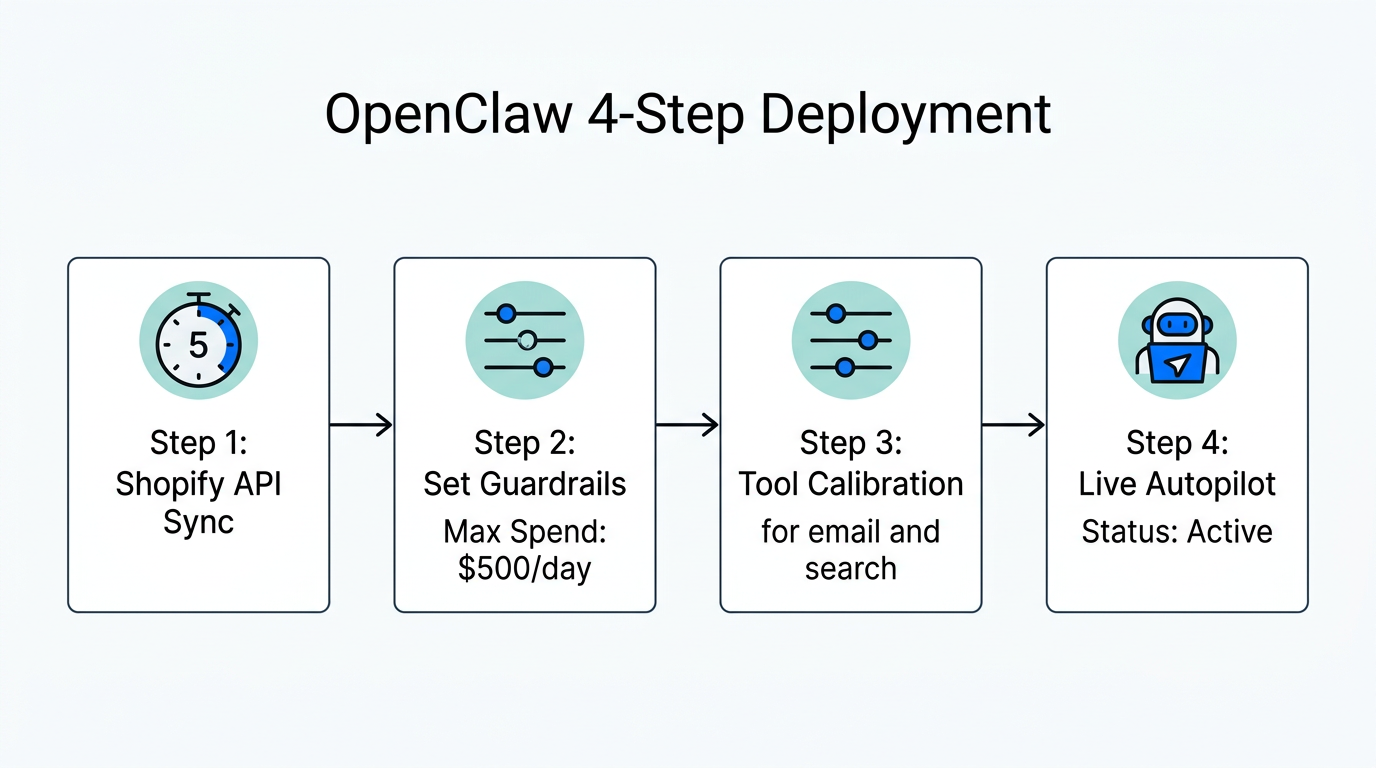
Ready to replace your manual workflows with enterprise agentic commerce? Follow this step-by-step deployment guide used by top agencies to scale their partners in 2026.
Step 1: Establish Your Infrastructure
Never run a commercial agent on a local laptop. You need a 24/7 environment. Use a VPS provider like Hetzner or Tencent Cloud to host your OpenClaw instance via Docker. This ensures your agent—whether it's handling support or marketing—never "sleeps." Hosting costs typically range from $10 to $50 per month, a fraction of a human salary.
Step 2: Connect the Shopify "Brain"
Use the Composio Shopify Connector to link your store’s Admin API. This step is critical because it utilizes the Model Context Protocol, allowing the AI to actually perceive your store's structure, from meta-objects to customer tags. Without this, the agent is just a blind chatbot; with it, it is a fully functioning employee.
"OpenClaw isn't just a model; it's the hands and legs of your business. In the B2A era, content must be optimized so autonomous agents can discover and parse your brands." — Jacky Chan, CTO, Votee AI
Step 3: Define Scoped Roles ("Klara" and "Martin")
Don't try to build one agent that does everything. Instead, define specific roles with unique permissions:
- "Klara" (Support Agent): Connected to your email and WhatsApp Business. She has permissions to issue refunds under $50 and track packages.
- "Martin" (Marketing Agent): Connected to Stormy AI. He searches for influencers matching your niche, negotiates affiliate rates, and handles sample shipping via the API.
Step 4: Knowledge Injection via SOPs
An agent is only as good as its training. Feed your agents your Standard Operating Procedures (SOPs) directly from Notion or Google Drive. If Klara knows your exact return policy for holiday sales, she won't hallucinate or make mistakes that cost you money. This "Knowledge Injection" creates a brand-consistent experience across every channel.
Step 5: Implement Human-in-the-Loop (HITL) Safety
Security is the biggest barrier to Shopify AI agents. As reported on Reddit, a misconfigured agent once entered a "Loop of Doom," purchasing its own inventory and depleting a marketing budget in hours. To prevent this, use Clawly to set Financial Approval Gates. For example: "Agent can approve refunds under $50, but must ask for permission for anything higher."
Automating Influencer Growth with Stormy AI
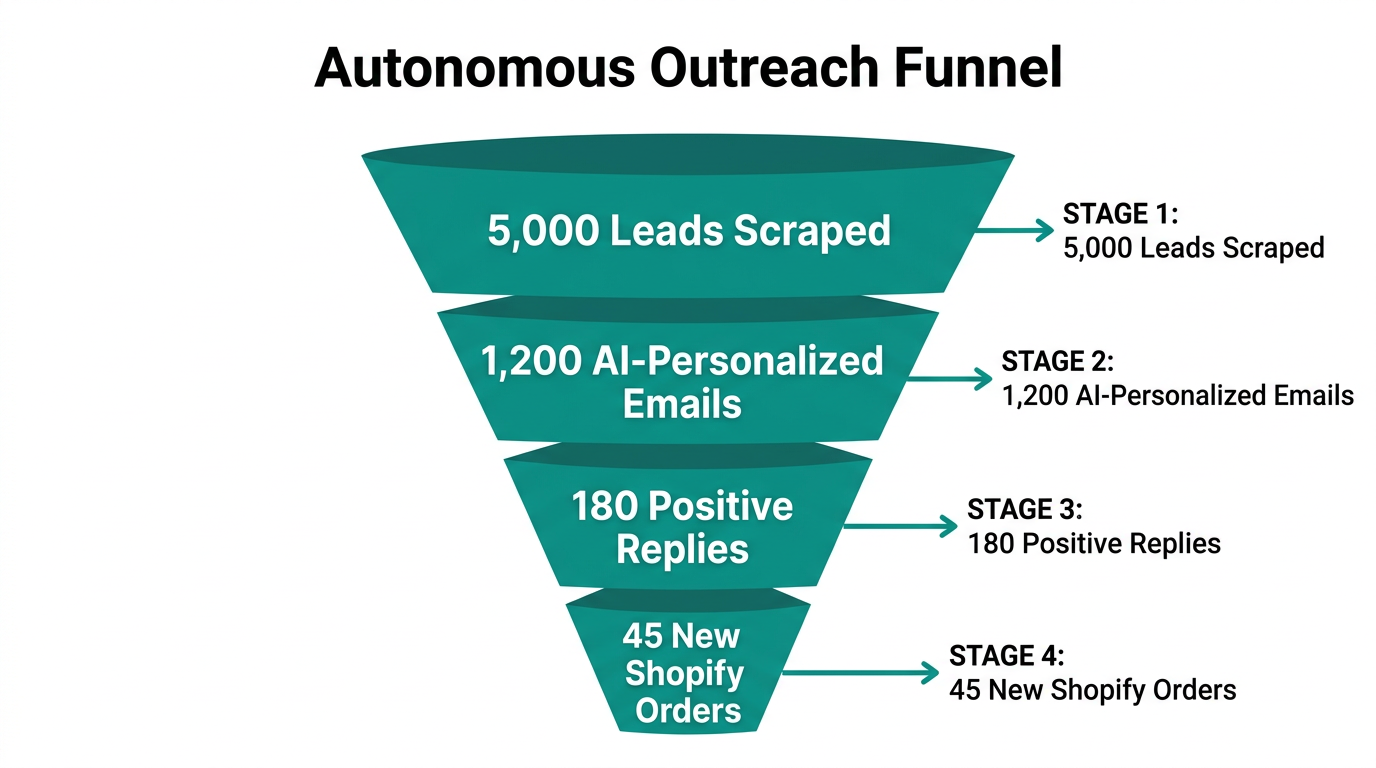
One of the most powerful applications of the OpenClaw playbook is in influencer marketing. Traditionally, a VA would spend hours scrolling TikTok and Instagram, manually emailing creators. In 2026, this process is entirely autonomous. By integrating Stormy AI, your "Martin" agent can identify creators that fit your brand’s aesthetic and engagement requirements instantly.
According to a case study by Alchemy London, brands using this automated seeding and attribution process achieved 4x revenue growth in early 2026. The agent identifies the influencer on Stormy AI, sends a personalized outreach email, and if the creator agrees, the agent autonomously creates a draft order in Shopify and ships the product. This reduces your CAC by up to 62%, as the agent operates at a scale no human team could match.
Navigating the Risks of Autonomous Store Managers
While the rewards are massive, the risks are real. Over 220,000 OpenClaw instances were found to be exposed on the public internet with zero authentication earlier this year (Source: Reddit). Before you turn your store over to an agent, you must address the "Technical Wall."
Peter Steinberger, the creator of OpenClaw, emphasizes that the move to open-source allows merchants to keep their sensitive PII (Personally Identifiable Information) on their own servers rather than in third-party clouds. However, this means the merchant is responsible for security. Circuit Breakers are your best friend. Set hard limits in your `.env` file for maximum spend per transaction and require human approval for any wholesale purchases.
"OpenClaw is the hands and legs. But the owner must remain the eyes and the brain. Never give an agent write-access to your bank account without a circuit breaker."
From SEO to Agentic Search Optimization (ASO)
As we move deeper into 2026, the way customers find your store is changing. We are no longer just optimizing for Google; we are optimizing for Agentic Search Optimization (ASO). Because AI models now "buy" for humans, merchants use OpenClaw to push real-time structured data—like exact inventory counts and dynamic pricing—to AI search crawlers.
This ensures that when a user asks their personal AI assistant to "find the best eco-friendly sneakers under $100," your product is the first one recommended. Semrush 2026 Data shows that ASO has officially surpassed traditional SEO in monthly search volume growth. If your store isn't "agent-ready," you are effectively invisible to the most valuable consumers of 2026.
The Bottom Line: Adapt or Be Automated
The transition to enterprise agentic commerce isn't just a trend; it's a survival mechanism. Replacing a $2,400/mo VA with a $50/mo OpenClaw agent isn't just about saving money—it's about increasing the velocity of your business. While your competitors are waiting for their human teams to wake up and answer emails, your autonomous store manager has already handled 50 inquiries, negotiated three influencer deals via Stormy AI, and adjusted your prices for the morning commute rush.
To get started, don't build from scratch. Use the Composio Shopify Connector, audit your data with Adzviser, and ensure you have human-in-the-loop gates in place. The era of the hands-free store is here—make sure you're the one holding the controller.