Mastering LinkedIn Content Repurposing with OpenClaw in 2026: Automating the Creator Workflow
Learn how to use OpenClaw LinkedIn content automation in 2026 to repurpose long-form video into high-performing posts, automate engagement, and save 10 hours weekly.
In 2026, the role of the content marketer has shifted from a manual creator to a high-level architect. The "spray and pray" method of social media distribution has been replaced by precise, agentic workflows that turn single assets into multi-channel ecosystems. At the center of this revolution is OpenClaw, an open-source autonomous AI agent framework that has fundamentally changed how we approach LinkedIn content automation. With over 247,000 stars on GitHub, OpenClaw is no longer a niche tool for developers—it is the engine powering the world's most efficient marketing departments.
The 2026 Content Factory: From Long-Form to LinkedIn Hooks
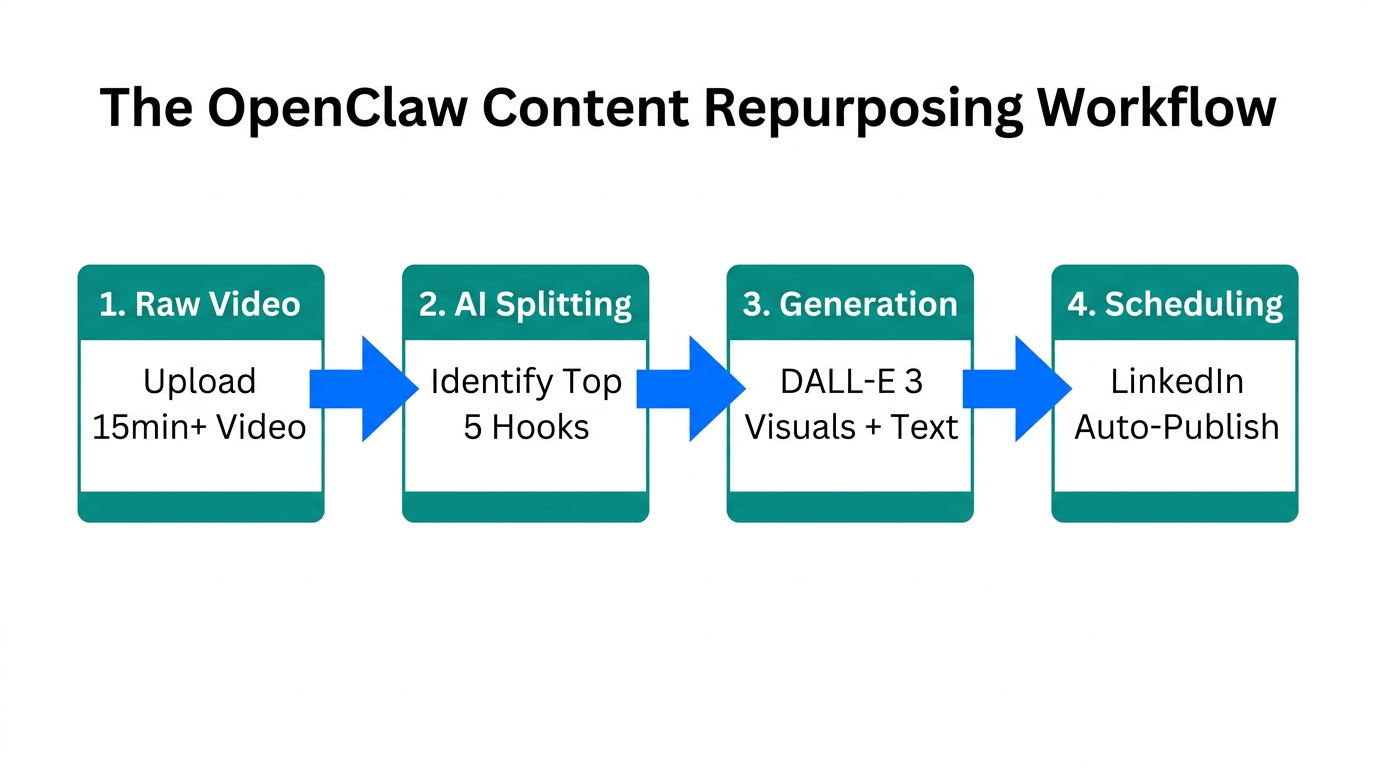
Modern marketing demands volume without sacrificing quality. The 2026 "Content Factory" model uses OpenClaw to solve the most significant bottleneck in social media: repurposing. Instead of spending hours manually scrubbing a 20-minute YouTube video or a 3,000-word whitepaper for "LinkedIn-friendly" snippets, marketers are now deploying specialized OpenClaw skills that handle the heavy lifting autonomously.
These agents don't just summarize; they analyze the sentiment, identify high-engagement timestamps, and draft "hooky" LinkedIn posts tailored to your specific voice. By automating this transformation, preliminary reports show that creators are reclaiming between 5 to 10 hours per week on routine professional tasks. This reclaimed time is better spent on high-level strategy or 1-on-1 relationship building.
"OpenClaw isn't just a model; it's the car. You plug the engine (LLM) into it, and it does the driving," says founder Peter Steinberger on steipete.me.
Model Routing for ROI: Efficiency Meets Quality
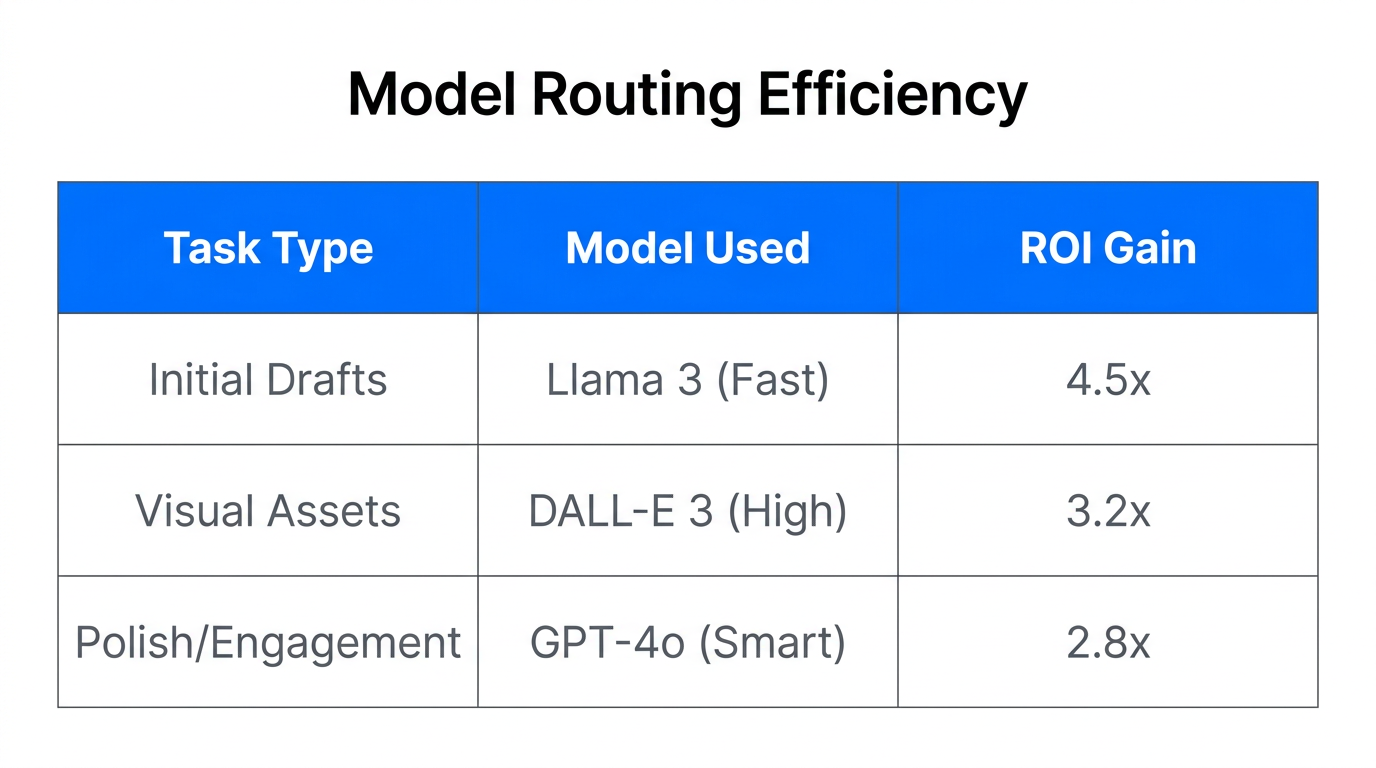
One of the biggest mistakes in AI social media repurposing is overspending on API tokens. Using a high-reasoning, high-cost model like Claude 3.5 Opus or GPT-5 for simple tasks like data cleaning or transcript formatting is a recipe for a drained marketing budget. In 2026, savvy marketers use Model Routing to maximize their ROI.
| Task Type | Recommended Model | Purpose |
|---|---|---|
| Research & Transcription | GPT-4o-mini | Cost-efficient processing of raw data and initial drafts. |
| Creative Copywriting | Claude 3.5 Sonnet | Final polish, tone adjustments, and "human-like" nuances. |
| Complex Logic/Strategic Planning | GPT-4o / GPT-5 | High-level campaign architecture and multi-step reasoning. |
By instructing an OpenClaw agent to route simple research tasks to cheaper models and only use premium models for the final 20% of the creative process, agencies are slashing their operational costs by up to 60%. This hybrid approach ensures that the "hook" of your LinkedIn post remains sharp while the background labor remains affordable.
Visual Automation: Platform-Native Imagery with DALL-E 3
Text-only posts are no longer enough to stop the scroll. In 2026, LinkedIn creator workflows must include high-quality visuals. OpenClaw integrates directly with DALL-E 3 and Midjourney via custom skills to generate platform-native imagery for every single post.
Instead of searching through generic stock photo sites, the agent analyzes the finalized LinkedIn copy, extracts the core theme, and generates a custom image that matches your brand's aesthetic. This level of visual automation ensures that your distribution isn't just fast—it's aesthetically consistent. Whether you need a futuristic 3D render for a tech post or a minimalist infographic, OpenClaw handles the prompt engineering and generation in the background.
"65% of OpenClaw users are now in the enterprise sector, utilizing agentic visuals to maintain brand authority across thousands of automated posts."
Automated Engagement: Handling the "Initial Loop"
The first 60 minutes after posting on LinkedIn are the most critical for the LinkedIn algorithm. However, most marketers are too busy creating the next piece of content to engage with comments in real-time. OpenClaw solves this by setting up automated LinkedIn engagement agents. These agents can handle the initial wave of replies, fostering community growth immediately after a post goes live.
Crucially, these agents are not just "thanks for sharing" bots. By using intent-driven scoring, they can analyze a commenter's profile via LinkdAPI and provide personalized, value-added responses. For example, if a CTO comments on your post, the agent can acknowledge their specific industry background in the reply, significantly increasing the likelihood of a connection request.
If you're looking to scale this even further by partnering with external creators, tools like Stormy AI can help you discover the right influencers to amplify your automated content, ensuring your high-quality repurposed posts reach the exact audience they were designed for.
Safety First: Mitigating Risk and Avoiding "LinkedIn Jail"
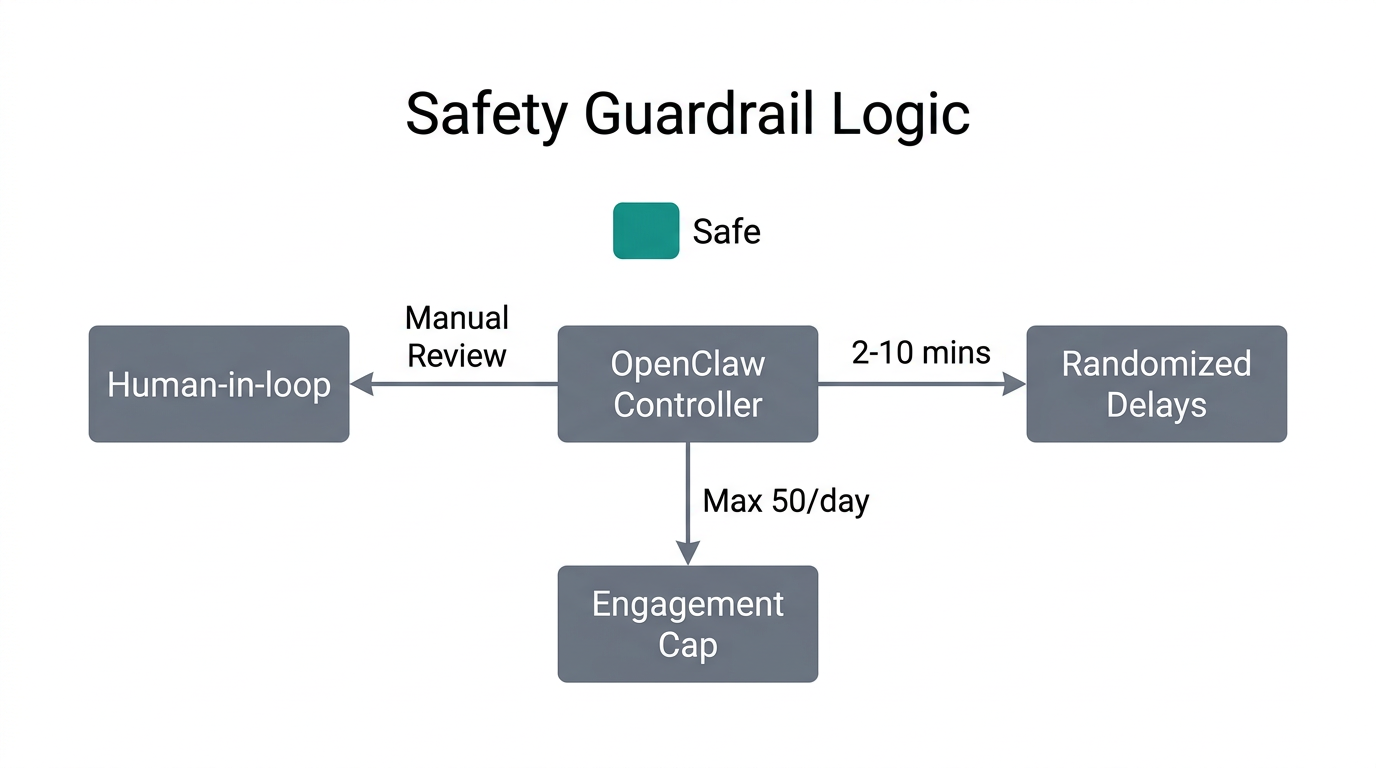
While OpenClaw is powerful, it is also experimental. Running agents through raw browser automation is a fast track to a permanent ban. LinkedIn’s session-level detection has become incredibly sophisticated in 2026. To bypass this, marketers must move away from "clicking buttons" and toward Agentic APIs.
- Use BeReach: Instead of brittle browser scripts, use BeReach, which provides a stable, dedicated API layer for AI agents to interact with LinkedIn securely.
- Account Warm-Up: Never automate a fresh account at full scale. A 2–3 week warm-up period is mandatory, starting with just 5 profile visits and scaling slowly to avoid detection.
- Anti-Loop Rules: Always include explicit instructions in your
SKILL.md. If a task fails twice, the agent must stop and alert a human to prevent infinite loops and wasted API credits. - Private Hosting: Given security concerns with cloud providers, many technical users are shifting to self-hosted frameworks on a private VPS from Hostinger to maintain full data ownership.
The Playbook: Setting Up Your OpenClaw LinkedIn Engine
Step 1: Source Material Integration
Connect your OpenClaw agent to your content repository (Notion, Google Drive, or YouTube). Use the LinkdAPI skill to fetch trending topics in your niche to ensure your repurposed content remains relevant to 2026 trends.
Step 2: Drafting and Model Routing
Set up a workflow where GPT-4o-mini extracts key insights from your source material. Then, pass that summary to a premium model for the final creative polish. This is where you define your "LinkedIn Voice"—are you contrarian, educational, or inspirational?
Step 3: Visual Generation
Inject a DALL-E 3 step into the sequence. Provide the agent with your brand's style guide so the images produced are instantly recognizable as yours.
Step 4: Human-in-the-Loop Review
Never let an agent post without a final human check. Use OpenClaw to draft the post and stage it in a tool like Buffer or Metricool for your final approval. This maintains the 80/20 rule: 80% AI efficiency, 20% human quality control.
Step 5: Automated Engagement Tracking
Once live, deploy an engagement agent to monitor the thread. Set specific triggers: if a user with more than 10,000 followers comments, notify you immediately on Slack so you can jump in personally. For everyone else, let the agent provide high-value replies.
Conclusion: The Future of Creator Efficiency
In 2026, the winners on LinkedIn are not those who work the hardest, but those who build the smartest systems. OpenClaw LinkedIn content automation allows you to maintain a daily presence without the daily grind. By leveraging model routing, visual automation, and secure API layers like BeReach, you can transform a single piece of long-form content into a month’s worth of high-engagement social media activity.
As you scale your automated engine, remember that the most successful content strategies also incorporate human-driven collaboration. Use Stormy AI to identify the perfect creators to partner with, ensuring that your perfectly repurposed content is seen by the audiences that matter most. The future of marketing is agentic—it’s time to start building your factory.