5 High-ROI Growth Playbooks Using OpenClaw AI Agents in 2026
Scale your growth in 2026 with 5 high-ROI OpenClaw growth strategies. Learn how AI agent lead generation and autonomous SEO automation drive 200% better ROI.
By mid-2026, the marketing landscape has shifted from "chatting with AI" to "deploying AI employees." The global AI agents market is surging toward an estimated $11.55 billion by the end of this year, according to Grand View Research. We are no longer impressed by an LLM that can write a blog post; we demand systems that act, reason, and execute while we sleep. Leading this revolution is OpenClaw, the open-source autonomous operating system that has fundamentally changed how growth teams operate. Today, 40% of enterprise applications have embedded these task-specific agents, a massive leap from the single digits we saw just eighteen months ago, as reported by Gartner.
For growth marketers, the stakes have never been higher. With LinkedIn CPMs hitting record highs and traditional organic search traffic dropping between 15% and 64% due to the rise of AI-powered search, the old playbooks are broken. To win in 2026, you need autonomous execution. This guide breaks down five high-ROI playbooks using OpenClaw to reclaim your time and dominate your niche.
"The demand is for an AI that does things while you sleep, not one that just answers your questions." — Peter Steinberger, OpenClaw Founder
1. The Performance Auditor: Slashing Ad Waste by 25%
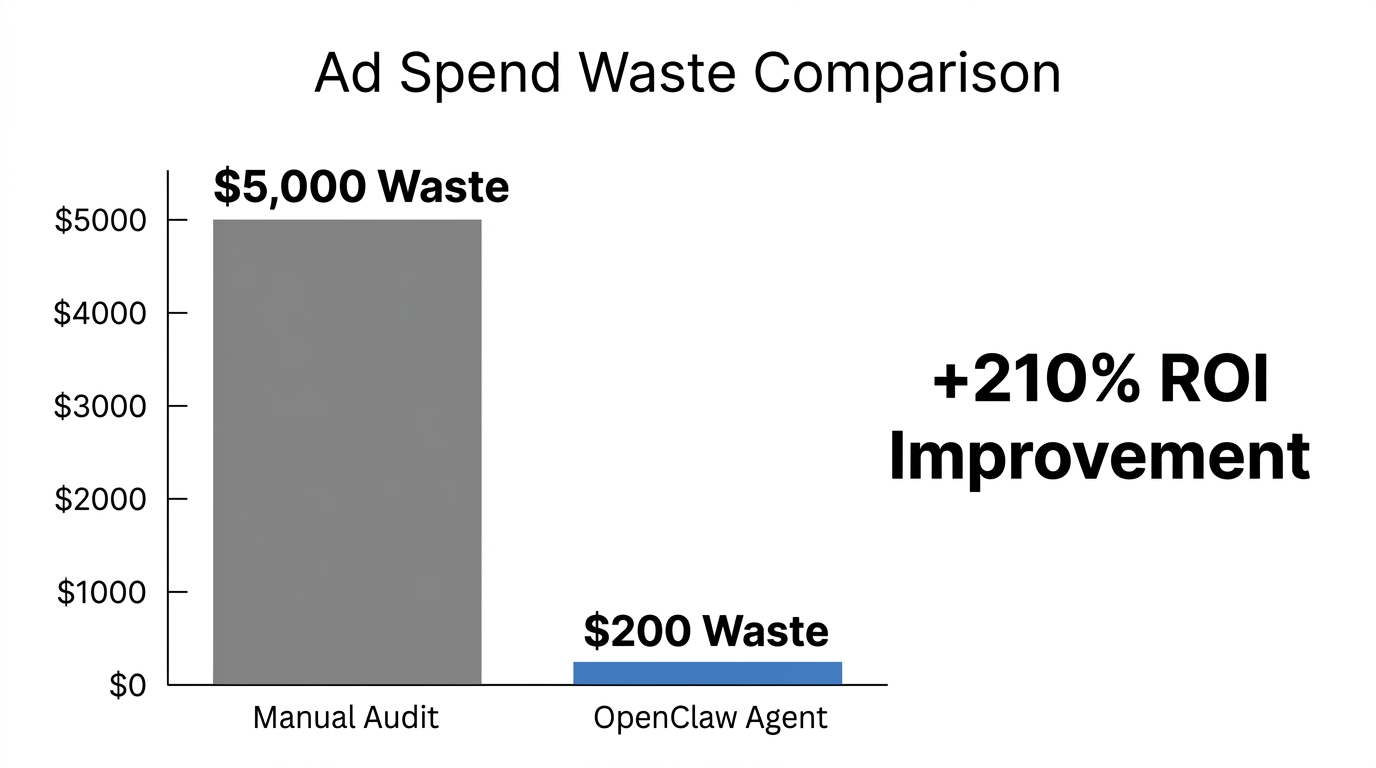
In 2026, manual bidding is a relic of the past. With LinkedIn ad costs reaching a staggering $44 CPM in major markets, even a few hours of "wasted spend" on a low-performing creative can tank a monthly budget. The Performance Auditor Skill in OpenClaw acts as a 24/7 watchman for your Meta Ads Manager and Google Ads accounts. Unlike native auto-rules, which are often rigid, an OpenClaw agent uses reasoning to detect CPA spikes and anomalous behavior across your entire funnel.
Growth teams using these agents report a 25% reduction in wasted spend by catching underperforming segments in minutes. The agent doesn't just pause ads; it can autonomously reallocate budget to winning creatives based on real-time Model Context Protocol (MCP) data fetched from your HubSpot CRM or Mixpanel analytics. This ensures that your "AI-ready website optimization" isn't just a buzzword, but a data-driven reality that feeds the agent high-quality signals for better decision-making.
2. Automating Local SEO: Reclaiming 50+ Hours a Week
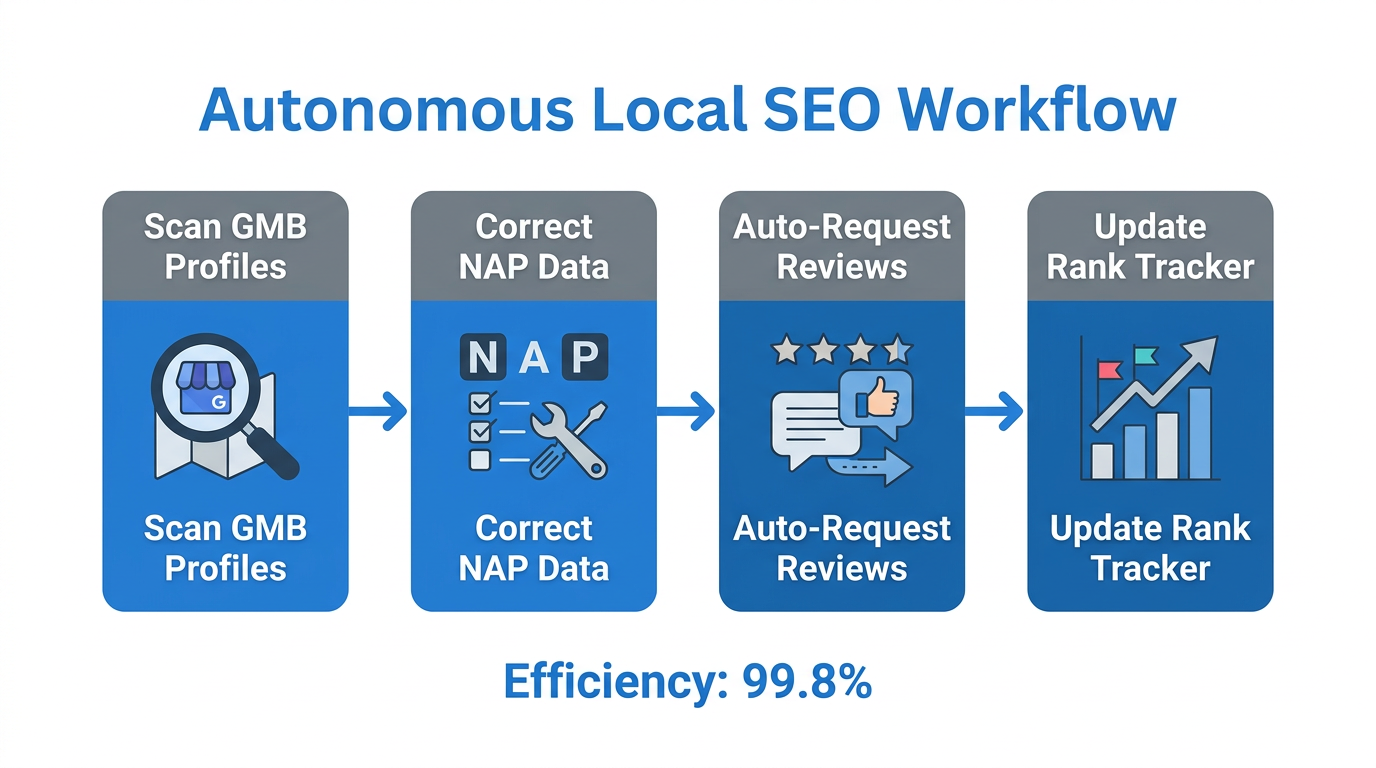
Local SEO has traditionally been one of the most manual-intensive aspects of digital marketing. Between tracking Google Business Profile (GBP) rankings, responding to reviews, and performing content gap analyses, a multi-location brand can easily sink hundreds of hours into maintenance. Enter GMBMantra, which utilizes OpenClaw to automate the entire lifecycle of local search optimization. By deploying agents to monitor 50+ locations simultaneously, brands are reclaiming 50+ hours a week while seeing a 35% increase in leads.
These agents go beyond simple rank tracking. They perform autonomous SEO automation by identifying specific keywords where competitors are outranking the brand and then drafting localized content to bridge that gap. Because OpenClaw uses a "heartbeat" mechanism, as noted by HelloPM, the agent proactively checks for ranking shifts every 30 minutes, ensuring that your local presence never slips under the radar.
| Feature | Traditional RPA (Zapier) | AI Chatbot (ChatGPT) | AI Agent (OpenClaw) |
|---|---|---|---|
| Logic | Rigid If-Then rules | Responsive text generation | Reasoning & Planning |
| Interface | App-specific | Chat UI | Cross-platform (Browser/Shell) |
| Exceptions | Breaks on UI changes | Escalates to human | Retries and adapts |
| Memory | Stateless | Session-based | Long-term (.md files) |
3. Signal-Based Intent Scraping for 200% Better ROI
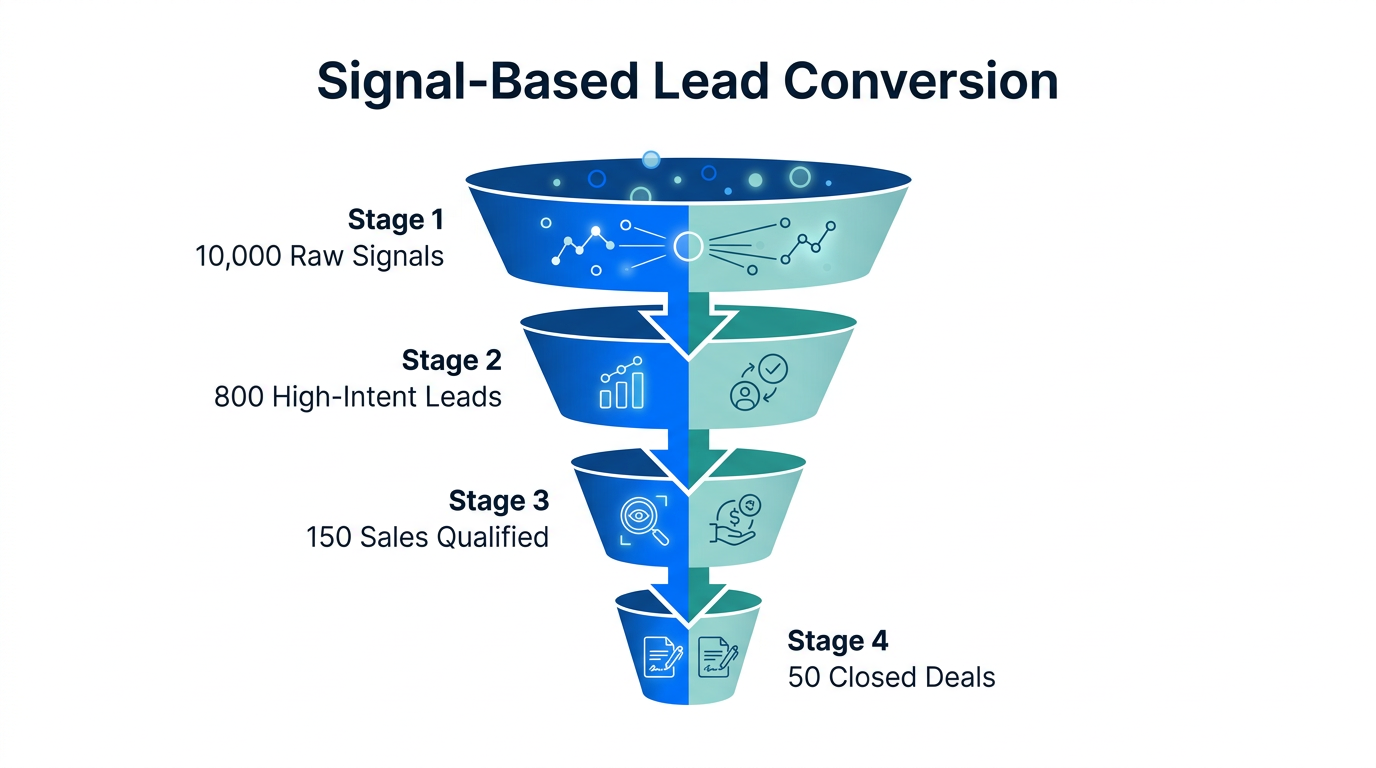
In 2026, demographic targeting is dead. It is too broad and too expensive. The highest-performing growth teams have shifted to signal-based lead generation. Using OpenClaw agents powered by Browserbase, marketers can monitor specific "intent signals" across the web. For example, an agent can be programmed to monitor news for Series B funding announcements on Crunchbase, LinkedIn for specific pain-point posts, or GitHub for new repository stars.
Research from Level8 suggests that targeting based on these real-time signals results in a 200% better ROI than traditional demographic-based campaigns. Once a signal is detected, the OpenClaw agent doesn't just hand off a list; it uses its Scraping Skill to find the decision-maker’s contact info and prepares a hyper-personalized outreach draft. For companies utilizing UGC and influencers, pairing this data with tools like Stormy AI allows you to find and vet creators who are already trending within those specific signal-based niches, creating a powerful synergy between automated scraping and human-centric marketing.
"Agentic workflows—where the AI can iteratively correct its own mistakes—are the next great leap in productivity, far outperforming simple one-off prompts." — Andrew Ng, AI Pioneer
4. Predictive Email Personalization: Achieving 25% Conversion
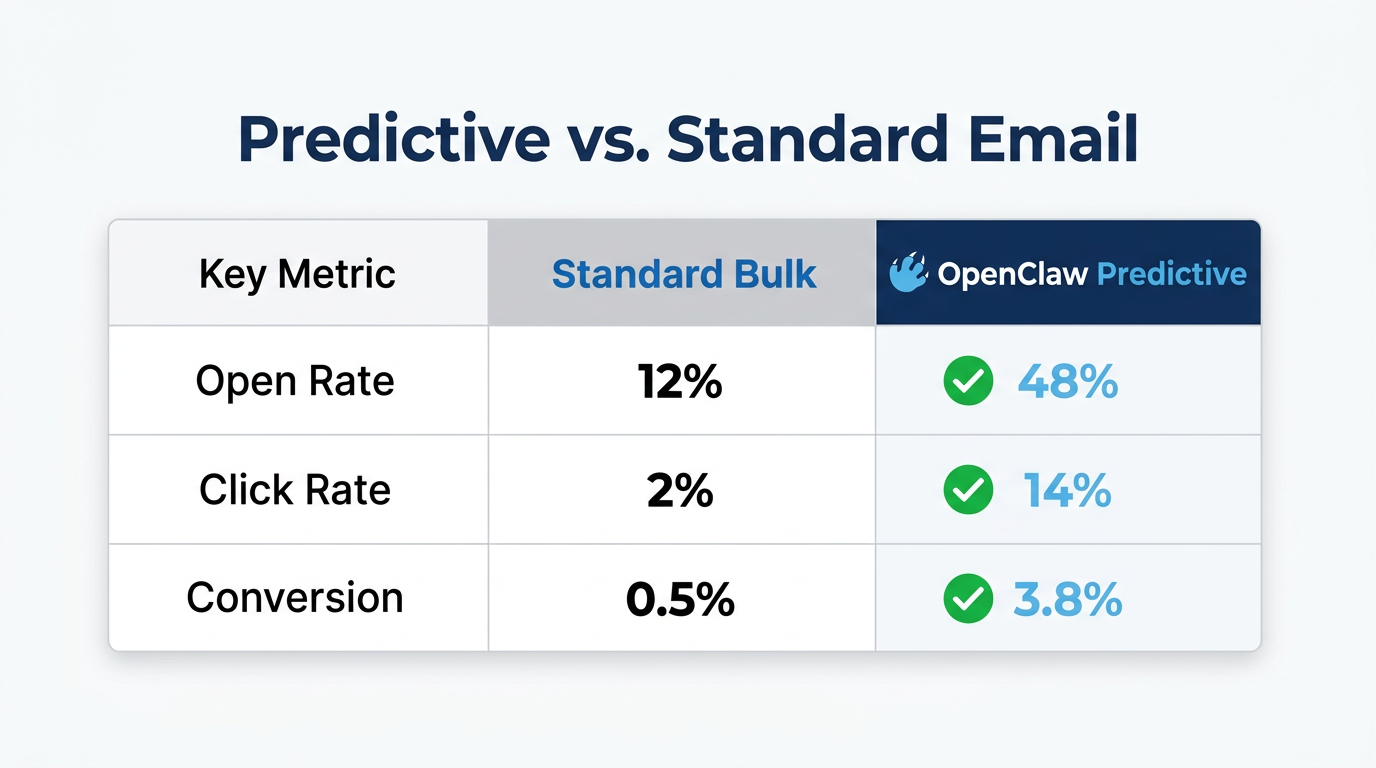
The industry standard for email conversion has historically hovered around 15%, but AI agents are shattering that ceiling. Amazon’s recent deployment of agentic personalization led to a 300% ROI, with agents achieving a 25% conversion rate by iterating on user behavior in real-time. Unlike traditional A/B testing, which requires human analysis and manual implementation, an OpenClaw agent can autonomously iterate on email copy, timing, and offers for every individual user.
By monitoring how a user interacts with your "AI-ready website," the agent builds a persistent profile (often stored in long-term .md files). When it’s time to send an email via platforms like Klaviyo or Instantly, the agent crafts a message that isn't just "personalized" with a first name, but contextually relevant to the user’s exact stage in the buying journey. According to Vellum AI, teams using these agentic workflows report 73% faster campaign development, as the agent handles the heavy lifting of content iteration.
5. Reactive Content Loops: The Human-in-the-Loop Edge
The final playbook focuses on maintaining brand relevance in a fast-moving social environment. By setting up Reactive Content Loops, you can use OpenClaw to monitor competitors and industry news 24/7. When a competitor launches a new feature or a major news story breaks, the agent immediately drafts a reactive LinkedIn or X (formerly Twitter) post for your brand. However, to avoid the "soulless AI backlash" that saw some brands take a 12% hit in sentiment in early 2026, these loops should always include a human-in-the-loop (HITL) checkpoint.
Using the SOUL.md protocol—a concept advocated by Wharton Professor Ethan Mollick—you can define the agent's "personality" and hard limits. For example, your SOUL.md might state: "Never post to social media without a human approval flag in Slack." This allows the agent to do 90% of the work—researching the trend, finding the angle, and drafting the copy—while you maintain 100% of the creative control. This workflow is often managed within a secure sandbox environment like E2B or Microsoft Azure to ensure that the agent never has unauthorized access to your core systems.
Implementation Guide: Running OpenClaw Safely for Growth
Deploying these playbooks requires a Defense-in-Depth strategy to avoid common pitfalls like the "ClawHub" security risks or hallucinated contracts. Follow these three steps to build a robust agentic marketing stack:
Step 1: Secure Your Infrastructure
Never run OpenClaw directly on your primary work machine. Use a dedicated VPS (Virtual Private Server) from providers like DigitalOcean or Hetzner. Running your agent inside a Docker container with specific security flags is non-negotiable in 2026 to prevent the agent from reaching your root filesystem. As noted by NXCode, isolation is your best defense against autonomous errors.
Step 2: Establish the SOUL.md Protocol
Create a SOUL.md file in your agent’s directory. This file acts as the agent's "Constitution." Explicitly define its role (e.g., "You are an SEO Growth Lead"), its hard limits (e.g., "Never approve a budget increase over 10% without Slack approval"), and its data access boundaries. This is the difference between an agent that helps you grow and an agent that accidentally hallucinates a 50% discount for your entire customer base—a failure that cost several firms dearly in 2025.
Step 3: Route Tasks via Model Cascades
To manage token costs, use a Model Cascade. Route 80% of routine tasks like data cleaning and basic web scraping to "Small" models via Ollama. Reserve high-end "Frontier" models (like Claude 4.5 or GPT-5) for final strategy calls and complex creative drafting. This approach ensures your marketing ROI with OpenClaw remains high by minimizing unnecessary API spend.
"The key to 2026 growth is treating AI agents not as software, but as digital employees with specific responsibilities and clear constraints."
Conclusion: The Future of Autonomous Growth
The transition to AI agent lead generation and autonomous SEO automation is no longer optional for brands that wish to remain competitive. By implementing these five playbooks—Performance Auditing, Local SEO Automation, Signal-Based Scraping, Predictive Emailing, and Reactive Content Loops—you can achieve a level of scale that was physically impossible just two years ago. While 87% of IT leaders still struggle with data readiness, as reported by Acropolium, those who act now to build "AI-ready" structures will be the ones who define the market in 2026 and beyond.
Remember, the goal isn't just efficiency; it's autonomy. Whether you're managing creator relationships through Stormy AI or scraping the web for the next big intent signal, the winners of 2026 will be the marketers who spend less time in the dashboard and more time on high-level strategy, leaving the execution to their agentic workforce.