In 2026, the traditional Sales Development Representative (SDR) role has undergone a fundamental transformation. As the global AI in marketing market surges toward a projected $107.5 billion by 2028, according to MarketsandMarkets, the manual "batch and blast" tactics of the past decade have been rendered obsolete. Modern revenue engines are no longer built on headcount, but on Technical RevOps and high-fidelity data orchestration.
Leading this charge is the OpenClaw growth stack 2026, a methodology that treats sales as an engineering problem. With 72% of B2B organizations now augmenting their SDR teams with autonomous workflows, as reported by Gartner, staying competitive requires a transition from being a creative copywriter to becoming an AI orchestrator. This guide breaks down the exact 5-step playbook utilized by top-tier agencies like OpenClaw to build automated revenue engines that outperform human teams by 9.2x ROI.
"By 2026, the role of the SDR is an 'AI Orchestrator.' If you are still manually writing emails, you are already obsolete."
The Shift to Autonomous RevOps in 2026
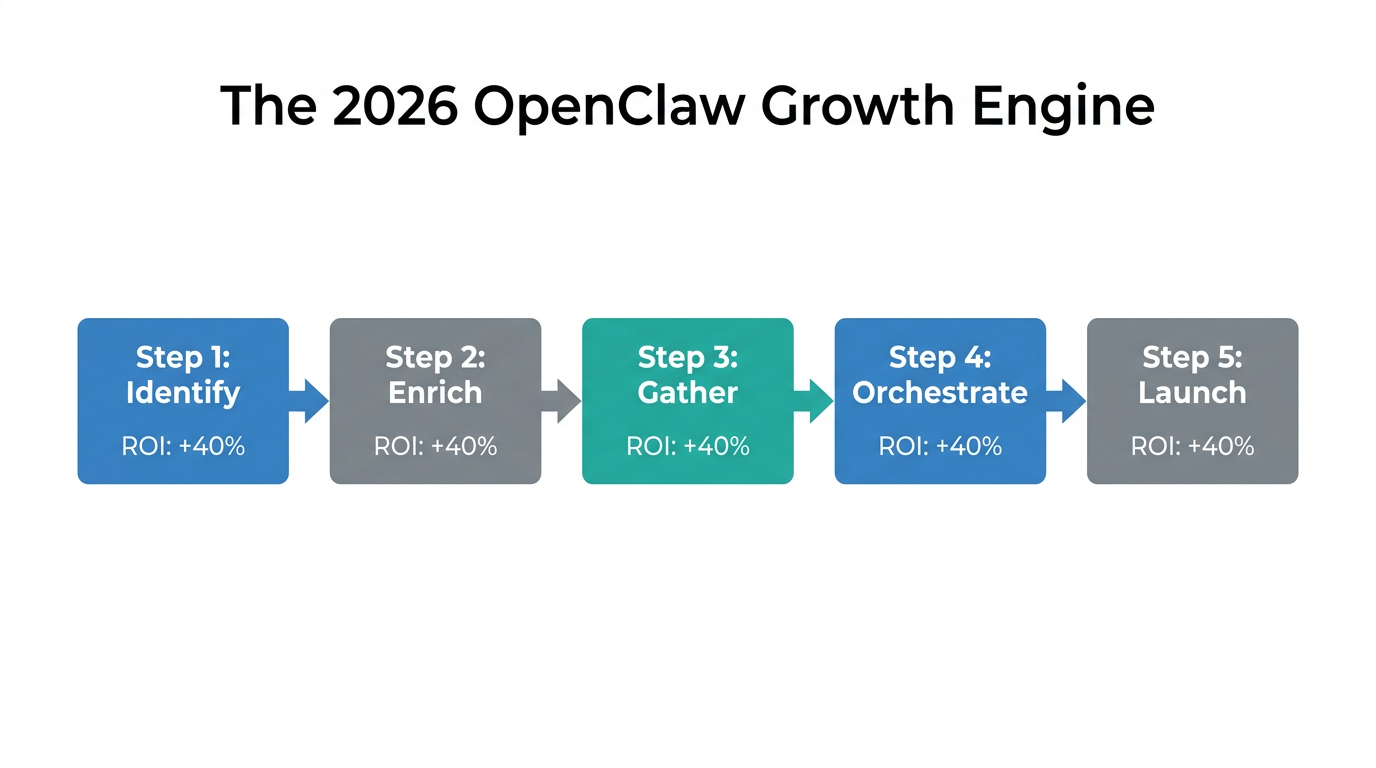
The landscape changed significantly in February 2026 when OpenAI integrated OpenClaw’s core philosophy into their foundation, following the hiring of creator Peter Steinberger to lead their "next-generation personal agents" division, per Leanware. This move signaled that autonomous agents with shell access are no longer experimental—they are the infrastructure of modern business.
However, scaling these systems isn't just about volume. With Google and Yahoo enforcing a strict 0.10% spam complaint threshold, as noted by Chronos Agency, the "OpenClaw Playbook" focuses on relevance over reach. To succeed in 2026, your stack must prioritize data accuracy and hyper-personalization to avoid the "AI Blindness" currently causing 50-70% churn in generic AI SDR tools, as documented by Autobound.
Step 1: Identifying High-Intent Lookalike Prospects
The foundation of the automated B2B lead generation process is moving away from static databases toward dynamic intent signals. Instead of buying a broad list, OpenClaw practitioners use a two-pronged approach to find prospects who are already in a buying window.
Competitive Displacement with BuiltWith
First, use BuiltWith to identify companies currently using your competitor’s software. This is the highest-intent signal possible: they have a budget, a recognized need, and a tech stack compatible with your solution. By monitoring "tech spends" and "installation dates," you can trigger outreach the moment a competitor's contract is likely up for renewal.
Lookalike Modeling with Ocean.io
For broader expansion, the playbook utilizes Ocean.io to find "lookalike" companies. Rather than relying on inaccurate NAICS codes, Ocean.io’s AI analyzes the actual website content of your best customers to find twins. This ensures your AI outbound sales playbook is targeting companies with the same DNA, significantly increasing the probability of a product-market fit.
- Identify your top 10 most successful clients.
- Feed their URLs into an AI lookalike engine.
- Filter by recent growth signals (e.g., Series B funding, new executive hires).
"Relevance is the new personalization. AI allows us to be relevant at a scale that was physically impossible for human teams." — Jordan Crawford, Founder of Blueprint.
Step 2: Implementing 'Waterfall' Enrichment via Clay
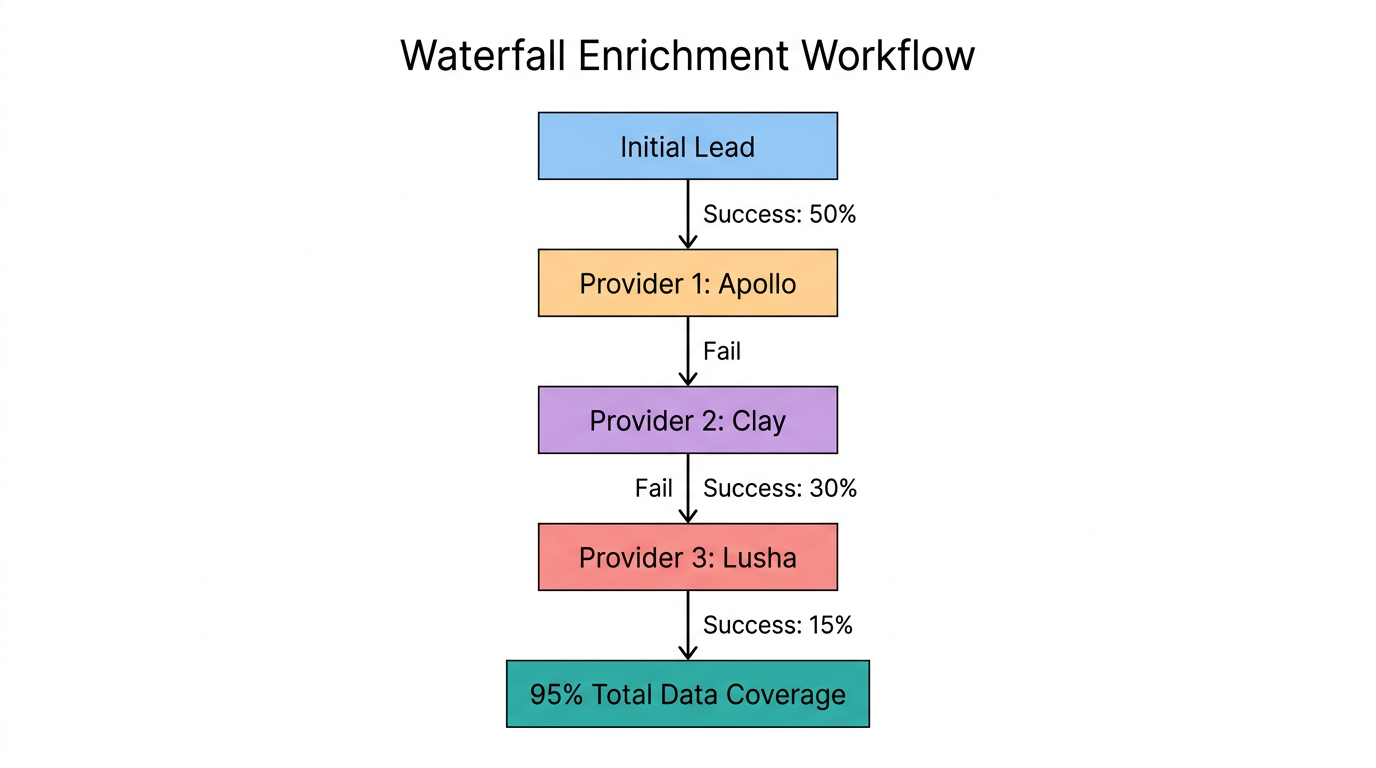
The greatest bottleneck in 2026 isn't finding names—it's data decay. B2B data decays at a rate of 30% annually. To maintain high deliverability, the OpenClaw stack utilizes "Waterfall Enrichment" through Clay.
Waterfall enrichment works by checking multiple data providers in sequential order. If Apollo.io doesn't have a verified email, the system automatically checks RocketReach, then Findymail, and finally Hunter.io. This process continues until a 99% accuracy rate is achieved. This is critical for staying under the 0.1% spam ceiling enforced by major email providers.
| Metric | Traditional Manual Research | Claygent Automation |
|---|---|---|
| Time per Lead | 5-10 Minutes | < 2 Seconds |
| Email Accuracy | ~75% | 99%+ (Waterfall) |
| Scalability | Linear (Limited by Headcount) | Exponential (API-driven) |
| Cost per Enrichment | High (Labor) | $0.02 - $0.15 |
By using Claygent automation, you can also scrape specific data points that aren't available in standard databases, such as a company's recent job postings or specific mentions in a 10-K report. This raw data becomes the fuel for your AI-generated triggers in the next step.
Step 3: Intelligence Gathering with GPT-4o
In 2026, simple merge tags like {{first_name}} are no longer effective. Prospects have developed "AI Blindness" to generic outreach. The OpenClaw method solves this by using GPT-4o to analyze the last three LinkedIn posts or podcast appearances of a prospect to find a genuine common theme.
However, automation at this level carries the risk of AI Hallucinations—where the AI invents fake facts about a prospect. To combat this, practitioners use "Grounding," a technique where the AI is strictly forbidden from using any information not found in the verified data payload provided by the CRM. This ensures that every personalized line is rooted in reality, as highlighted in research by Aakash Gupta.
While OpenClaw is built for B2B sales automation, brands targeting the creator economy should consider specialized tools. For example, platforms like Stormy AI allow growth marketers to discover and vet influencers with similar AI-powered precision, ensuring that creator outreach is just as data-driven as sales outbound.
Step 4: Managing Multi-Channel Orchestration
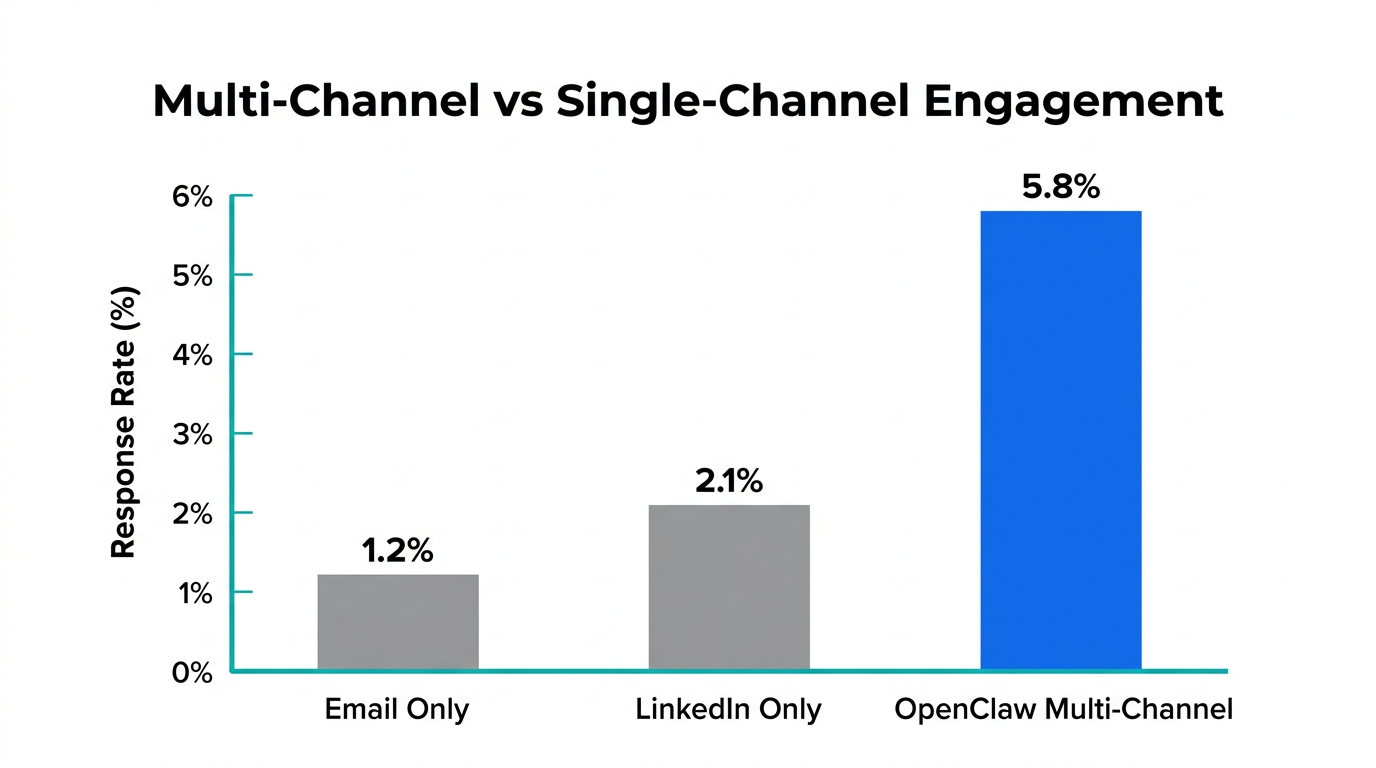
Relying solely on email is a losing strategy in 2026. The OpenClaw growth stack leverages multi-channel convergence, orchestrating touchpoints across LinkedIn, Email, and even Direct Mail or personalized video.
The 2026 Orchestration Sequence
- Day 1: LinkedIn Profile Visit + Soft Retargeting via Meta Ads.
- Day 2: Hyper-personalized Email 1 (Focus on a specific LinkedIn trigger).
- Day 4: LinkedIn Connection Request with a personalized note.
- Day 6: AI-generated Video via HeyGen or Tavus sent via Email 2.
- Day 10: Automated LinkedIn Voice Note.
This "surround sound" approach ensures your message is seen without being intrusive. By using a single AI agent to manage these channels, you maintain a consistent narrative. For those in the mobile app space, this multi-channel strategy is often paired with Apple Search Ads to capture high-intent users at the exact moment of search, creating a holistic growth engine.
"The winning formula is no longer 'more emails,' but better data orchestration."
Step 5: Launching via Smartlead and Maintaining Deliverability
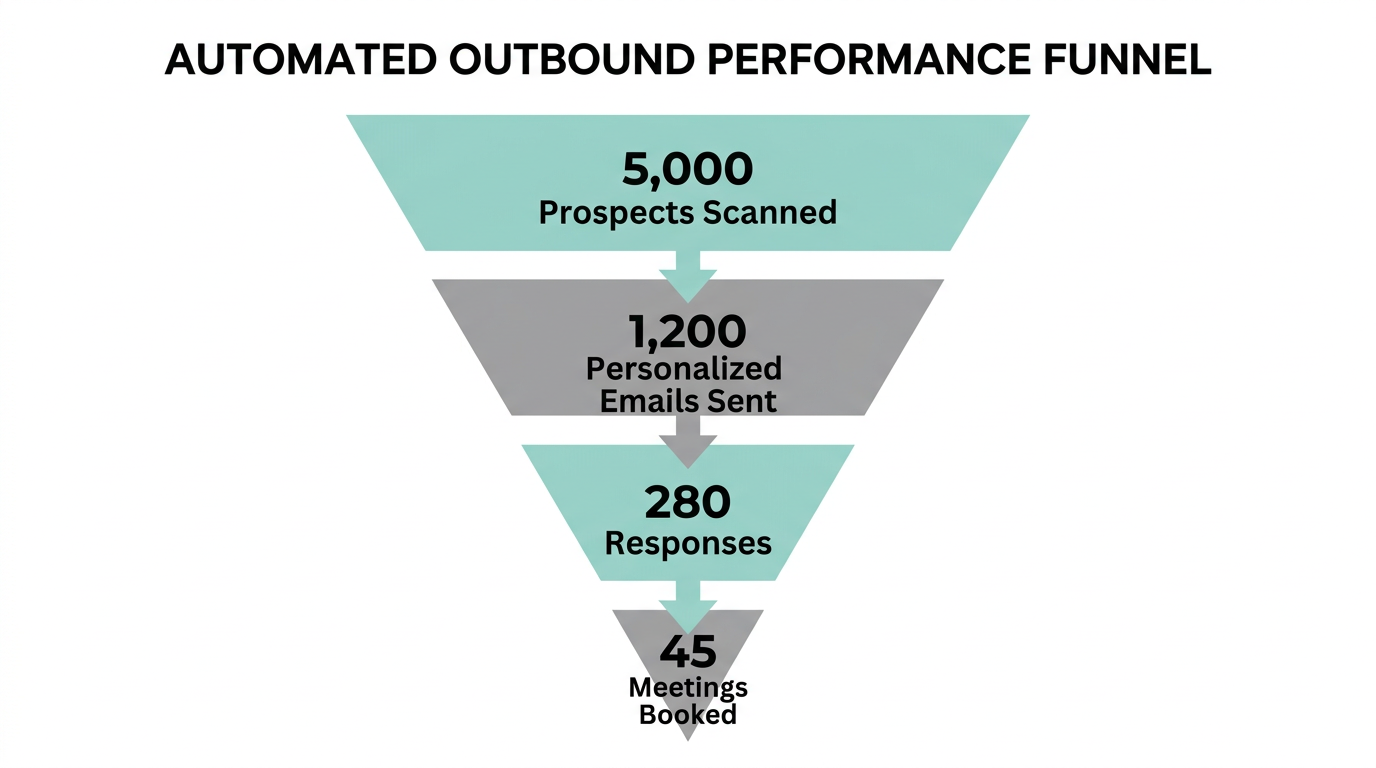
The final step is the execution. The playbook utilizes enterprise-grade platforms like Smartlead or Instantly.ai to manage "burner domains" and isolated infrastructure. In 2026, sending from your primary company domain is a recipe for disaster.
The 0.1% Spam Shield
To stay below the 0.1% complaint threshold, OpenClaw practitioners use Pattern Randomization. Google’s AI filters now detect repetitive prose patterns common in AI-generated emails. To bypass this, sequences use "Dynamic Spintax" and occasional "Human-in-the-loop" vibe checks to ensure the content feels organic. According to data from SurFox, this level of technical deliverability management is the difference between a 1% and a 35% response rate.
| Scenario | Human SDR Team | AI SDR Agent (OpenClaw) |
|---|---|---|
| Daily Volume | 50-80 Contacts | 1,000+ Contacts |
| Response Time | 42-47 Hours | < 60 Seconds |
| Cost Per Lead | ~$262 | ~$39 |
| Annual Cost | $98k - $173k | $6k - $24k |
As you scale your outbound, don't forget to track the downstream impact. High-performing teams often integrate their sales data with PostHog or Amplitude to see how AI-generated leads behave once they actually enter the product. This creates a feedback loop that informs better targeting in Step 1.
Conclusion: Building Your 2026 Revenue Engine
The OpenClaw growth stack 2026 is more than just a collection of tools; it is a shift toward GTM Engineering. By automating the drudgery of lead sourcing, enrichment, and initial outreach, you free up your human closers to do what they do best: build relationships and solve complex problems.
For marketing teams looking to replicate this success in the influencer and UGC space, Stormy AI provides the same level of automated discovery and personalized outreach, tailored for the creator economy. Whether you are selling B2B SaaS or scaling a consumer app, the message is clear: the future belongs to the orchestrators. Start building your automated engine today, or risk being left behind in the manual past.