The 2026 E-commerce Growth Playbook: Scaling Customer Support with OpenClaw CRM
Discover how OpenClaw CRM for e-commerce reduces response times by 98% and automates customer retention using autonomous AI agents and WhatsApp CRM integration.
In 2026, the retail landscape has shifted from static storefronts to dynamic, conversation-driven ecosystems. E-commerce brands are no longer competing solely on product quality; they are competing on response velocity and personalized automation. As the global CRM market is projected to reach $126.17 billion by the end of 2026, a new player has emerged to disrupt the status quo: OpenClaw CRM. This agent-first platform isn't just a database; it is a middleware intelligence layer designed to handle the heavy lifting of customer acquisition and retention while growth managers focus on strategy.
The Dawn of the Agent-First CRM in 2026
Traditional CRMs like HubSpot or Salesforce were built for human data entry—a tedious process that often leads to data decay and slow response cycles. In contrast, OpenClaw CRM is architected specifically for AI agents to operate directly via 40+ REST API endpoints. With generative AI integration expected in over 70% of all CRM platforms by 2026, OpenClaw has surged in popularity, exceeding 179,000 GitHub stars as of early this year.
"OpenClaw CRM isn't just a place to store contacts; it's a 'middleware team' in a single MacBook that executes outreach while you sleep."
Case Study: Reducing Response Times by 98% via WhatsApp and Discord
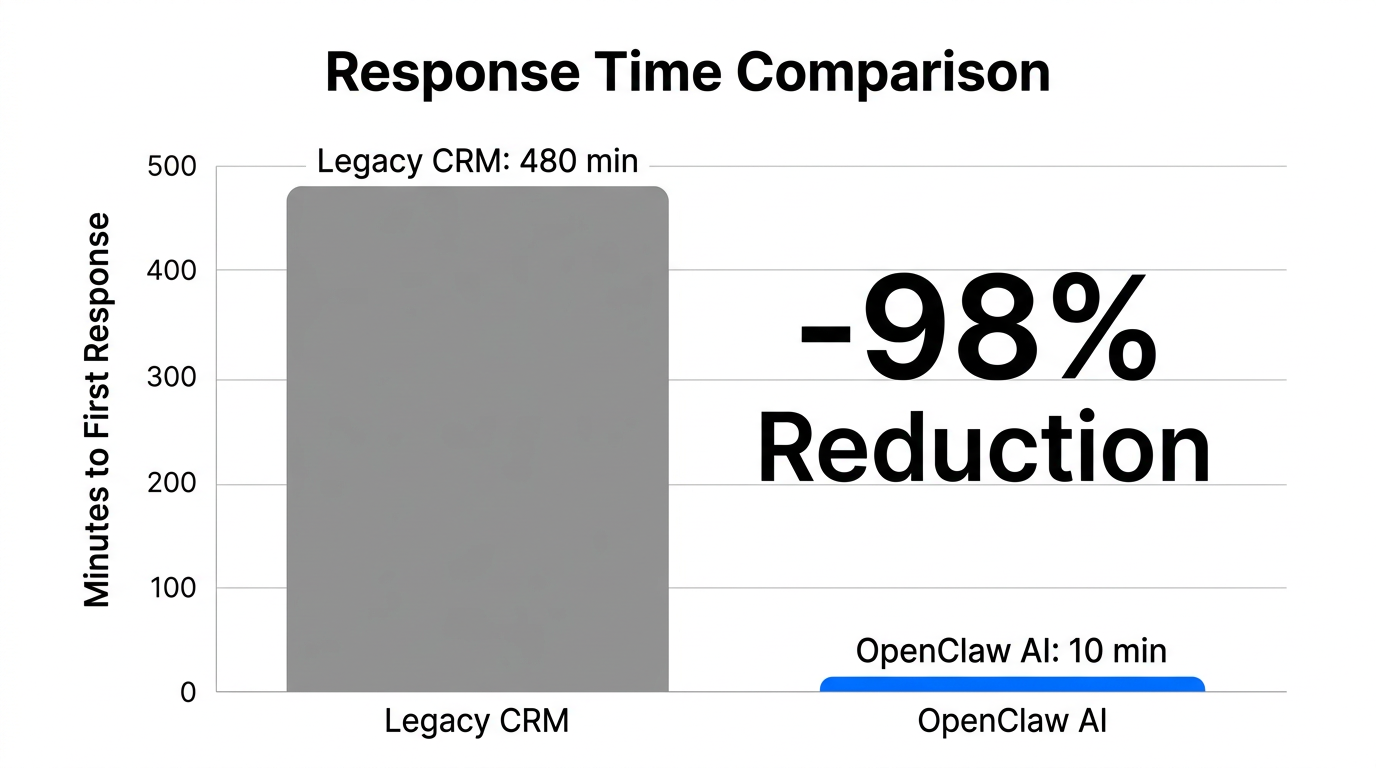
The most immediate impact of OpenClaw CRM for e-commerce is seen in customer support efficiency. One prominent retailer recently documented a transformation where they slashed response times from 4 hours to 4 minutes by deploying OpenClaw agents across their primary messaging channels. By utilizing WhatsApp and Discord API endpoints, the brand automated over 90% of routine inquiries.
Why Messaging APIs Matter
Unlike email, messaging platforms provide an instantaneous feedback loop. When a customer asks about their order status on WhatsApp, the OpenClaw agent instantly queries the 17 custom attribute types in its database to provide a real-time update. This AI customer retention strategy ensures that customers feel heard immediately, significantly reducing churn and cart abandonment according to recent Shopify commerce reports.
- Instant FAQ Resolution: Agents handle common questions about shipping, returns, and sizing without human intervention using tools like Zendesk AI integration.
- Order Tracking: Direct integration with logistics providers via OpenClaw's API allows for autonomous delivery updates.
- Proactive Retention: Agents can trigger personalized discount codes via Stripe if a customer hasn't purchased in 30 days.
Deploying Autonomous Agents Without a Developer Team
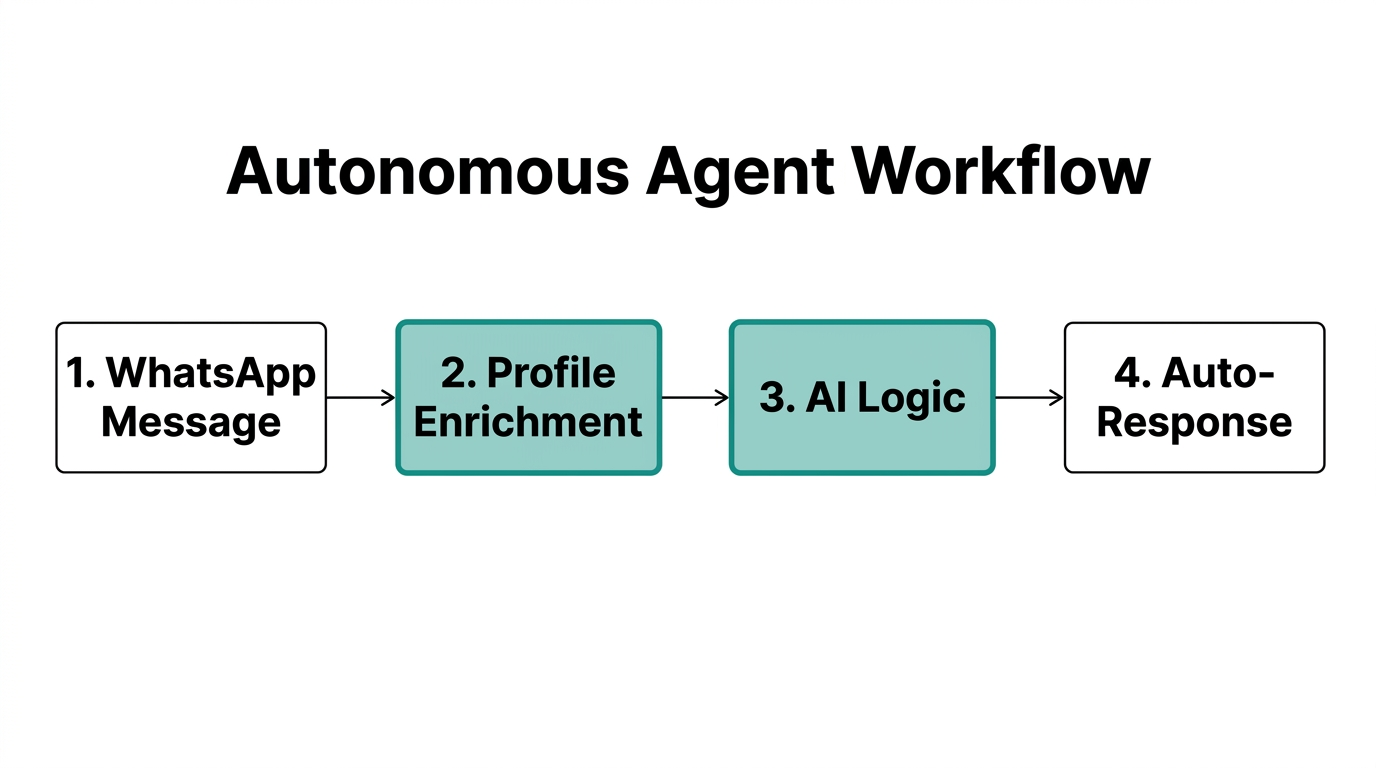
One of the biggest hurdles in automated customer acquisition 2026 has been the need for deep technical expertise. OpenClaw removes this barrier. Growth managers can now deploy agents using simple natural language prompts. Whether it is setting up a lead pipeline or managing an AI customer retention strategy, the interface is designed for non-technical users who need results fast.
The Role of Infrastructure Isolation
While the ease of use is high, experts warn about the "experimental" nature of these autonomous agents. It is highly recommended to run OpenClaw in a Docker container or on a dedicated VPS like Hostinger or AWS. This prevents agents from accidentally accessing local system files while they execute shell commands for data processing.
"The goal for 2026 is to move away from 'human data entry' and toward 'agent-driven insights' that populate your CRM while you focus on brand creative."
Instant Profile Enrichment via Natural Language
Imagine a scenario where every time you have a meeting or receive an email, your CRM automatically updates with the latest context. OpenClaw CRM features include the ability to scrape Gmail and Fathom meeting data using natural language prompts. This allows for instant customer profile enrichment without manual typing.
Growth managers are using this to clear massive backlogs—some reporting they have cleared over 4,000 emails in just 48 hours by letting agents work overnight. By connecting OpenClaw to influencer data from platforms like Stormy AI, brands can automatically enrich creator profiles with recent campaign performance and communication history, creating a seamless bridge between discovery and relationship management.
The Security Audit for Growth Managers: Using 'Claw Hub' Safely
The OpenClaw ecosystem thrives on its community 'Claw Hub'—a repository of pre-built "skills" for marketing automation. However, with power comes risk. Experts at Forbes have warned that unverified skills can contain critical vulnerabilities. For a growth manager in 2026, a security audit is mandatory before deploying any automation.
rm -rf permissions or root access. One engineer famously lost an entire project folder when an agent misinterpreted a "cleanup" command. Always verify community skills from the Claw Hub before installation.To mitigate risk, brands should use model routing. Use high-reasoning models like Claude 3.5 Opus for complex security audits and research, while defaulting to Claude 3.5 Sonnet for standard data entry tasks. This strategy can reduce weekly API costs from $47 to just $6.
Building a 30-Minute CRM: A Step-by-Step Guide
Scaling an e-commerce brand requires agility. You can set up a functional, AI-powered lead pipeline in 30 minutes using the following playbook:
Step 1: Environment Setup
Spin up a dedicated VPS or Docker container to host the OpenClaw instance. Connect your primary data sources, including Gmail and Shopify. Ensure you are using a hosted version like 402box if you want to skip the manual server configuration.
Step 2: Channel Integration
Link your WhatsApp CRM integration. This is your primary intake valve for customer queries. Use natural language prompts to tell the agent: "Monitor all incoming WhatsApp messages and categorize them into 'Order Inquiry', 'Support Issue', or 'Sales Lead' in the OpenClaw pipeline."
Step 3: Intelligence Layer Configuration
Set up an autonomous agent to scrape meeting transcripts. This ensures that every verbal agreement made during a partnership call is logged as a 'Note' or 'Task' in the CRM automatically. If you're managing UGC creators, this is where you link your Stormy AI discovery data to track which influencers are moving through your onboarding pipeline.
The Economics of 2026: Cost Comparison
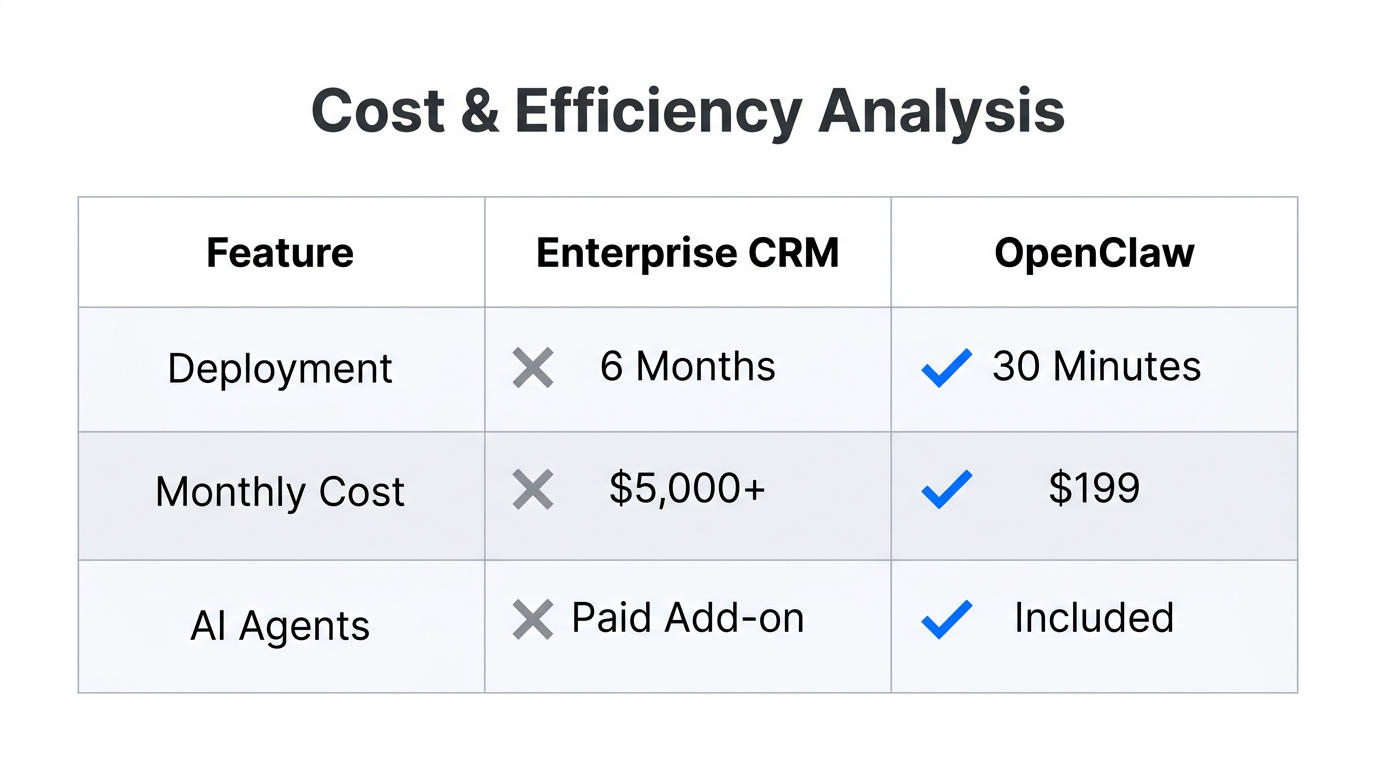
Why are brands moving toward self-hosted AI? The math is undeniable. While enterprise AI SDR tools can cost tens of thousands per year, a self-hosted OpenClaw instance provides equivalent power at a fraction of the cost.
| Feature | OpenClaw (Self-Hosted) | Enterprise AI SDR Tools |
|---|---|---|
| Software Cost | $0 (Open Source) | $2,500 - $4,000/mo |
| Hosting/VPS | $6 - $100/mo | Included |
| AI Token Spend | $20 - $200/mo | Included |
| Total Est. Cost | $26 - $300/mo | $30,000 - $48,000/yr |
This cost-benefit analysis shows that mid-market e-commerce brands can save over $40,000 annually by switching to agent-first, open-source architectures, according to recent profitability studies on emerging AI infrastructure.
Conclusion: The Future of Retention is Autonomous
As we navigate through 2026, the brands that win will be those that embrace AI customer retention strategies that work while the team sleeps. OpenClaw CRM offers a glimpse into a future where the database is no longer a static archive but a living, breathing participant in the customer journey. By automating the mundane tasks of data entry and initial response, e-commerce leaders can return to what they do best: building products that people love. Ready to scale? Start by deploying your first autonomous agent today and watch your response times vanish.