In 2026, the marketing landscape has undergone a seismic shift. We are no longer living in an era of "traffic brokering"; we are living in the era of Reputation Arbitrage. For CMOs and brand managers, the metrics that once defined success—Google Search Console impressions and Ahrefs Domain Rating—now fail to capture nearly 70% of the brand interactions happening in the wild. As AI search traffic has surged by 527% year-over-year, with over 1 billion users now treating ChatGPT and Perplexity as their primary information sources, the battle for brand visibility has moved from the SERP to the LLM context window.
Traditional SEO was about winning the click. Modern AI Share of Voice (SOV) is about winning the citation. If your brand isn't being mentioned in the "Primary Answer" of a generative engine, it effectively doesn't exist for the modern consumer. This guide explores how enterprise leaders are using Profound to monitor, protect, and grow their presence in the AI-driven Agentic Commerce economy.
The Zero-Click Crisis: Why Traditional Metrics are Failing
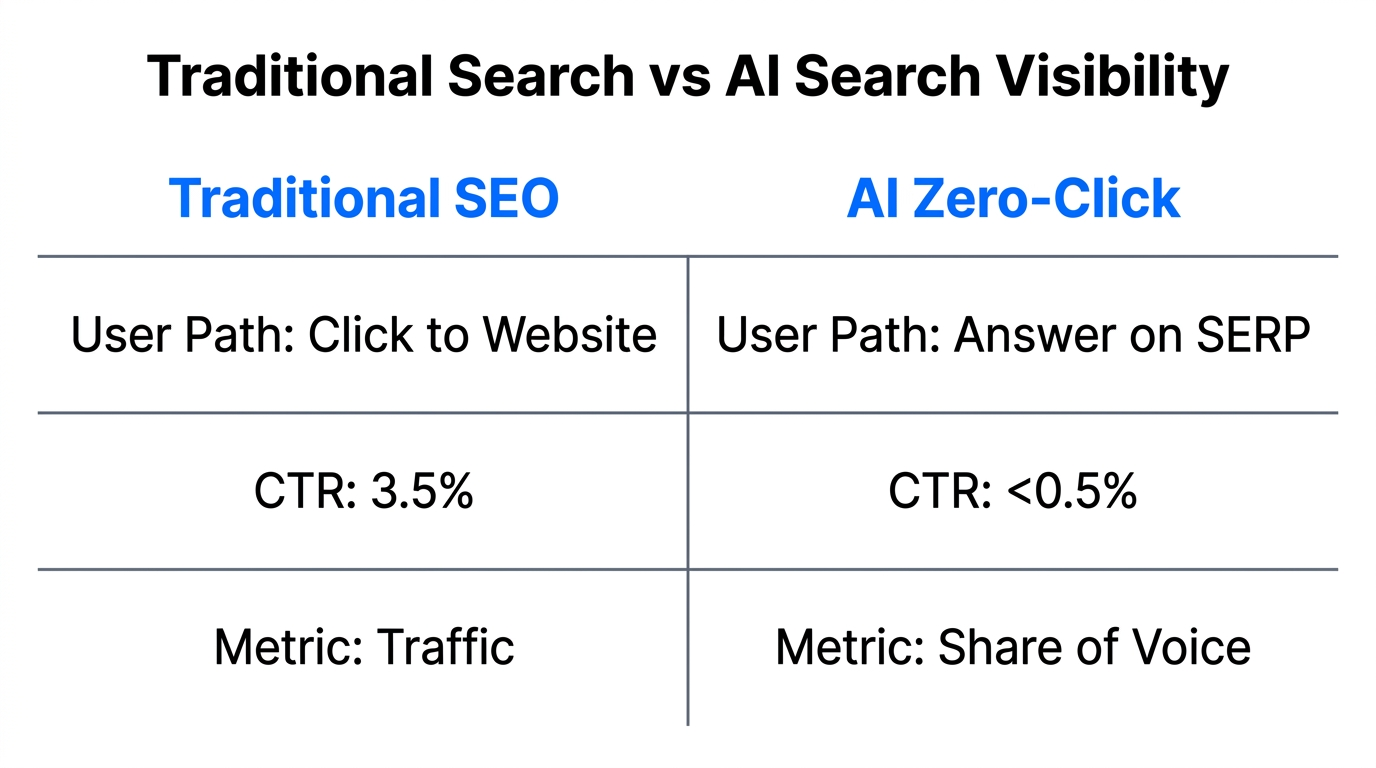
The fundamental problem facing marketers today is the "CTR Collapse." According to recent data, organic click-through rates have dropped by 61% in instances where AI Overviews (AIO) appear. Because 60-70% of searches now end without a single click, your brand's reach is being obscured by the very engines designed to help users find you.
Standard tools like GSC or Ahrefs are blind to these conversational impressions. They cannot tell you if a user asked Claude for the "most reliable enterprise automation tool" and received your competitor's name instead of yours. This measurement gap has led to the rise of AI Share of Voice analytics, where the goal is to track your brand’s frequency and sentiment across LLM responses.
"ChatGPT doesn't read your website; it reads who talks about you. This isn't SEO anymore; it's reputation arbitrage." — Rokas, AI SEO Specialist
Profound: Monitoring 'Hallucination Liability' and Competitor Misattribution
As enterprises scale their AI presence, they face a new risk: Hallucination Liability. This occurs when an AI agent incorrectly attributes your features to a competitor or, worse, provides outdated pricing or false service claims about your product. Profound, which recently raised a $96M Series C to address this exact problem, provides real-time monitoring of how LLMs perceive your brand entity.
Without active monitoring, your brand is at the mercy of the model's training data. For example, if a legacy article from 2022 claims your software lacks a certain API—which you launched in 2024—the AI might continue to "hallucinate" this deficiency to prospective buyers in 2026. Profound allows brands to identify these misattributions and deploy Entity Seeding strategies to correct the record in the sources the AI trusts most.
| Metric | Traditional SEO (Legacy) | AI Visibility (Profound) |
|---|---|---|
| Primary Focus | Keyword Rankings | Entity Citation Frequency |
| Success Signal | Click-Through Rate (CTR) | Sentiment & Attribution Accuracy |
| Risk Factor | Algorithm Penalties | Hallucination & Misattribution |
| Source Data | On-page Content | Cross-platform Citations (Reddit, G2, News) |
Tracking Your Brand in the 'AI Knowledge Graph'
Search engines in 2026 no longer see the web as a collection of pages, but as a Knowledge Graph of entities. Research from Princeton and Georgia Tech shows that Semantic Completeness—how well your content covers all facets of a topic—now has a r=0.87 correlation with ranking in AI answers, while traditional Domain Authority has plummeted to r=0.18.
To stay visible, brands must move beyond keyword stuffing and focus on Generative Engine Optimization (GEO). This involves ensuring your brand is linked to high-authority entities in your niche. For instance, being mentioned alongside industry leaders on trusted platforms like Reddit or G2 acts as a "trust signal" that LLMs use to verify your authority. When a user asks an AI for a recommendation, the model looks for these clusters of verified mentions to decide who to cite.
"The shift is happening. More people get answers from Perplexity than scrolling results. If you aren't in those answers, you're invisible." — Tim Soulo, CMO at Ahrefs
To build this multi-channel reputation, brands are increasingly turning to influencer and creator-led strategies. Utilizing platforms like Stormy AI allows brands to discover and partner with niche UGC creators who generate the social proof and "human-verified" content that AI agents prioritize when building their knowledge graphs.
Agentic SEO: Preparing for the Age of Autonomous Commerce
The next frontier is Agentic SEO. We are moving past the era where AI is merely an answer engine and into an era where AI is an executive assistant. Tools like OpenAI’s "Operator" can now execute transactions autonomously. A user might say, "Find me the best project management tool for a 50-person agency and buy a Pro subscription for our team."
In this scenario, the AI isn't just a search tool; it's the buyer. To optimize for these agents, brands must ensure their data is "machine-readable." This includes:
- Implementing Schema 2.0 (Dataset, FAQ, and Speakable markup).
- Using Server-Side Rendering (SSR) to ensure AI crawlers can access full text immediately without executing JavaScript.
- Providing clear, structured Markdown summaries at the top of every high-value page to facilitate easy extraction by bots.
Establishing an 'AI Visibility Lift' Benchmark
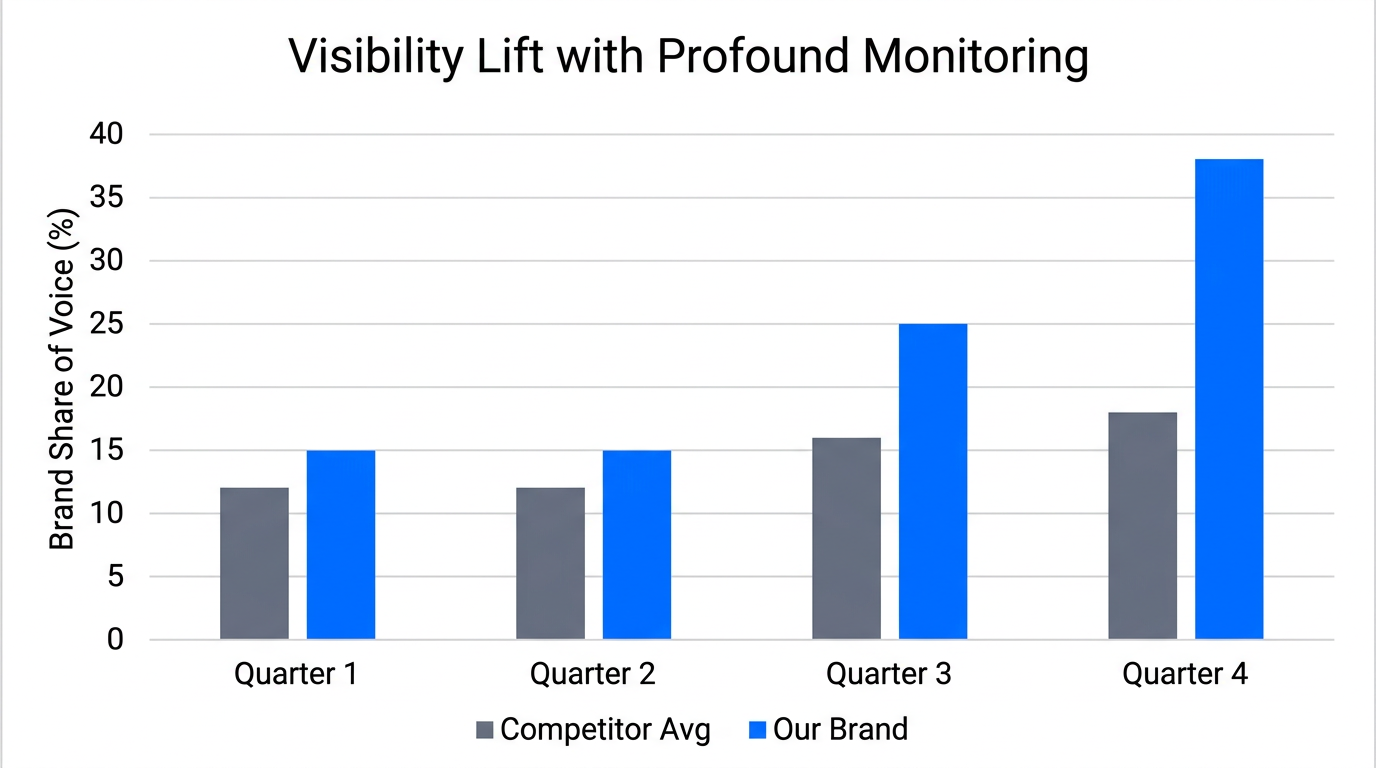
Proving marketing ROI to the board in a zero-click world requires new KPIs. Instead of just reporting traffic, CMOs are now focusing on the AI Visibility Lift. According to Semrush, being featured as a source in an AI Overview increases the CTR for that specific citation from 0.6% to 1.08%—nearly doubling your efficiency in a crowded market.
Furthermore, B2B companies are finding that while AI-driven reach may be smaller in raw numbers, the referral quality is significantly higher. Platforms like Perplexity are reported to have 3x higher referral quality for considered purchases like SaaS or FinTech compared to traditional search. The AI has already done the "vetting" for the user, meaning the traffic that does land on your site is pre-qualified and ready to convert.
"The global AI SEO software market has reached $2.43 billion in 2026. The proof of efficacy is no longer volume, but getting AI agents to recommend brands to high-ticket buyers."
The 2026 AI Visibility Playbook
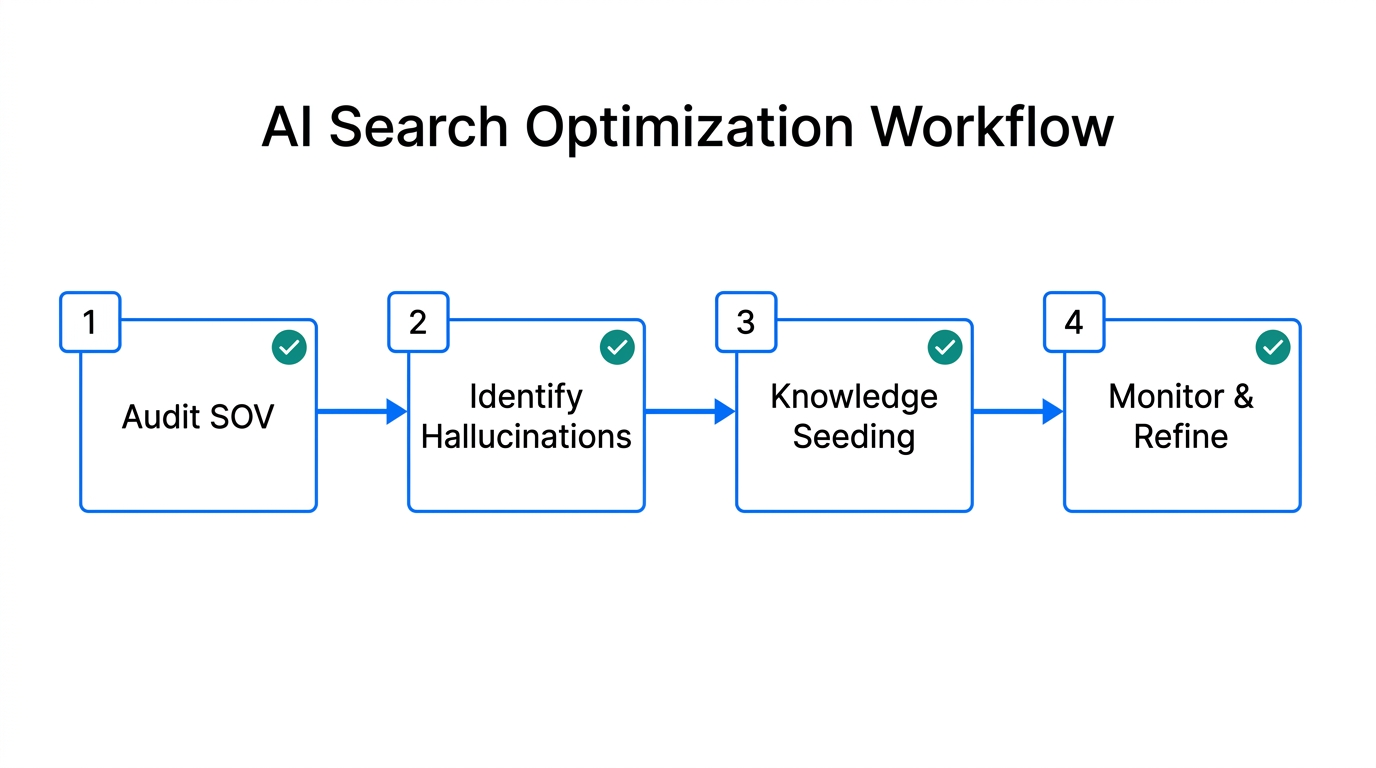
To secure your brand's share of voice, follow this strategic implementation path:
- Audit Your Entity: Use Profound or Goodie AI to see how your brand is currently cited in LLM responses. Look for hallucination risks or competitor misattributions.
- Optimize for "Answer-First": Place a 2-3 sentence direct answer to the target query at the very top of your most important pages. This "Primary Answer" lead is what AI bots use for their summaries.
- Execute Reputation Arbitrage: Don't just build links; build mentions. Seed discussions on Reddit, optimize your G2 profile, and ensure your brand is cited in niche directories.
- Technical Readiness: Move to SSR and implement advanced Schema markup. Ensure your site is compatible with agents like GPTBot and PerplexityBot.
- Monitor SOV: Set a monthly benchmark for AI Share of Voice. Track how often your brand appears in the "Top 3" recommendations for your core industry queries.
Conclusion: Protecting the Future of Your Brand
In 2026, the brands that win aren't just the ones with the most content; they are the ones with the most trusted reputation in the AI ecosystem. Traditional SEO is dead, but AEO (Answer Engine Optimization) and GEO are thriving. By leveraging tools like Profound to monitor visibility and using platforms like Stormy AI to build the human-centric social proof that feeds AI models, brands can navigate the transition to Agentic Commerce with confidence.
The board will no longer ask for your "Google rank." They will ask for your "AI Share of Voice." Make sure you have the data to answer.