In the high-speed marketing landscape of 2026, the pursuit of being “better” has become a fool’s errand. With generative AI now capable of reaching feature parity across software and consumer goods in a matter of weeks, the traditional competitive advantage of a slightly faster UI or a marginally more durable material has evaporated. Today, success isn't about climbing the same ladder as the market leader; it’s about building a different ladder entirely. This is the core tenet of strategic brand positioning: finding your “different” triangle in a world of circles.
The 2026 Reality: The Death of "Better"
 25:12
25:12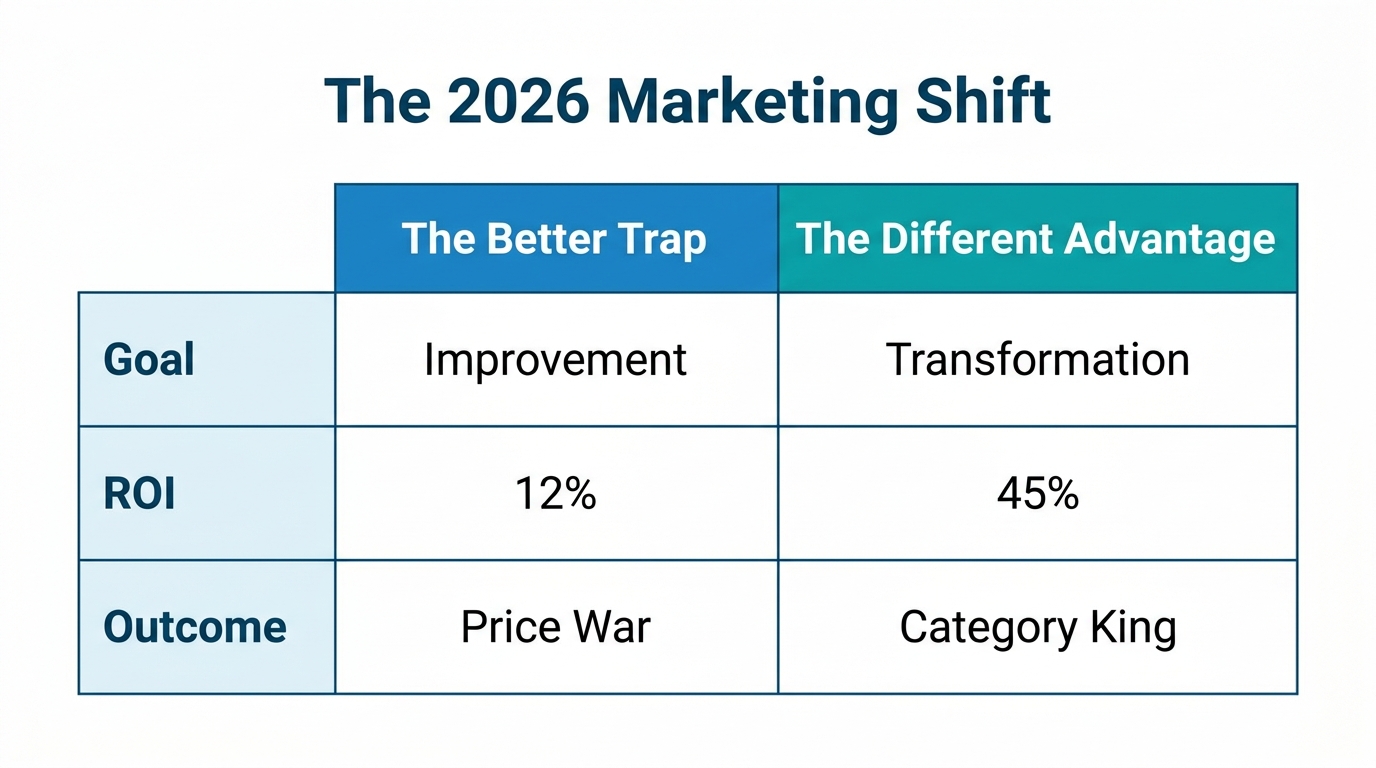
As we navigate this year, growth leads are realizing that “better” is a reactive strategy. When you try to be better, you are inherently validating the market leader's framework. You are saying, “They are the standard, and we are just 10% more efficient.” In a world saturated with options, 10% efficiency gains are invisible. According to the 22 Immutable Laws of Marketing, the first law is the Law of Leadership: it is better to be first than it is to be better.
But if you aren't first, you must invoke the Law of the Opposite. If you cannot be first in a category, you must create a new category where you can be first. This requires a fundamental shift from feature-based competition to category design. Startups that win in 2026 aren't out-coding their rivals; they are out-positioning them by highlighting an objective alternative that makes the incumbent look like a relic of the past.
"In 2026, feature parity is reached instantly via AI. If your only pitch is 'we are 10% better,' you are already dead. You must be fundamentally different."
The Listerine Framework: The Power of the Opposite
23:06The classic example of this strategy is the rivalry between Listerine and its later competitors. For decades, Listerine dominated the mouthwash market with a “clinical” position. It tasted terrible, but that bad taste served as a “signal of efficacy.” It felt like it was working because it burned. When competitors tried to enter the market by being “better” (tasting slightly less bad), they failed. They were just weaker versions of Listerine.
The brand that succeeded was the one that embraced the Law of the Opposite. Instead of trying to be “less bad-tasting,” they positioned themselves as the mouthwash that actually tasted good. They didn't insult Listerine; they objectively categorized it as “the hospital mouthwash” while they became “the social mouthwash.” They created a new branch on the decision tree. Users had to choose: Do I want to feel like I just left the doctor, or do I want to feel ready for a date? Both are valid, but they are different.

In the context of 2026 influencer marketing, we see this play out constantly. Legacy platforms like Tagger or CreatorIQ focus on massive, manual enterprise databases. They are the “clinical” choice for old-school agencies. Stormy AI, by contrast, is the Opposite. It is the AI-native agent that doesn't just provide a database but actually does the work for you. While legacy tools require a team of five to manage, Stormy uses an AI agent to discover, outreach, and follow up autonomously. One is a library; the other is a librarian who also writes the book.
Step-by-Step Audit: Finding Your "Different" Triangle
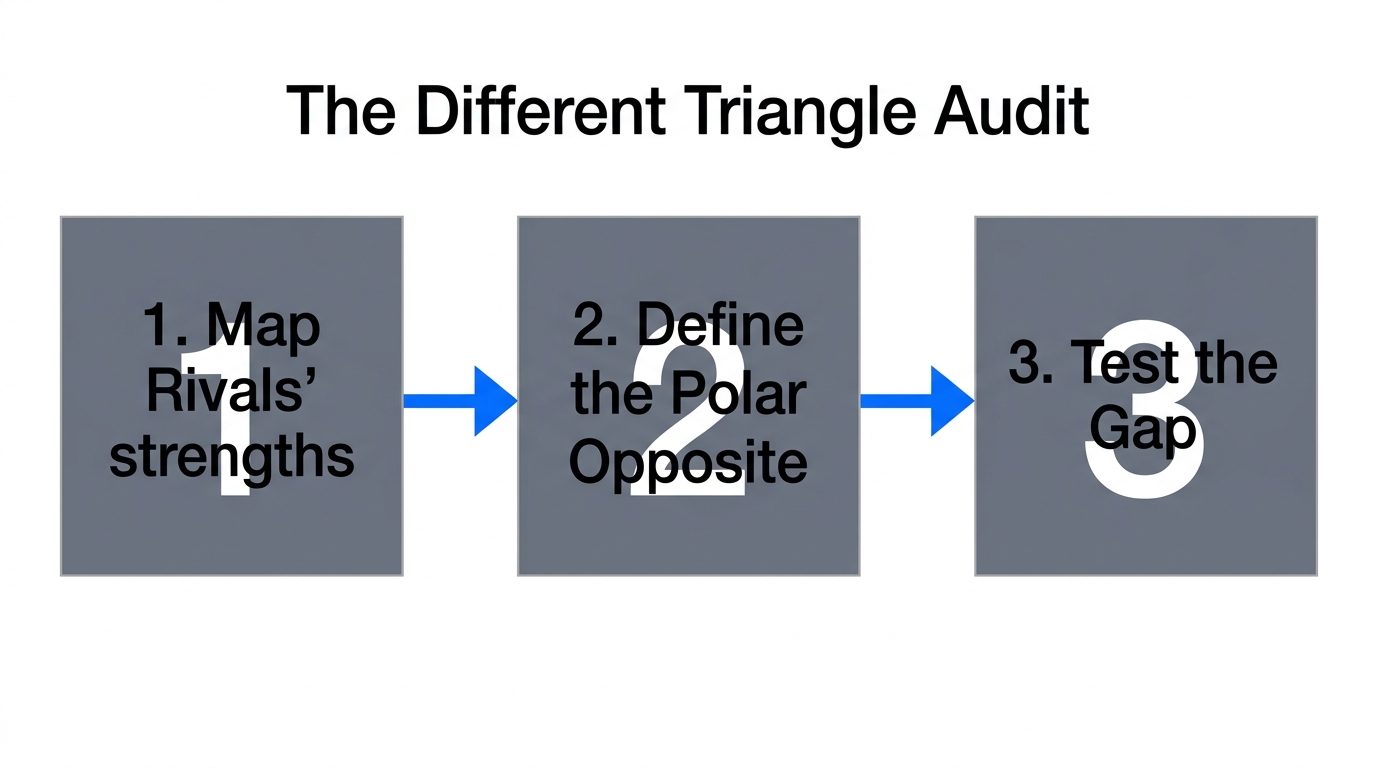
To move away from the “better” trap, growth leads must conduct a rigorous audit of their competitive landscape. You aren't looking for where your competitor is weak; you are looking for where they are strong, and then positioning yourself as the alternative to that strength.
Step 1: Identify the Market Leader's Core Attribute
What is the one word the incumbent owns? For Bank of America, as we learned from the lore of Amadeo Giannini, the early incumbents owned “Elite.” They served the wealthy. Giannini didn't try to be a “better elite bank.” He became the “Bank of Italy”—the bank for the “little man.” He thrived by being the opposite of the establishment.
Step 2: Find the “Cost” of that Strength
Every strength has a baked-in weakness. If a tool like HubSpot is “all-in-one,” the cost is “complexity and bloat.” If a platform is “premium and expensive,” the cost is “exclusivity and slow adoption.” Use Stormy AI analytics to monitor what creators and customers are saying about these incumbents on TikTok and YouTube. Are they complaining about the learning curve? The price? The lack of automation?
Step 3: Define Your Wedge
Once you identify the “cost” of the leader's strength, that becomes your wedge. If the leader is “Manual/Comprehensive,” you are “Automated/Fast.” If the leader is “Safe/Corporate,” you are “Bold/UGC-First.”
| Competitor Attribute (The Strength) | The Baked-in Weakness | Your Opposite Position |
|---|---|---|
| Enterprise-Scale | Slow, high-friction, requires training | Agile & Instant (AI-First) |
| Human-Managed | Expensive, unscalable, prone to error | Autonomous Agents (Stormy AI) |
| Premium Pricing | High barrier to entry for startups | Democratic/Performance-Based |
Why Incumbents Fail to Defend Against 'Opposite' Positioning
25:44The beauty of the Law of the Opposite is that a market leader cannot defend against it without undermining their own core value proposition. If Listerine suddenly started advertising that they taste great, they would lose their “clinical efficacy” status. They are trapped by their own success.
This is why Stormy AI is currently disrupting the influencer marketing space. Legacy platforms have spent a decade building massive manual databases. If they were to pivot to a fully autonomous AI agent model like Stormy, they would have to admit that their 50-person managed service departments are obsolete. They are incentivized to keep things complex; Stormy is incentivized to make them automatic.
"The incumbent's greatest strength is the anchor that prevents them from following you into the 'Opposite' territory."
Consider the story of Apple Search Ads vs. traditional social ads. While others focused on “Interest-based targeting,” Apple focused on “Intent-based targeting” at the point of download. They didn't try to be a better Meta Ads Manager; they became the opposite—the platform that owns the final click.
Playbook: Using Stormy AI to Identify Competitor Weaknesses
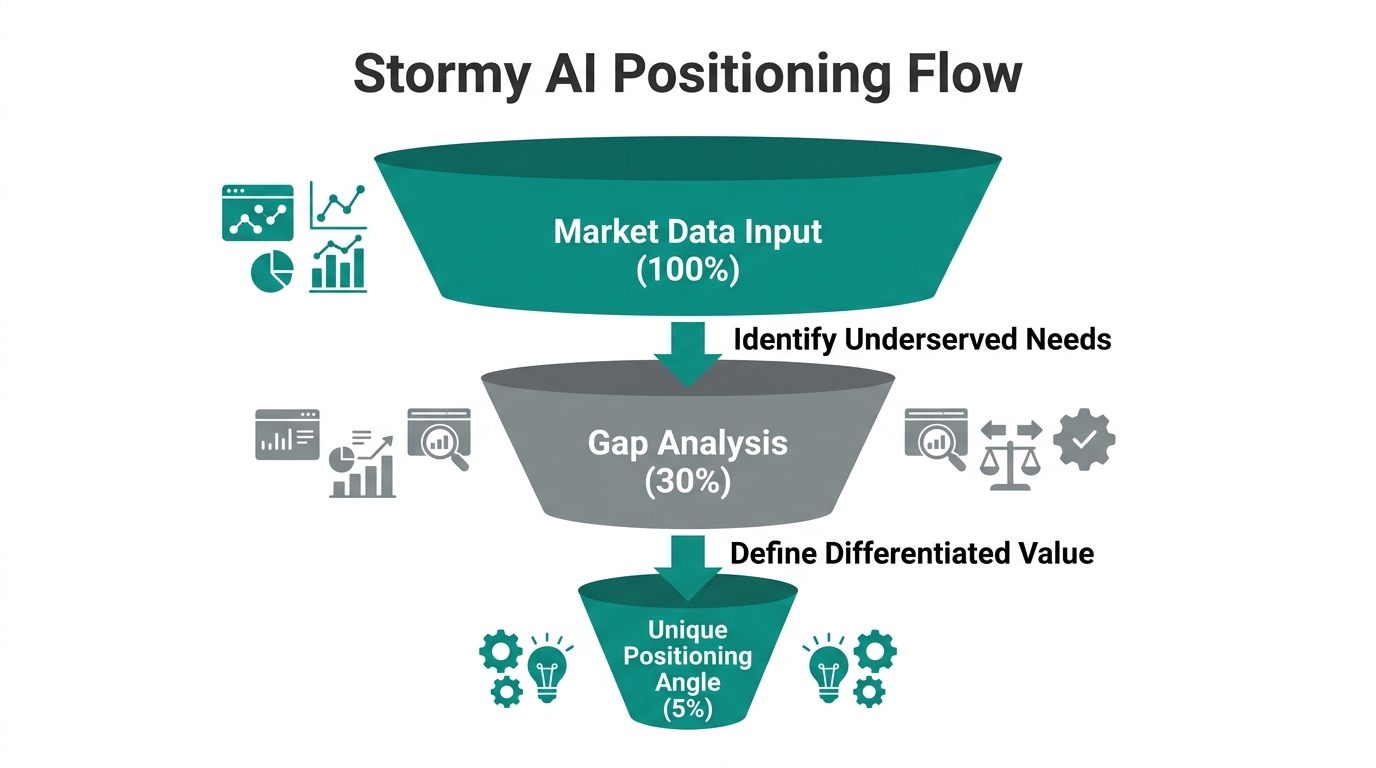
In 2026, you don't need a $50,000 consulting project to find your positioning. You can use Stormy AI to perform real-time market sentiment analysis and execute your “Opposite” strategy.
- Monitor the Narrative: Use Stormy’s Post Tracking to monitor videos from creators who use your competitors' products. Look for the phrase “I wish it did...” or “It's great, but...”. That “but” is your entry point.
- Identify the 'Un-Served': Just as Giannini found the fruit peddlers that the elite banks ignored, use Stormy’s AI Search to find “micro-niches” of creators that are being ignored by the “better” brands. If everyone is chasing the top 1% on Instagram, your “Opposite” move might be owning the emerging Beehiiv newsletter creator space.
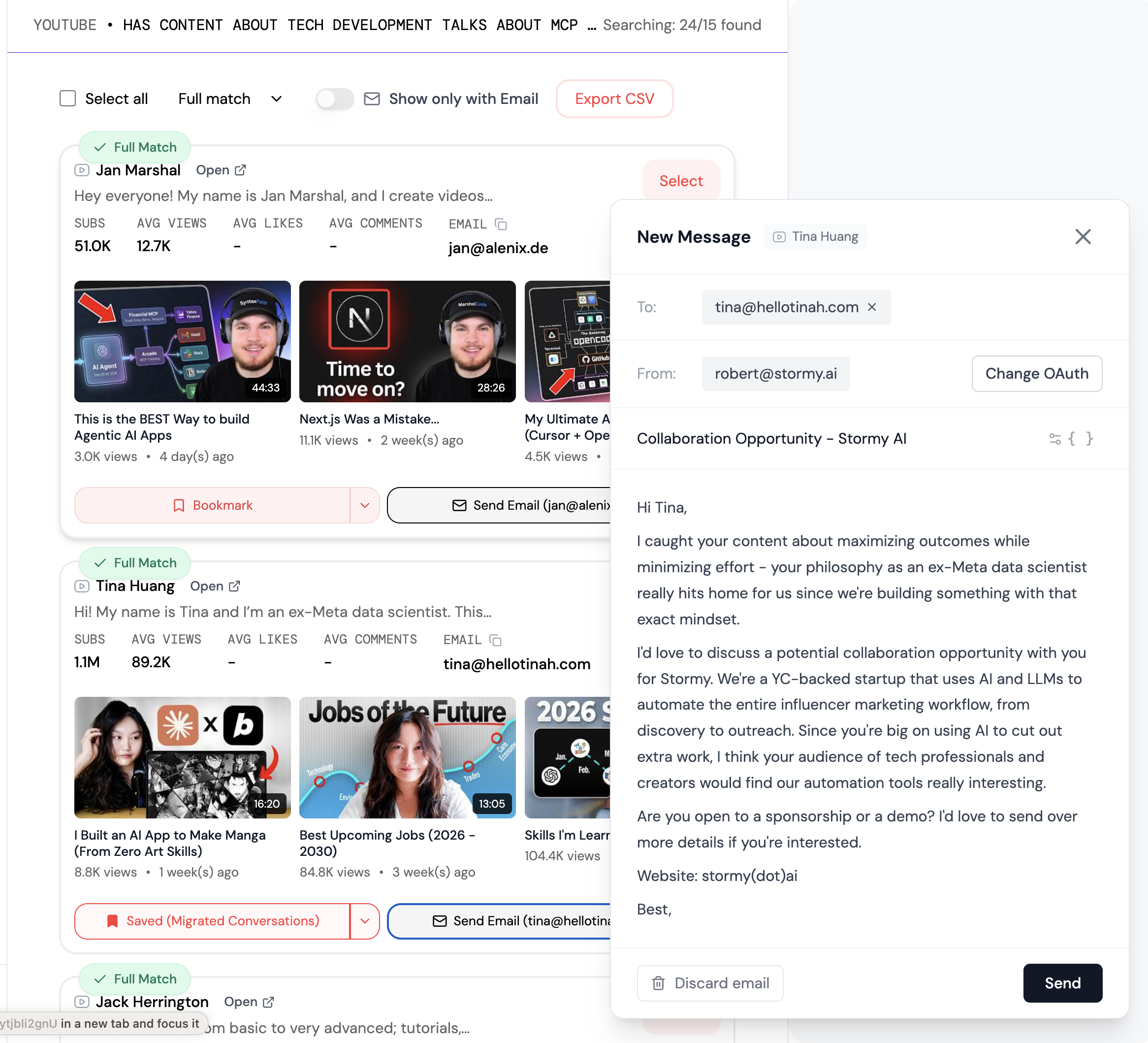
- Automate the Contrast: Use Stormy’s personalized email engine to reach out to creators with a message that highlights your difference. Instead of “We are a better platform,” your email should say, “You're likely tired of the manual reporting in [Competitor Name]. We built an AI agent that does it for you while you sleep.”
Conclusion: Embrace the Unorthodox
As we've seen from the “lore” of business history—from the benevolent banking of Amadeo Giannini to the high-stakes cryptography of the modern Bitcoin era—success often comes from the most unorthodox paths. In marketing, that path is Different. Don't waste your 2026 budget trying to win a feature war. Use tools like Stormy AI to identify the gap, define your opposite position, and own a category that only you can serve.
Ready to stop being “better” and start being “different”? Discover how Stormy AI can automate your competitor analysis and creator outreach today.