Jungle Scout Tutorial 2026: The Step-by-Step Amazon Product Research Playbook
Learn the Jungle Scout tutorial 2026 playbook for Amazon FBA success. Discover how to use the Opportunity Finder, validate niches, and automate with Stormy AI.
In 2026, the Amazon marketplace has reached a "professionalization paradox." While the barrier to entry is higher and new seller sign-ups have hit a decade low of 165,000, the number of elite sellers clearing $1 million in annual revenue has nearly doubled since 2021. Succeeding as an Amazon FBA seller this year isn't about finding a "winning item" anymore; it is about validating market gaps using AI-driven sentiment analysis and data-backed sourcing. With total Amazon GMV projected to exceed $700 billion this year, the pie is larger than ever, but 3P sellers (who account for 62% of units sold) must be surgical with their product research.
This Jungle Scout tutorial 2026 provides a comprehensive playbook for navigating the modern FBA landscape. We will cover the "Find-Filter-Validate" workflow, specifically designed to handle the 2026 fee structure and the rise of Amazon’s AI shopping assistant, Rufus. Once you've identified your winning product, an AI ecommerce employee like Stormy AI handles the heavy lifting of supplier outreach and inventory monitoring in the background.
The 2026 Amazon Landscape: Why Precision Matters
Before we dive into the tool, you must understand the economics of 2026. The average FBA seller now generates $160,000 annually, but profit margins are under pressure. A typical seller pays between 30% and 45% of their revenue in Amazon fees, including the newer inbound placement fees which can range from $0.21 to $1.58 per unit. If your product research is off by even 15%, these fees will consume your entire margin before you can pivot.
Furthermore, Amazon's search behavior has shifted from keyword-matching to "Intent Clusters." 30% of purchases now happen through Rufus chat, where customers ask complex questions like, "Show me a coffee maker that fits under low cabinets and doesn't leak." Your research must identify these specific functional requirements before you ever place a PO.
Step 1: Niche Hunting with the Opportunity Finder
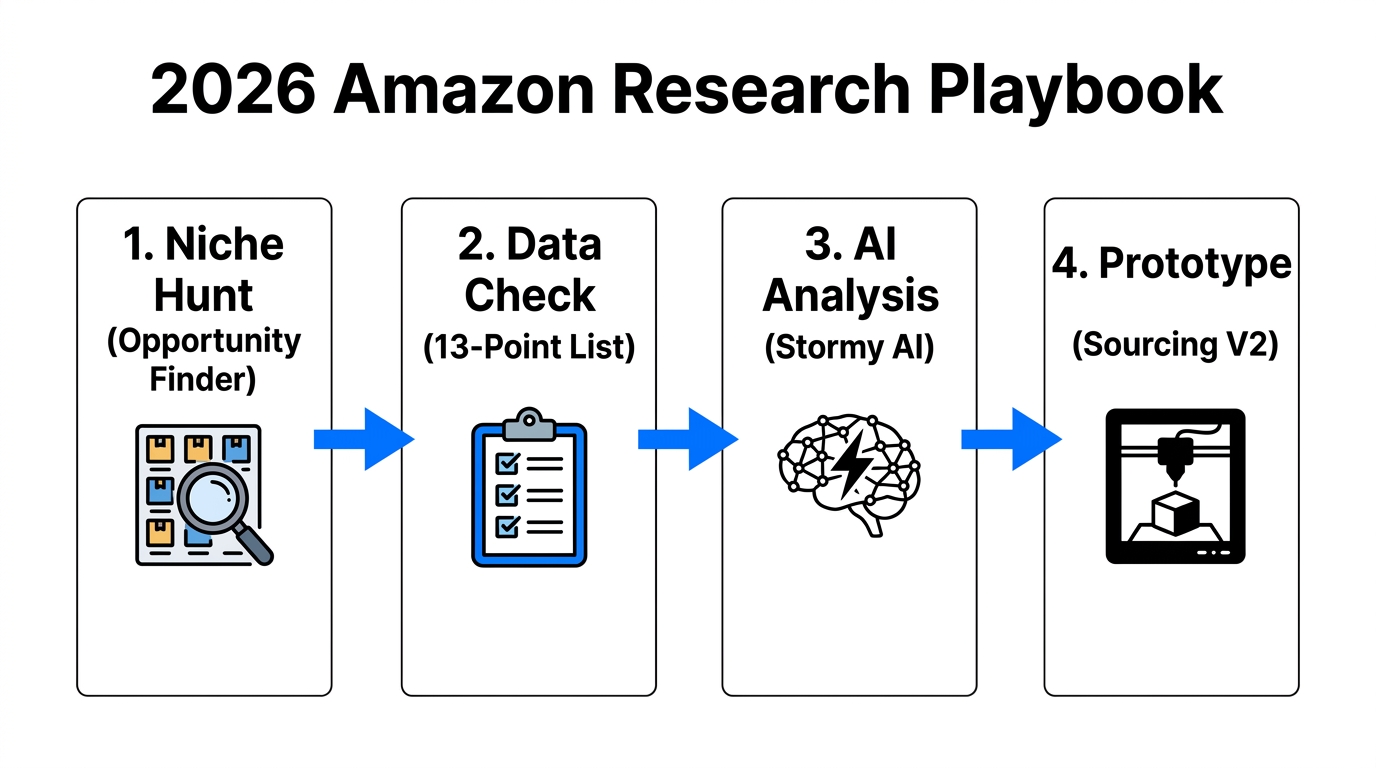
The first stage of our Amazon product research playbook is the "Find" phase. Open the Jungle Scout Opportunity Finder. This tool bypasses the noise of the main search results and looks at the underlying data of entire niches.
Configuring Your 2026 Filters
To find a viable path in today's market, use these specific benchmark settings in the Opportunity Finder:
- Category: Focus on high-utility niches like Pet Supplies, Home & Kitchen, or Office. Avoid highly regulated categories like Supplements or Toys unless you have existing compliance infrastructure.
- Average Units Sold: 300–1,000 per month. This ensures there is enough demand to support a business but not so much that you're fighting established conglomerates.
- Monthly Search Volume: >10,000 for the main keyword.
- Niche Score: Target a score of 7 or higher. However, as Nova Analytics points out, any niche with a score of 10 is likely already being targeted by copycat manufacturers; the "sweet spot" is often a 7 or 8.
As you browse, look for "Zero-Search" potential. These are niches where customers are looking for specific solutions rather than generic terms. If you find a niche where the top products have high sales but poor listings, you've found your entry point.
"Data accuracy is the only moat left. In 2026, if your sales estimate is off by 20%, your inventory storage fees will eat your entire margin before you can pivot." — Greg Mercer, Jungle Scout Founder
Step 2: The 13-Point Validation Checklist
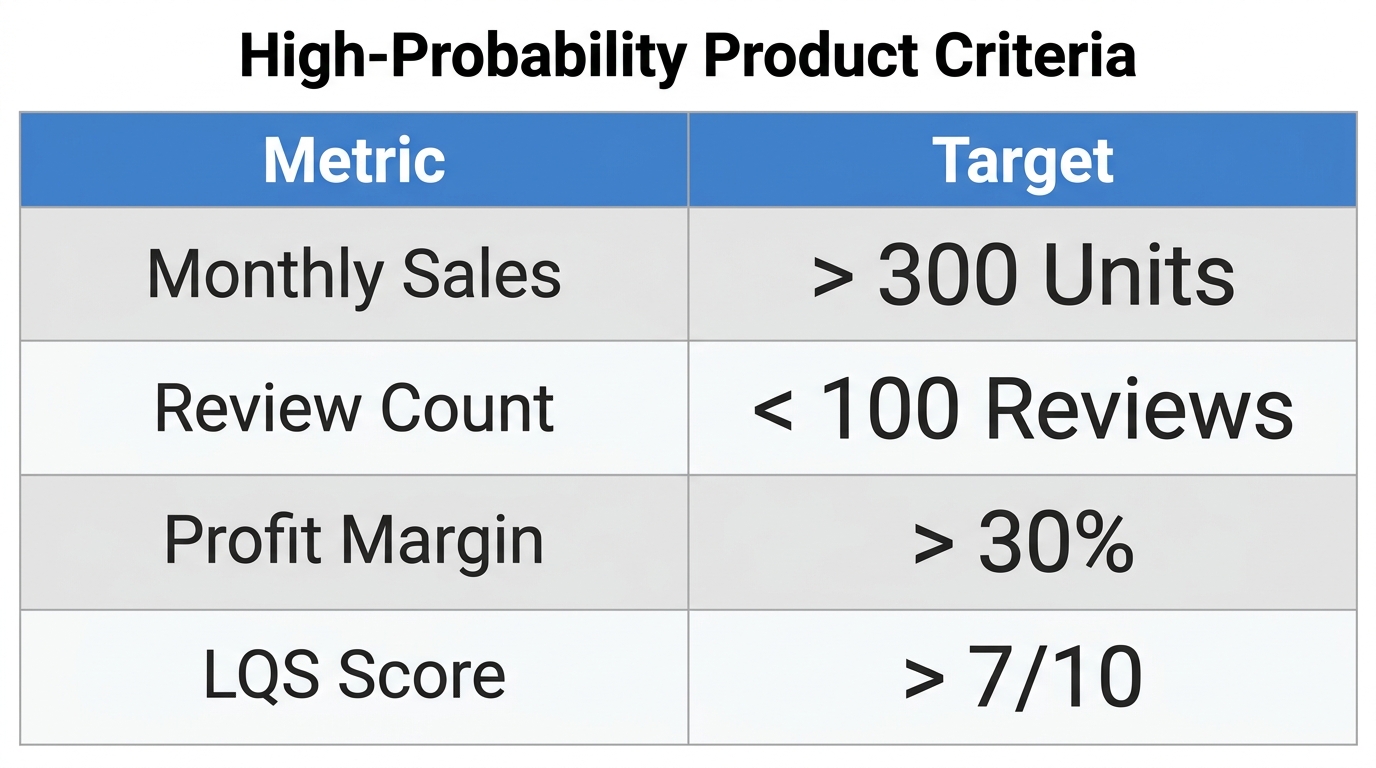
Once you have a list of potential niches, you must run each through a rigorous filtering process. This 13-point checklist ensures your Amazon FBA product validation accounts for the logistics and fee realities of the current year.
| Metric | Target Benchmark | Why it Matters in 2026 |
|---|---|---|
| Retail Price | $20 – $50 | Sweet spot for impulse buys and healthy margins after fees. |
| Size Tier | Small Standard | Avoids the 2026 bulky item fee spikes and high storage costs. |
| Net Margin | 25% Minimum | Buffer for the average $1.15 CPC and Amazon's 35% "Tax." |
| Review Gap | Top 5 < 500 Reviews | Easier to rank organically without massive Vine program spend. |
| Rufus Ready | Clear Use-Case | The product must answer a specific functional question. |
Pay close attention to the Size and Weight. According to Jungle Scout’s State of the Seller report, 2026 logistics are punishing for items larger than 18"x14"x8". If your item requires a "Large Standard" or "Oversize" tier, your fulfillment costs will skyrocket, often reaching $10+ per unit.
Also, check for Low-Inventory Surcharges. Amazon now penalizes sellers up to $0.97 per unit if stock levels fall below 28 days of supply. This makes it critical to choose products with stable lead times. While you focus on the market data, Stormy AI can monitor your inventory levels across Shopify and Amazon, flagging stockout risks before these penalties hit your bottom line.
Step 3: AI Sentiment Analysis & Product Validation
In the past, sellers just looked at the best-seller rank (BSR). In 2026, you use the Jungle Scout Review Analysis AI to perform a sentiment audit. This is where you find the "unfair advantage."
Identifying Mechanical vs. UX Improvements
Run the AI tool on the top 3 sellers in your niche. The AI will summarize thousands of reviews into actionable themes. You are looking for two types of improvements:
- Mechanical Improvements: These are physical flaws. For example, "The strap breaks after three uses" or "The plastic feels flimsy." These are easy to fix at the factory level.
- UX (User Experience) Improvements: These are usage flaws. For example, "Hard to assemble without a video" or "The instructions are only in one language." These can be fixed through better branding, packaging, and digital assets.
By fixing one mechanical flaw and one UX flaw, you create a "V2" product that naturally outranks the competition through better conversion rates. Data shows that AI-optimized listings (those that address common complaints) see a 14.2% conversion rate, compared to the standard 9.8% for generic listings.
"Keyword research is no longer about volume; it’s about relevance density. You need to rank for the questions Rufus is asking, not just the words people are typing."
Step 4: Sourcing V2 Prototypes via the Supplier Database
With your improvements identified, move to the Jungle Scout Supplier Database. This tool allows you to see the exact factories used by the market leaders. By sourcing from a verified factory that already understands the category requirements, you reduce the risk of manufacturing defects.
Once you find a potential factory, ask for a "V2" prototype that incorporates the fixes identified in Step 3. This is where many sellers get bogged down in the "messy back office" of ecommerce—managing dozens of supplier emails, tracking sample shipments, and following up on quotes.
Automating the Boring Parts with Stormy AI
This is where Stormy AI becomes your most valuable teammate. Instead of manually tracking supplier conversations in a messy inbox, you can ask Stormy AI to manage the follow-up process. Stormy is an AI ecommerce employee that can use a browser, a spreadsheet, and an email account to run your back office.
- Supplier Outreach: Stormy can draft personalized outreach emails to multiple factories found in Jungle Scout, keeping track of rates and lead times in a dynamic spreadsheet.
- Automated Follow-ups: If a supplier hasn't replied to your sample request after 3 days, Stormy wakes up and sends a polite follow-up automatically.
- Inventory Pulse: Once your product is live, Stormy creates a daily inventory pulse, checking your Amazon and Shopify stock levels to ensure you stay in the "Goldilocks Zone" of 35-45 days of supply, avoiding both storage surcharges and low-stock penalties.
- PPC Audits: Stormy can pull your campaign performance from Amazon Ads every morning, flagging any campaign where the ROAS drops below your break-even point.
The "TikTok Test" for 2026
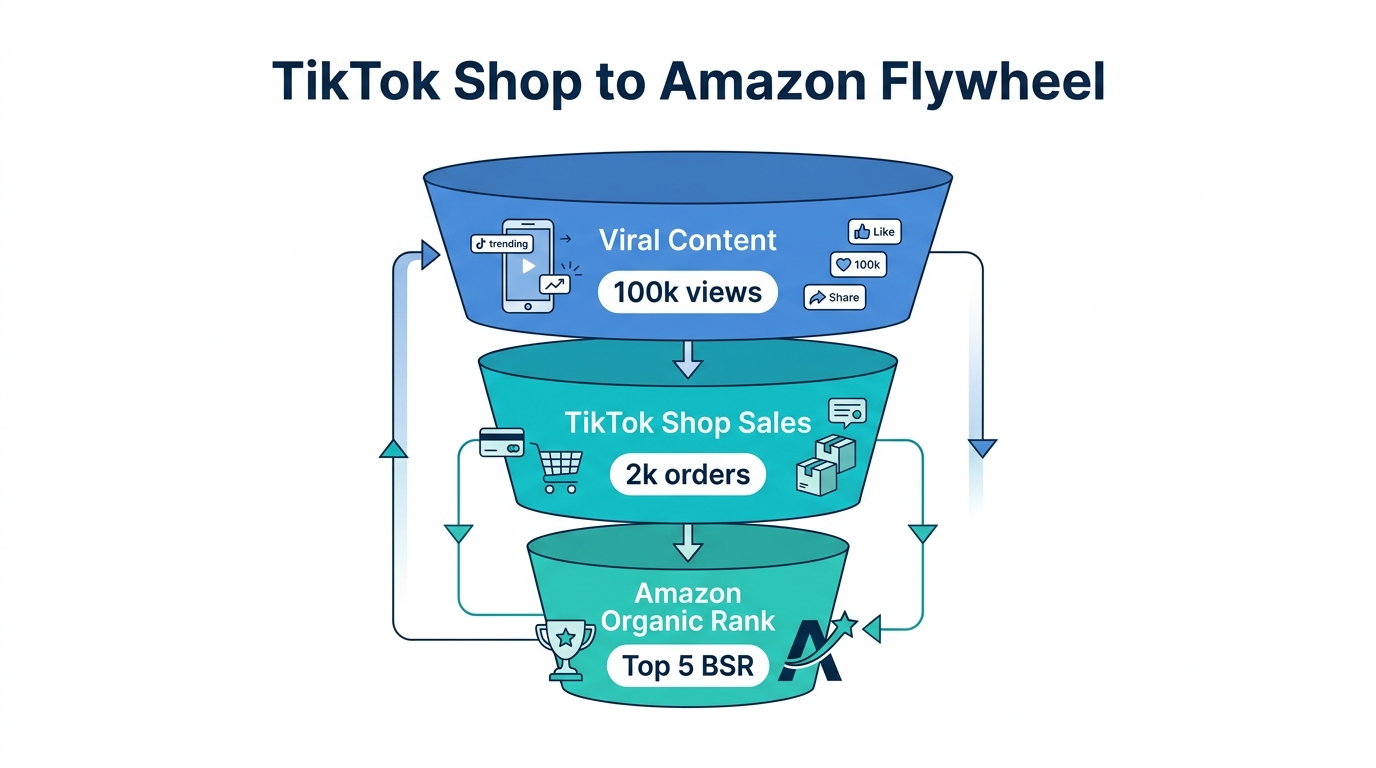
The final layer of validation in 2026 is checking "Off-Amazon" signals. Recent case studies have shown that brands without social proof struggle to rank as Rufus pulls data from across the web. Before committing to a product, check the search volume for your niche on TikTok Creative Center.
If a product is trending on TikTok but has a low review count on Amazon, you have found a massive Market Gap. This indicates that customer demand is moving faster than the Amazon catalog can keep up with. Leveraging Stormy AI for creator discovery can help you find influencers to launch your product with external traffic, giving you a 35% lift in click-through rates once you earn the "Rufus Recommended" badge.
"The most valuable software products are going to be using clean, structured data as the backbone of their AI agents to make them 10 times smarter."
Conclusion: Building a Research-First Brand
The failure rate for Amazon sellers who skip systematic validation in 2026 is 97%. By following this Jungle Scout tutorial 2026, you move from guessing to knowing. The "Find-Filter-Validate" framework ensures you only invest capital in products with a 25%+ net margin and a clear functional advantage.
To recap your 2026 playbook:
- Use the Opportunity Finder to hunt for niches with a score of 7+ and search volume over 10,000.
- Apply the 13-Point Checklist to filter for Small Standard items in the $20–$50 range.
- Use Review Analysis AI to identify specific mechanical and UX improvements for your V2 product.
- Source through the Supplier Database and integrate Stormy AI to handle the tedious follow-ups and inventory monitoring.
Amazon FBA is no longer a hobby; it is a data-science business. With the right tools like Jungle Scout and an autonomous AI teammate like Stormy AI, you can navigate the complexities of 2026 and build a million-dollar brand with a lean, efficient team.