How to Use OpenClaw to Automate Shopify Customer Support and Boost Retention in 2026
Learn how to use OpenClaw Shopify automation to reduce WISMO support tickets by 70% and boost customer retention in 2026 using AI-powered autonomous agents.
In 2026, the ecommerce landscape has moved far beyond basic chatbots and static FAQ pages. With Shopify powering approximately 5.7 million active stores globally, the competition for customer attention—and more importantly, customer retention—has reached a fever pitch. Today, brands that thrive aren't just those with the best products, but those that offer the most frictionless post-purchase experience. This is where agentic commerce takes center stage, specifically through the deployment of OpenClaw autonomous agents to handle the most repetitive, margin-draining aspect of retail: customer service.
The 2026 Cost of Manual Support: Why WISMO is a Margin Killer
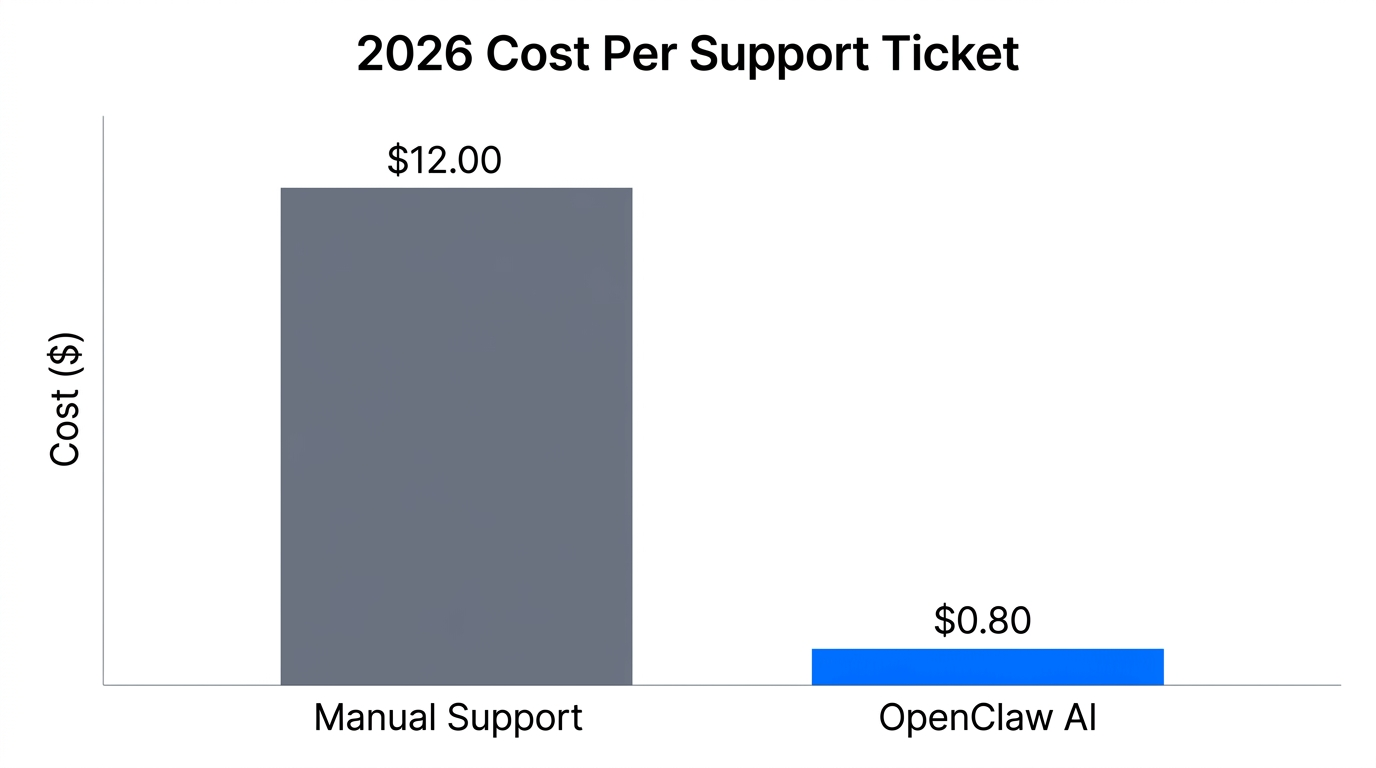
For most Shopify merchants, "Where Is My Order?" (WISMO) queries remain the single largest drain on support resources. Recent data from Fluent Commerce reveals that WISMO inquiries account for 40–60% of total customer support volume. In 2026, the labor cost for a human agent to handle a single order status ticket has climbed to $5–$6 per inquiry. When you multiply that across hundreds of orders a week, you aren't just losing time; you are systematically eroding your profit margins.
"The future of ecommerce isn't just about selling; it's about the autonomous management of customer expectations from checkout to delivery."
Furthermore, the global Order Management System (OMS) software market is projected to reach $1.9 billion this year, reflecting a massive shift toward unified commerce. Merchants are no longer satisfied with siloed data; they need a single AI-driven layer that can synchronize inventory, shipping updates, and customer data in real-time. OpenClaw Shopify automation provides this bridge, transforming your support from a reactive cost center into a proactive retention engine.
What is OpenClaw? The "Digital Employee" for Shopify
OpenClaw (often referred to as Clawbot) is an open-source AI agent harness designed to run autonomously on a server. Unlike traditional SaaS tools that offer rigid "if-this-then-that" workflows, OpenClaw acts as a digital employee. It can reason through tasks, access your store data via the Model Context Protocol (MCP), and execute actions like tagging high-priority orders or updating fulfillment statuses without manual intervention.
Early adopters of these AI-driven systems are reporting 35–45% cost reductions and order accuracy exceeding 95% in 2026, according to Artsyl Tech. By self-hosting OpenClaw on a dedicated VPS—such as those offered by Tencent Cloud Lighthouse—merchants maintain full control over their data privacy while ensuring their AI agent is online 24/7.
| Feature | Traditional Support | OpenClaw AI Agent |
|---|---|---|
| Response Time | 4-24 Hours | < 4 Minutes |
| Cost Per Ticket | $5.00 - $6.00 | ~$0.10 (API fees) |
| Availability | Business Hours | 24/7/365 |
| Scalability | Requires Hiring | Instant & Infinite |
Step-by-Step Setup: Automating Shopify Support with OpenClaw
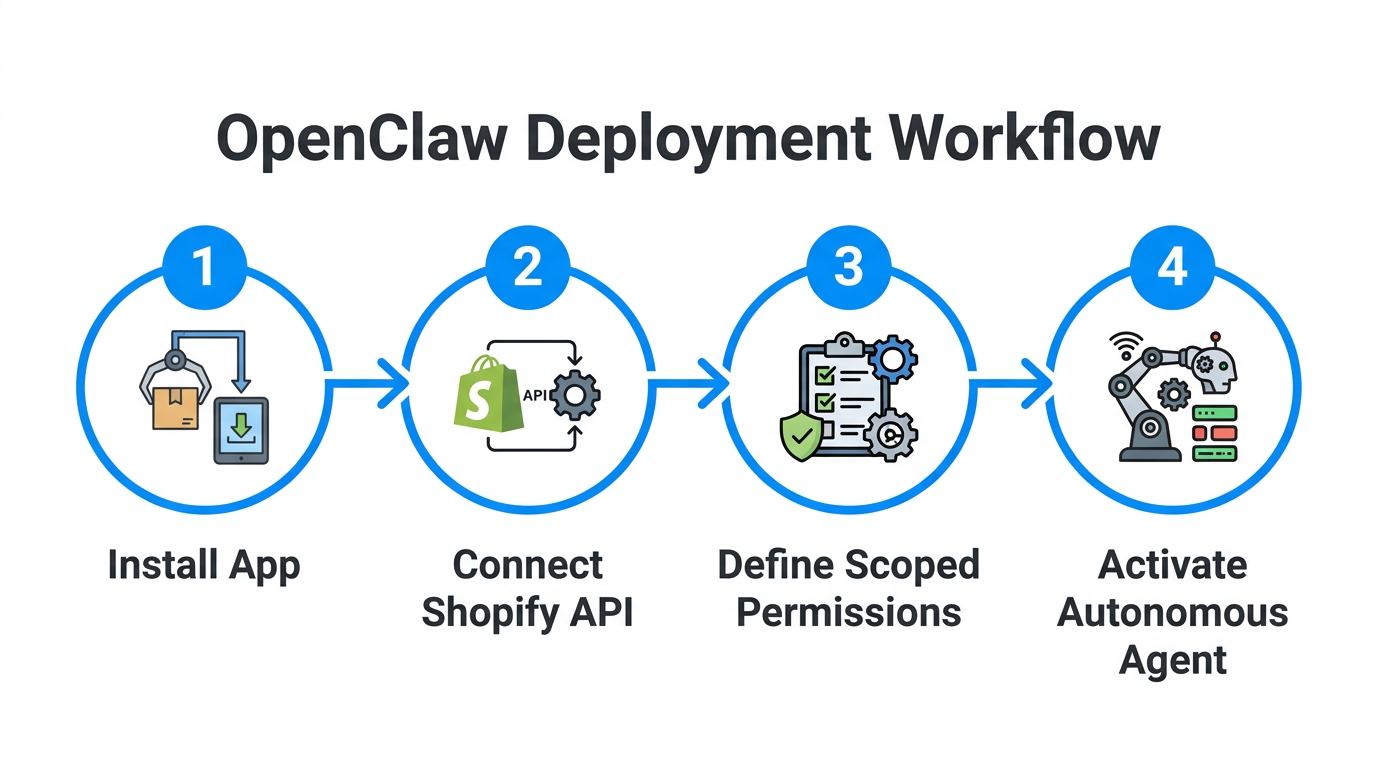
Implementing AI customer service for ecommerce requires a structured approach to ensure the agent has the information it needs without creating security risks. Follow this playbook to deploy your first OpenClaw agent for Shopify.
Step 1: Hosting and Environment Setup
Because OpenClaw is an autonomous agent that needs to "think" and "act" continuously, you cannot run it on a local machine that might go to sleep. Deploy the OpenClaw harness using a Docker container on a dedicated server. This isolates the agent from your primary business data and provides a stable environment for continuous operation.
Step 2: Connecting Shopify via Composio
The most critical step is the bridge between the AI and your store data. Use Composio, which utilizes the Model Context Protocol (MCP). Think of MCP as the "USB-C for AI"—it allows OpenClaw to "read" your inventory levels, order history, and fulfillment data without the need for custom, fragile API coding. This integration enables the agent to fetch tracking numbers or identify unfulfilled orders instantly.
Step 3: Bridging to WhatsApp and Telegram
To reduce friction, your customers shouldn't have to log in to your site to check their order status. Connect your OpenClaw agent to a WhatsApp or Telegram bridge using tools like Twilio. When a customer sends a message saying "Where is my order?", the agent identifies the customer via their phone number or email, queries Shopify through Composio, and provides a real-time update in seconds.
"In 2026, convenience is the currency of loyalty. If a customer can track their package via a simple WhatsApp message, you've already won half the retention battle."
Implementing Scoped Permissions with Composio
One of the biggest mistakes merchants make when deploying AI is giving the agent 100% autonomy with full "write" access to their store. AI can occasionally hallucinate or misinterpret a complex request, which could lead to accidental order cancellations or incorrect shipping tags. This is why scoped permission management is non-negotiable.
Using Composio, you can strictly limit what the agent is allowed to do. For example:
- Read-Only Access: Allow the agent to view order_status and tracking_info.
- Limited Write Access: Allow the agent to tag_orders (e.g., tagging a ticket as "High Priority") but NOT to delete_orders or issue_refunds without human approval.
- Audit Logs: Ensure every action taken by the OpenClaw agent is logged in a Slack channel or a dedicated CRM.
Case Study: Improving CSAT from 3.2 to 4.4
A prominent DTC brand specializing in eco-friendly home goods faced a crisis in late 2025. Their rapid growth led to a backlog of support tickets, resulting in a Customer Satisfaction (CSAT) score of 3.2. Customers were frustrated by the 4-hour wait time for simple order updates.
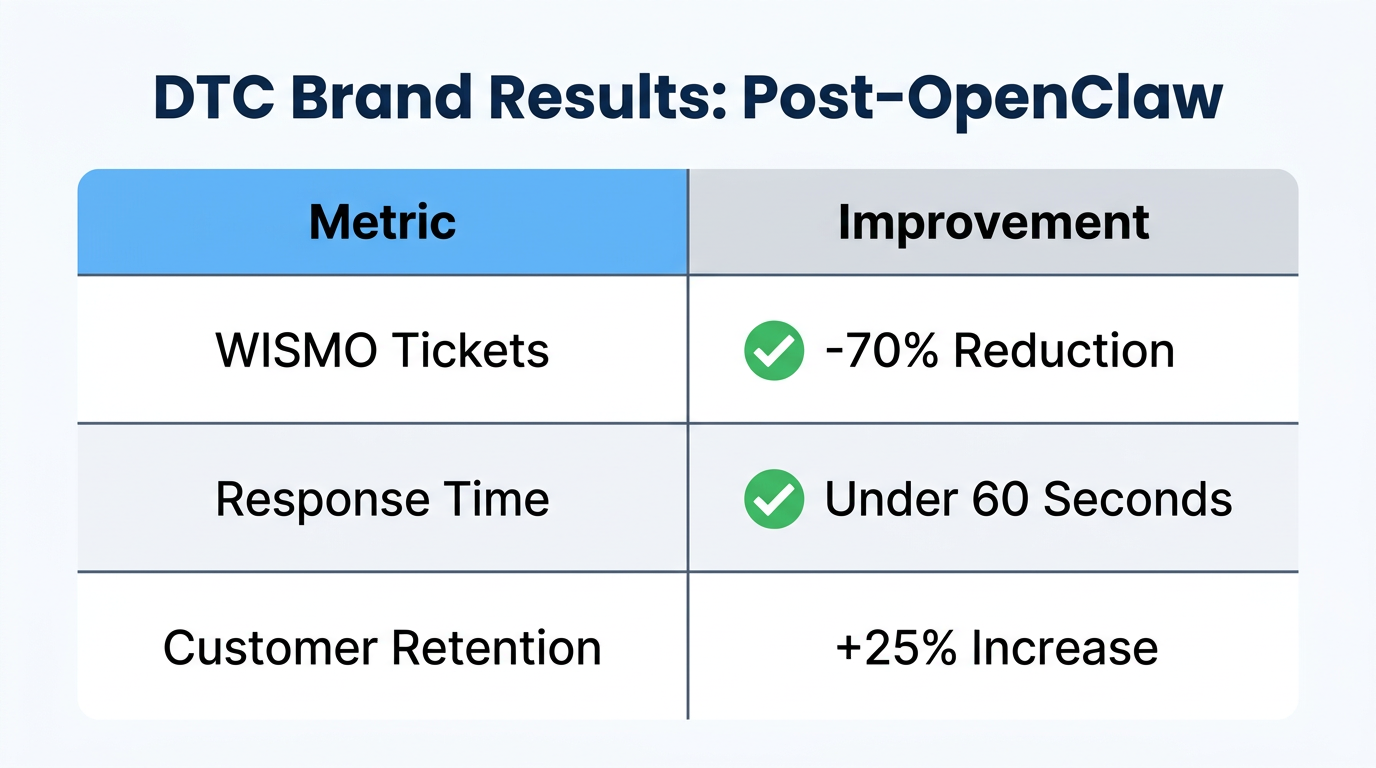
By implementing an OpenClaw agent via WhatsApp, the brand achieved the following results:
- 70% Reduction in manual support ticket volume within 60 days.
- CSAT Score Boost: Increased from 3.2 to 4.4, primarily due to the instantaneous nature of the responses.
- Operational Efficiency: Reclaimed 10+ hours per week for the management team, who previously had to assist in the support queue during peak periods.
This success isn't just about answering questions; it's about freeing up your team to focus on high-value tasks. While tools like Stormy AI are essential for automating your influencer outreach and driving top-of-funnel growth, OpenClaw ensures that the traffic you generate is supported by a world-class post-purchase experience. This combination of AI-driven acquisition and AI-driven retention is the winning formula for Shopify order management in 2026.
The 'Human-in-the-Loop' Protocol: Managing Complexity
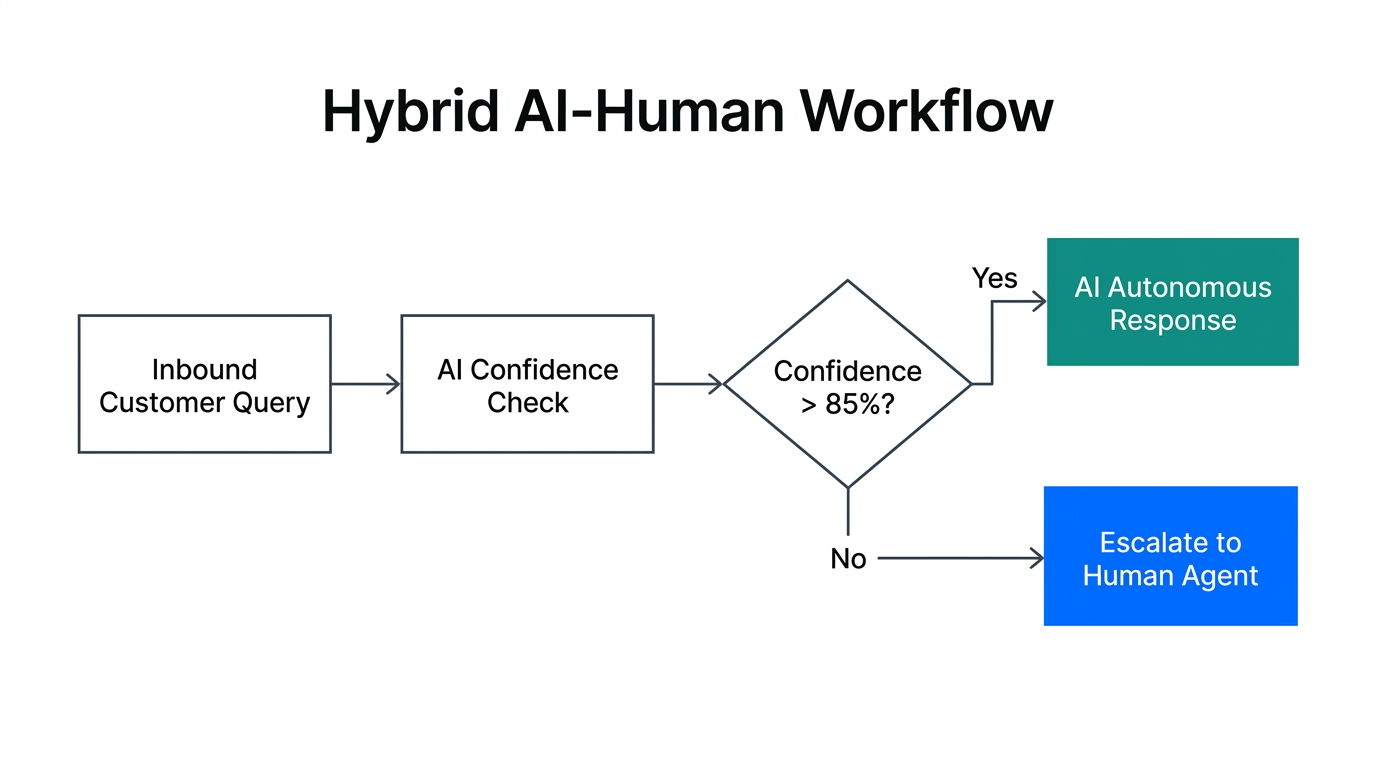
Despite the power of OpenClaw, AI is not a total replacement for human empathy and problem-solving. A successful ecommerce retention strategy requires a "Human-in-the-Loop" (HITL) protocol. This ensures that when the AI encounters a situation it cannot resolve—such as a lost package claim or a complex return—it gracefully hands the conversation off to a human agent.
Set up automated alerts using tools like Slack or Notion. If the OpenClaw agent detects a sentiment shift (e.g., a customer using frustrated language) or if the query falls outside its scoped permissions, it should immediately notify your support team. This hybrid approach ensures efficiency without sacrificing the personal touch that builds long-term brand loyalty. According to experts like Francesca Tabor, the most successful AI implementations are those that augment human capabilities rather than attempting to replace them entirely.
Final Thoughts: Future-Proofing Your Shopify Store
As we move deeper into 2026, the gap between AI-enabled merchants and traditional retailers will only widen. Implementing OpenClaw Shopify automation is no longer a luxury for large enterprises; it is a necessity for any brand looking to scale without seeing their margins swallowed by support costs. By automating WISMO inquiries, securing your data with scoped permissions, and maintaining a human-in-the-loop for complex issues, you can significantly reduce WISMO support tickets and improve your customer lifetime value.
Ready to revolutionize your growth? Pair your backend automation with a powerful frontend strategy. Use Stormy AI to discover and outreach to the creators who will drive your next wave of customers, while your OpenClaw agent stands ready to provide them with 24/7 support.