How to Use Claude Code to Achieve 11.45% Ecommerce Conversion Rates in 2026
Learn how to leverage Claude Code to reach 11.45% ecommerce conversion rates. This 2026 CRO playbook covers AI landing pages, agentic coding, and high-velocity A/B testing.
In 2026, the baseline for ecommerce success has shifted. While the industry average landing page conversion rate sits at a respectable 6.6%, the elite 10% of brands are now consistently hitting 11.45% or higher, according to latest data from Nudge. The difference between these two cohorts isn't just better copywriting or flashier creative; it is the implementation of Action AI. For growth marketers and founders, the emergence of Claude Code has turned the tide, allowing teams to move from slow, manual design-to-code handoffs to agentic systems that build, test, and optimize high-converting landing pages in real-time.
The 2026 Conversion Benchmark: Why 11.45% is the New North Star
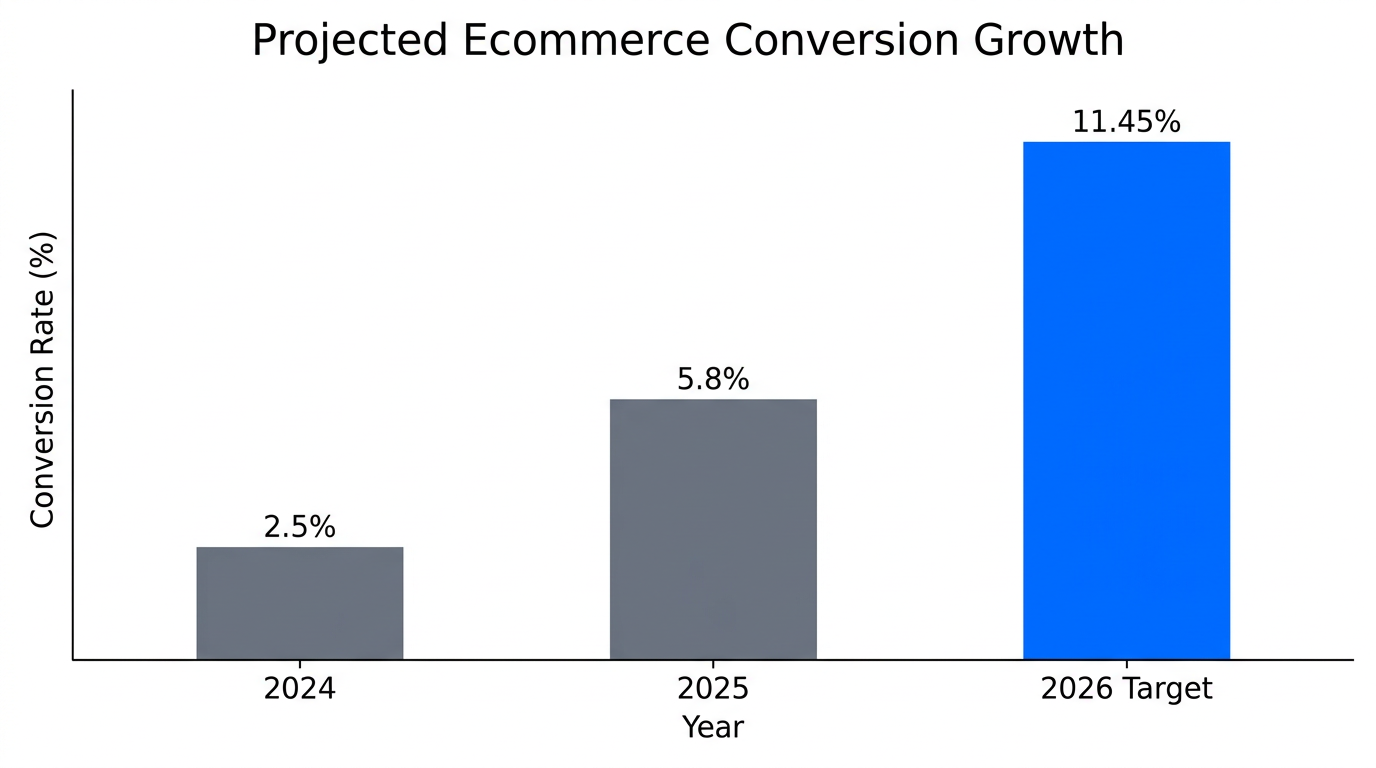
The ecommerce landscape this year is dominated by hyper-personalization. Research from McKinsey reveals that companies utilizing AI for deep personalization have seen a 25% increase in conversion rates and a 10–15% boost in Average Order Value (AOV). If your site still feels like a static catalog, you are leaving millions on the table. Today, over 65% of web traffic originates from mobile devices, and these users are 20% more likely to purchase when interactive AI features or virtual try-ons are integrated into the experience.
Claude Code isn't just another chatbot; it’s a developer’s powerhouse that reached a $2.5 billion run-rate revenue by early 2026. With roughly 34% of its tasks now focused strictly on software modification and deployment, it has become the backbone of modern high-velocity marketing teams who have seen developer workflow speeds improve by 28–44%.
"The shift from asking AI to write a headline to asking AI to deploy 50 variations to a Vercel staging environment is what separates the winners from the losers in 2026."
Moving from 'Chat AI' to 'Action AI' with Claude Code
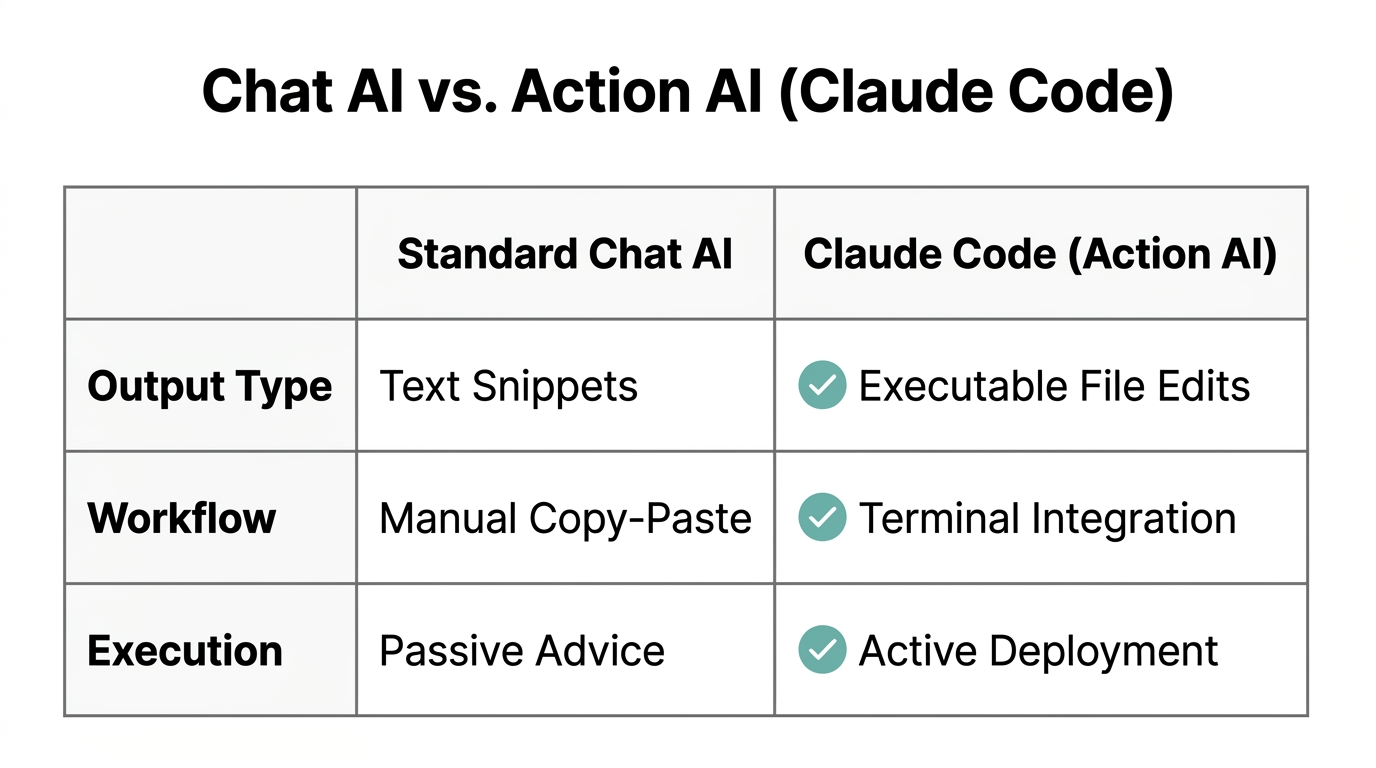
For years, marketers used AI to brainstorm ideas. In 2026, we use Claude Code to execute them. This transition is known as Agentic Coding. Instead of a single LLM, sophisticated teams are using "multi-agent architectures" where Claude Code spins up parallel sub-agents—one for security, one for performance, and one for logic—to audit and optimize an ecommerce page in under 30 seconds, as noted by technical experts on YouTube.
This leap is made possible by the Model Context Protocol (MCP). This new standard allows Claude Code to pull live data directly from your Google Ads account, Shopify backend, or CRM. By following the Anthropic MCP guidelines, the AI can suggest and implement real-time optimizations based on exactly what is happening in your sales funnel right now.
| Feature | Traditional "Chat" AI | Claude Code "Action" AI |
|---|---|---|
| Output | Text-based advice/code snippets | Live, deployed staging environments |
| Data Access | Cut-and-paste manual data | Real-time API/MCP integration |
| Speed | Hours of manual implementation | Seconds to minutes for full builds |
| Optimization | Reactive (Wait for results) | Proactive (Auto-A/B testing) |
The 'Strategy-First' Prompting Framework for CRO
One of the biggest mistakes in ecommerce growth strategy is asking AI to "build a high-converting page" without context. To hit that 11.45% mark, you must use a Strategy-First Prompting approach. This involves feeding Claude Code your Ideal Customer Profile (ICP), Unique Selling Proposition (USP), and specific competitor links before a single line of code is written.
By defining your brand's emotional resonance—often called "Vibe Marketing"—you can create adaptive landing pages that match a visitor’s emotional state. As Azarian Growth Agency suggests, moving away from static linear funnels to these emotionally resonant pages is a key driver for 2026 growth. Your prompt should look like this: "Identify the conversion gaps in these 3 competitors, analyze our ICP's pain points, and draft 3 hero headlines + 1st-person CTAs before generating the Next.js components."
"AI builds the structure, but humans provide the taste. Strategy-First prompting ensures the AI has a blueprint of excellence to follow."
Eliminating 'The AI Look' with Design Tokens and Shadcn
A major hurdle in using AI for high converting ecommerce landing pages is the tendency for generic outputs—the dreaded "AI blue" gradients and stock layouts. To avoid this, elite developers use the Figma MCP to extract design tokens directly from their brand guides. By feeding specific spacing, typography, and color tokens into Claude Code, you ensure the generated page is pixel-perfect and on-brand.
Experts at Composio highlight that while some models excel at backend tasks, Claude Sonnet 3.5 remains the gold standard for UI fidelity. To keep your code lean and your Core Web Vitals high, always instruct Claude to use Tailwind CSS and Shadcn UI. This prevents the code bloat that often plagues AI-generated exports and ensures your mobile performance stays above a score of 90 on Google PageSpeed Insights.
High-Velocity CRO: A/B Testing at Scale
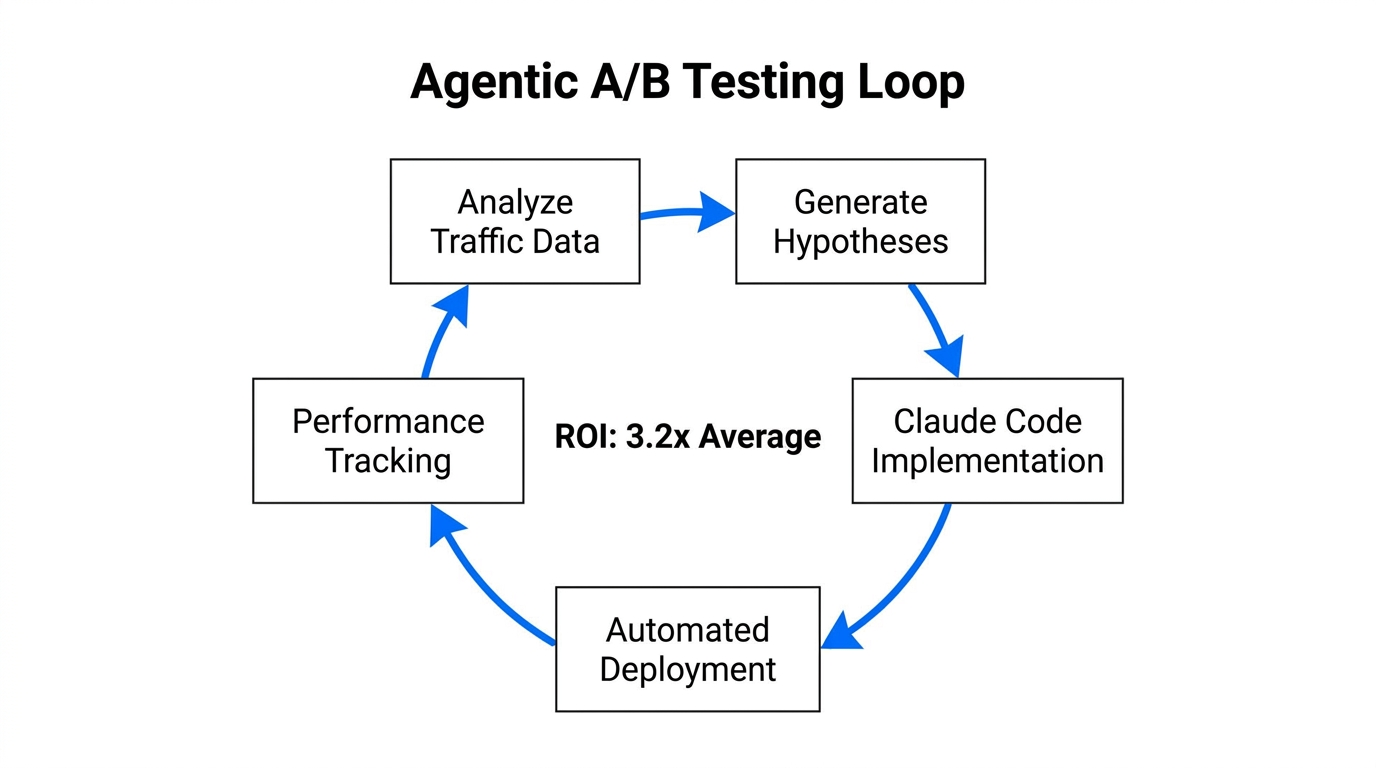
The secret to the 11.45% conversion rate is not finding the one perfect page, but running 50 tests to find the winning variation. In 2026, developers use Claude Code to duplicate pages and swap five different value propositions in minutes. These are then deployed via Vercel Edge Config for instant split testing without the usual developer bottlenecks mentioned by JC Digital.
To further enhance these pages, many brands are integrating User-Generated Content (UGC) as social proof. Platforms like Stormy AI streamline the process of finding and managing TikTok and Instagram creators, ensuring that the high-performing landing pages Claude Code builds are fueled by authentic human content that converts.
Case Studies: AI-Driven Success in 2026
The results of this AI-integrated approach are already showing up in the balance sheets of top brands:
- Nuun (Hydration): By using AI-integrated page builders to redesign their checkout flow, they saw a 34% jump in conversion rate and a 33% reduction in bounce rate, as reported by Checkout Links.
- J. Lindeberg (Fashion): This brand migrated to an AI-supported Shopify Plus setup, resulting in a 70% increase in sales by dedicating half of their page real estate to dynamic brand storytelling.
- The Vibe Marketer: Rebuilt a clunky squeeze page using Claude Code to integrate instant modal flows and Beehiiv email capture, significantly reducing friction.
"The future of CRO isn't about guessing what the customer wants; it's about using Claude Code to build every variation they could possibly need."
Your 2026 Playbook for 11.45% Conversions
Achieving ecommerce conversion rate optimization at an elite level this year requires a paradigm shift. You must move from being a manager of people to a manager of agents. By using Claude Code to handle the heavy lifting of coding, deployment, and variation testing, you free up your team to focus on high-level ecommerce growth strategy and brand vision.
Remember that while AI can build the components, you must insert the expert proof and E-E-A-T signals that Google and customers demand. Manually insert customer quotes and expert fact blocks to ensure your AI-driven CRO 2026 strategy remains human-centric. Pair your technical builds with high-quality creator content sourced through Stormy AI to provide the trust signals that close the sale. The tools are here—it's time to build the next 11.45% success story.