In 2026, running a high-volume Shopify store is no longer a game of managing tickets; it is a game of managing autonomous systems. The "chatbot" era, where a pre-programmed widget simply pointed customers toward a FAQ page, has officially ended. Today, ecommerce brands are choosing between two fundamentally different architectures: the Helpdesk-First model led by Gorgias and the Agent-First model pioneered by Stormy AI. As the global AI customer service market reaches an estimated $15.12 billion this year, the decision you make will dictate whether you scale with high-margin automation or get trapped in the predatory 'Double Billing' cycle that has frustrated so many growing brands.
The Shift from Helpdesk-First to Agent-First Architectures
For years, the standard playbook was simple: buy a helpdesk like Gorgias, hire a team of agents, and then bolt on a "bot" to deflect common questions. But in 2026, the unit economics have flipped. According to research by Gartner, the cost of an AI self-service interaction has dropped to just $1.84 per contact, compared to $13.50 for a human-assisted interaction. This massive price gap is driving brands toward AI-native employees like Stormy AI.
"Organizations aren't cutting agents because AI is fully ready to take over; they are redesigning models so AI handles speed while humans provide empathy." — Emily Potosky, Gartner Analyst
While Gorgias remains a powerful tool for teams managing a high volume of human-to-human interactions, it is fundamentally an inbox. Stormy AI, on the other hand, acts as an autonomous ecommerce employee. It doesn't just sit in your inbox; it uses a browser, manages dynamic spreadsheets, and follows up with suppliers and creators without a human needing to click a single button. The difference is reactive versus proactive.
Breaking Down the 'Double Billing' Trap
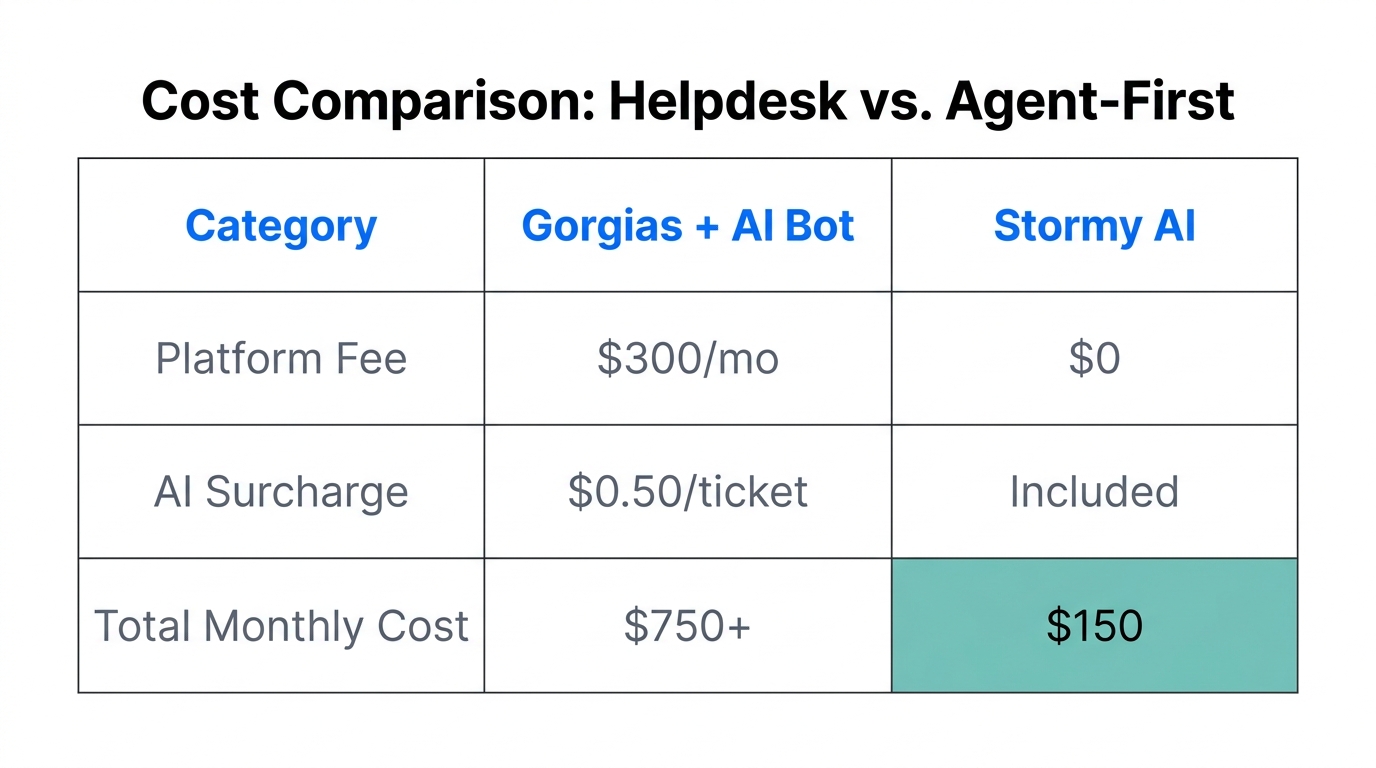
One of the most significant pain points discussed in 2026 Gorgias pricing reviews is what industry insiders call the "Double Billing Trap." Many high-volume sellers find themselves paying a high monthly base fee for the helpdesk software, only to be charged an additional $1.00 per AI-resolved conversation on top of it.
By contrast, an AI ecommerce employee like Stormy AI typically operates on a more transparent, agent-based pricing model. Instead of taxing your success (charging you more every time the AI actually works), Stormy AI is hired like a teammate. This allows for predictable unit economics even during high-traffic seasons like Black Friday or Cyber Monday, where ticket volumes can spike 5x or 10x overnight.
Performance Benchmarks: FCR and Handle Times
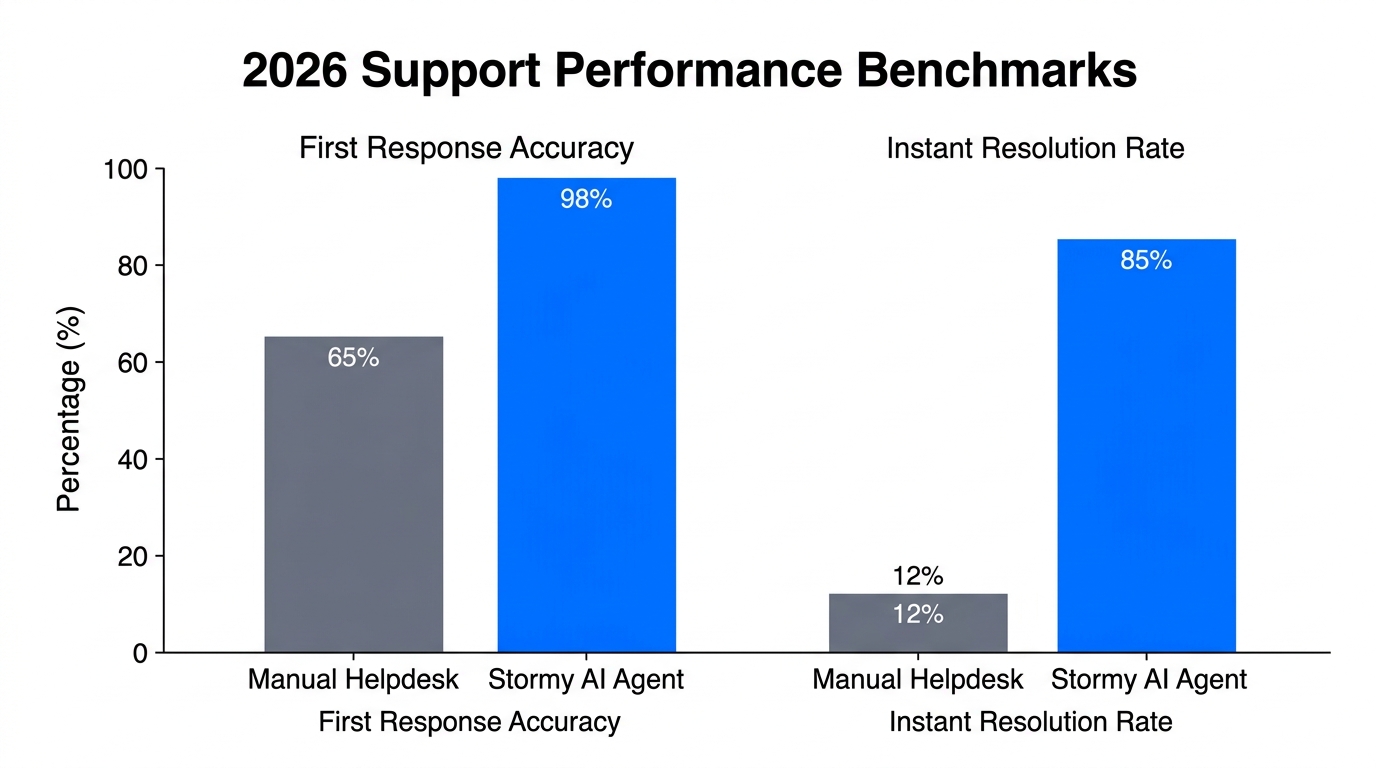
In the world of 2026 ecommerce, First Contact Resolution (FCR) is the only metric that matters. Customers no longer tolerate "we've received your request" emails. They want their refund processed, their shipping address changed, or their discount code applied immediately.
| Metric (2026 Avg) | Gorgias AI (Helpdesk Model) | Stormy AI (Agent Model) |
|---|---|---|
| First Contact Resolution | 55% - 65% | 70% - 85% |
| Avg. Handle Time | < 5 Minutes | < 2 Minutes |
| Execution Method | Platform APIs (Refunds/Edits) | Computer Use / Browser Control |
| Primary Focus | Customer Support Tickets | Support + Marketing + Ops |
While Gorgias can automate about 26% to 56% of routine tickets like order status or returns according to their own case studies, Stormy AI pushes these benchmarks further by handling the back-office messy work. Stormy doesn't just look up a tracking number via the Shopify API; it can log into your supplier's portal, check lead times, and update a spreadsheet to warn you of a potential stockout before the customer even complains.
Why 'Computer Use' Wins Over Limited APIs
The technical "moat" for Stormy AI in 2026 is its agentic computer-use capability. Traditional support tools like Gorgias or Zendesk AI rely on API integrations. If a tool doesn't have a direct "button" built for an action, the AI can't do it.

Stormy AI can navigate software interfaces just like a human employee. Whether it's checking a custom field in Klaviyo, navigating a complex Amazon Seller Central dashboard, or cross-referencing a 3PL portal like ShipBob, Stormy isn't limited by what an API allows. This allows for truly autonomous resolution of edge cases that would typically require a human to log in and fix manually.
"The key insight for 2026 is that the 'Chatbot' era is over. This is the year of Autonomous AI Agents that don't just point to help articles—they execute actions in the background."
Beyond Support: The Growth Employee Advantage
The biggest differentiator in the Gorgias vs Stormy AI debate is the scope of work. Gorgias is a support tool. Stormy AI is an ecommerce growth employee. While Gorgias manages your incoming tickets, Stormy is busy driving revenue through automated creator outreach and marketing operations.
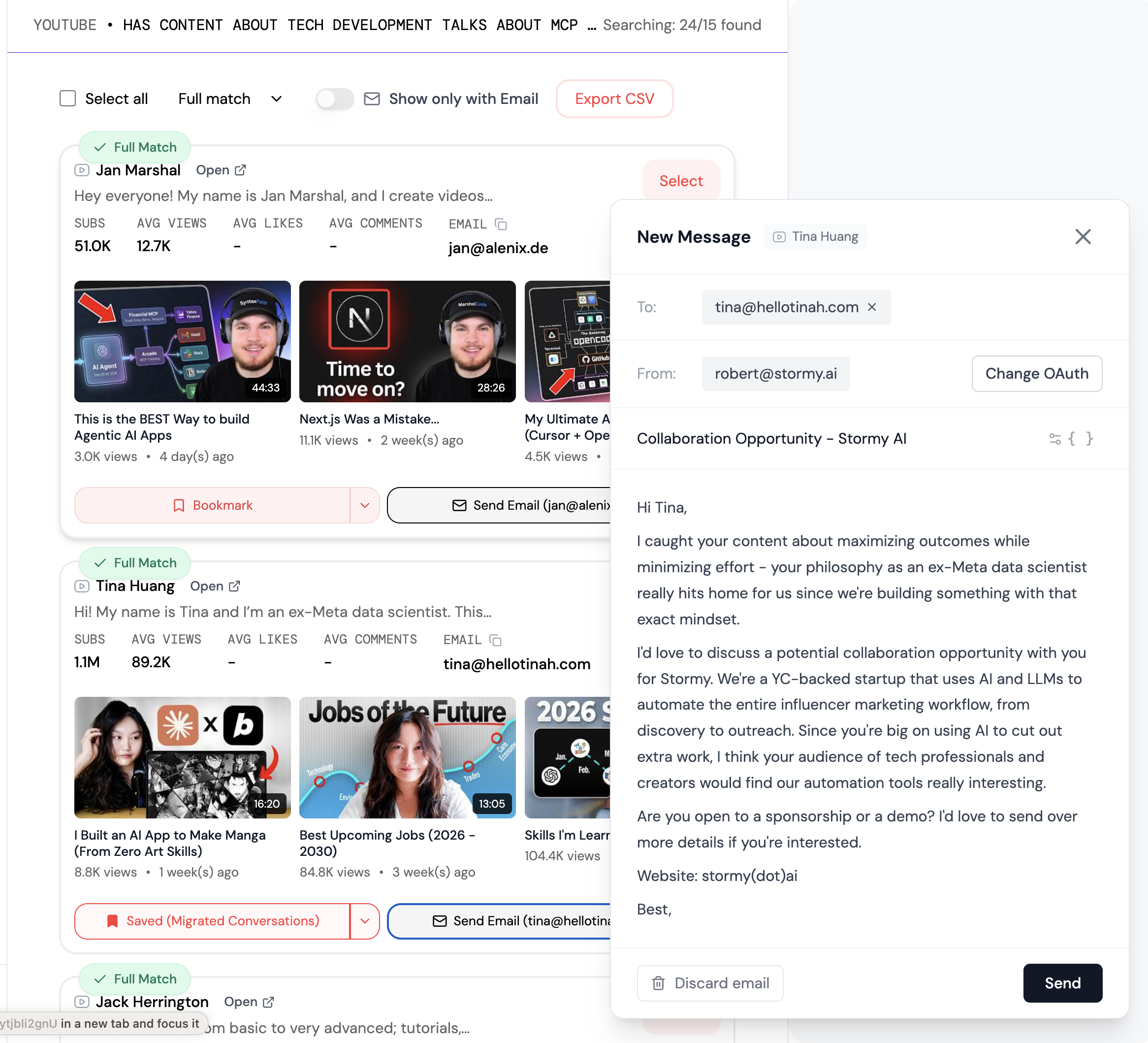
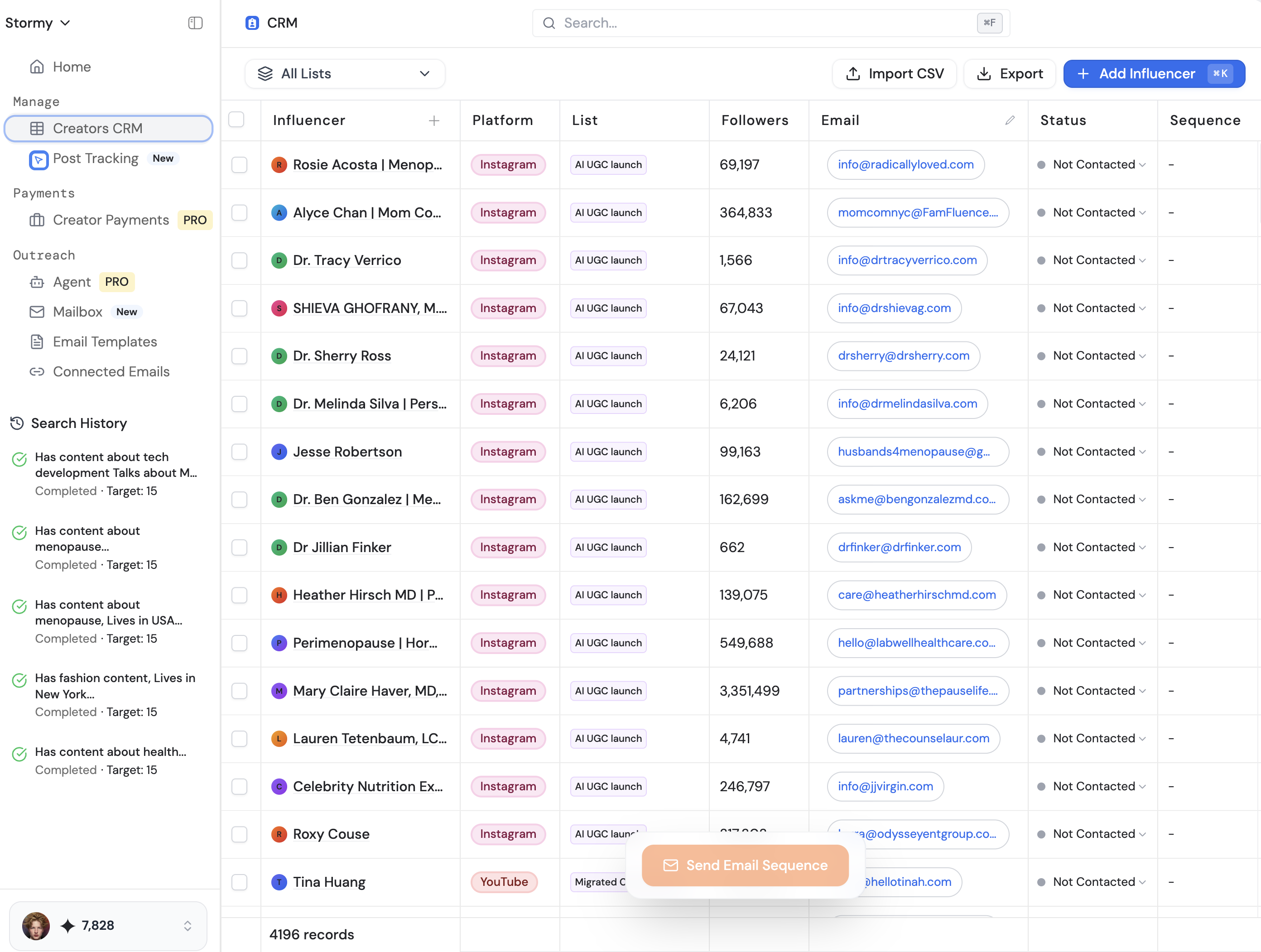
For instance, Stormy AI can discover creators on TikTok Shop, send hyper-personalized outreach emails, and track every post in a built-in CRM. This is support-led growth in action. If a creator has a question about their affiliate link, Stormy resolves it. If a customer asks about a product, Stormy recommends the right variant and tracks the conversion.
Decision Matrix: Which One Should You Hire?
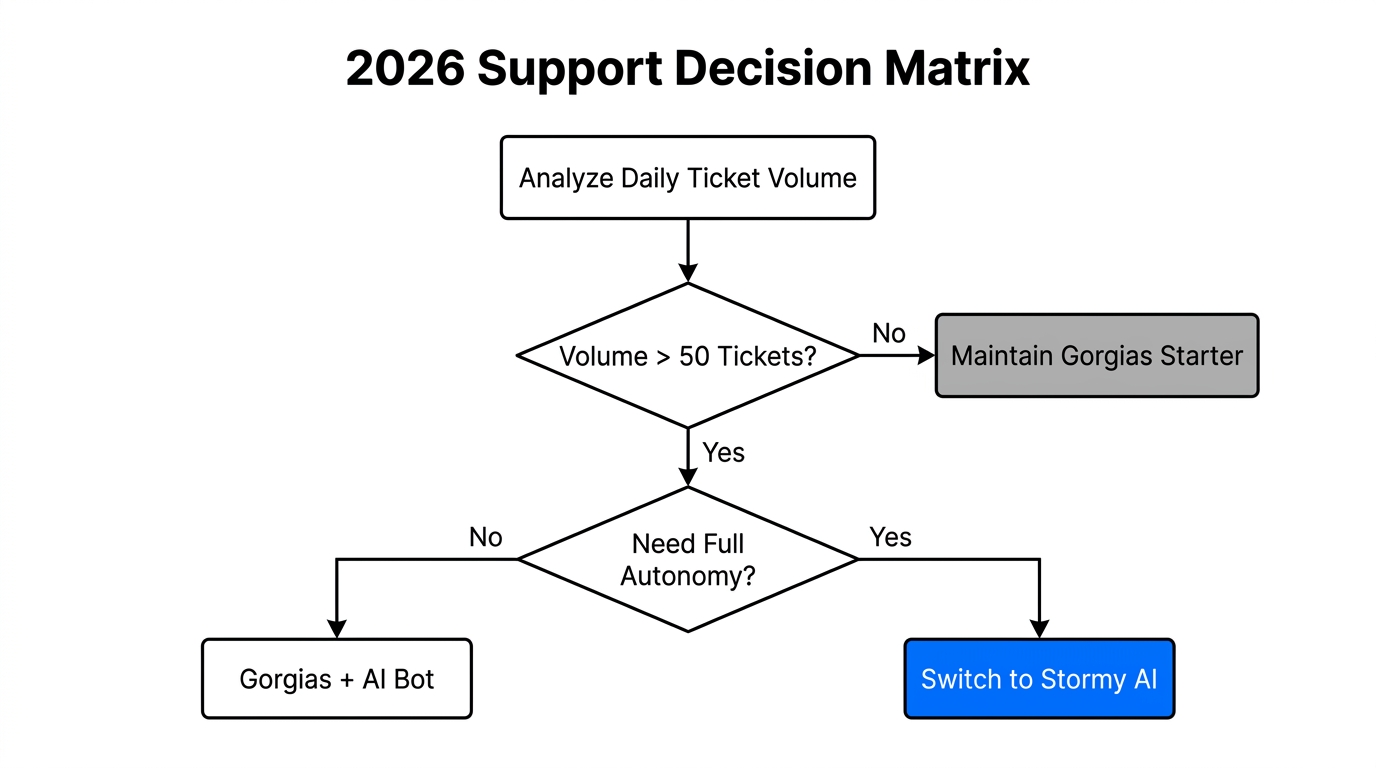
Choosing between Gorgias and Stormy AI depends entirely on your current team structure and your 2026 growth goals.
When to Choose Gorgias
- You already have a large human support team (5+ people) and need a robust collaborative inbox.
- You require deep, legacy integrations with tools like Gorgias's native Shopify sidebar.
- Your primary goal is ticket management rather than autonomous business operations.
When to Choose Stormy AI
- You are a lean operation or a solo founder who wants to replace manual back-office work with AI.
- You want an AI that handles both support and marketing (influencer outreach, ad reporting, supplier follow-ups).
- You want to avoid per-resolution fees and the "Double Billing" problem associated with traditional helpdesks.
- You need an agent that can "use a computer" to handle tasks that don't have standard API buttons.
The 2026 Shopify Support Playbook
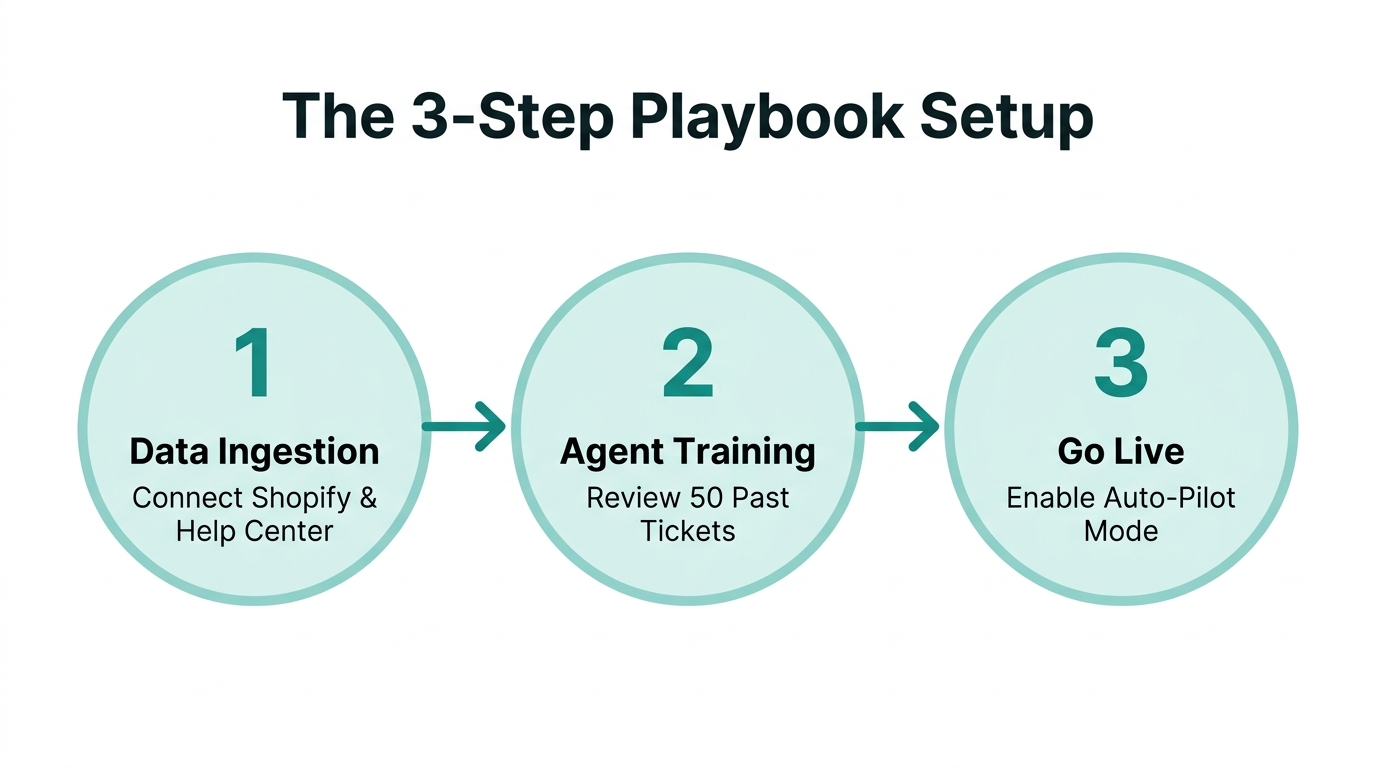
If you are looking to implement Shopify customer support automation this year, follow this three-step playbook to ensure high satisfaction and low costs:
- Audit Your Knowledge Base: Forrester analysts call 2026 the year of "Gritty, Foundational Work." Before hiring an AI like Stormy AI, ensure your help docs and shipping policies are up to date. AI is only as good as the data it can access.
- Implement the 'Human-Handoff' Rule: Always maintain a clear escalation path. Best practices from platforms like Kustomer suggest that the AI should always summarize the interaction for the human agent to prevent the customer from repeating themselves.
- Proactive Workflow Triggering: Instead of waiting for a "Where is my order?" (WISMO) ticket, have Stormy AI monitor your Shopify orders. If a shipment is delayed, Stormy can proactively message the customer with an update and a small discount code, preventing the ticket from ever being created.
"The 'Hallucination Tax' cost businesses billions in 2025. In 2026, leading brands use 'Grounded Knowledge' to ensure their AI employees never make up a refund policy."
The Bottom Line: Hiring vs. Subscribing
In the head-to-head of Gorgias vs Stormy AI, the choice represents your philosophy on growth. If you view support as a cost center to be managed via a ticket queue, Gorgias is the gold standard for human-centric teams.
However, if you view support as a component of a larger, autonomous growth engine, Stormy AI is the clear winner. By acting as an AI ecommerce employee that can use a browser, manage spreadsheets, and handle proactive marketing, Stormy AI doesn't just resolve tickets—it runs your back office while you focus on the big picture. Stop paying the "Double Billing" tax and start hiring the future of ecommerce today.