In 2026, the era of the passive chatbot is officially dead. As the global AI customer service market surges toward $15.12 billion according to Grand View Research, ecommerce brands have moved beyond simple auto-replies. We are now in the age of the "Agentic Helpdesk," where AI doesn't just talk—it acts. Leading this charge is Gorgias AI Agent 2.0, a tool capable of reaching the elusive 80% resolution benchmark that Gartner predicted would become the industry standard by the end of this year.
However, hitting an 80% resolution rate isn't as simple as toggling a switch. It requires a precise orchestration of data permissions, plain-English logic, and adversarial testing. While modern support teams use automation to handle the front line, the most efficient brands use an AI ecommerce employee to manage the back-office tasks like inventory monitoring and supplier follow-ups. This tutorial provides the technical playbook for DTC operators to implement the latest 2026 features of Gorgias, ensuring your support operations are lean, autonomous, and profit-driven.
The State of Support in 2026: From Deflection to Resolution
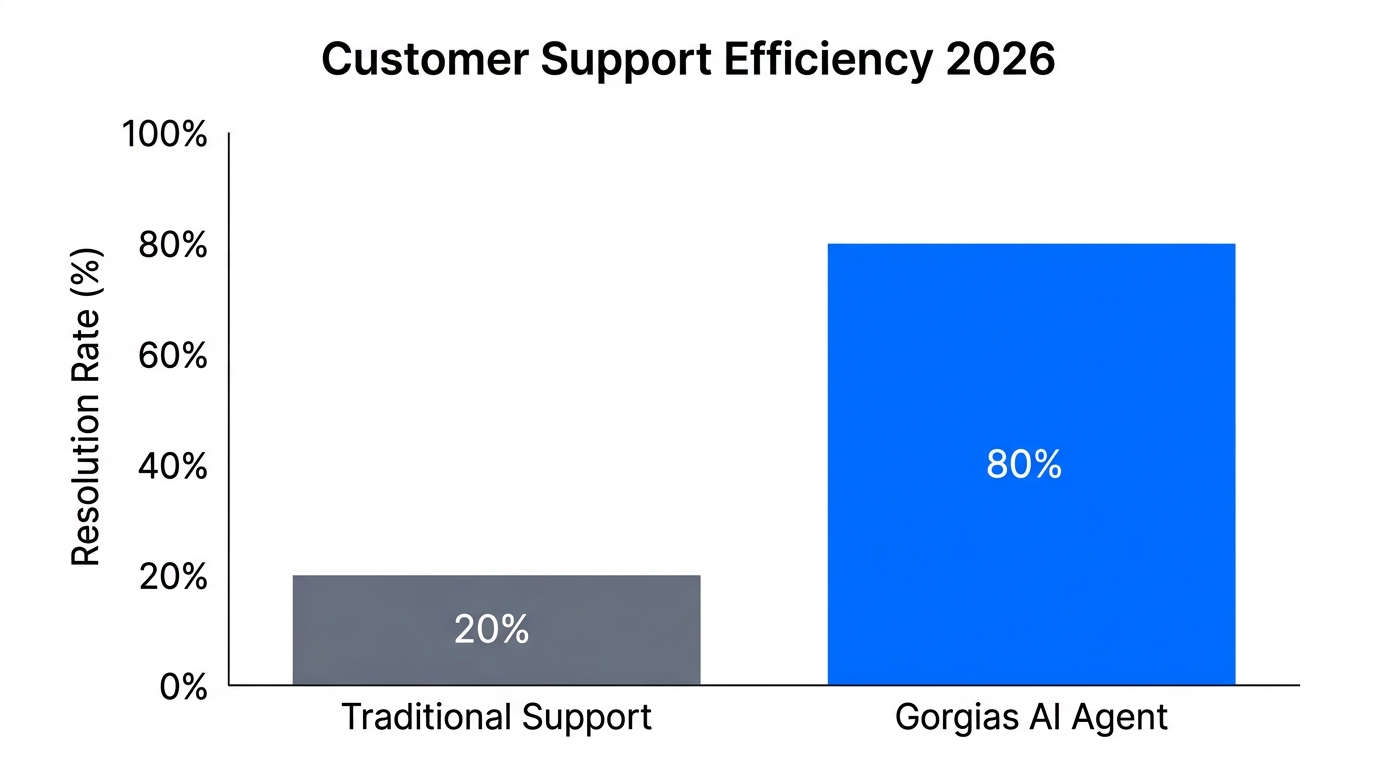
The industry has shifted its primary metric from "Deflection Rate" to "Resolution Rate." In 2026, customers no longer tolerate being sent to a help article; they expect the AI to process their refund, edit their shipping address, or update their subscription tier autonomously via API. Data from Lorikeet suggests the market is expanding at a CAGR of 25.8%, driven by this shift toward true agency.
Brands like Psycho Bunny have already leveraged the Gorgias AI Agent to resolve 26% of all tickets autonomously, while high-efficiency teams using tools like My AskAI are hitting 80% resolution rates, saving hundreds of human agent hours every month. But to reach these benchmarks, you must move past the "Cold-Start" problem—the fact that Gorgias AI cannot learn from your historical tickets and requires manual grounding in your current policies.
"2026 will be defined by gritty, foundational work—simplifying tech stacks and improving data quality—rather than dazzling transformation." — Forrester Research
Step 1: Enabling Shopify and Magento Data Permissions
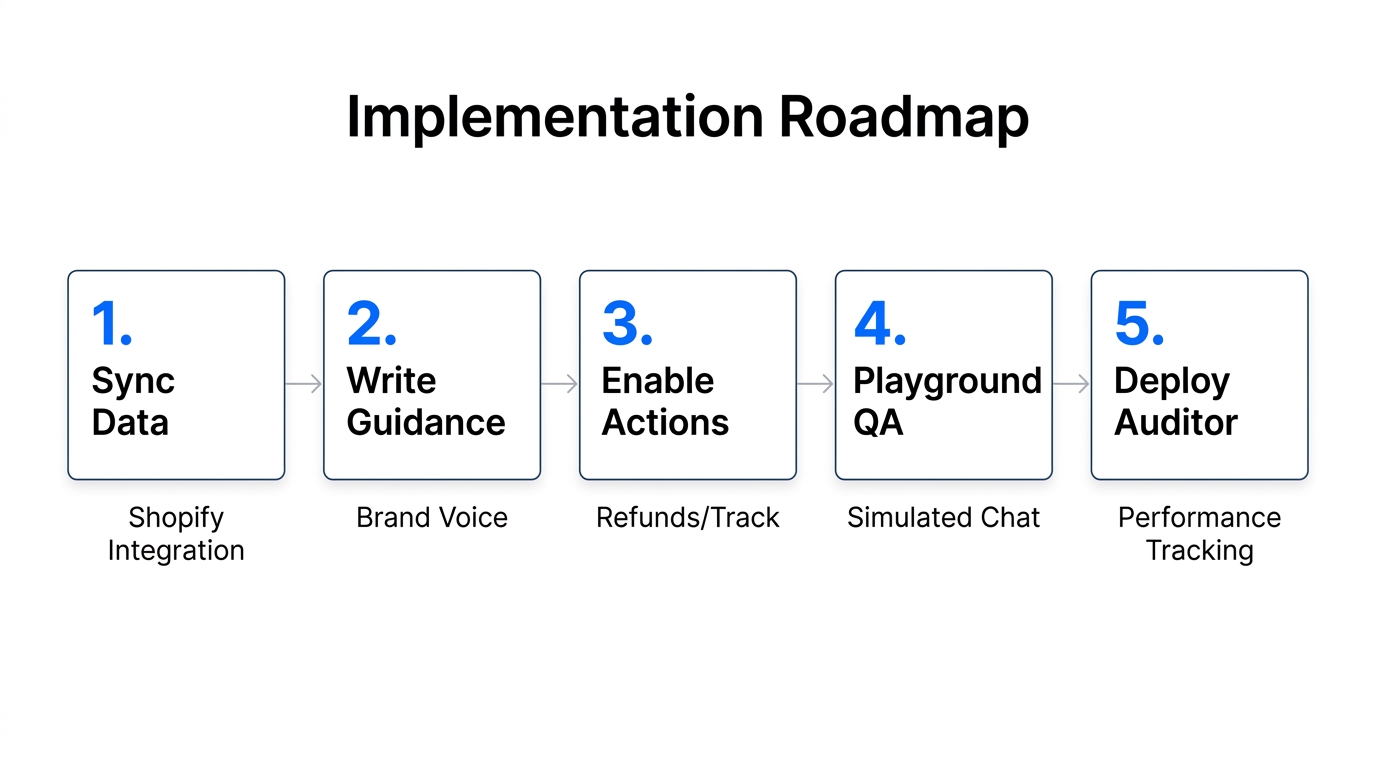
The foundation of any Gorgias AI tutorial 2026 is the data layer. Without deep access to your ecommerce platform, the AI is just a glorified FAQ bot. To enable the AI to see the last 10 orders and full customer history, you must update your app permissions.
Technical Configuration:
- Log into your Gorgias Dashboard and navigate to Settings > My Apps.
- Select Shopify (or Magento/BigCommerce) from your list of active integrations.
- Click on Update App Permissions. Ensure that the 'Orders', 'Customers', and 'Draft Orders' scopes are fully enabled.
- Navigate to the AI Agent tab in the left-hand sidebar and ensure the 'Order Management' toggle is active.
By granting these permissions, the AI can now cross-reference real-time shipping data from Shopify or Amazon Seller Central. This ensures that the AI Agent is immediately informed and won't offer replacements for specific SKUs that are currently out of stock across your sales channels.
Step 2: Writing Plain-English 'Guidance' Instructions
The biggest failure point for AI in 2026 is "Policy Hallucination." This occurs when an agent makes up a return policy because it wasn't explicitly told otherwise. Gorgias uses a "Guidance" layer—a document written in plain English that acts as the AI's employee handbook.
How to Write Effective Guidance:
Avoid vague language. Instead of saying "Be helpful with returns," use specific logic. For example: "If a customer asks for a return on a 'Final Sale' item, politely decline based on our policy, but immediately offer a 10% discount code for their next purchase."
This grounding is critical. As reported by Twig, AI agents occasionally fabricate policies if they are not strictly grounded in Retrieval-Augmented Generation (RAG). By writing clear instructions in the AI Agent > Guidance section, you prevent the bot from inventing rules that could lead to expensive return shipping costs or legal liabilities.
Step 3: Setting Up Action Orchestration for Autonomous Tasks
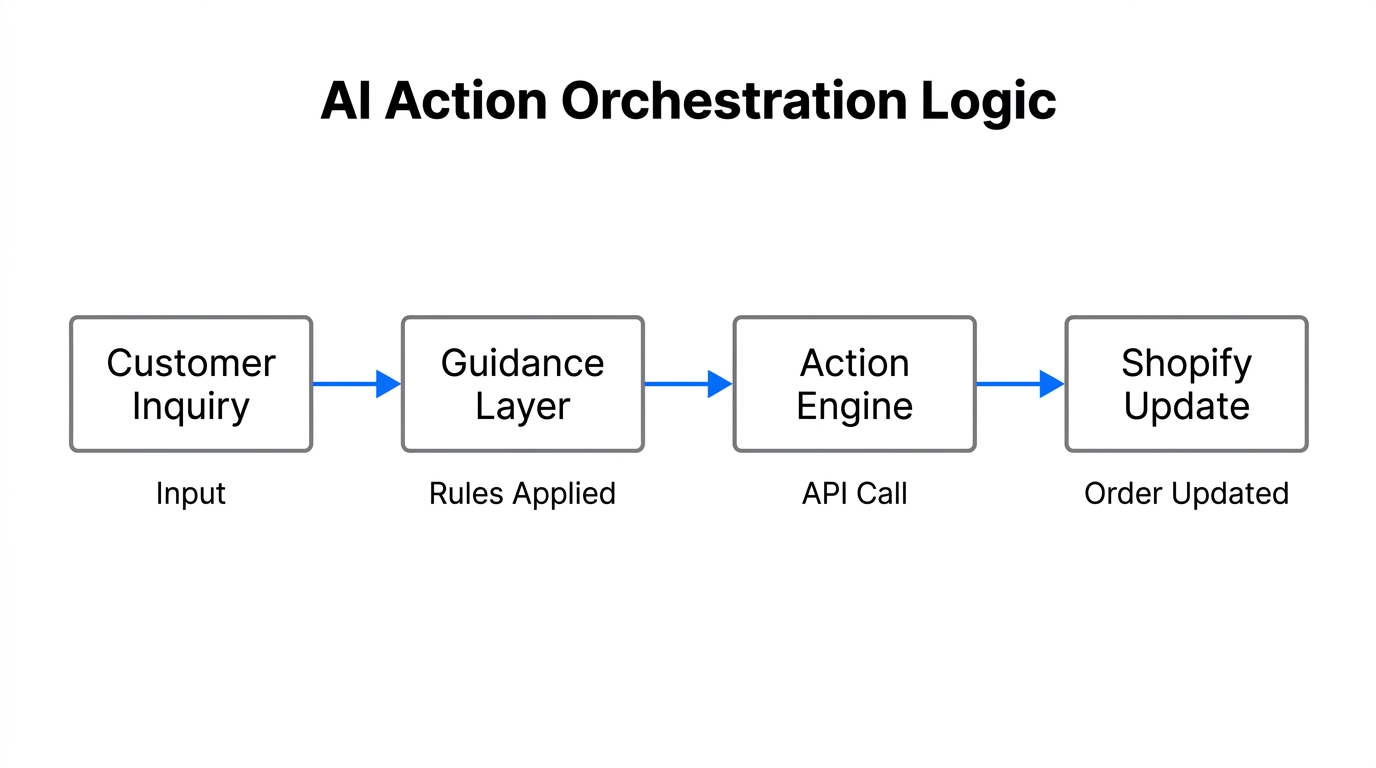
This is where the "Agent" earns its name. Action Orchestration allows the AI to perform tasks in Shopify or your CRM without human intervention. In the Spring 2026 release, Gorgias expanded these to include "Intent-based discounting" and "WhatsApp Cart Recovery."
Playbook for Setting Up Actions:
- Cancel Order: Enable this action but set a Confidence Threshold of 90%. If the AI is less than 90% sure the customer wants a full cancellation, it must hand off to a human.
- Edit Shipping Address: This should only be active if the order status is 'Unfulfilled'. The AI should verify the new address format before pushing the update to Shopify.
- Intent-based Discounts: Use the new Shopping Assistant feature to trigger a 10% discount if the AI detects "exit intent" during a conversation about product sizing.
While the Gorgias AI handles these front-end requests, an AI ecommerce employee like Stormy AI can be tasked to follow up with the warehouse via email or Slack to ensure the cancellation was physically caught before the truck left the dock. This synergy between front-end AI (Gorgias) and back-office AI (Stormy) is how lean teams scale in 2026.
"The failure point in 2026 is governance. Many teams deploy agents faster than they design the oversight roles needed to manage them." — Funmi Mide-Ajala, Director at Hugo
Step 4: Using the 'Playground' for Adversarial Testing
Never deploy an AI Agent to your entire customer base without "Red Teaming" it first. The Gorgias Playground feature allows you to run "what-if" scenarios against your knowledge base in a sandbox environment.
Adversarial Test Script:
- Navigate to AI Agent > Playground.
- Run a Grounding Check: Toggle the "KB-Only" (Knowledge Base Only) setting. This ensures the AI doesn't "fill gaps" with fake specs, a common complaint on Reddit regarding product compatibility hallucinations.
- Perform 50 test interactions. Try to "trick" the bot into giving a refund for an item outside the 30-day window or changing an address on a delivered package.
- Check the Handoff Tags. Ensure the AI correctly tags failures as
ai-failed-logic(if it misunderstood the rule) orai-failed-data(if it couldn't find the order).
Step 5: Implementing the 'Agentic Auditor' Framework
In 2026, brands are increasingly held legally liable for AI hallucinations. To mitigate this, expert practitioners use the Agentic Auditor framework. This involves using a second, high-reasoning LLM (like Claude 4 or an autonomous agent's custom code execution tool) to fact-check the output of the Gorgias agent before it is finalized.
By setting up a webhook between Gorgias and an external auditor, you can verify that the AI's response aligns with your official PDF policy docs. According to Minami AI, this step is essential for maintaining a high CSAT, as AI resolution rates below 20% are often more desirable for luxury brands that prioritize accuracy over pure speed.
Gorgias AI Pricing and 2026 Benchmarks
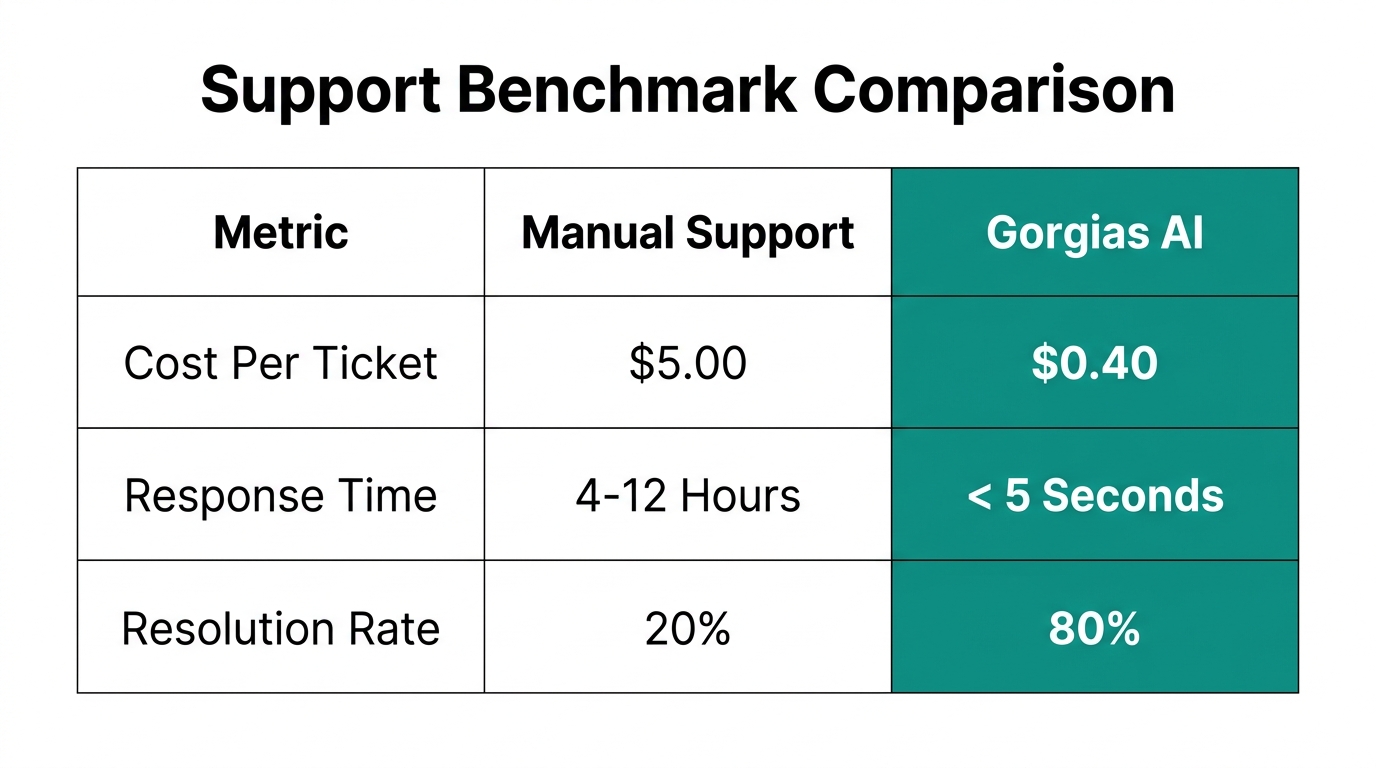
Understanding the "Double-Billing" math of 2026 is vital for budget optimization. Every AI-resolved ticket in Gorgias is typically billed twice: once as a standard ticket fee (~$0.40) and once as an automation fee ($1.00). Efficient teams aim for a Cost Per Message (CPM) of under $2.00.
| Feature | Gorgias AI Agent 2.0 | Intercom (Fin) | Zendesk AI |
|---|---|---|---|
| Best For | Shopify DTC Brands | SaaS / B2B Engagement | Large Enterprise |
| 2026 Pricing | $1.00 / Resolution | $0.99 / Resolution | $50 / Agent / Month |
| Shopify Hooks | Deepest (1-Click) | Moderate | Basic / Middleware |
| Setup Time | Weeks (Manual KB) | Days (Crawler) | Months (Custom) |
Pricing for Intercom and Zendesk remains competitive, but Gorgias continues to win on native Shopify integration depth.
Conclusion: Building an Automated Ecommerce Helpdesk
Automating 80% of your support is no longer a futuristic dream—it is a technical requirement for staying competitive in 2026. By following this Gorgias AI Agent setup guide, you can transition your CX team from reactive fire-fighting to proactive growth.
The winning stack for 2026 involves a specialized front-end agent like Gorgias handling the customer's immediate needs, while an AI ecommerce employee like Stormy AI manages the back-office operations, supplier follow-ups, and inventory reconciliation. Start with the data permissions, ground your agent with precise Guidance instructions, and never skip the Playground testing phase. Your automated ecommerce helpdesk is only as good as the data and logic you provide it.