The Creative Asset Audit: Leveraging UGC and Influencers for Google Ads Success in 2026
Learn how to audit Google Ads creative assets in 2026. Discover how UGC and influencer content drive a 15% conversion lift and 40% higher CTR in PMax campaigns.
In 2026, the landscape of digital advertising has undergone a seismic shift. We have moved past the era where granular keyword bidding was the primary lever for success. Today, artificial intelligence handles the heavy lifting of targeting and bidding within Google Ads, but it requires one critical fuel to function: high-quality creative. For brands looking to scale, the Google Ads creative assets you provide are no longer just 'parts' of an ad—they are the primary signals that tell Google's AI who your customer is. Recent data from Metaflow AI suggests that the average Google Ads account wastes approximately 76% of its budget on underperforming placements and poor creative, proving that a rigorous audit of your visual assets is the only way to protect your margins.
Why Creative Assets are the New 'Keywords' in 2026
For over a decade, PPC managers obsessed over match types and negative keyword lists. However, as Google's AI Max for Search and Performance Max (PMax) have become the dominant campaign types, the algorithm now relies on "Creative Excellence" to determine ad rank and auction win rates. In this environment, your UGC for Google Ads acts as the targeting mechanism. If your video features a 25-year-old fitness enthusiast, the AI will naturally find 25-year-old fitness enthusiasts on platforms like YouTube and Display.
As noted by Google Ads expert Jyll Saskin Gales, survival in 2026 depends on mastering automated targeting and optimizing your content so Large Language Models (LLMs) can actually understand your value proposition. Without a diverse library of images and videos, the AI is effectively flying blind. In fact, search campaigns now account for about 56.2% of investment, while AI-driven PMax consistently holds 13–18% of monthly spend, making asset variety a non-negotiable requirement for growth.
"In an AI-first world, a technically perfect campaign can fail if it is strategically misaligned—and that strategy is now told through your creative assets."
Auditing the Performance of UGC and Influencer Content
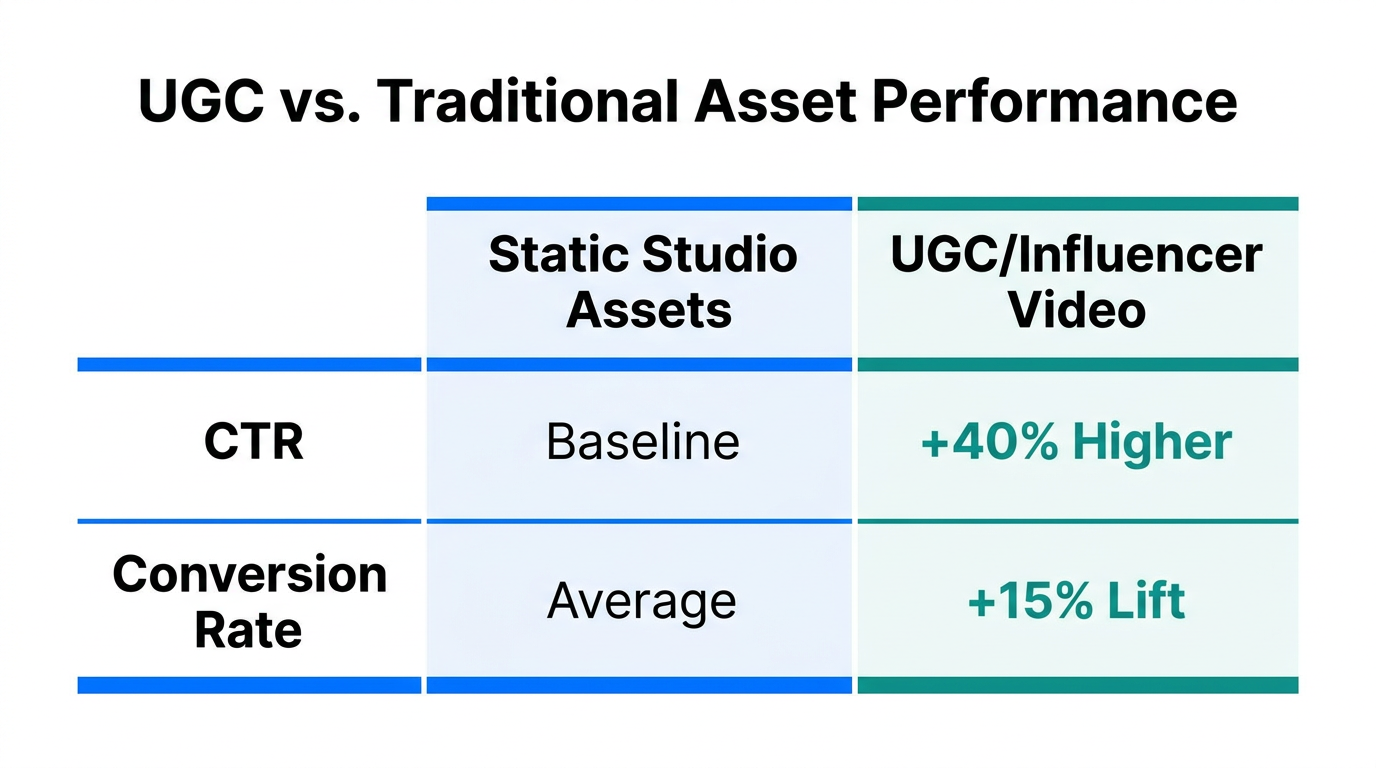
When auditing your influencer marketing PPC strategy, you must look beyond the vanity metrics of the social post and focus on how that content performs as a paid asset. UGC (User-Generated Content) is particularly effective because it bypasses the 'ad blindness' users feel toward polished studio productions. Statistics from ALM Corp show that campaigns utilizing AI-driven Smart Bidding and high-quality creative saw an average 19% increase in overall conversions.
To audit your UGC performance, you should categorize assets by "hook type" and "creator persona." Are your testimonials outperforming your unboxing videos? Is a specific influencer's aesthetic on TikTok or Instagram driving a lower CPA? According to Marketing LTB, properly optimized assets combined with Smart Bidding can reduce your Cost Per Acquisition (CPA) by up to 30%. If your audit reveals that 80% of your spend is going to a single video, it’s a sign of impending ad fatigue and a signal that you need to source more variety.
The Metrics of Asset Health
| Asset Type | Primary Metric | 2026 Benchmark | Action if Underperforming |
|---|---|---|---|
| UGC Video | View-through Rate | 25% + | Test a more aggressive 3-second hook. |
| Influencer Image | CTR (Click-Through) | 1.8% - 2.5% | Apply 'Retain Audiences' signals to refine targeting. |
| PMax Asset Group | Asset Rating | 'Best' | Replace 'Low' performing assets immediately. |
To consistently source the volume of content needed for these audits, brands often turn to AI-powered discovery tools. For instance, Stormy AI allows marketers to find and outreach to creators who specifically specialize in high-conversion UGC, ensuring the creative pipeline never runs dry.
Case Study: Driving a 40% Increase in CTR with Influencer Signals
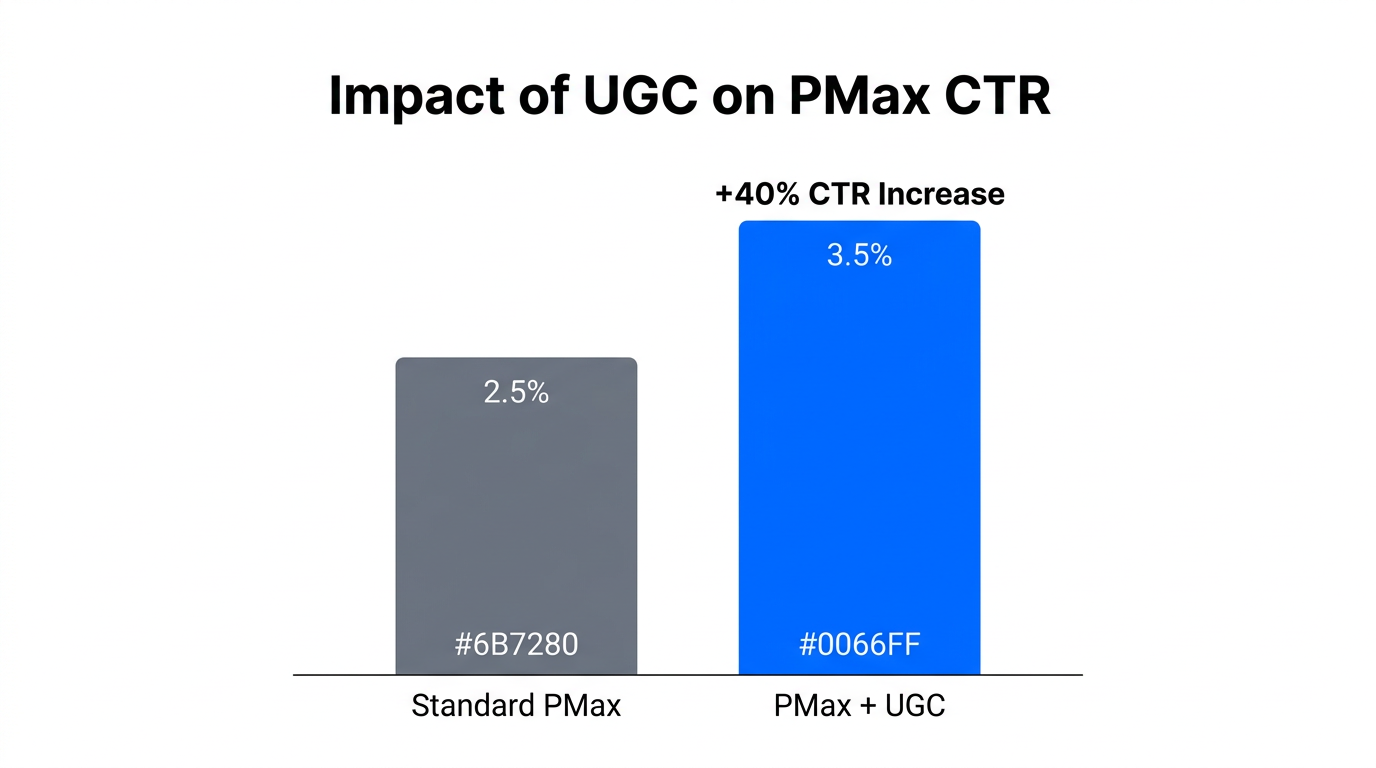
One of the most compelling examples of Google Ads asset health in action comes from the automotive sector. A group of 15 dealerships implemented a strategy focusing on "Retain Audiences"—using first-party data and influencer signals to inform Google’s algorithm about their most valuable customers. By pairing this data with relatable influencer-led video content, they achieved a 40% increase in CTR and a 15% lift in conversion rates. (Source: Strong Automotive).
This case study highlights that it’s not just about having a video; it’s about the signal that video sends. When an influencer mentions specific lifestyle benefits, Google's AI interprets the engagement and refines the audience profile. This is why strategic alignment is now more important than technical setup. As Sarah Stemen points out, tactical audits matter less than ensuring your creative speaks to the right business goals.
"The 40% increase in CTR wasn't just a fluke of the algorithm; it was the result of feeding the AI creative that actually resonated with the intent of the searcher."
Step-by-Step Playbook: Auditing Creative Variety
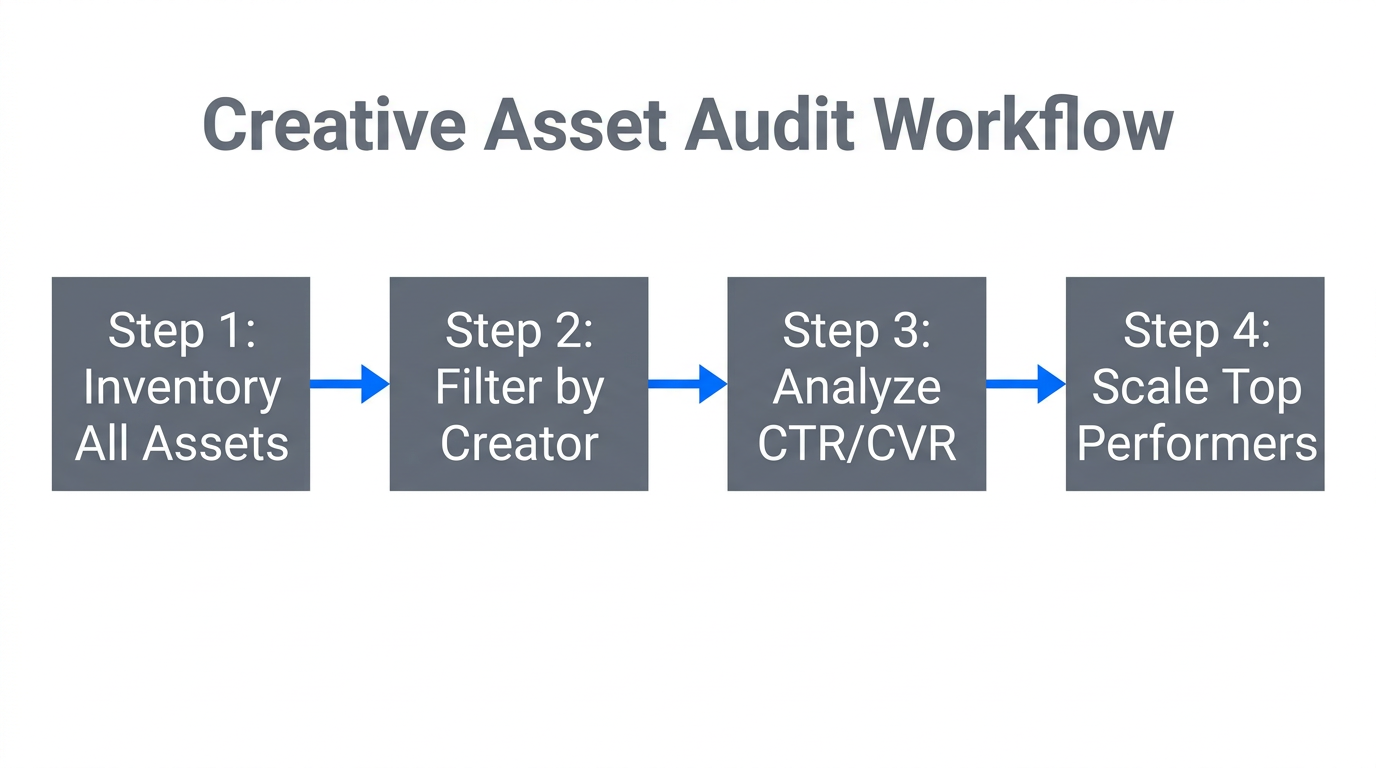
To prevent ad fatigue and maintain a high video ad optimization score in 2026, follow this weekly auditing process. Remember, Google's AI cannot optimize 'thin' asset groups. If you only provide two images, the machine has nothing to test.
Step 1: Check Asset Density
Ensure every Performance Max campaign has the full 15 images and 5 videos. If you are missing slots, you are effectively handicapping the AI's ability to find new customers. Use tools like Optmyzr to run automated audits that flag campaigns with insufficient asset counts.
Step 2: Verify Conversion Signals
Poor creative performance is often a tracking issue in disguise. Roughly 71% of accounts have inaccurate conversion tracking, which causes AI to optimize for the wrong results. (Source: North Country Consulting). Ensure Enhanced Conversions and Google Analytics 4 are active so your first-party data is bridging the gap.
Step 3: Analyze Asset Ratings
Navigate to the 'Asset' report in Google Ads. Sort by performance rating. Any asset labeled as 'Low' should be replaced immediately. Don't just delete it—analyze why it failed. Was the hook too slow? Was the lighting poor? Replace it with a variation from a platform like Stormy AI to see if a different creator's style resonates better.
Step 4: Cleanse Your 'Signals'
Use a tool like PPCrush.ai to identify 'near-meaning' but 'zero-intent' queries that might be triggering your ads. If your high-quality UGC is being shown to the wrong people, your CTR will plummet regardless of how good the video is.
Essential AI Tools for the 2026 Creative Audit
Auditing manually is a thing of the past. To stay competitive, your PPC stack should include tools that provide real-time alerts and deep analysis of your asset health.
- groas.ai: Excellent for real-time intent analysis and ensuring your creative aligns with what users are actually searching for.
- Opteo.com: Provides continuous monitoring and AI alerts for account health, helping you catch underperforming assets before they bleed your budget.
- AskGAAI.com: A natural-language tool that allows you to ask, "Which of my UGC videos is driving the highest return on ad spend?" and get an instant answer.
- TrueClicks.com: Acts as 'PPC Insurance,' auditing for errors and quality control at scale, ensuring your asset groups never fall below the required density.
While AI Overviews (AIO) might shrink organic click-through rates by 15–35%, Andrew Percey notes that this actually increases the value of precision-targeted PPC ads. In the conversational search results of 2026, having a video asset that directly answers a user's question can make your brand the definitive choice.
"The future of search is conversational. Your creative assets must be the answer to the conversation the user is having with the AI."
Conclusion: Protecting Your 2026 Ad Spend
The transition from tactical keyword management to strategic asset auditing is the hallmark of a successful 2026 marketing department. By prioritizing asset health and treating your UGC for Google Ads as the primary lever for targeting, you can unlock the full potential of Performance Max and AI Max campaigns. Don't let your account fall into the 76% waste category. Audit your asset density, verify your tracking signals, and continuously refresh your creative library to keep the AI working in your favor.
Ready to level up your creative game? Start by sourcing the high-performing creators you need to fuel your AI campaigns. Use Stormy AI to discover, vet, and manage the influencers who will drive your Google Ads success this year.