GEO for Shopify: Optimizing for OpenClaw and Generative Engines in 2026
Master Generative Engine Optimization (GEO) in 2026. Learn how to optimize your Shopify store for OpenClaw agents and autonomous AI purchasing bots to drive B2A sales.
In the rapidly shifting digital landscape of 2026, the traditional SEO playbook is being rewritten. We have officially entered the era of Generative Engine Optimization (GEO), where the goal is no longer just ranking on a search results page for human eyes, but becoming the preferred choice for autonomous AI agents. As Shopify merchants navigate this new reality, the focus has pivoted from Direct-to-Consumer (DTC) to Business-to-Agent (B2A) marketing. If your products aren't discoverable by agents like Gemini or OpenClaw, they effectively don't exist in the modern marketplace.
The scale of this shift is staggering. According to the latest research from Medium, the global AI agent market has expanded from $8.03 billion in 2025 to a massive $11.78 billion in early 2026. This 46% year-over-year growth is driven by a fundamental change in how consumers shop: they are increasingly delegating discovery, price comparison, and purchasing to personalized AI assistants. For Shopify’s 5.7 million active stores, optimizing for agentic commerce is no longer an experimental strategy—it is a survival requirement.
"The transition from DTC to B2A means brands are no longer just selling to humans; they are competing for the attention of autonomous purchasing agents that execute transactions in seconds."
Why Traditional SEO is Evolving into GEO for AI Agents
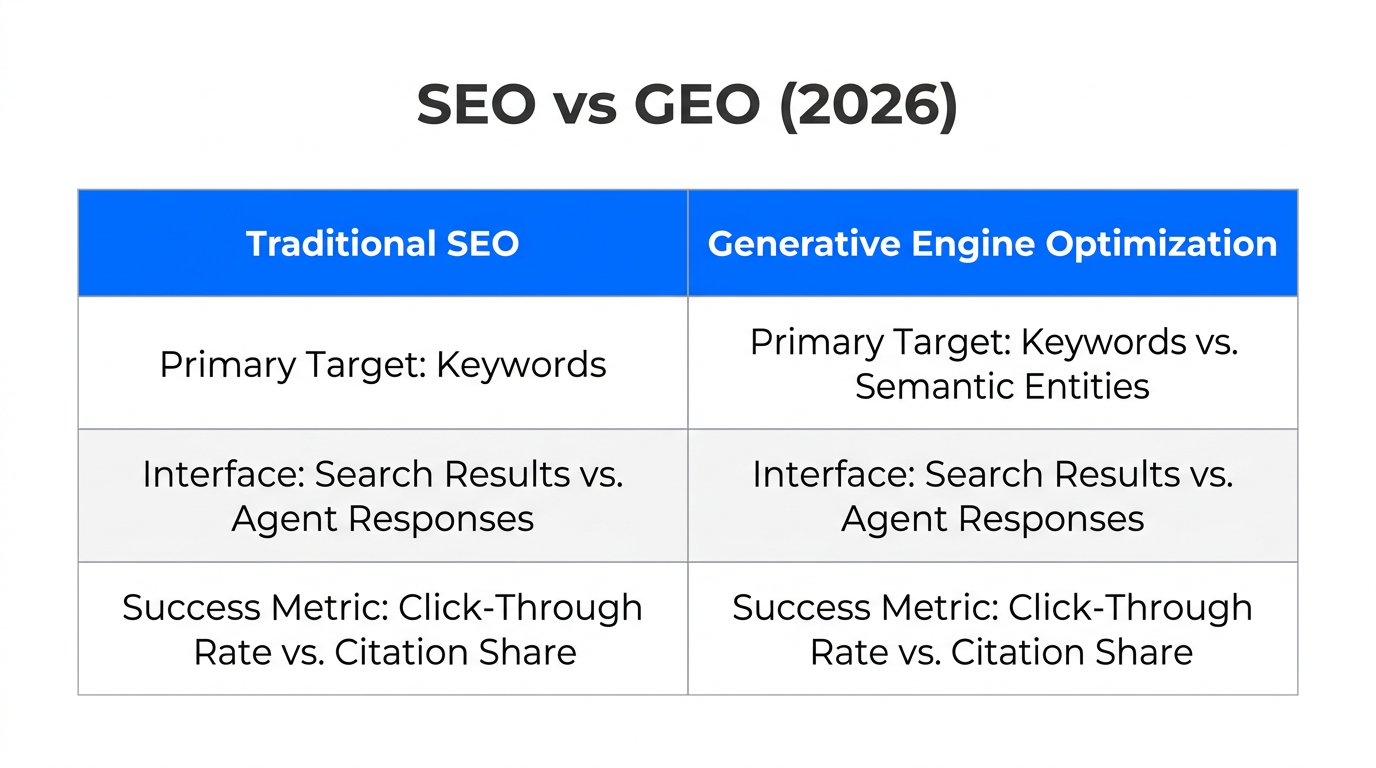
For decades, SEO was about keywords, backlinks, and meta descriptions. In 2026, Generative Engine Optimization (GEO) focuses on the "readability" and "trustworthiness" of data for Large Language Models (LLMs) and agentic frameworks. Unlike traditional scrapers, modern agents use sophisticated visual reasoning to interpret store layouts. Early adopters of agentic systems like OpenClaw are already reporting 35–45% cost reductions in operational overhead by allowing AI to handle complex tasks that previously required human intervention, as noted by Stormy AI.
The catalyst for this evolution is the rise of purchasing agents. These agents don't just provide a link; they evaluate product specs, read reviews, check inventory via APIs, and use the user's stored credit card to complete a checkout autonomously. To win in this environment, your Shopify store must provide structured data that these engines can parse instantly. As noted by FatJoe, OpenClaw reached a milestone of 247,000 GitHub stars in March 2026, signaling that the developer infrastructure for these agents is now fully mature and mainstream.
Technical Audit: Making Your Shopify Store Readable for OpenClaw
One of the biggest breakthroughs in 2026 is the Self-Healing UI Automation capability found in OpenClaw. Traditional scrapers would break if you changed your Shopify theme, but modern agents use visual reasoning to adapt. However, you can still significantly improve your "GEO score" by ensuring your technical stack is agent-friendly. Practitioners are increasingly using a WebSocket Gateway Protocol (typically on port 18789) to allow agents to execute system-level commands with zero latency, a technique detailed by GlobalGPT.
To ensure your store is fully optimized for AI agent product discovery, you should implement the Model Context Protocol (MCP). By using tools like Composio, you can provide agents with structured, authenticated access to your Shopify backend, including live inventory and custom attributes. This prevents the agent from "hallucinating" product details and ensures it always has the most accurate data for its decision-making process.
Leveraging Social Commerce Agents for SKU Parsing
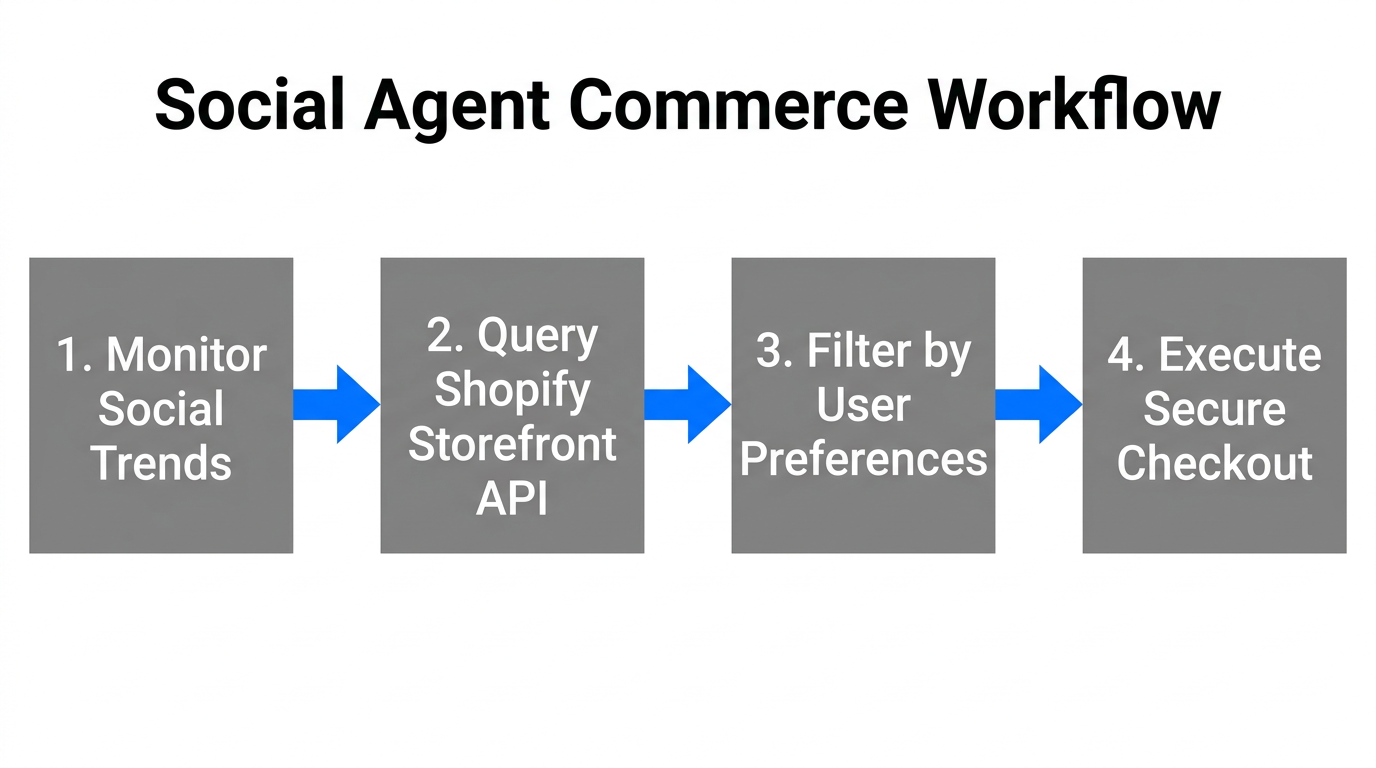
The role of social media has also transformed. In 2026, Social Commerce Agents monitor platforms like TikTok and Instagram to identify products mentioned in video content. These agents can parse SKUs directly from visual frames and execute checkouts in seconds. According to Retailgentic, this allows for a level of "frictionless commerce" that was impossible just two years ago.
For brands, this means your influencer marketing strategy must be integrated with your GEO efforts. When a creator features your product, ensure that the metadata associated with that video is optimized for agentic discovery. Platforms like Stormy AI are already using OpenClaw agents to manage influencer outreach and tracking at scale, ensuring that every piece of social content is discoverable by purchasing bots. Data from Medium suggests that merchants utilizing these social management agents have seen engagement increases of 34% within 60 days.
"The killer use case for agents in 2026 is the 'Digital Employee'—handling the janky, repetitive tasks of SKU matching and social listening that used to take teams of people hours to complete."
Building Long-Term Memory for Agents: The Role of memU
One of the main challenges for AI agents has been "context rot"—the tendency for bots to forget user preferences over long interactions. To combat this, 2026 Shopify strategies involve building long-term memory for agents using tools like memU. Unlike flat files, memU uses a Hierarchical Knowledge Graph to retain customer preference data across years, as explained by Synthetic Futures.
When a purchasing agent returns to your store, it should find a persistent memory of the customer’s past sizes, style preferences, and delivery requirements. This creates a loyalty lift that traditional cookies could never achieve. By integrating memory-enhancing tools, merchants can increase their Customer Satisfaction (CSAT) scores significantly. Recent benchmarks show stores using OpenClaw for automated service have seen CSAT scores jump from 3.2 to 4.4 out of 5.0, according to Tencent Cloud.
| Metric | Before OpenClaw Agents | With OpenClaw GEO Strategy |
|---|---|---|
| Support Response Time | 4.2 Hours | 3.8 Minutes |
| Order Accuracy | 88% | 95.4% |
| Conversion on Inquiries | 22% | 41% |
| Operational Cost | $5.50 / ticket | $0.45 / ticket |
GEO Optimization Checklist: Ranking for Purchasing Agents
If you want to be the "preferred choice" for 2026 AI agents, follow this implementation playbook to ensure your Shopify GEO strategy is airtight:
- Structured Data via MCP: Use Composio to register your Shopify store as a tool via the Model Context Protocol. This provides the "source of truth" for the agent.
- High-Frequency API Polling: Ensure your product APIs are polled every 5 minutes to prevent overselling. High-velocity stores using this method have reduced overselling incidents to zero, according to Tencent Cloud.
- Visual Metadata Tags: Optimize your product images for visual reasoning agents. Use descriptive alt-text that includes technical specs, not just marketing fluff.
- Always-On Hosting: Deploy your OpenClaw agents on a VPS (Virtual Private Server) like DigitalOcean or Tencent Cloud Lighthouse to ensure 24/7 availability for customer inquiries.
- Secure Guardrails: Audit your agent skills. As Reddit security audits have warned, 15% of community-contributed skills can contain malicious instructions. Use alternatives like NanoClaw for sensitive checkout operations, as recommended by Till Freitag.
The "Unhinged" Reality: Security Risks in Agentic Commerce
While the rewards of OpenClaw for SEO are high, the risks are equally significant. Experts like Ryan Eade describe OpenClaw as "basically unhinged" because it lacks built-in governance, giving it immense power over your store's backend. Without proper approval steps, an agent could theoretically delete product listings or process unauthorized refunds if triggered by a prompt injection attack, a danger highlighted by Scalevise.
Furthermore, merchants must manage token inflation. Multi-step reasoning for complex customer inquiries can be expensive, with some high-volume users reporting bill shocks of $100+ per day in API costs if they don't use tiered routing with cheaper models for simple tasks, as noted by Haimaker AI. To mitigate this, consider using localized gateways or optimized skills from LumaDock that minimize unnecessary token consumption.
"OpenClaw is about turning signals into action. It moves you from an analytics insight directly to a shipped work task without the human friction in between." — Joshua Warren, Host of Commerce Today
Conclusion: Winning the B2A Marketplace
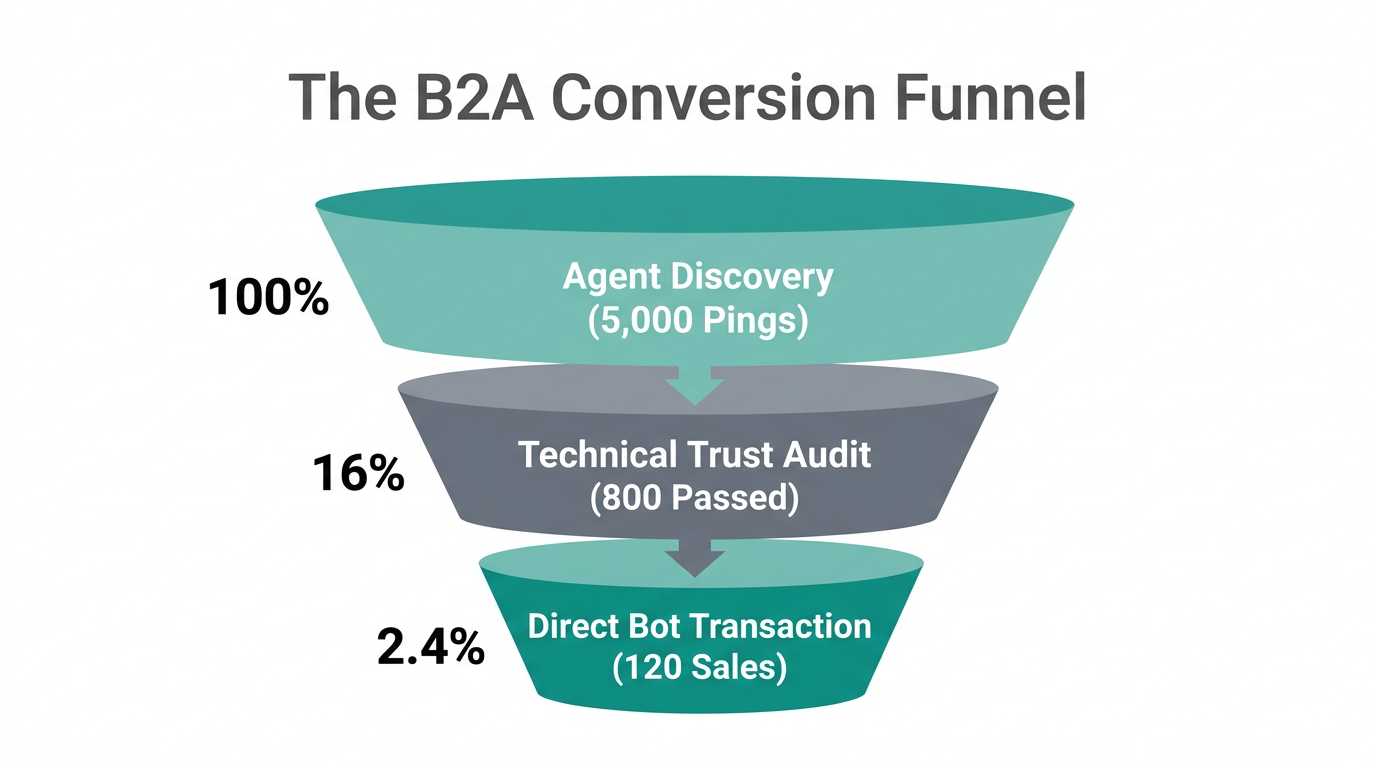
As we look deeper into 2026, the brands that dominate Shopify won't just have the best products—they will have the best agentic interfaces. By mastering Generative Engine Optimization, you ensure that when an AI purchasing agent is tasked with finding "the best eco-friendly sneakers for under $100," your store is the first and only answer it presents to the user.
Whether it is deploying autonomous AI agents for influencer discovery on platforms like Stormy AI or using Tencent Cloud to host 24/7 customer service bots, the infrastructure for the next generation of commerce is already here. The only question is whether your Shopify store is ready to be read, understood, and selected by the machines.