Beyond High Agency: How Being a Generative Founder with Grok Can Explode Your Business Output in 2026
Learn the generative leadership framework for 2026. Use Grok AI and Stormy AI influencer analytics to scale business output and adopt a high agency strategy.
Defining the 'Generative' Trait: Why Volume is the New Moat
Discover why the concept of high agency is evolving into the generative trait.
To be generative is to have a "blooming" effect on any idea you touch. As discussed in recent deep dives into modern leadership, a generative person doesn't just answer a question; they expand it into a framework, a story, and three related business models. They are the least fearful people in the room because they view output as a game of statistics rather than a reflection of their ego. In 2026, output volume and a total lack of fear have become the only sustainable moats in a world of commoditized intelligence.
Consider the rise of "Personal Software." Tools like Replit and Lovable have turned non-coders into software architects. A generative founder uses these to create a "Minimum Viable Promise"—a functioning mockup that proves a concept before a single line of production code is written. This ability to rapidly generate tangible assets is what separates the winners in 2026 from the legacy thinkers who are still writing 50-page business plans.
"The reason we admire icons like Elon Musk isn't just the wealth—it's that he is the most generative human alive. He generates businesses, rocket trajectories, and entire infrastructure systems as if he’s playing a sandbox game."
Business as a Sport: Adopting the 'Inner Game' Philosophy
Most founders burn out because they treat business as a life-or-death moral struggle. In 2026, the elite are shifting their perspective to view business as a sport. This mental shift is heavily influenced by the philosophy in The Inner Game of Tennis by Timothy Gallwey. The core premise is that every human has two selves:
- Self 1: The critical, judgmental, and emotional ego that says, "Why do I suck?" or "I'm terrified of this launch."
- Self 2: The animalistic, observational, and high-performing self that simply executes based on data.
To scale a business today, you must learn to silence Self 1. When a campaign on TikTok Ads Manager fails, a legacy founder feels personal shame. A generative founder observing through the "Inner Game" lens simply notes: "The click-through rate was 0.4% lower than the benchmark. Self 2 will now adjust the hook." This lack of judgment is what allows for the high agency business strategy required to navigate 2026's volatility.
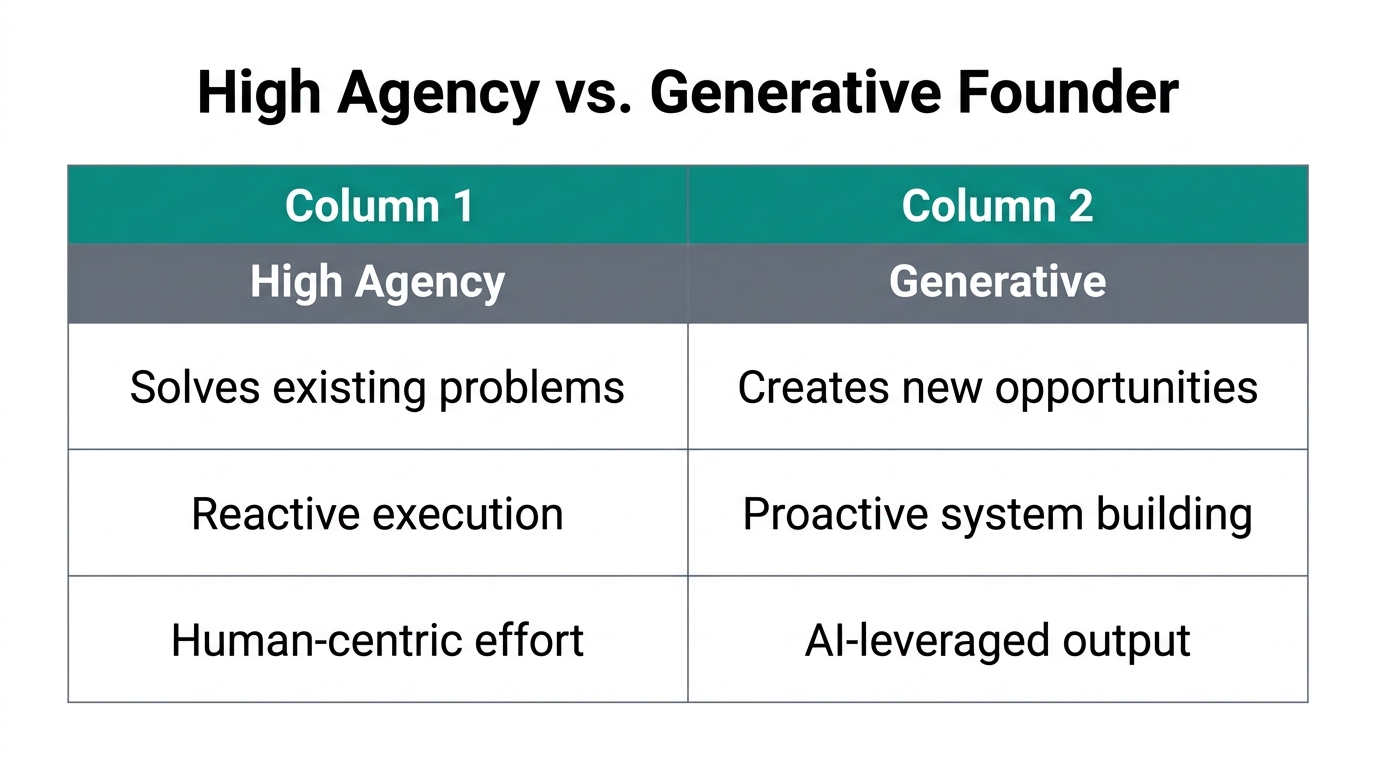
| Feature | The High Agency Founder (2025) | The Generative Founder (2026) |
|---|---|---|
| Primary Goal | Solving the immediate problem. | Building the system that prevents the problem. |
| Feedback Loop | Emotional and reactive. | Objective and data-driven (Grok-assisted). |
| Tech Stack | Manual tools and basic AI. | Autonomous AI Agents and Personal Software. |
| View of Failure | A setback to be feared. | A predictable data point in the sport of growth. |
Objective Feedback Loops: Using Grok to Strip Emotion
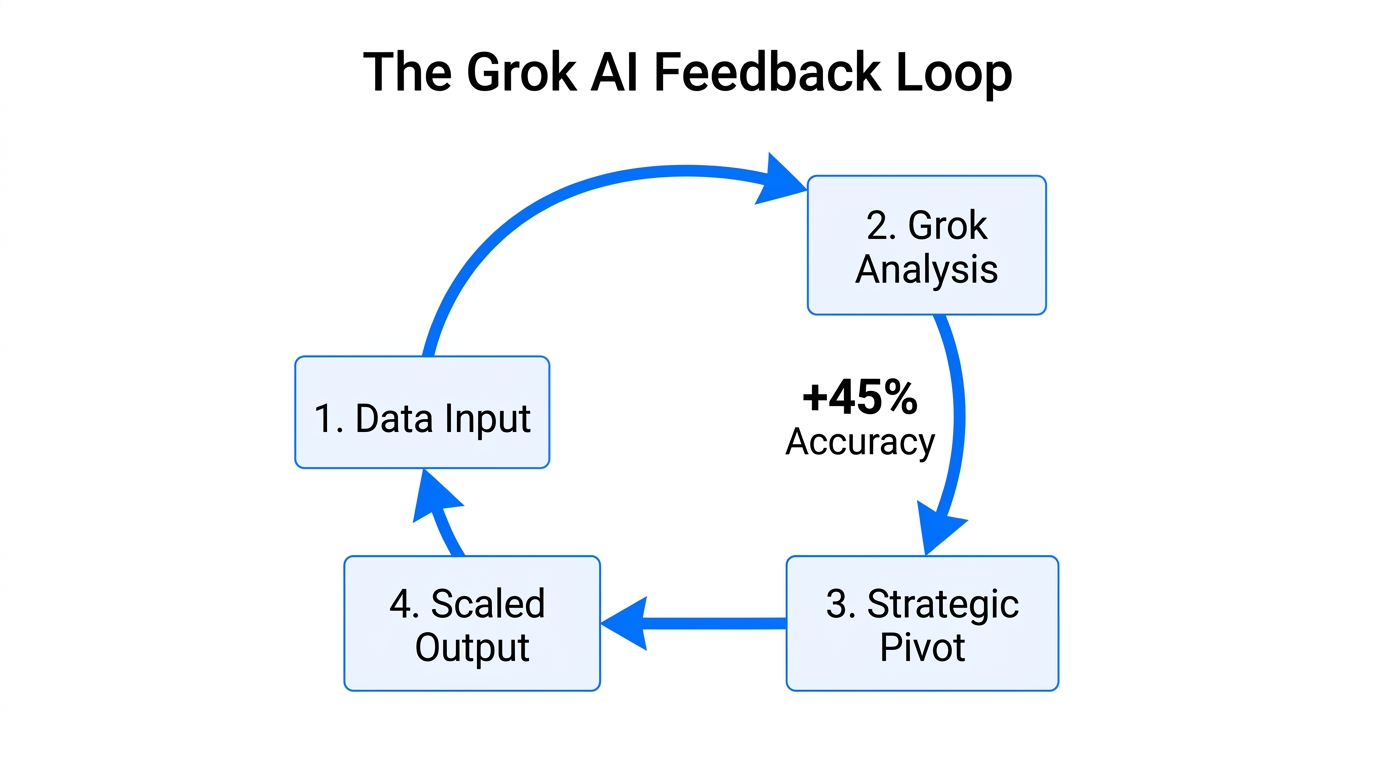
One of the most powerful uses of Grok AI for entrepreneurs in 2026 is its role as an "Emotional Filter." Unlike other LLMs that may offer 'corporate' or overly polite feedback, Grok's real-time access to the pulse of the internet allows it to provide objective, often blunt, feedback. When you are hit with a plateau, you can feed the raw data into Grok and ask for a radically objective assessment.
For example, if you are struggling with creator sourcing, instead of panicking, you use a platform like Stormy AI to vet 500 influencers instantly. You then feed that audience quality data into Grok to identify the structural flaw in your outreach. By treating the AI as your "Self 2" observer, you remove the friction of ego. This is the heart of generative leadership framework: utilizing AI to perform the clinical diagnostics so you can focus on the creative generation.
"If you aren't using AI as a co-pilot in 2026, it's the equivalent of coming to work without a computer. It's not just a tool; it's a second brain that doesn't get tired, scared, or offended."
Playbook: The 3-Month 'Letter to Self' Framework
Generative founders don't just react to the future; they pre-react to it. To maintain peak performance, adopt this growth mindset 2026 playbook to blunt the emotional impact of inevitable business hurdles.
- Step 1: Identify Predictable Hurdles. At the start of a project, list 5 things that will definitely go wrong. (e.g., "A key hire will decline the offer," or "The initial ROAS will be sub-1.0.")
- Step 2: Write the 'Letter to Self'. Write a letter to your future self 3 months from now. Explicitly mention these hurdles. Tell yourself: "I knew you were coming. You are a predictable part of the game level. I have already planned the counter-move."
- Step 3: Establish Objective Triggers. Define exactly what data point will trigger a pivot. This removes the "Should we?" debate and turns it into an "If X, then Y" execution.
- Step 4: Execute via Generative Sourcing. Use autonomous tools. For instance, if your hurdle is scale, set up an AI agent on Stormy AI to discover and outreach to creators while you sleep.
The Serge AI Lesson: Picking the Right Moat
Uncover the business lessons learned from the rapid rise of Surge AI.The story of Edwin Chen and Surge AI is the ultimate 2026 case study in generative output. While competitors like Scale AI focused on massive venture-backed growth, Chen focused on a high-quality, bootstrapped moat of data labeling. He stayed completely off the radar, generating a billion dollars in revenue with only 100 employees. He didn't chase status; he generated extreme utility for the biggest AI companies on earth.
This is the "Picks and Shovels" strategy updated for the AI age. Whether you are building in Google Ads or managing a fleet of UGC creators, the goal is to find the area where human intelligence (The Generative Layer) can elevate the machine. Chen understood that data does for AI what life does for humans—it provides the richness and the "stumbles" that lead to intelligence.
Second Order Effects: The 2026 Landscape
See how using Grok reveals the critical second order effects on future industries.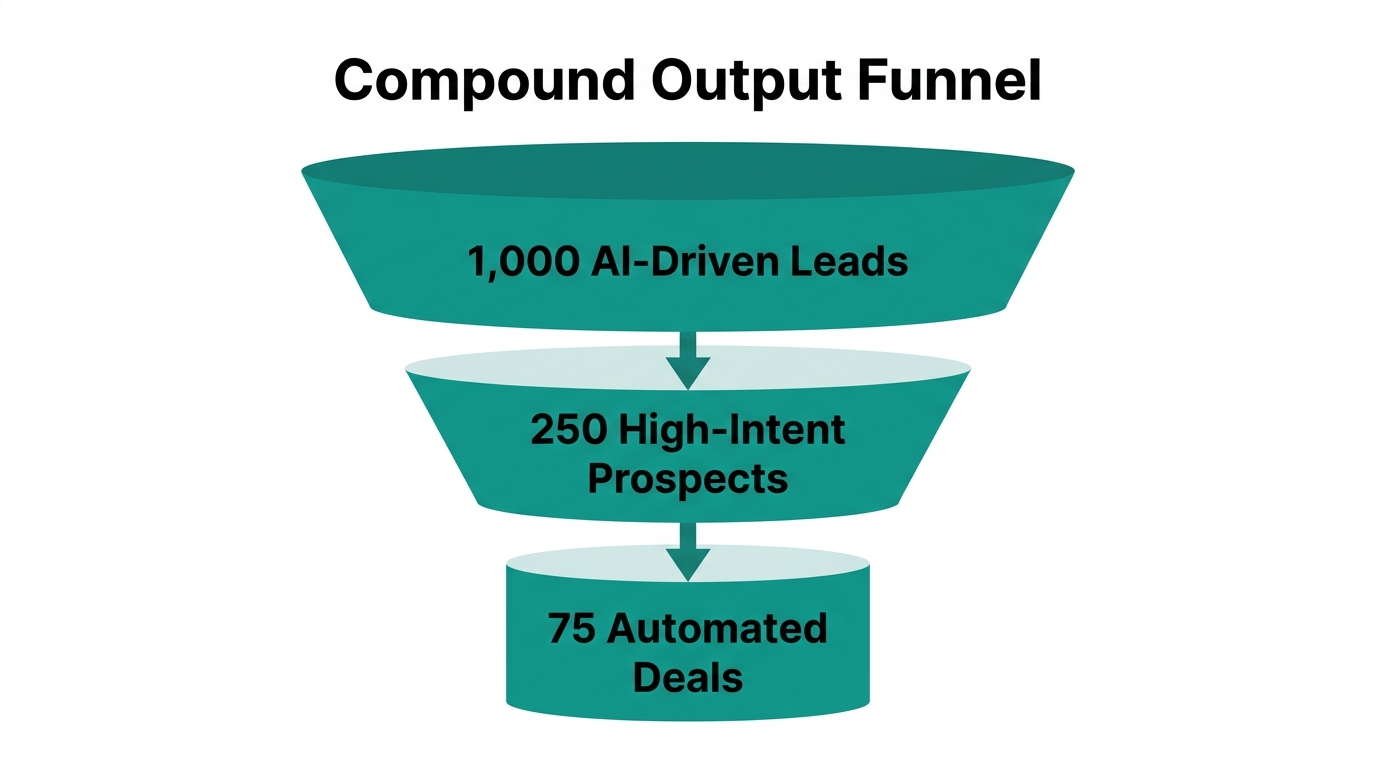
To be generative, you must look at second-order effects. Just as self-driving cars (now ubiquitous in SF and Austin via Waymo and Tesla) are transforming urban land use and the insurance industry, generative AI is transforming the labor market. We are seeing a 1 billion-x increase in software creation because the barrier to 'building' has vanished.
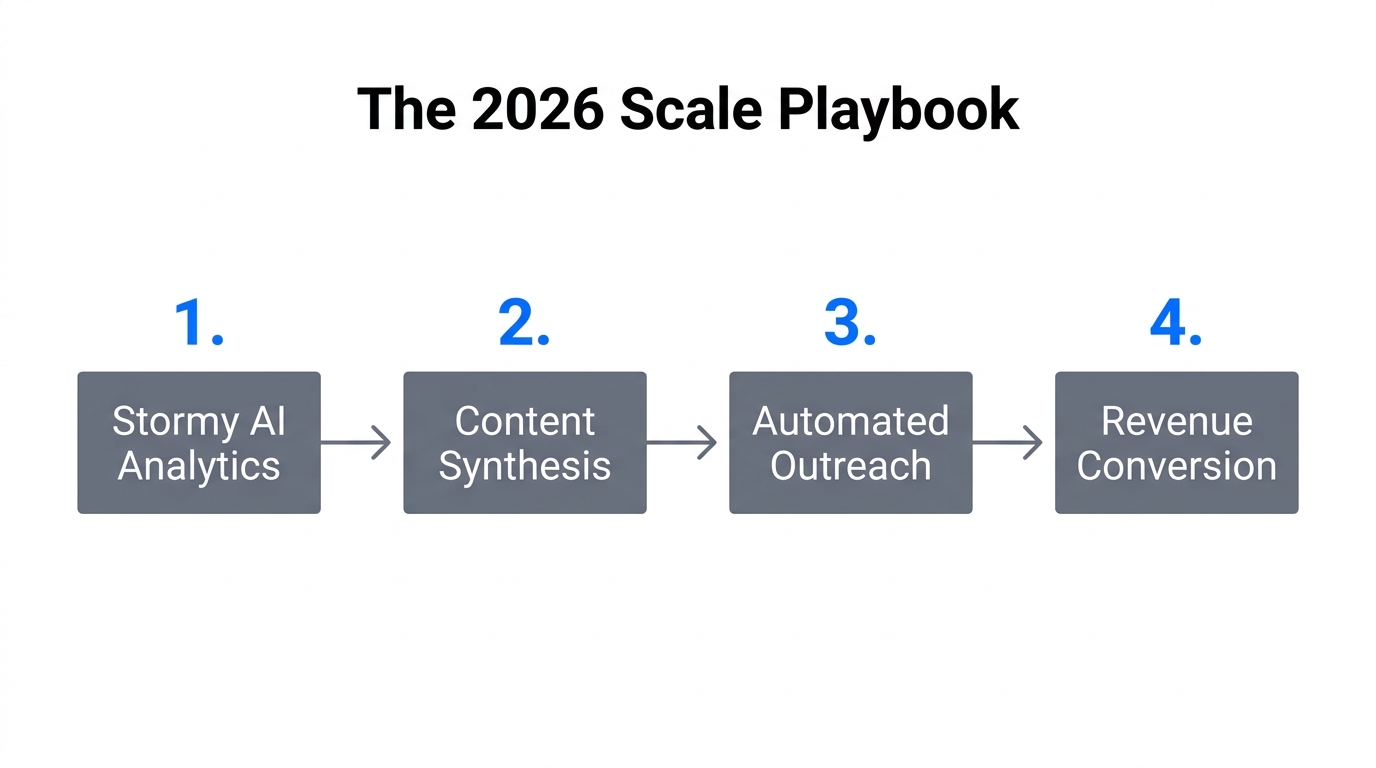
In the creator economy, this means a shift from manual talent scouting to high-volume influencer analytics. You no longer look for one "perfect" creator; you generate a system that finds, vets, and pays 1,000 creators. The founders who thrive in 2026 are those who realize that the car is now driving itself—their job is to decide where the destination should be and what games we should play on the way there.
"Within a few years, not using AI will be considered malpractice. Whether you are a radiologist or a growth marketer, ignoring the second layer of objective diagnostics is a risk to the patient—and the business."
Conclusion: Your Move for 2026
The shift from high agency to generative leadership is about moving from fighting the game to designing the game. By adopting the "Inner Game" philosophy, using Grok for objective feedback, and automating your growth systems with tools like Stormy AI, you can achieve an output volume that was impossible even two years ago.
Stop judging your setbacks as failures. Start observing them as data points. Write that letter to your future self, fire up your AI agents, and start generating. The world of 2026 belongs to those who can bloom an idea into a system before the competition has even finished their coffee.