Why Generative Engine Optimization (GEO) with NoimosAI is Replacing Traditional SEO in 2026
Discover why Generative Engine Optimization (GEO) 2026 is replacing traditional SEO. Learn to use NoimosAI for AI search visibility and citation frequency strategies.
By early 2026, the digital marketing landscape has undergone a tectonic shift. The days of fighting for the "#1 Spot on Google" are effectively over for high-growth B2B SaaS companies. In a world where 80% of companies have deployed AI-enabled apps, the way users find software has changed. They aren't scrolling through ten blue links anymore; they are asking Perplexity to "find the best AI-first CRM for a 10-person agency" or asking ChatGPT to "compare the security features of three specific SaaS tools." If your brand isn't the cited authority in that specific AI response, you don't exist.
This is the era of Generative Engine Optimization (GEO). Unlike traditional SEO, which focused on keywords and backlinks to appease a crawler, GEO focuses on citation frequency and semantic authority to satisfy large language models (LLMs). Using tools like NoimosAI, founders are now optimizing for "Answer Engine Optimization" (AEO) to ensure their Micro-SaaS becomes the primary recommendation for AI search agents.
Defining GEO: Why the AI Citation is the New Page One
Generative Engine Optimization (GEO) 2026 is the practice of structuring your digital footprint so that generative AI engines (ChatGPT, Gemini, Claude, and Perplexity) prioritize your content as a source of truth. In the traditional SEO model, you optimized for a click. In GEO, you optimize for inclusion in the model's synthesized answer.
"In 2026, the most valuable real estate on the internet isn't a search result; it's a footnote in an AI's response."
LLMs use a process called Retrieval-Augmented Generation (RAG). When a user asks a question, the AI searches a curated index of the web, pulls relevant snippets, and weaves them into a coherent answer. To win at AI search visibility strategy, your SaaS needs to be the highest-quality snippet the AI finds. This requires a transition from keyword stuffing to providing structured, high-intent data that AI agents can easily parse and verify.
Using NoimosAI to Audit and Optimize Brand Authority
Building a brand in 2026 requires more than just a blog; it requires an autonomous content engine. NoimosAI SEO tools have become the standard for SaaS founders who need to manage this at scale. NoimosAI doesn't just suggest keywords; it performs Answer Engine Optimization (AEO) audits.
An AEO audit identifies "answer gaps"—questions your target audience is asking AI agents that your competitors are currently answering. For instance, if you are building an AI Micro-SaaS using Lovable.dev, NoimosAI can scan current LLM outputs to see if your tool is mentioned when users ask about "fastest MVP builders." If you're missing, the tool generates a 30-day content calendar designed specifically to increase your citation frequency across the web.
- Sentiment Analysis: NoimosAI tracks how AI models "perceive" your brand. Is the AI describing your software as "affordable" or "enterprise-grade"?
- Citation Mapping: It identifies which high-authority sites (like Towards AI or Reddit) the models are pulling their information from.
- Agentic Publishing: It automates the distribution of content to those source sites to "feed" the LLM crawlers.
The Shift from Keyword Density to 'Citation Frequency'
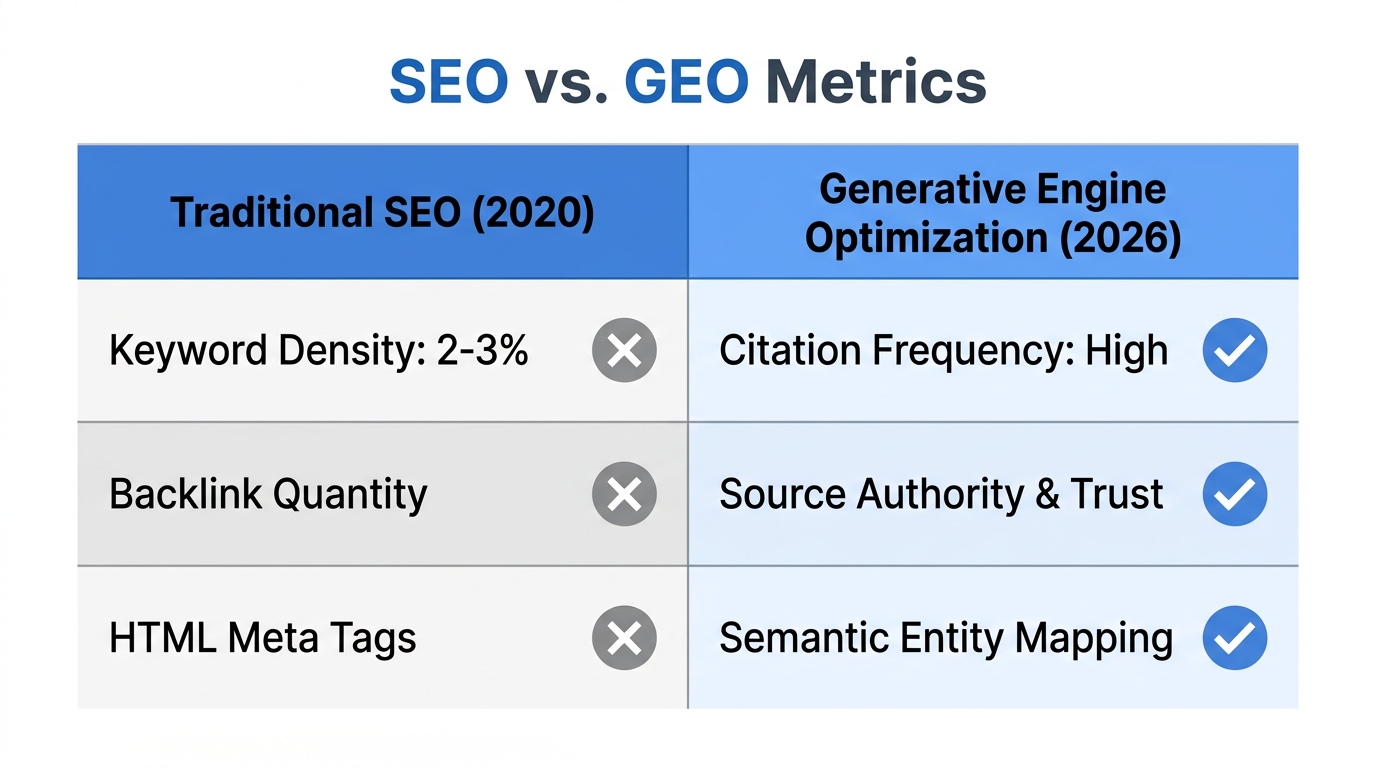
In 2024, you could rank by repeating "best accounting software" six times in a 1,000-word article. In 2026, LLMs ignore repetition. Instead, they look for citation frequency—how often your brand name is mentioned in relation to a specific problem across independent, high-trust domains. Models like Claude 4 and GPT-5 are designed to cross-reference data. If one blog post says you're the best, but Reddit discussions and GitHub repositories don't mention you, the AI will label your content as "potentially biased" and omit the citation.
| Metric | Traditional SEO (2020-2024) | GEO (2026) |
|---|---|---|
| Core Ranking Factor | Backlinks & Keywords | Citation Frequency & Semantic Context |
| Content Goal | Click-Through Rate (CTR) | Zero-Click Citation In-Answer |
| Target Platform | Google Search Engine | Perplexity, ChatGPT, Gemini, Claude |
| Discovery Agent | Web Crawler (Googlebot) | Generative Reasoning Agent |
This shift means that B2B content engines are prioritizing multi-channel mentions over single-site deep dives. The goal is to create a "web of mentions" that makes it mathematically impossible for an LLM to ignore your software when synthesizing an answer.
3-Step Checklist: Getting Your AI Micro-SaaS Indexed by Generative Search Agents
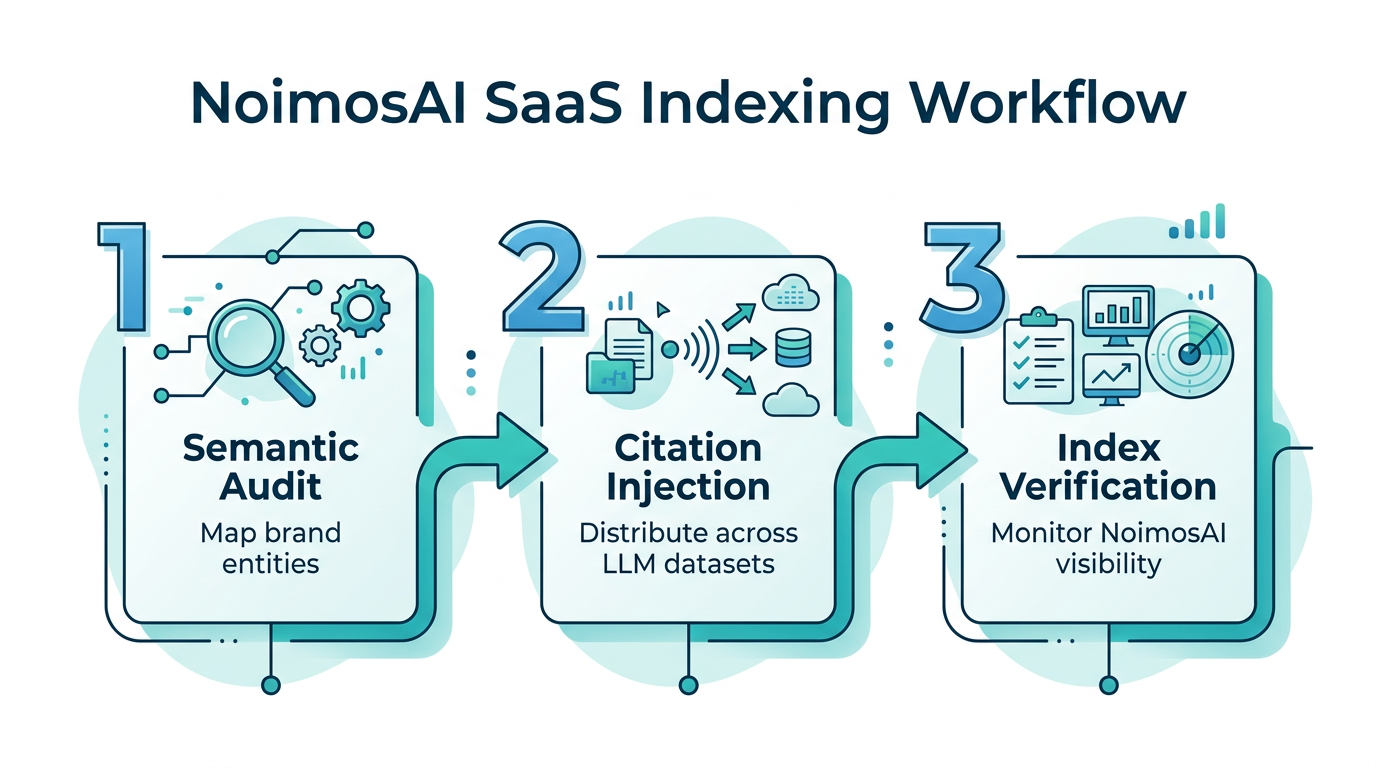
If you are launching a SaaS in 14 days, you cannot wait six months for Google to index your pages. You need immediate GEO visibility. Follow this playbook to ensure generative agents find and recommend your tool.
Step 1: Optimize for Model Context Protocols (MCP)
To be indexed effectively in 2026, your SaaS must be "readable" by agents. Connect your application to the Model Context Protocol (MCP). This allows AI agents to directly query your tool's capabilities. When an AI agent can "talk" to your software, it is significantly more likely to cite it as a solution for a user’s workflow. Ensure your technical documentation is hosted on platforms like Dev.to or GitConnected, which LLMs prioritize for technical reasoning tasks.
Step 2: Engineer for Semantic Authority
Stop writing "How-to" guides that repeat common knowledge. Generative engines prioritize unique data and contrarian insights. Use NoimosAI to identify "low-density semantic clusters"—topics where AI agents have a hard time finding definitive answers. By providing the primary data for these clusters, you become the "canonical source" the AI references.
"If you aren't providing the AI with data it can't find elsewhere, you are just background noise in the training set."
Step 3: Build the Influencer Citation Web
In 2026, influencer marketing and GEO are inextricably linked. When a niche creator on TikTok or LinkedIn mentions your SaaS, it doesn't just drive immediate traffic—it creates a high-authority mention that LLM scrapers prioritize. Using platforms like Stormy AI, you can find creators who specifically talk about your niche (e.g., "AI-first productivity tools"). When these creators publish content about you, it increases your verifiable citation count, signaling to AI engines that your brand is a legitimate player in the space.
Why Zero-Click Visibility is the Most Important KPI in 2026
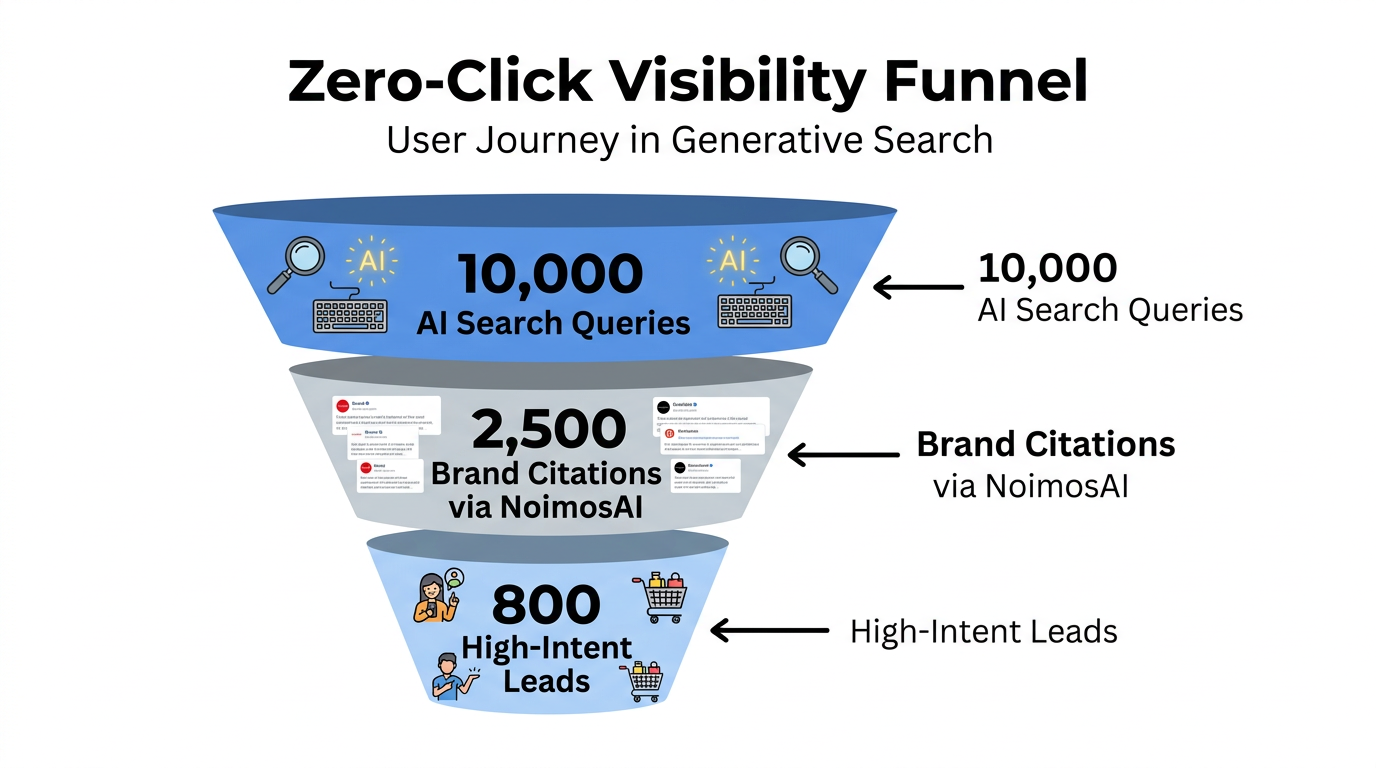
For years, marketers feared the "zero-click search." We wanted users to land on our websites so we could pixel them and lead them down a funnel. But in 2026, the funnel has changed. Users often get their full answer—and their tool recommendation—without ever leaving the Perplexity or ChatGPT interface. Zero-click visibility is no longer a threat; it is the primary goal.
Why? Because AI search agents are becoming the decision-makers. According to HubSpot's 2026 State of Marketing Report, over 60% of B2B SaaS purchases are now initiated by an AI agent's recommendation. If a user asks their AI assistant to "set up a billing system for my new app," and the AI suggests Chargebee because it has the best MCP-documented integration, the "click" happens at the point of purchase, not at the point of discovery.
The Future is Agentic
The transition from GEO vs SEO 2026 marks the end of the "manipulation era" of search and the beginning of the "authority era." You cannot trick a generative engine with keyword density or low-quality link farms. These models are built on reasoning; they require logic, data, and social proof.
To dominate your niche, you must operationalize your GEO strategy. This means using NoimosAI to identify the questions the AI is asking and using tools like Stormy AI to ensure that when the AI goes looking for the answer, it finds your brand mentioned by the voices your audience trusts most. Stop chasing the algorithm and start becoming the citation.