The 2026 Playbook for Generative Engine Optimization (GEO): Getting Cited by Perplexity and Gemini
Learn the 2026 Generative Engine Optimization (GEO) strategy to win in AI search. Master entity mapping, MCP, and citation rules to get cited by Perplexity and Gemini.
By mid-2026, the digital marketing landscape has undergone a seismic shift. The "blue link" economy that dominated the last two decades is fading, replaced by a sophisticated ecosystem of generative answers and autonomous agents. According to recent data from SparkToro, 70% of search queries now result in zero clicks, as AI engines like Perplexity, ChatGPT, and Gemini provide definitive answers directly within the interface. For marketers, the goal is no longer just ranking #1; it is becoming the "ground truth" that these engines cite. This is the era of Generative Engine Optimization (GEO).
The Zero-Click Reality: Why GEO is the New SEO
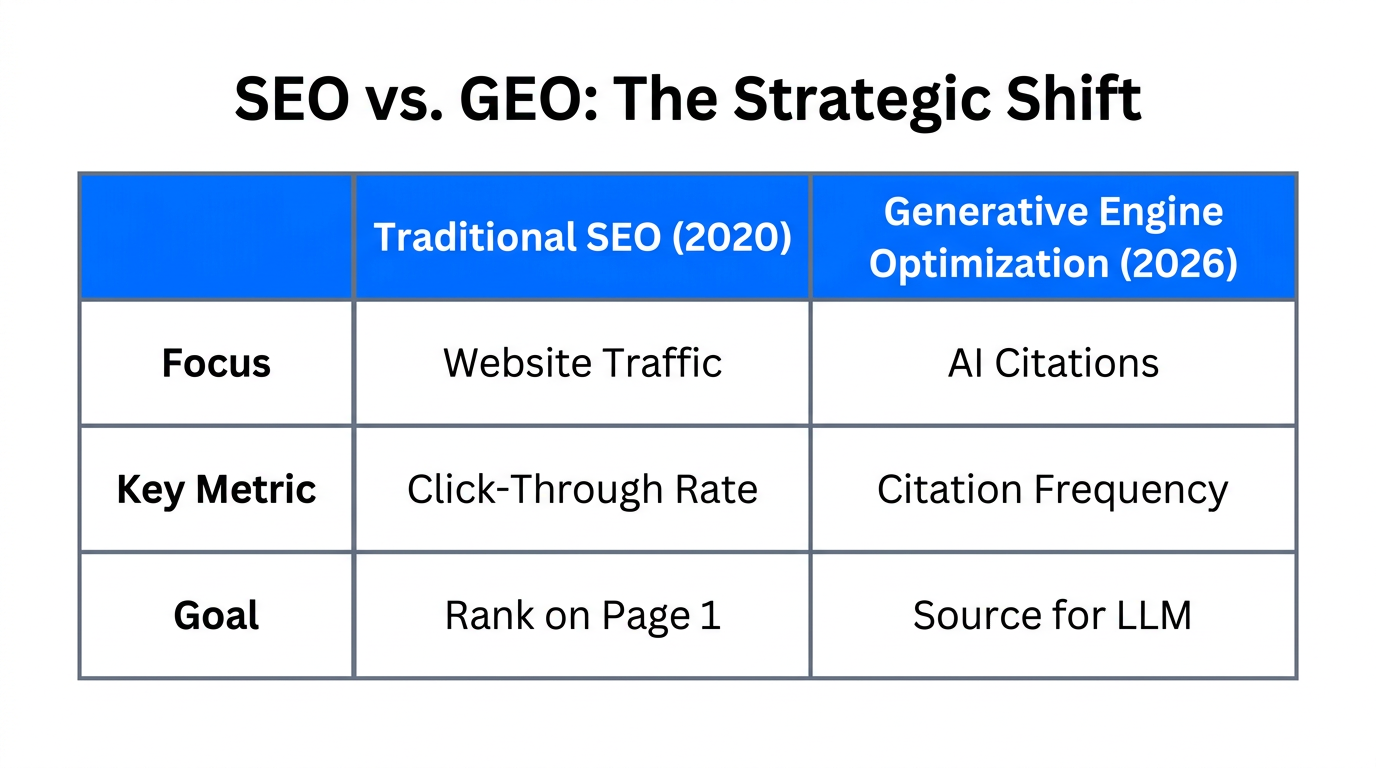
Traditional Search Engine Optimization (SEO) was built on the premise of driving traffic to a website. However, Gartner predicts a 25% drop in traditional search volume by 2026, as users shift toward conversational discovery. When a user asks an AI agent a question, the agent doesn't present a list of links; it synthesizes a response from a handful of trusted sources. If your brand isn't in that synthesis, you effectively don't exist in that user journey.
As search moves toward platforms like zumoseo.ch notes, the "Zero-Click Reality" means marketers must optimize for attribution within the generative response. This shift from SEO to a GEO marketing strategy requires a fundamental re-engineering of how we produce and structure brand information.
Mastering the 'Top-4 Citation Rule'
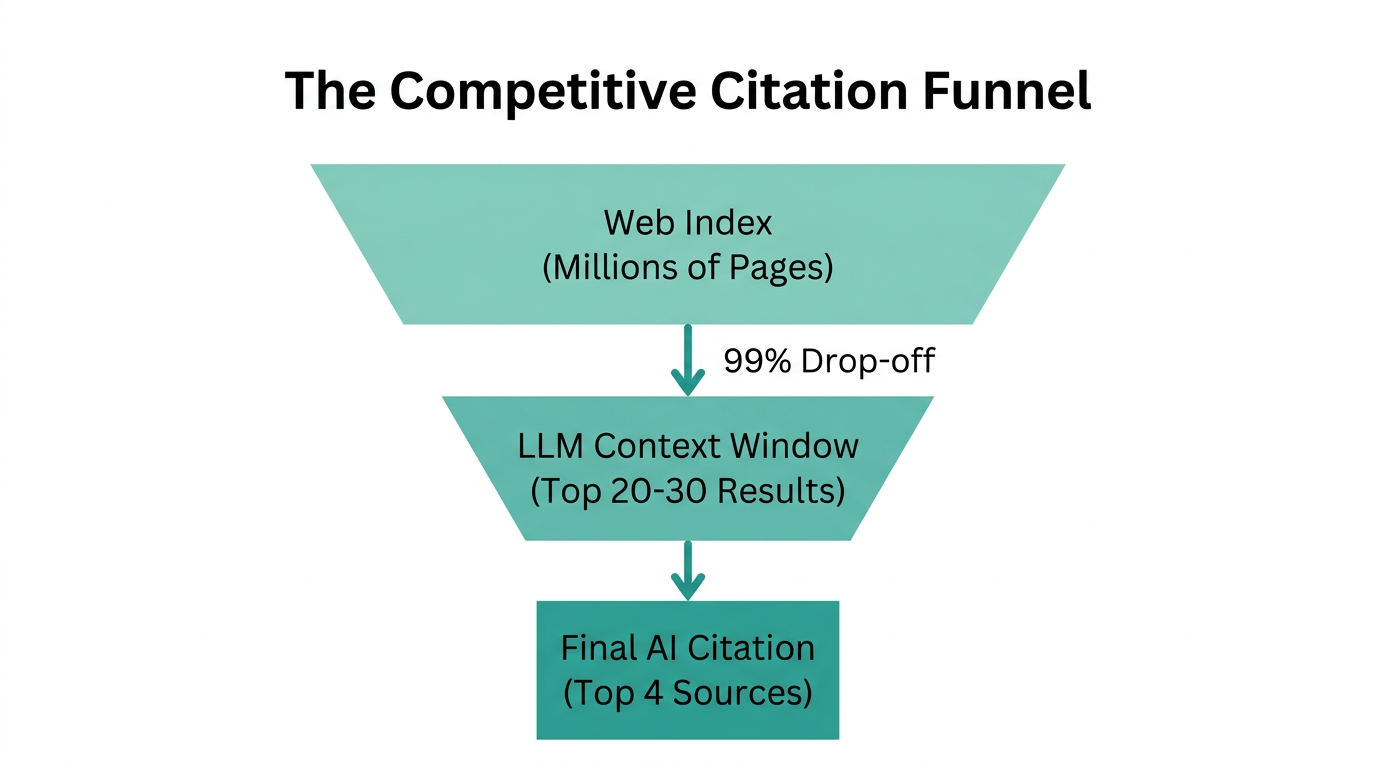
Most generative engines, particularly Perplexity and Gemini, follow a "Top-4" citation logic. They typically pull from a limited set of high-authority sources to construct an answer. To land in this coveted source list, your content must meet three specific criteria: high factual density, direct answer mapping, and verified authority.
Data from NoimosAI suggests that AI agents prioritize content that uses structured data and clear, declarative statements. Instead of long-winded introductions, 2026 content leaders are using "Summary-First" architectures that allow LLMs to quickly scrape the essential facts. Getting cited requires your brand to be semantically linked to the specific problem-solving keywords within the model's training data.
"In the GEO era, a single citation in a Perplexity answer is worth more than 1,000 impressions on a traditional search results page."
| Feature | Traditional SEO | GEO (2026) |
|---|---|---|
| Primary Goal | Drive Clicks to Site | Secure AI Citations |
| Main Metric | CTR & Keyword Rank | AI Share of Voice |
| Content Focus | Readability & Keywords | Entity Authority & Facts |
| User Journey | Linear (Search -> Click) | Agentic (Ask -> Action) |
Tactical Entity Mapping: Becoming the 'Ground Truth'
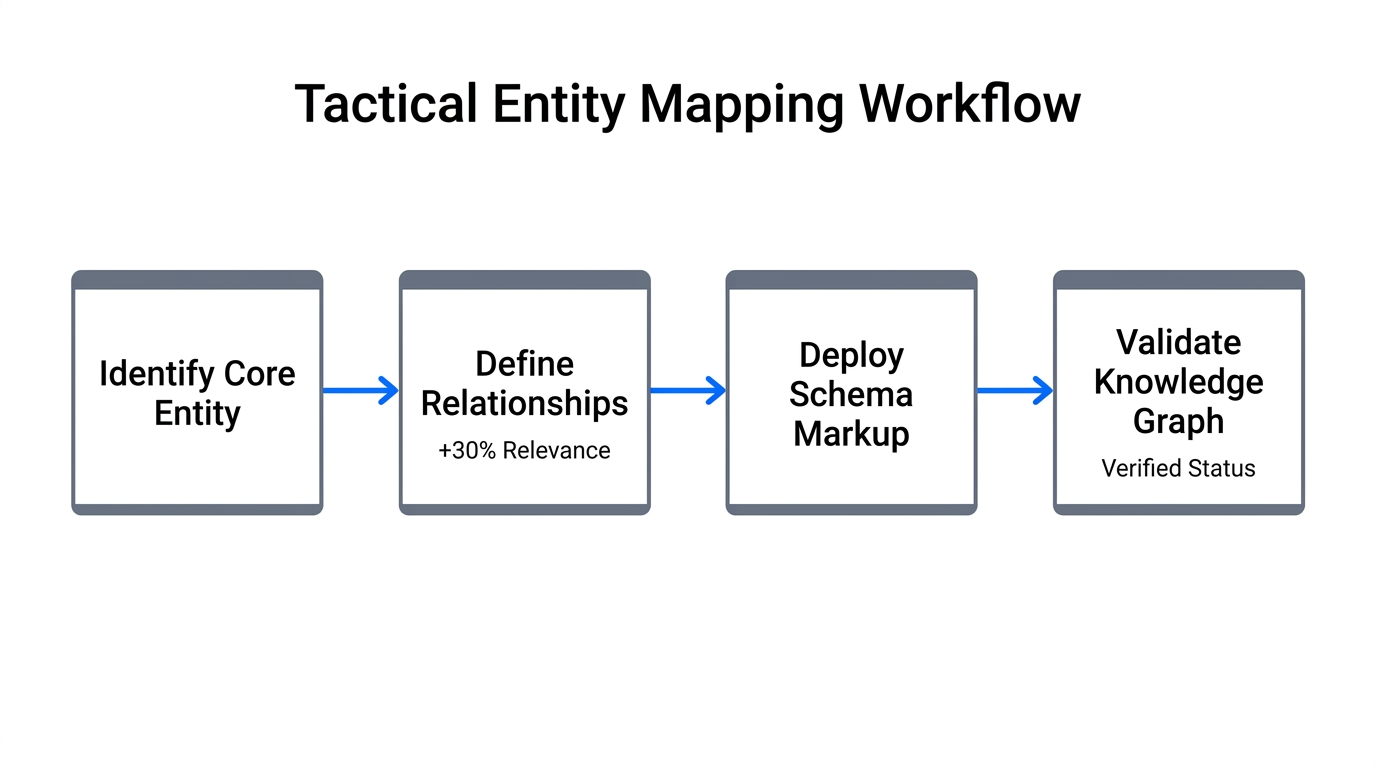
Entity mapping is the process of ensuring your brand is recognized as the definitive authority on a specific topic within an LLM’s knowledge graph. This isn't about keyword stuffing; it’s about contextual relevance. You want the AI to "know" that your product is the solution to a specific pain point. This involves seeding the web with consistent, factual data across multiple high-authority platforms.
One of the most effective ways to build this authority in 2026 is through influencer-led content and User-Generated Content (UGC). When hundreds of creators mention your brand in specific problem-solving contexts, it creates a cluster of data that AI agents recognize as a trend. For brands looking to scale this, using a platform like Stormy AI allows you to discover and manage the right creators who can help build this "Entity Mapping" through authentic, high-reach content across TikTok, YouTube, and LinkedIn.
Furthermore, Averi.ai highlights that 80% of IT leaders see data integration as the biggest hurdle. If your brand data is siloed or inconsistent, agents will likely hallucinate or ignore your brand entirely in favor of a competitor with a cleaner digital footprint.
Using Model Context Protocol (MCP) as a Marketing Asset
A major breakthrough for 2026 SEO trends is the adoption of the Model Context Protocol (MCP). This open standard allows AI agents to connect directly to your brand’s data—such as real-time pricing, inventory, or technical documentation—without the need for complex API integrations. By hosting an "MCP-friendly" data server, you make it incredibly easy for an AI agent to recommend your product and even initiate a transaction.
This leads into what MarTech.org calls Agent-to-Agent (A2A) Commerce. In this scenario, a customer’s personal AI agent negotiates with a brand’s AI agent to find the best deal. If your data isn't "agent-friendly," you are locked out of this autonomous economy. Marketers must pivot from building for humans to building for the agents that represent them.
"The USB-C for AI has arrived. If you aren't using MCP to expose your brand's 'ground truth' to agents, you're leaving 2026 revenue on the table."
Beyond CTR: Measuring AI Share of Voice
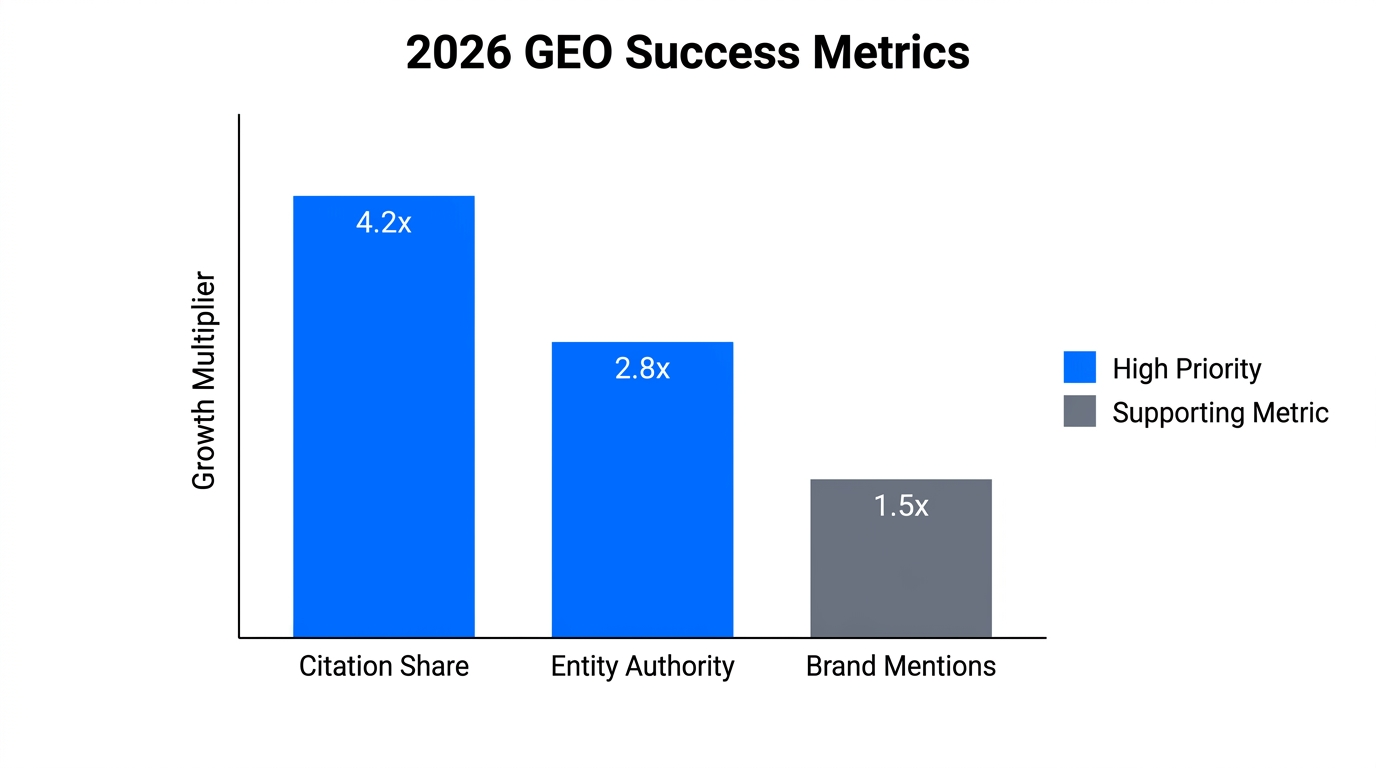
In 2026, the marketing dashboard looks very different. Since clicks are no longer the primary currency, we must measure success through AI Share of Voice (ASoV). This metric tracks how often your brand is mentioned in generative responses compared to your competitors for specific intent-based queries.
Organizations implementing these agentic workflows are seeing a 3% to 15% increase in revenue and a significant boost in sales ROI, according to research from McKinsey and Bloomreach. Tools like AgentOps.ai are now used to monitor agent logs and refine the reasoning loops that lead to a brand recommendation.
The 2026 GEO Playbook: Step-by-Step
To ensure your brand remains visible in a world of zero-click searches, follow this 4-step playbook for GEO marketing strategy implementation:
Step 1: Define Objective-Driven Goals
Move away from task-based goals like "write 5 blogs." Instead, define outcomes: "Increase brand citations for 'best eco-friendly CRM' by 30% in Perplexity responses." As Jasper AI emphasizes, commanding an outcome is the core of modern "Autopilot" marketing.
Step 2: Context Engineering & Ground Truth
Feed the agents "ground truth" data. This includes technical specs, brand guidelines, and case studies. Use platforms like Stormy AI to identify high-authority voices that can amplify this data, ensuring it becomes part of the web's "reasoning cluster" for your niche.
Step 3: Authorize Agentic Tools
Connect your marketing stack—CRM, CMS, and Ad Managers—via MCP protocols. This allows AI agents to take real-time actions, like updating a lead's status or adjusting an ad bid based on a conversational prompt.
Step 4: Implement AI Guardrails
With autonomy comes risk. Set escalation triggers where an agent must ask for human approval—for example, if a discount offer exceeds 20% or if an agent encounters a GDPR-sensitive query. Gartner warns that 40% of projects fail due to poor risk controls; don't let your GEO strategy be one of them.
The Bottom Line for 2026
The transition from SEO to GEO is not just a technical change; it is a shift in marketing philosophy. In 2026, the brands that win are those that stop trying to trick an algorithm and start trying to educate an agent. By mastering the Top-4 Citation Rule, utilizing Model Context Protocol, and focusing on AI Share of Voice, you can ensure your brand remains the first choice for both humans and the AI agents that serve them. The future is autonomous—is your brand ready to be cited?