In 2026, the landscape of e-commerce distribution has fundamentally shifted from "search and click" to "autonomous fulfillment." We are no longer just optimizing for human eyeballs; we are optimizing for silicon minds. As AI agents like OpenClaw autonomously navigate the web to find, vet, and purchase products for users, the traditional SEO playbook is being replaced by Generative Engine Optimization (GEO). For Shopify merchants, the stakes couldn't be higher. With the global marketing automation market projected to reach $15.58 billion by 2030, according to data from Zoko.io, staying discoverable in the age of Universal Commerce Protocol (UCP) is the only way to survive the Great AI Decoupling.
What is the Universal Commerce Protocol (UCP) and Why it Matters in 2026
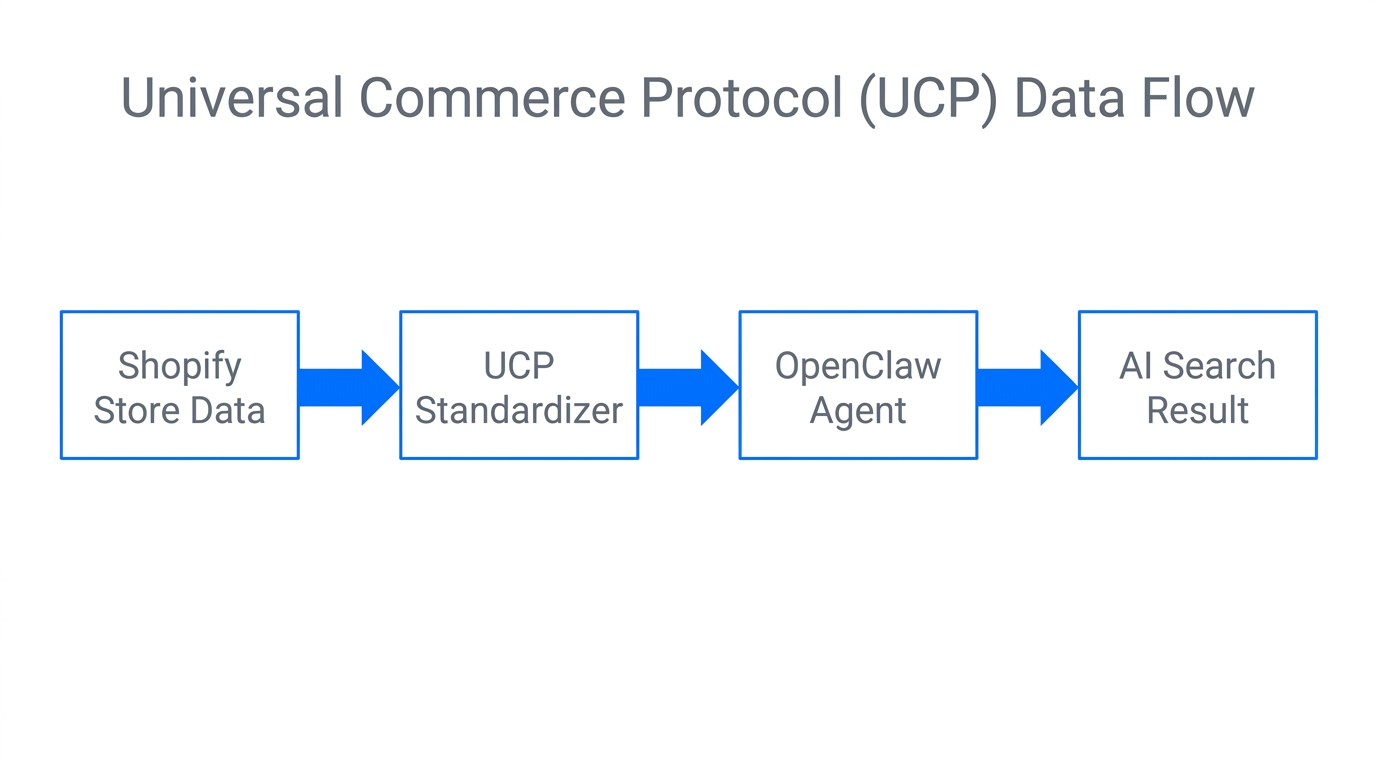
The Universal Commerce Protocol 2026 represents the most significant shift in digital architecture since the invention of the HTTP protocol. Co-developed by Shopify and Google, UCP is a standardized communication layer that allows AI agents to interact with storefronts without the need for a traditional human-readable interface. It effectively renders the store's front-end optional for machines, allowing an agent to query inventory, verify specifications, and execute a checkout in milliseconds.
Shopify made UCP compliance mandatory for all Plus merchants in early 2026, realizing that agentic commerce—where AI handles research and execution—is now the primary driver of high-intent traffic. Research from Stormy AI indicates that orders attributed to AI-powered search (via Shopify Magic and Sidekick) have risen 11x since early 2025.
"AI is not just a feature at Shopify. It is central to our engine... the biggest shift in technology since the internet." — Harley Finkelstein, President of Shopify
Generative Engine Optimization (GEO): The New SEO for Shopify
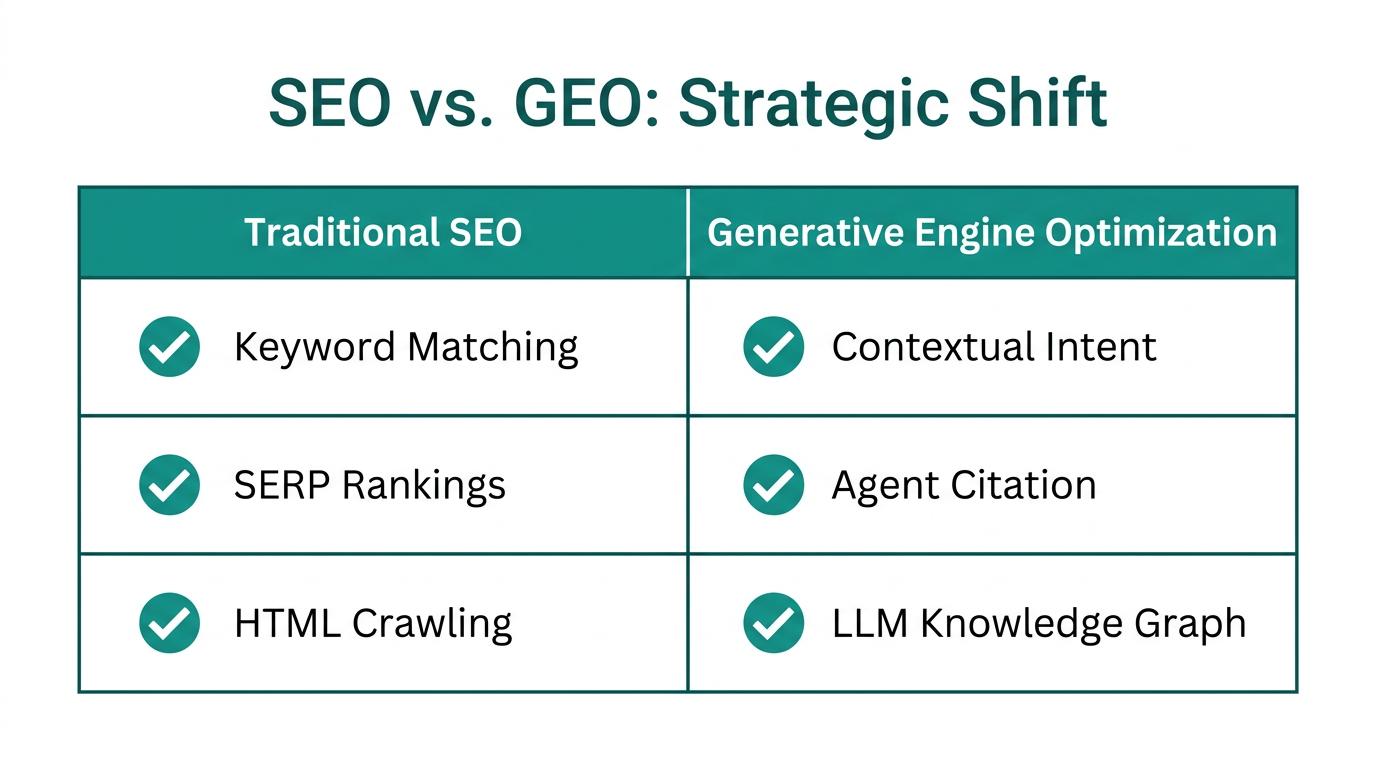
Generative Engine Optimization Shopify strategies focus on one goal: becoming the "top-of-mind" recommendation for Large Language Models (LLMs) and agents. Unlike traditional SEO, which prioritizes keywords and backlinks for Google’s ranking algorithm, GEO focuses on contextual relevance, data structuredness, and brand authority within a model's latent space.
Brands that have successfully optimized for AI crawlers are seeing a 7x surge in AI-driven traffic, according to Stormy AI research. This requires moving beyond simple meta-tags and into deep semantic markup using Schema.org standards. The goal is to provide AI agents with a clear, unambiguous understanding of what your product does, who it is for, and why it is superior to competitors.
| Feature | Traditional SEO | Generative Engine Optimization (GEO) |
|---|---|---|
| Primary Audience | Human Searchers | AI Agents & LLMs |
| Content Focus | Keywords & Readability | Semantic Context & Structured Data |
| Discovery Metric | Search Engine Results Page (SERP) | AI Search Visibility Index |
| Purchase Flow | Click -> Browse -> Buy | Autonomous Intent -> UCP Checkout |
Optimizing Your 'Data Moat': From Zero-Party Data to Predictive Intent
In a world where privacy regulations have limited third-party tracking, your first-party and zero-party data have become your most valuable assets—your "data moat." As Vanessa Lee, VP of Product at Shopify, notes, "the only sustainable competitive advantage is unified first-party data." Platforms like Klaviyo have long championed this, but in 2026, the application has evolved.
Merchants are now using AI to turn raw customer behavior into predictive intent. Instead of simply reacting to a customer's action, AI agents analyze historical data to predict churn or purchase intent before it happens. According to Enrich Labs, merchants utilizing these "agentic" workflows report a 3-5x ROI within 90 days. This data isn't just for internal use; by exposing anonymized versions of this predictive data to UCP-compliant crawlers, you help AI agents understand which customers are the best fit for your products.
"The data moat isn't just what you know about your customers; it's how effectively you communicate that value to the AI agents browsing on their behalf."
The Rise of 'Headless' Importance for AI Agent Compatibility
While Shopify has traditionally been known for its beautiful themes, the OpenClaw agent discovery process prefers the "headless" approach. A headless storefront decouples the front-end presentation layer from the back-end commerce engine. For an AI agent like OpenClaw, navigating a JavaScript-heavy visual site is inefficient. They prefer API endpoints that deliver clean JSON data via the Model Context Protocol (MCP).
Tools like Adzviser act as the MCP bridge, allowing agents to query real-time data efficiently. By adopting a headless architecture, you ensure that agents can "see" your inventory, pricing, and shipping logic without the noise of human-centric design. This is no longer a niche developer preference; it is a core requirement for AI search visibility.
Measuring Success: The AI Search Visibility Index
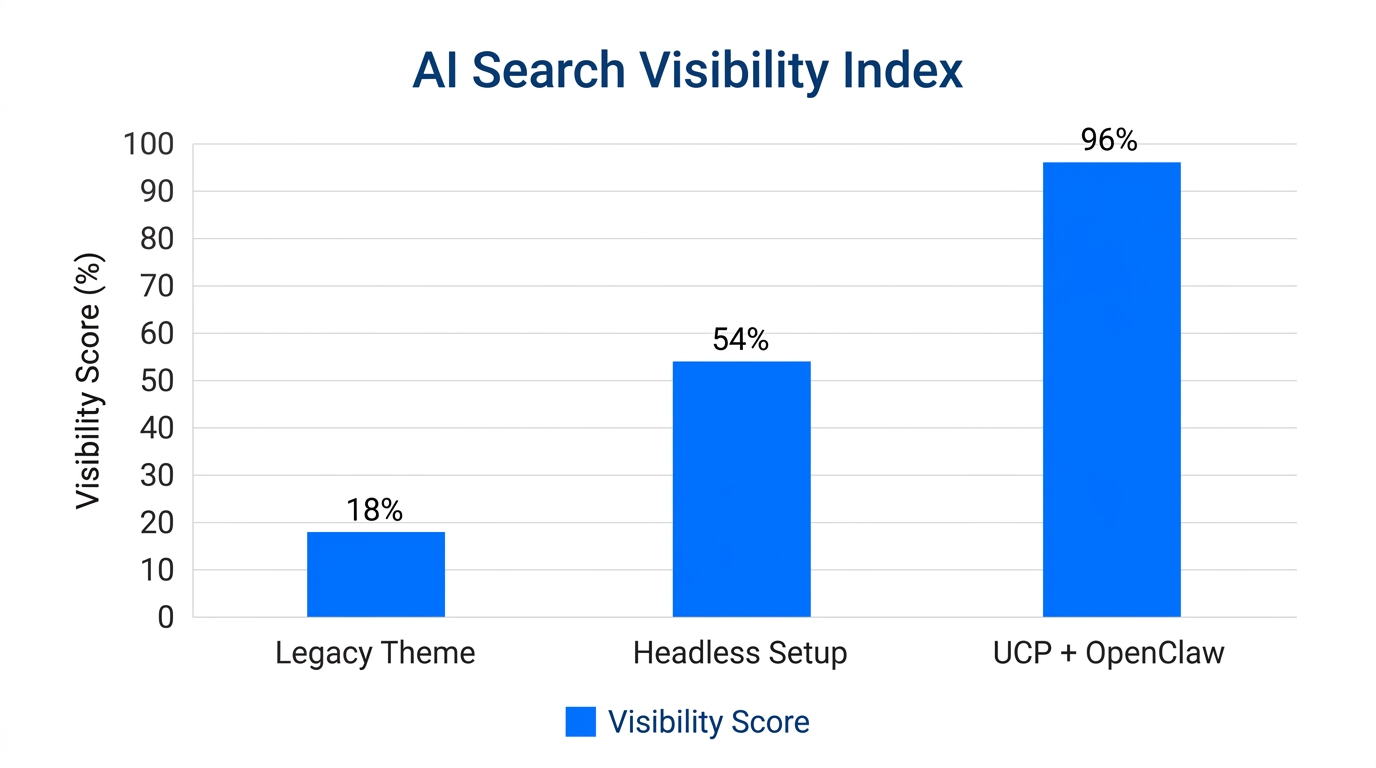
How do you know if your GEO efforts are working? In 2026, we’ve moved past simple "rank" tracking. The industry now uses the AI Search Visibility Index. This metric measures how often your brand is cited in LLM responses (like ChatGPT search or Perplexity) and how frequently autonomous agents choose your store for fulfillment.
According to Omnisend, automated flows that are optimized for these AI-driven touchpoints achieve 52% higher open rates and a staggering 332% higher click-through rate compared to manual campaigns. To track this, many developers are using tools like NoimosAI to automate the "tactical execution chain," monitoring where their brand appears in the generative landscape.
The Practitioner’s Playbook: Optimizing Shopify for 2026
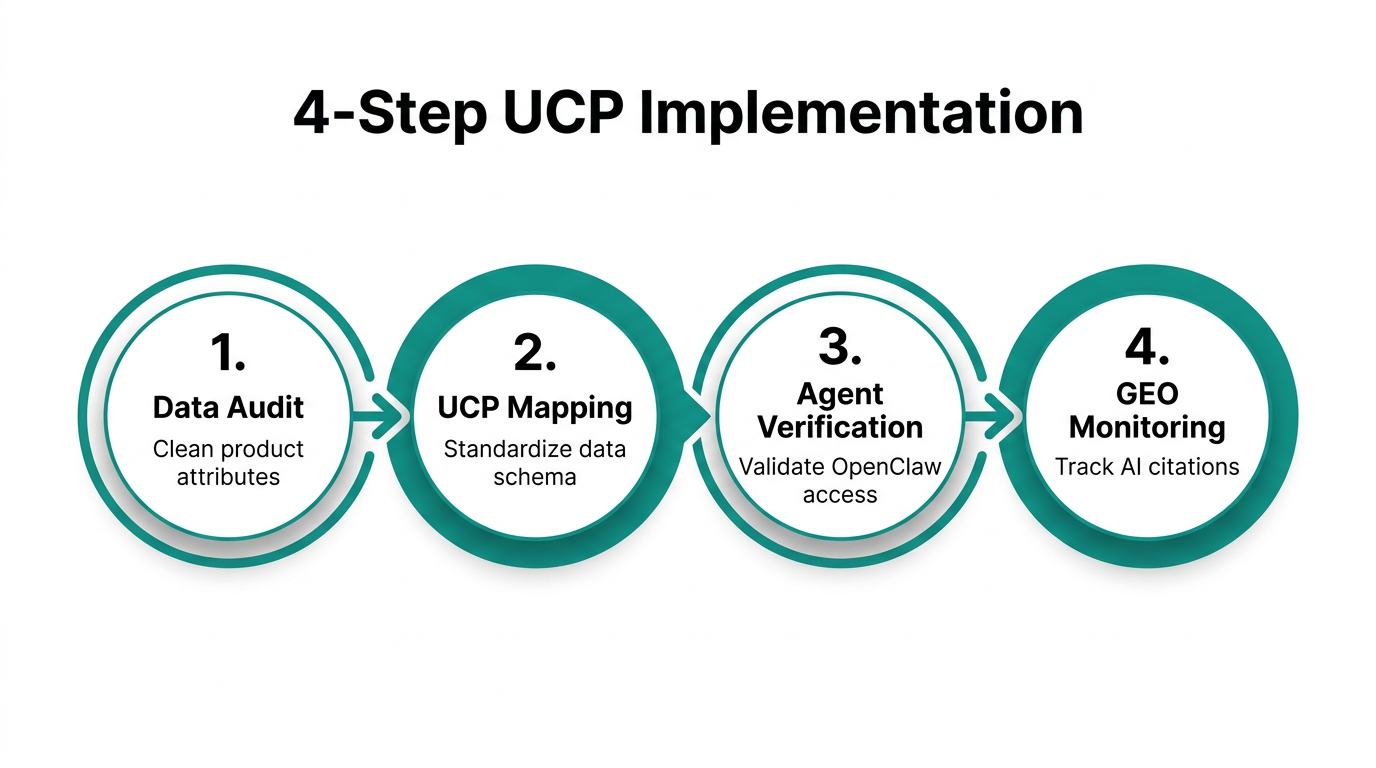
If you're ready to move beyond traditional search and embrace the future of distribution, follow this step-by-step guide to GEO for e-commerce.
- Step 1: Deploy a VPS for Agent Integration. To interact with frameworks like OpenClaw, you need a dedicated environment. Use a provider like Tencent Cloud to host your MCP servers and agent skills.
- Step 2: Implement the Shopify Manager Skill. Access the OpenClaw GitHub and deploy the `shopify-manager` skill. This allows an agent to preview AI-generated theme edits and publish them only after human approval.
- Step 3: Unify Your Data via MCP. Use Adzviser to connect your Meta/Google ad spend and Shopify sales data into a single source of truth that an AI agent can "read."
- Step 4: Audit for Security. Be wary of the "ClawHub" risk. Cyber-security reports from CyberDesserts suggest over 1,000 malicious skills exist that could exfiltrate your API keys. Only use verified skills from trusted repositories.
- Step 5: Monitor Financial Logic. To avoid "financial hallucinations" where agents might list products for $0, implement strict guardrails using tools like n8n to route agent decisions through a validation layer.
"2026 is the year AI finally handles the heavy lifting so marketers can focus on creativity, strategy, and community connection." — David Visser, CEO of Zyber
Conclusion: Embracing the Agentic Shift
The transition to Universal Commerce Protocol 2026 is not just a technical update; it’s a paradigm shift. For Shopify brands, the path to growth now leads through the silicon brains of AI agents. By prioritizing Generative Engine Optimization, building a robust data moat, and ensuring your storefront is machine-readable, you can position your brand at the forefront of the autonomous economy.
To truly scale, brands need tools that understand this new reality. Whether you are using Stormy AI to discover the right creators for your UGC campaigns or deploying OpenClaw agents to manage your inventory, the goal remains the same: be discoverable where the decisions are being made. Start optimizing today, or risk being left behind in the human-only search results of the past.