The Growth of Proactive Wellness: Marketing Lessons from Function Health’s $100M Revenue Model
Analyze how Function Health hit $100M revenue by turning proactive wellness into a status symbol. Explore biohacking consumer market trends for 2026.
In the high-stakes world of 2026 marketing, the shift from reactive to proactive care has moved from the fringes of Silicon Valley to the center of the global consumer psyche. Traditional healthcare has long functioned like a car mechanic—you only visit when the engine is smoking. However, brands like Function Health have flipped this script, building a $100 million revenue engine by treating health not as the absence of disease, but as the ultimate luxury performance metric. By leveraging a combination of influencer-led education, founder personal branding, and seamless infrastructure, they have created a blueprint for how wellness industry trends 2026 are being defined by status, data, and aesthetics.
The Shift from Reactive Medicine to Proactive Wellness
Why the future of health is shifting toward proactive, data-driven blood testing models.
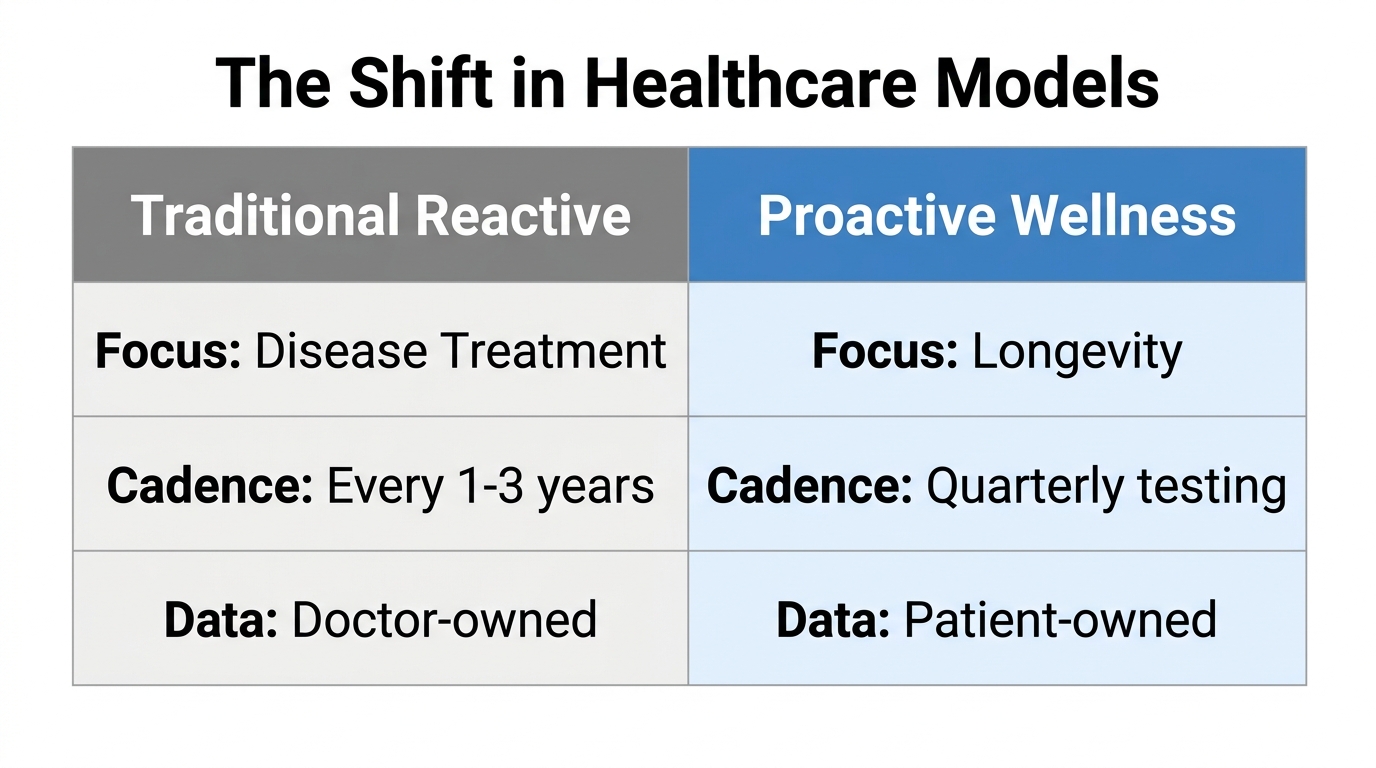
For decades, the American medical system has operated under a maintenance-only philosophy. You wait for symptoms, visit a doctor, and hope to return to a baseline of "not sick." But a cultural sea change has occurred. In 2026, the biohacking consumer market has matured into a mainstream powerhouse where individuals seek to optimize their biology before a problem ever arises. This isn't just about avoiding illness; it’s about achieving peak human performance through constant data monitoring.
"The medical system is a mechanic; you go when you’re broken. Proactive wellness is about staying on the road with a high-performance engine at all times."
The marketing hook for Function Health is simple yet profound: accessibility to data that was previously locked behind a doctor’s gatekeeping. By offering a comprehensive blood panel of over 100 biomarkers for a flat fee of $500, they have commoditized high-end executive health services. This transparency removes the friction of insurance approvals and the "you look fine" dismissiveness of traditional general practitioners.
| Feature | Traditional Healthcare | Proactive Wellness (2026) |
|---|---|---|
| Primary Goal | Disease management | Optimal performance |
| Data Ownership | Provider-owned records | User-owned digital dashboards |
| Incentive Structure | Fee-for-service (sick care) | Subscription-based (health care) |
| Marketing Angle | Insurance & Reliability | Status, Data & Longevity |
How Influencers and Founder Branding Drive High-LTV Growth
How personal authority and founder branding drive high-trust consumer purchasing decisions today.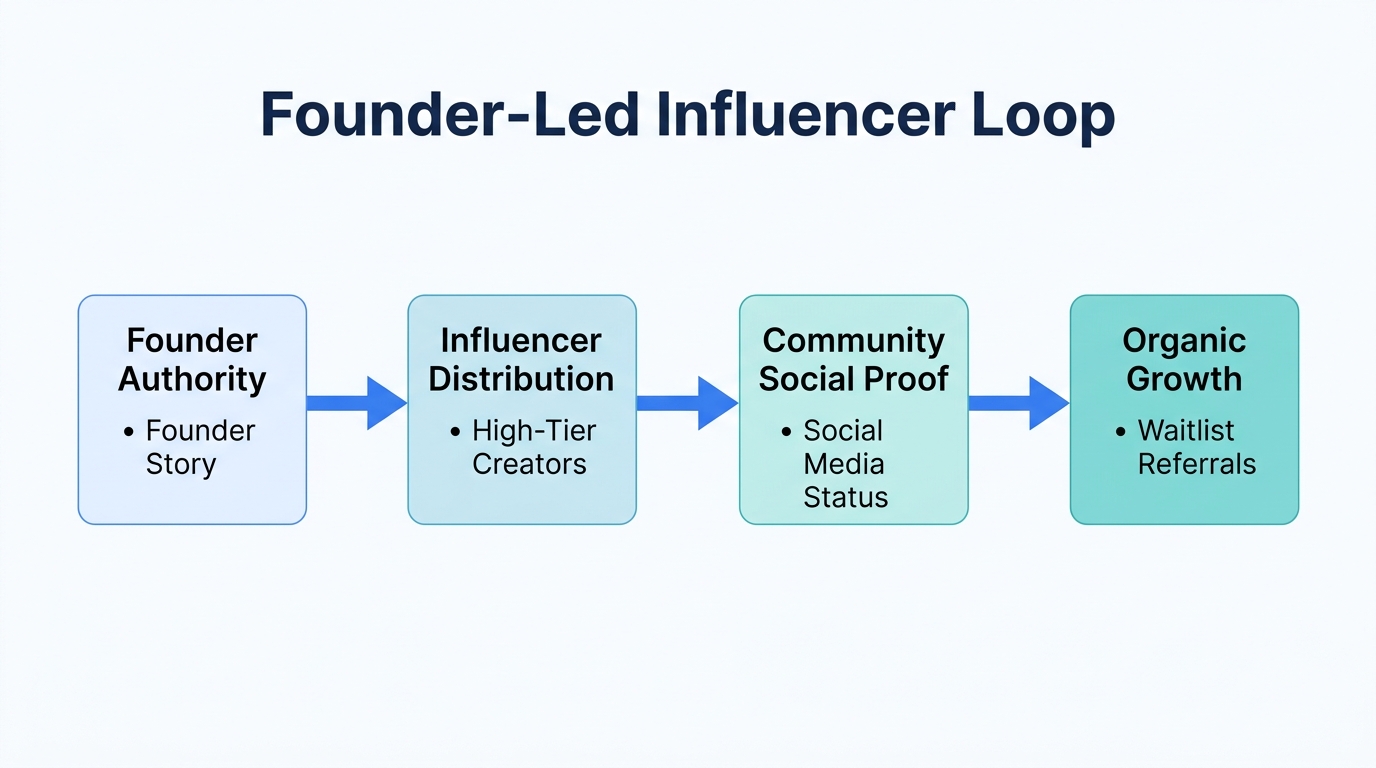
The explosion of this category is inextricably linked to the founder personal branding movement. Leaders like Ankur Nagpal, the founder of Teachable and now Carry, have pioneered a new type of customer acquisition: the transparent executive. By sharing their own health journeys, blood results, and biohacking stacks, they build a level of trust that a faceless hospital brand never could.
High-profile influencers like Bryan Johnson have turned the concept of "longevity" into a competitive sport. In 2026, wellness industry trends show that consumers no longer want to just feel better; they want to compare their biological age against their chronological age. When a founder or influencer posts a screenshot of their declining biological age, it creates a viral loop of aspiration that drives high-LTV (lifetime value) customers who are willing to pay for recurring testing and supplements.
When sourcing creators for high-ticket wellness campaigns, platforms like Stormy AI enable brands to find health-conscious influencers with verified audience demographics, ensuring that marketing spend is targeted at the specific "biohacker" persona. Utilizing an AI-powered search engine to identify creators who already discuss longevity and performance is the most efficient way to scale this influencer-led education model.
Infrastructure as a Service: Building a Global Brand on Existing Networks
One of the most misunderstood aspects of the Function Health marketing analysis is how they scaled so rapidly without owning a single laboratory. They utilize Infrastructure as a Service (IaaS), tapping into existing networks like Quest and Labcorp. This allows them to offer testing sites within 0.8 miles of most urban users, providing an "Amazon-like" convenience for a medical procedure.
By layering a beautiful, user-centric software interface over a legacy brick-and-mortar lab infrastructure, they have solved the two biggest hurdles in healthcare: convenience and data visualization. Users can walk into a local lab, have their blood drawn, and receive a visual action plan on a mobile dashboard days later. This seamless integration of digital and physical is what allows a startup to hit $100M in revenue in less than three years.
"Infrastructure is the new moat. By owning the data layer while leasing the physical labs, wellness brands can scale globally at software speeds."
The Psychology of the Funnel: From $500 to Multi-Thousand Dollar Relationships
How comprehensive health testing packages leverage consumer psychology to increase total sale value.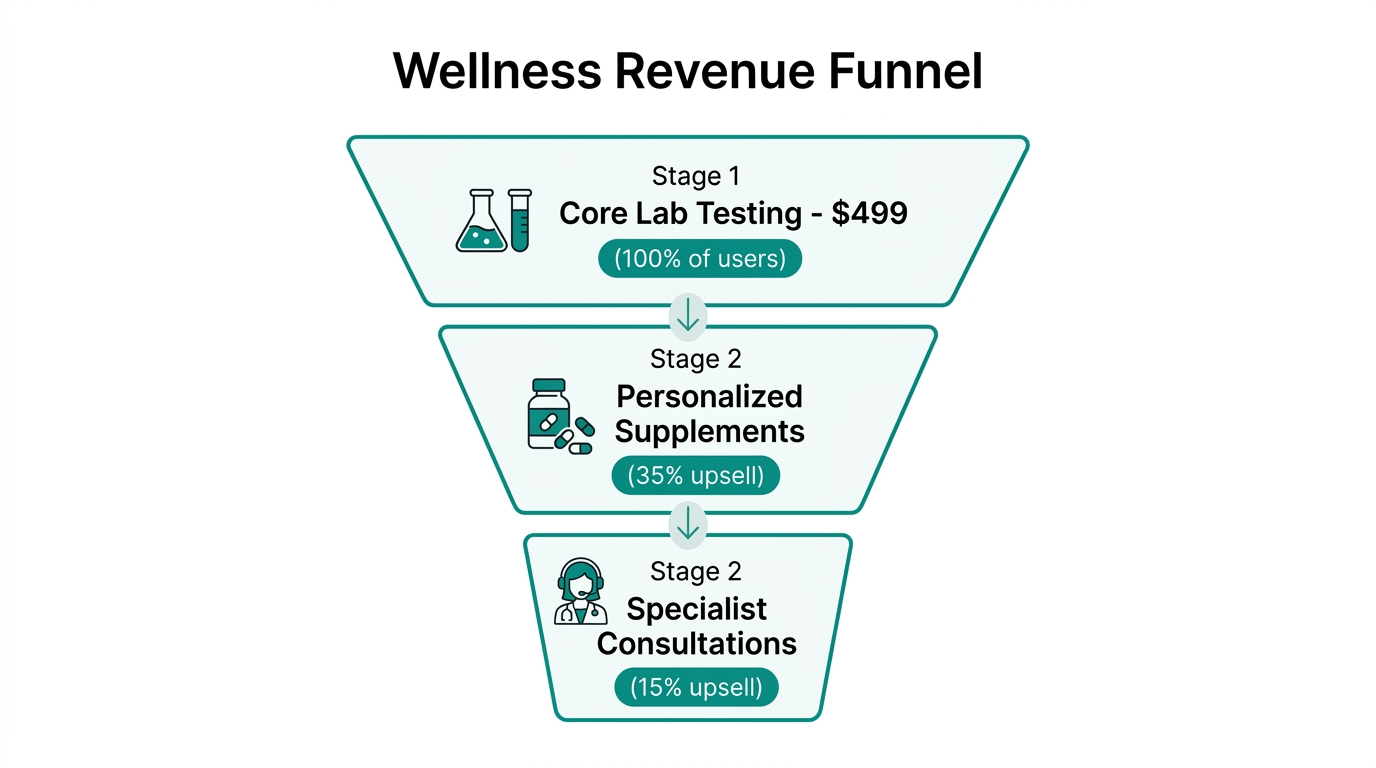
The Function Health model is a masterclass in the subscription health business model. It begins with a low-friction entry point: $500 for a comprehensive physical. This price point is accessible enough for the upper-middle class but high enough to filter for high-intent users. However, the real revenue growth happens in the post-test funnel.
The checkout process and the results dashboard are filled with high-intent upsells. Once a user has committed to a blood draw, the psychological friction of adding a microbiome test, a heavy metal toxin screening, or a food allergy panel is significantly reduced. Users often report clicking "yes" through 15 different upsell prompts because the desire for total biological transparency is addictive. This transforms a one-time transaction into a multi-thousand-dollar lifetime relationship where the brand becomes the central hub for the user's entire wellness ecosystem.
- Phase 1: The $500 Discovery (Blood Biomarkers)
- Phase 2: The Deep Dives (Gut Health, Toxins, DNA)
- Phase 3: The Action Plan (Concierge doctors and action steps)
- Phase 4: The Recurring Maintenance (Quarterly re-testing)
The Aesthetic Pivot: Transitioning from Longevity to Appearance
Why modern wellness businesses are successfully pivoting toward aesthetic-focused marketing and results.As we look deeper into the wellness industry trends 2026, a new pivot is emerging: the move from "internal health" to aesthetic performance. While longevity is a powerful long-term motivator, humans are inherently vain. Marketing that focuses solely on heart health and liver enzymes often hits a ceiling. The next wave of proactive wellness brands is focusing on how internal optimization manifests externally.
This includes concierge services for hair density, skin glow, muscle preservation, and fat distribution. By tying blood work results to aesthetic outcomes—for example, showing how correcting a Vitamin D deficiency or balancing hormones directly leads to better skin—brands can tap into the massive beauty and anti-aging markets. The biohacking consumer market is no longer just for the tech elite; it’s for anyone who wants to look as good as they feel.
Strategic Takeaways for Brands and Growth Marketers
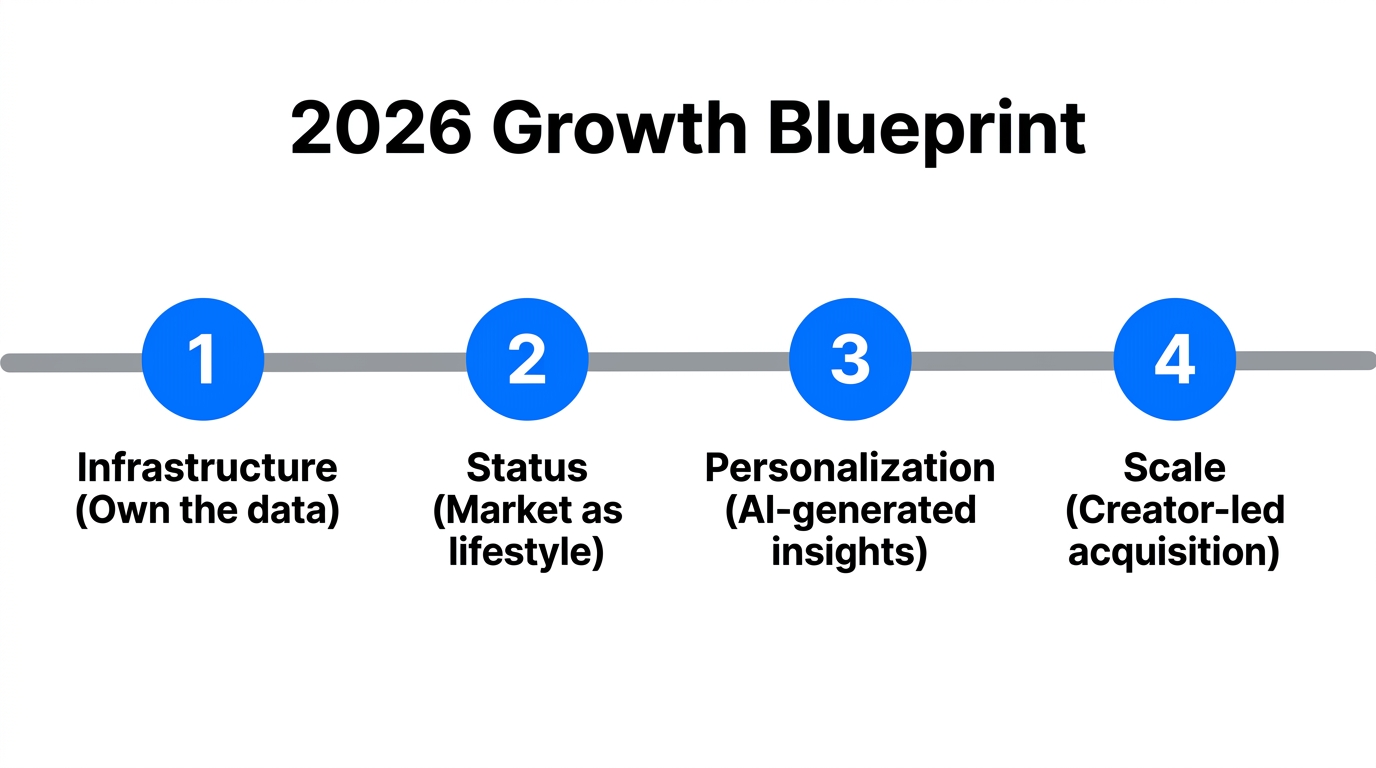
Whether you are in healthcare or a different vertical, the success of the Function Health marketing analysis offers universal lessons for the 2026 landscape:
- Education is the Lead: In complex markets, use influencers to bridge the knowledge gap. Don't sell a product; sell the realization that the consumer has a "knowledge deficit" about their own lives.
- Status as a Feature: If your product allows users to compare themselves favorably to others (e.g., biological age vs. chronological age), you have built-in virality.
- Frictionless UX over Legacy Systems: Consumers will pay a premium to avoid the bureaucratic hurdles of traditional systems. Use a robust Creator CRM to manage the user journey and personalized follow-ups.
- Leverage Creator Sourcing: Don't try to build an audience from scratch. Use tools like Stormy AI to find the exact creators who already own the trust of your target demographic.
The growth of proactive wellness demonstrates that consumers are ready to take the driver's seat in their own lives. By combining high-end data with status-driven marketing and a focus on aesthetics, brands can build resilient, high-revenue businesses that disrupt even the most entrenched industries. As we move through 2026, the brands that win will be those that treat their customers not as patients to be fixed, but as high-performance assets to be optimized.