Facing the Pain: A Founder's Guide to Conversion Rate Audits in 2026
Scale your business in 2026 without increasing ad spend. Learn the founder's framework for mystery shopping your own funnel and auditing for 'Visible, Juicy, Clear' conversion.
In 2026, the most dangerous sentence a founder can utter is: "We tried that, and it didn't work." Whether it's Google Ads, influencer marketing, or a new pricing model, the "it didn't work" narrative is often a mask for sloppy execution or a failure to face the pain of a broken funnel. If you spent $200 in free ad credits without tracking and saw "low-quality leads," you didn't fail at advertising; you failed at decision-making hygiene.
As we navigate the hyper-competitive landscape of 2026, the cost of customer acquisition continues to climb. The solution isn't always a bigger budget—it is a rigorous, monthly conversion rate audit. By mystery shopping your own product and applying a "Visible, Juicy, Clear" framework, you can identify the friction points that are quietly killing your growth. This guide outlines the exact playbook for auditing your sales funnel from the perspective of a cold user.
The Mystery Shop: Why You Must Walk Your Own Funnel
Hear the eye-opening story of a founder performing a real-world audit on a local business.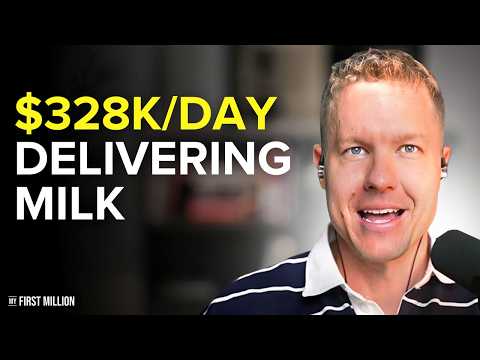
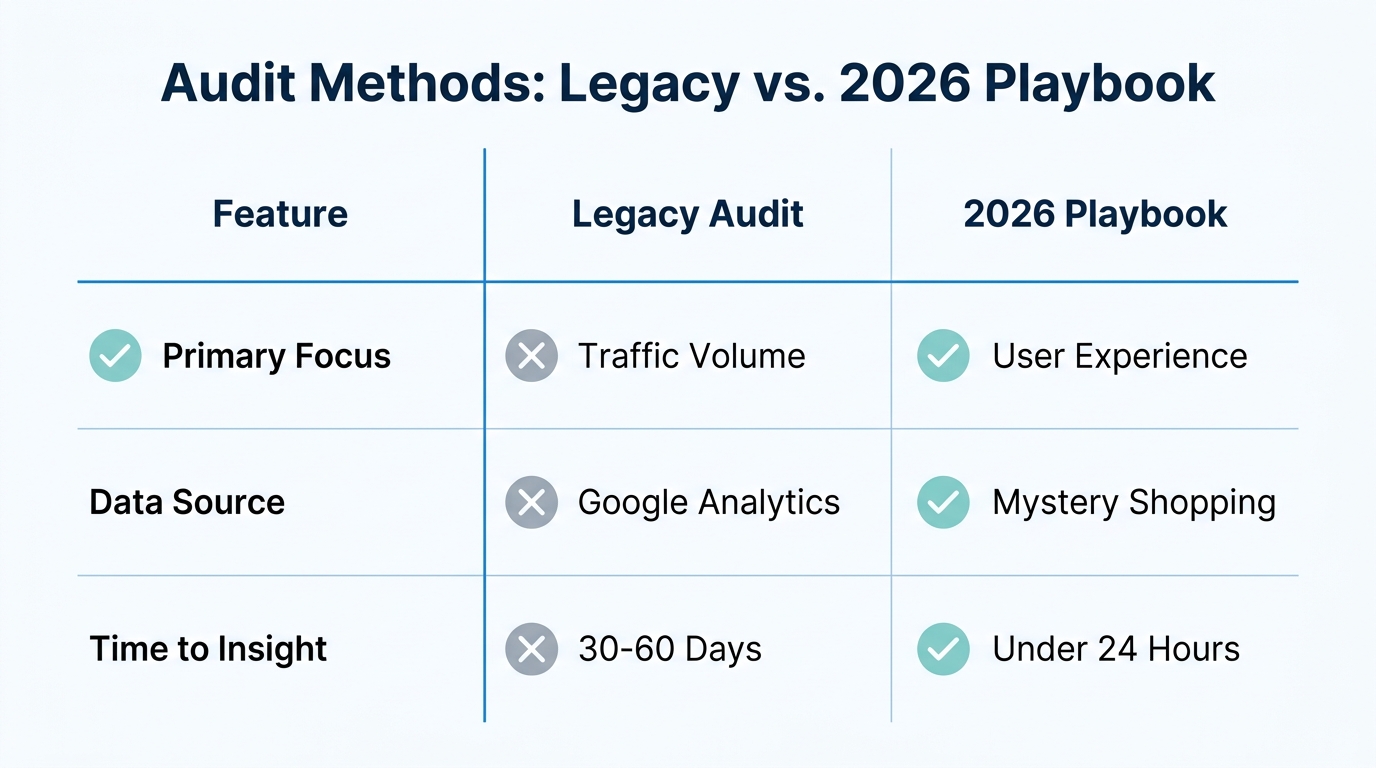
Most founders spend their days looking at high-level dashboards in Google Analytics or Mixpanel. While data is essential, it is sterile. It doesn't tell you the feeling of a user trying to navigate your checkout process on a spotty 5G connection or the confusion they feel when your value proposition is "hand-wavy."
Every month, you must perform a Mystery Shop. Open an incognito window, or better yet, grab a different device, and attempt to buy your own product as a total stranger. Start from a search query like "smog check near me" or "best AI sourcing tool" and see where you actually land. Are you even visible? If you are, is the first thing you see compelling?
"The problem is most likely right there on your site in your core flow where you're just not clear enough or you're not compelling enough."
In the world of local services, like the mobile emissions business discussed in recent growth circles, many founders ignore the Google Business Profile map results in favor of traditional SEO. In 2026, if you aren't in the top map pack with a high review count and a clear call-to-action, you are invisible to the majority of mobile users. Facing this pain means acknowledging that your organic ranking doesn't matter if the Map result above it is capturing 80% of the clicks.
The UserTesting Playbook: Moving Beyond Metrics
See how the 'think-aloud' protocol provides raw insights into how users actually navigate websites.While the founder's own mystery shop is great for catching obvious bugs, you are inherently biased. You know where the buttons are. To get a raw look at your conversion friction, you need to use tools like UserTesting. For as little as $20 per test, you can watch a screen recording of a real person attempting to use your site while they talk out loud.
How to Run a 2026 UX Audit:
- The 5-Second Test: Show a user your landing page for five seconds, then hide it. Ask them: "What does this company do?" If they can't answer, your page isn't clear.
- The Friction Hunt: Give the user a specific task (e.g., "Book a mobile emissions appointment for next Tuesday"). Watch where they hesitate. Does the calendar load slowly? Is the 'Pay Now' button hidden below the fold?
- The "Juicy" Audit: Ask the user, "Does this feel premium or punk rock?" Depending on your brand, you want a specific emotional response. If they say "it looks like a generic template," you've failed the 'Juicy' test.
Interestingly, some of the most successful ventures in 2026 are leaning into intentional friction or nostalgia. For example, The Onion recently 3xed its revenue by bringing back a physical print magazine. In a world of digital sludge, physical items are a Purple Cow. If your digital funnel feels like every other SaaS site, you might need to inject something radically different to stand out.
Visible, Juicy, Clear: The Three-Part Landing Page Framework
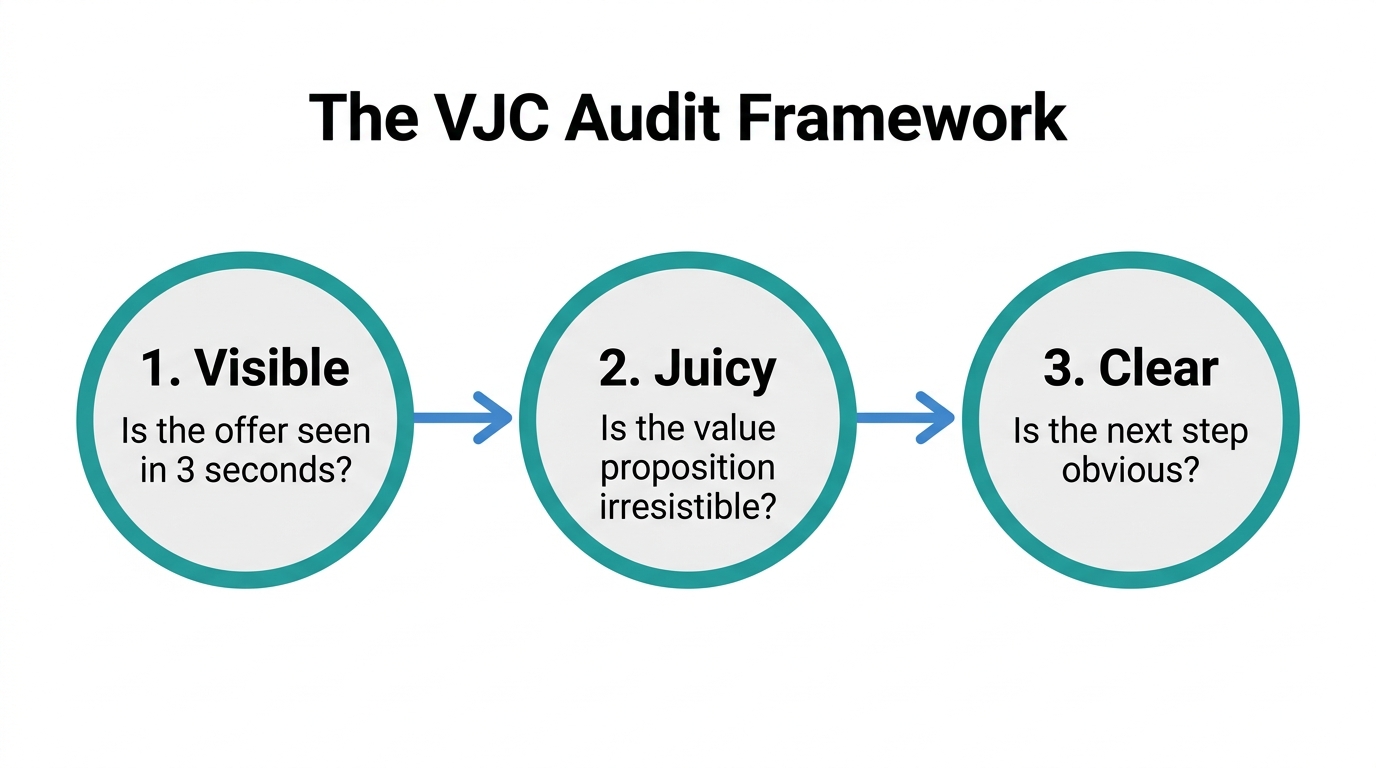
If you want to optimize your sales funnel, stop obsessing over button colors and start looking at the architecture of your message. We use the Visible, Juicy, Clear framework to evaluate any marketing asset.
| Element | The Question | 2026 Standard |
|---|---|---|
| Visible | Can they find you when the intent is high? | Top 3 in Google Maps or targeted TikTok Ads. |
| Juicy | Is the offer so good they feel stupid saying no? | Deep social proof, UGC creators, and low perceived pain. |
| Clear | Does the user know exactly what to do next? | One primary button, zero distractions, and Stripe-level checkout simplicity. |
A common mistake in 2026 is having a landing page that is clear but dry. It tells the user what the product does, but it doesn't make them want it. This is where user-generated content (UGC) becomes your best friend. For app developers and founders, sourcing authentic creators via platforms like Stormy AI is the fastest way to make a page "Juicy." When users see a real human demonstrating the value prop, the conversion friction melts away.
"If you split test everything, you just end up with porn. At some point, you need to take a stand and be different."
Being "Juicy" often means being different. In the education space, Alpha School uses a 2026 approach by combining AI tutors with "impossible missions" like teaching 7-year-olds to run a 5K. They don't just promise "better education"; they promise a different life experience. Your landing page needs that same level of conviction.
The Local Funnel: Optimizing Google Business Results
Explore why simple Google ads are the most overlooked growth lever for local businesses.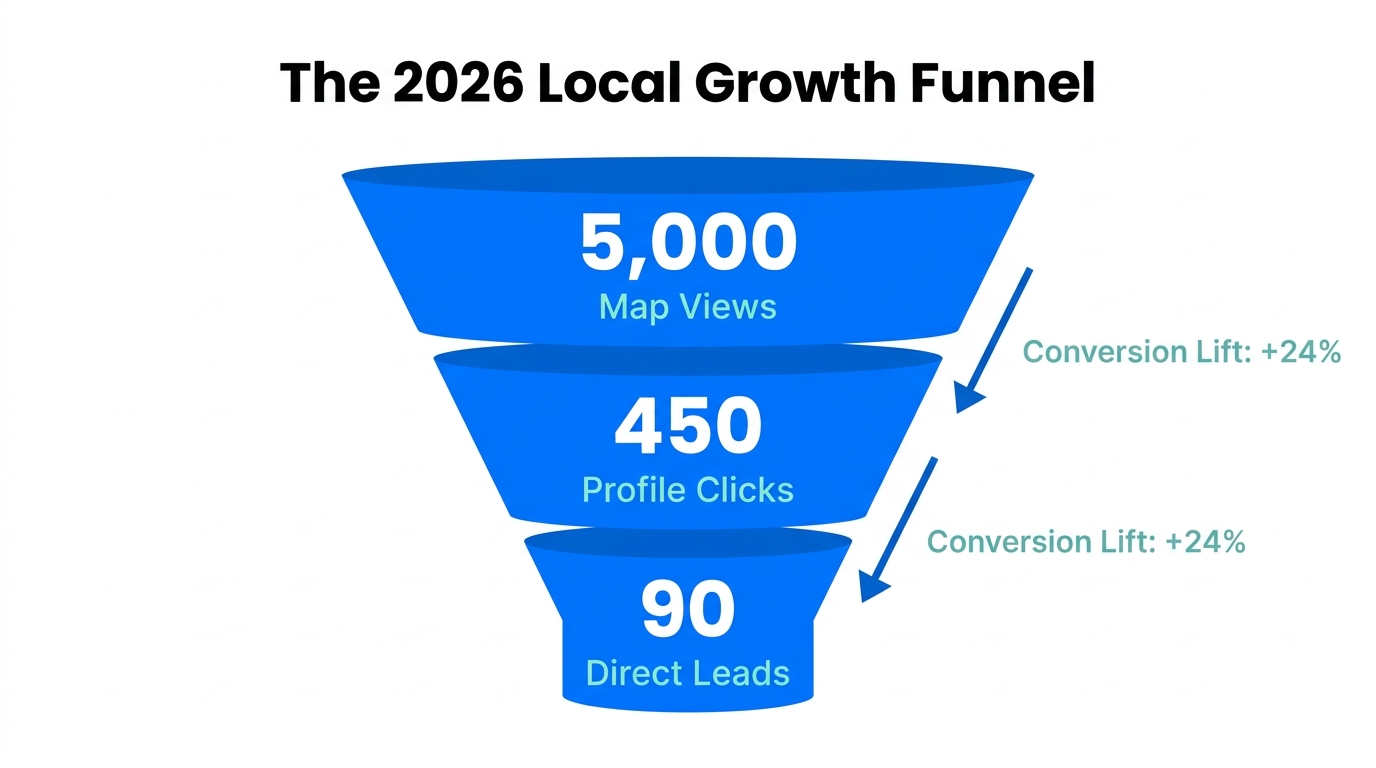
For service-based businesses, your website is often secondary to your Google Business Profile. In 2026, search behavior has shifted. Users aren't reading blog posts to find a service; they are looking at the map results. If you are a founder, you need to audit your local visibility with the same intensity as your ad spend.
Step 1: The Map Pack Audit
Search for your core service + "near me." If you aren't in the top three, you are losing. Improving this isn't about keywords; it's about reviews and recency. Are you generating a new 5-star review every week? Are you responding to them? Google rewards active, highly-rated profiles.
Step 2: The Value Prop in the Snippet
Google often pulls snippets of reviews into the search results. If your value prop is "we save you time," but your reviews only talk about price, there's a disconnect. Guide your customers to mention specific benefits in their reviews to influence the "Visible" part of the framework.
State of Mind: Why Fatigue Makes Cowards of Us All
One of the most overlooked aspects of conversion rate optimization (CRO) is the state of mind of the founder making the decisions. Strategic decisions made while sick, fatigued, or burnt out lead to "strategic cowardice." You take the easy route (e.g., "let's just try more ads") instead of the hard route (e.g., "let's rebuild the core onboarding flow").
In 2026, we recognize that Impulse Control is a competitive advantage. If you are feeling under the weather, abstain from making major pivots. Fatigue limits your creativity and makes you bias toward options that have "lower perceived pain" rather than higher ROI. High-performance founders in 2026 use state-management techniques—whether it's morning exercise or strict digital diets—to ensure they are in a peak state before auditing their sales funnels.
"Fatigue makes cowards of us all. I literally abstain from making any decisions when I'm sick."
When you are energized, you are more likely to notice the small friction points. You'll realize that your Beehiiv newsletter signup is too complex, or that your influencer outreach is too generic. You'll have the stamina to set up an automated system to handle your creator discovery and outreach, rather than just manually scrolling through social media in a daze.
Conclusion: Your 2026 Growth Playbook
Growth in 2026 is not about finding a magic new channel; it's about refining the obvious ones. The most successful founders are those who embrace the Socratic method of self-advice. They write down their assumptions, they mystery shop their own products, and they refuse to accept the "it didn't work" narrative without a fight.
To recap your conversion audit for this month:
- Write it out: Use a Google Doc to interrogate your current growth channels. If a channel "failed," document exactly why with data from PostHog or Amplitude.
- Mystery Shop: Walk through your funnel on a mobile device. Is it Visible, Juicy, and Clear?
- Face the Pain: Use UserTesting to see where real humans are getting stuck in your flow.
- Check Your State: Only make major strategic shifts when you are at full energy. Never pivot while fatigued.
- Fuel the Top: Once your bottom-of-funnel is fixed, use Stormy AI to discover and outreach to the creators who will provide the UGC needed to keep your conversion rates high.
By treating your conversion rate as a living breathing system rather than a static metric, you ensure that every dollar spent on Meta Ads or influencer campaigns is working at maximum efficiency. Stop looking for the next shiny thing and start facing the pain of your own product today.