Founder-Led Storytelling on Shopify: The 2026 Distribution Playbook for Brands
Master founder-led brand growth in 2026. Learn how Shopify leaders use storytelling, 'game film' analysis, and distribution moats to outperform big-budget competitors.
In 2026, the era of the faceless direct-to-consumer (DTC) brand has officially ended. As the cost of customer acquisition on platforms like Meta Ads Manager continues to climb, the most successful brands on Shopify have pivoted toward a high-leverage marketing engine: founder-led storytelling. This strategy isn't just about posting on social media; it’s about treating the CEO’s personal brand as a primary distribution moat that competitors cannot simply outspend.
Whether it’s Touchland turning hand sanitizer into a luxury accessory or Dyson generating millions of views on a vacuum cleaner demo, the core of e-commerce storytelling 2026 is the ability to take a utility product and wrap it in a compelling, human narrative. This article breaks down the 'Lead Singer' playbook used by the world's most successful Shopify founders to drive exponential growth.
The Harley Finkelstein & Toby Lütke Dynamic: Lead Singer vs. Drummer
Breaking down the essential roles within a startup and who truly drives the work.
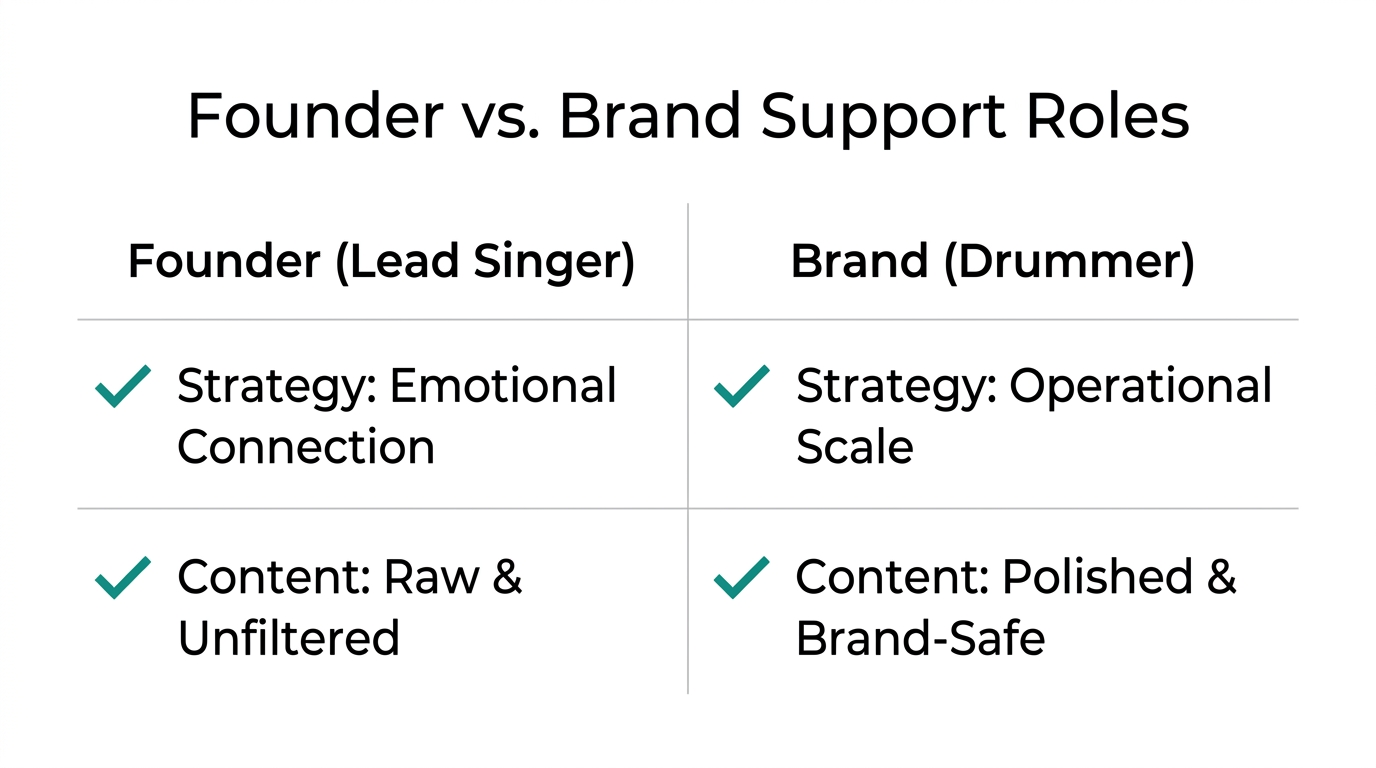
One of the most effective frameworks for CEO personal branding strategy comes from the leadership at Shopify itself. Harley Finkelstein, Shopify’s President, often refers to himself as the "Lead Singer" of the band, while founder Tobi Lütke is the "Drummer." This distinction is critical for any founder trying to scale their company without losing their mind.
The Drummer (Tobi) is the technical and product visionary. He is the "immigrant to the human condition," obsessed with the code, the inner wiring, and the long-term intuition of the product. The Lead Singer (Harley) is the storyteller. His job is to be the face, the voice, and the evangelist who converts the technical brilliance of the product into a narrative that resonates with the world. This synergy allows the brand to maintain both technical excellence and high-reach distribution.
Game Film Analysis: Studying the Masters of Media
Mastering the art of public performance by treating corporate communications like theater.Top-tier founders in 2026 treat their media appearances like professional athletes treat their performance. They study "game film." This involves analyzing competitors' earnings calls, YouTube presence, and media tours to understand what resonates with audiences. Harley Finkelstein, for instance, reviews earnings calls from companies like Salesforce and Best Buy not just for data, but for tonality.
By studying the game film, you can spot the difference between an executive reading a script and a founder who is genuinely obsessed. In 2026, the market rewards high-inflection communication. If you sound like an AI, people will treat you like a utility. If you sound like a human with a mission, people will treat you like a movement.
"People only remember you're weird. Any behavior that is standard is useful, but it is rarely memorable."
To implement this, founders should record their own demos and podcast appearances, then review them specifically for energy, clarity, and narrative hooks. Tools like Descript or CapCut make it easy to slice these moments for distribution on TikTok Ads Manager or organic channels.
The Peter Thiel Method: Creating 'Marketing Slogans' that Define an Era
Effective founder-led brand growth requires more than just talking; it requires memetics. Peter Thiel is a master of this, creating slogans that act as intellectual gravity. Think of phrases like "Competition is for losers" or "We wanted flying cars, but all we got was 140 characters." These aren't just quotes; they are marketing slogans that frame an entire worldview.
For a Shopify brand, this means defining your category in a way that makes the competition irrelevant. Look at AG1, which grew to $600 million in revenue with a single SKU by owning the "comprehensive nutrition" narrative. They didn't just sell vitamins; they sold a daily ritual. When you create a slogan that captures a cultural moment, you generate viral organic interest that no amount of paid spend can replicate.
| Strategy Type | Focus Area | Key Outcome |
|---|---|---|
| The Slogan Method | Memetic Phrases | Viral Organic Reach |
| The Game Film | Performance Analysis | Improved Founder Presence |
| The Lead Singer | Personality-Driven | Trust & Distribution Moat |
Authenticity vs. AI: The High-Inflection Advantage in 2026
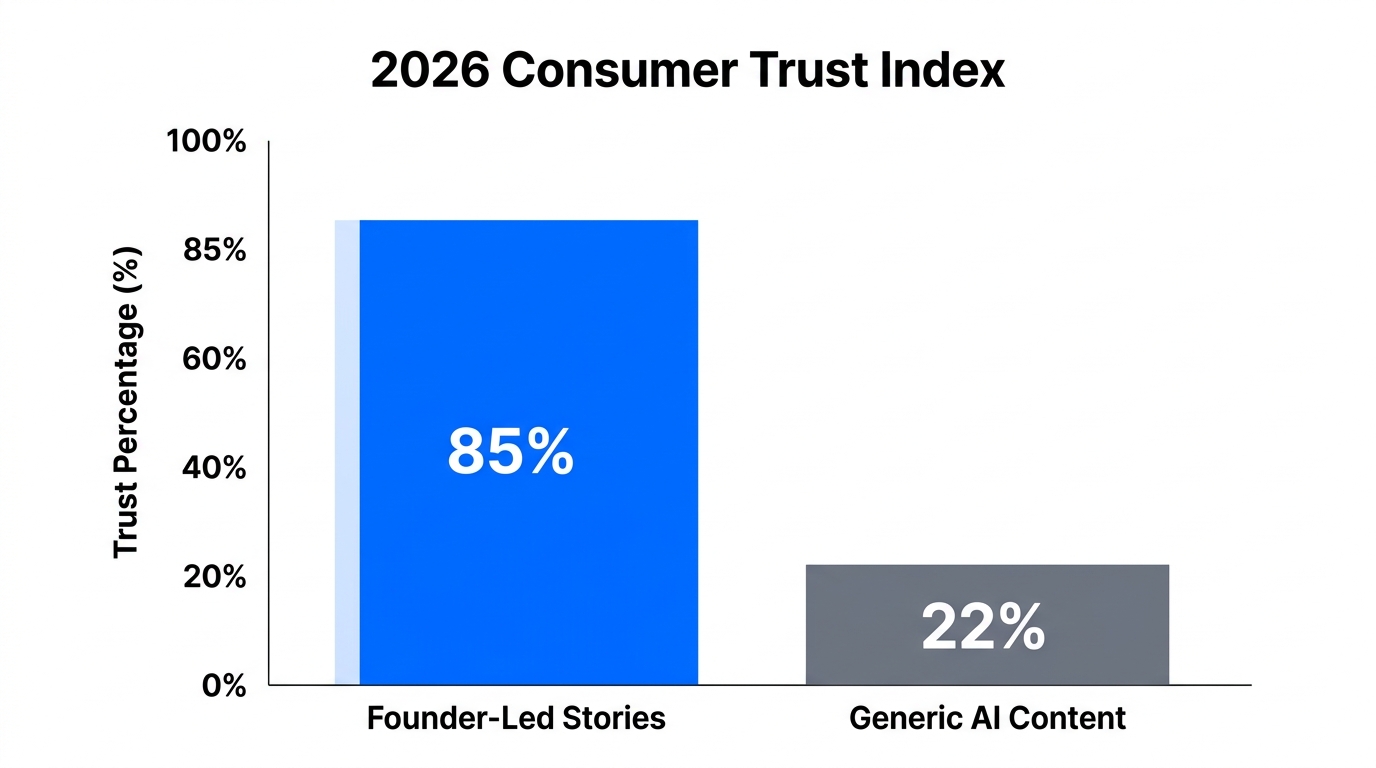
While 2026 is the year of reflexive AI usage, there is a dangerous trap: the "six-out-of-ten" content. Many companies are using AI to automate their communication, leading to a sea of competent but boring messaging. Shopify's Tobi Lütke famously implemented a friction-based hiring rule: before hiring anyone, the team must first substantiate why AI cannot do the job better.
However, the Lead Singer’s edge is high-inflection, personality-driven communication. While AI can handle the "side quests"—like data analysis or basic email drafts—it cannot replicate the passion in a founder’s voice during an earnings call or a product demo. In 2026, the most successful founders use AI as a baseline (reflexively) but double down on their "weirdness" to stand out.
"If you have the means to use AI to handle your logistics and data, you have no excuse not to spend all your remaining time on storytelling."
For brands leveraging organic distribution for DTC, this means using AI to handle the mundane tasks while the founder focuses on high-impact media like YouTube and LinkedIn. For instance, while you might use Stormy AI to automatically discover and outreach to 100 creators, the message and the vision must remain authentically yours.
Building a Distribution Moat via Modern Media
Why dominating a specific platform like Shopify creates an untouchable distribution advantage for brands.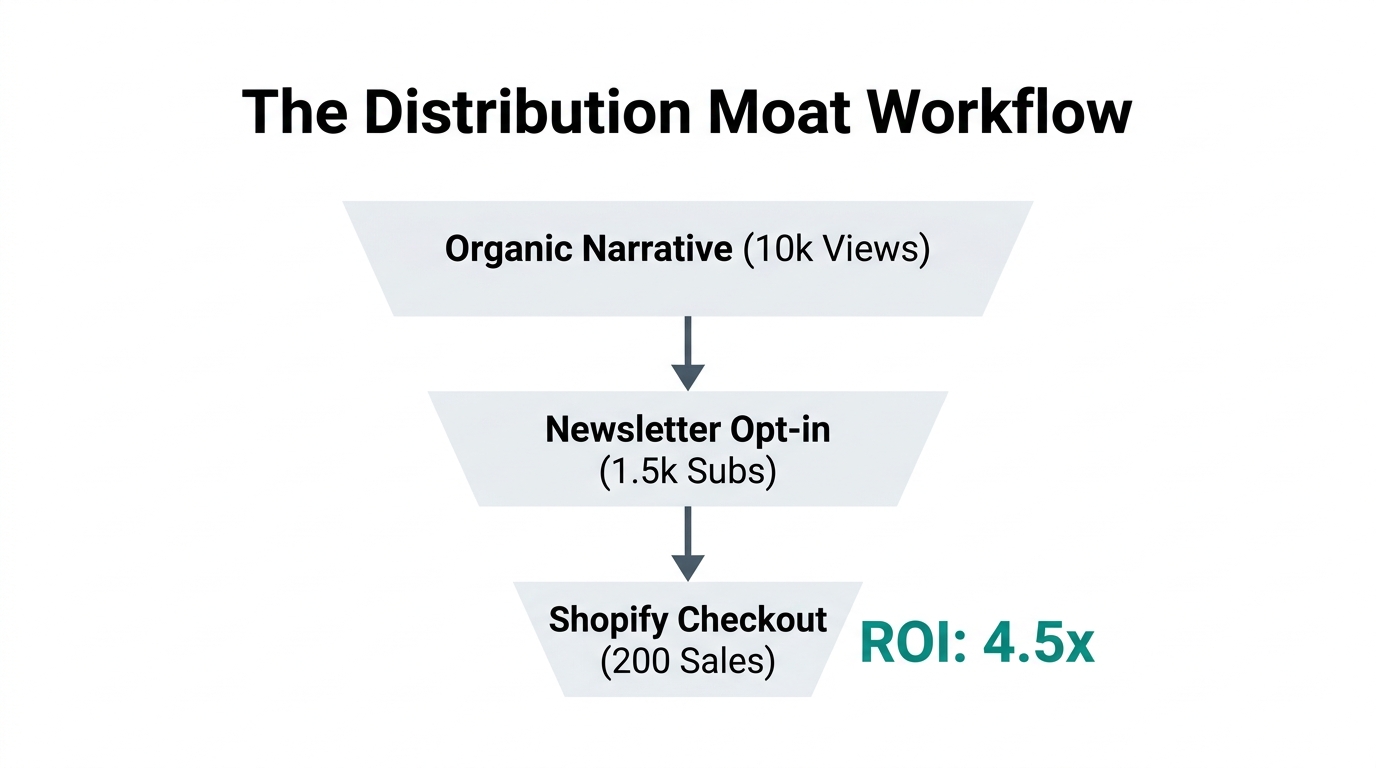
Distribution is no longer just about buying ads; it’s about owning the microphone. Founders in 2026 are building distribution moats by becoming media entities themselves. This involves a three-pronged approach:
- Podcasts as Relationship Capital: Use podcasts not just for reach, but to build relationships with other high-leverage founders.
- The Demo Drop: Like James Dyson’s viral vacuum demos, use YouTube to show, not just tell. A 7-minute passionate demo can be more effective than a million-dollar ad campaign.
- X (Twitter) as a Narrative Testing Ground: Use X to workshop your "bits" and slogans before they go into a keynote or a major campaign.
This distribution moat is incredibly hard to disrupt because it is built on trust and attention, two things that are increasingly scarce. When a founder like Harley Finkelstein can jump on a podcast and move the needle for Shopify’s market cap, it proves that CEO personal branding strategy is a multi-billion dollar asset.
Case Study: Taking Boring Products and Making Them Sexy
Learn the secrets to turning mundane, everyday items into high-demand lifestyle products.The 2026 playbook is filled with examples of founders who took utilitarian products and applied high-fashion or luxury principles. This is how you grow the TAM (Total Addressable Market) instead of just fighting for a piece of the existing pie.
- Touchland: Reimagined hand sanitizer as a luxury accessory with collaborations like Disney and Hello Kitty.
- Dyson: Took the humble vacuum cleaner and turned it into a piece of high-performance engineering that people are proud to display.
- Flint: Founders are now looking to disrupt boring categories like fire starters by applying better branding and distribution (e.g., selling in convenience stores instead of just Home Depot).
Conclusion: The Founder-Led Future
As we navigate 2026, the brands that win will be those led by founders who embrace the Lead Singer mentality. By studying game film, crafting memetic slogans, and leveraging reflexive AI for scale, you can build a brand that is both profitable and culturally relevant. Tools like Stormy AI are essential for the Lead Singer, allowing you to find the right voices to amplify your story across the Shopify ecosystem and beyond.
Start by identifying your "weirdness," honing your slogans, and recording your first high-inflection demo. In the age of AI, your humanity is your greatest competitive advantage.