The 2026 Growth Playbook: Customizing SuiteCRM and Odoo CRM for Influencer Marketing
Learn how to build a custom influencer management system using SuiteCRM and Odoo. Automate workflows, track ROI, and scale your 2026 creator strategy effectively.
In 2026, the influencer marketing landscape has evolved into a $24.2 billion powerhouse, according to the latest Influencer Marketing Hub data. As brands move away from rigid, high-cost SaaS subscriptions, the shift toward data sovereignty and custom-built open-source solutions has become the competitive edge for marketing operations teams. With 74% of marketers planning to increase their creator budgets this year, the need for a custom influencer management system that doesn't eat up $60,000 in licensing fees has never been more urgent.
While enterprise-tier platforms offer convenience, they often lack the granular flexibility required for niche industries or complex supply chains. This is why over 2,000 brands migrated to open-source frameworks like SuiteCRM and Odoo CRM in the last year alone, seeking to save an estimated $24,000–$60,000 annually while maintaining full control over their proprietary creator data.
The Odoo Advantage: Defining 'Influencer' Entities vs. Standard Contacts
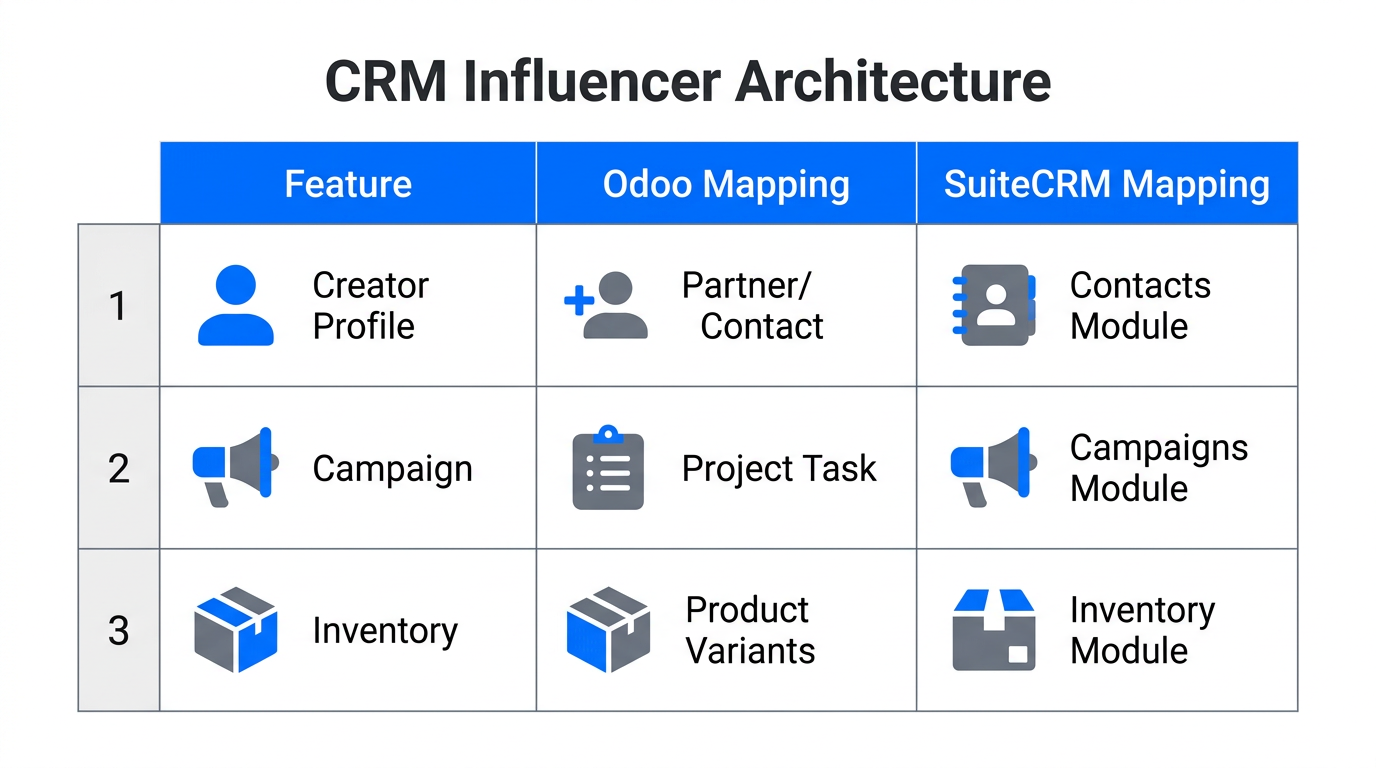
The biggest mistake most teams make when setting up Odoo CRM influencer marketing is treating creators as standard "Contacts" or "Leads." In 2026, an influencer is a complex entity with unique metadata—engagement rates, platform handles, and audience demographics—that a generic contact card cannot capture. To build a high-performance system, you must define a custom entity.
Step 1: Customizing the Model with Odoo Studio
Using the Odoo Studio module, you should create a dedicated "Influencer" model that inherits properties from the base contact record but adds specific creator-centric fields. Critical fields to include:
- Platform Handles: Dedicated fields for TikTok, Instagram, YouTube, and LinkedIn URLs.
- Content Style Tags: Descriptive labels like "High-Energy," "Informative," or "Minimalist" to allow for quick filtering.
- Primary Niche: A multi-select field to categorize creators (e.g., Tech, Beauty, SaaS, Wellness).
- Verified Status: A boolean field to track whether the creator has passed your internal vetting process.
Once your entity is defined, you can leverage Odoo's Kanban view to visualize your creator pipeline. Stages should reflect the unique creator lifecycle: Discovery > Vetting > Outreach > Negotiation > Active Campaign > Post-Campaign Analysis. This structure allows your team to manage thousands of relationships simultaneously—a necessity given that micro-influencers generate up to 60% more engagement than celebrities and require more intensive management.
"Standard SaaS platforms often lack the flexibility for niche industries. Open source acts as a hub, allowing brands to integrate best-of-breed tools without being restricted by a single provider's roadmap."
SuiteCRM Automation: Building High-Performance Gifting Workflows
One of the primary drivers for SuiteCRM influencer management is its robust "Module Builder" and workflow engine. For brands shipping physical products, the manual effort of coordinating product seeding is often the biggest bottleneck. In 2026, top-tier brands use automated gifting workflows to connect their CRM directly to their shipping and inventory systems.
The Automated Seeding Playbook
- Trigger Event: When a creator's status in SuiteCRM is updated to "Agreement Signed," the workflow engine triggers an automated action.
- Inventory Check: The CRM queries your inventory system (like ERPNext) to ensure the requested SKU is in stock.
- Shipping Label Generation: Using a plugin or API connection to a tool like Shippo, the CRM generates a shipping label and updates the influencer record with a tracking number.
- Confirmation Email: An automated, personalized email is sent to the creator with their tracking details and a link to the campaign brief.
| Feature | Odoo CRM | SuiteCRM |
|---|---|---|
| Inventory Integration | Native (Built-in ERP) | Requires API/Middleware |
| Customization Ease | High (Visual Studio) | Moderate (Module Builder) |
| Workflow Automation | Logic-Based Actions | Highly Customizable Workflows |
| Cost | Per User / App | Free / Self-Hosted |
This level of automation ensures that your team spends time on relationship building rather than data entry. As industry research emphasizes, moving from transactional posts to symbiotic partnerships is the only way to future-proof your strategy in a saturated market.
Integrating Performance APIs: Pulling Real-Time TikTok and Instagram Metrics
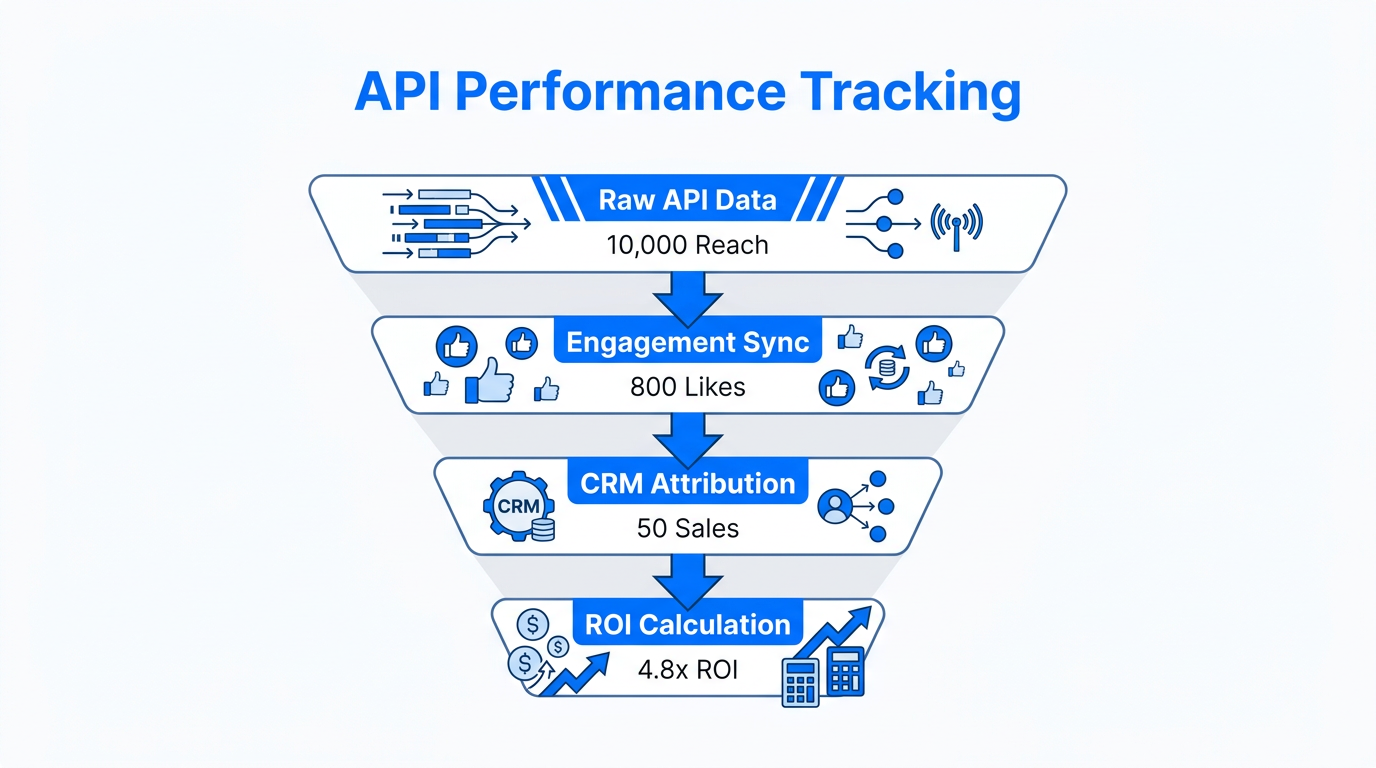
A CRM is only as good as the data inside it. Manual entry of likes, views, and shares is a recipe for outdated information. To achieve true influencer performance tracking, you must integrate live performance APIs directly into your dashboard. For 2026, the industry standard for this is Phyllo.
By connecting Phyllo's API to your Odoo or SuiteCRM instance, you can pull real-time data from platforms like TikTok, Instagram, and YouTube. This allows your marketing ops team to see:
- Real-time Reach: Actual impressions vs. follower count.
- Audience Demographics: Verified age, gender, and location data directly from the social platform's API.
- Conversion Link Performance: Integration with TikTok Ads Manager to track the downstream impact of organic posts.
Brands like EA Sports have successfully utilized this data-driven approach to reach tech-savvy audiences on TikTok, achieving engagement rates as high as 9.1% by focusing on creators whose real-time data aligned perfectly with their target KPIs. Using Stormy AI for initial creator discovery and vetting, and then syncing that data into your custom CRM via API, creates a seamless workflow from search to conversion.
"The average brand earns $5.78 for every $1 spent on influencer marketing—but only if they have the data to identify and scale their winning creators."
Predictive AI: Forecasting Creator Conversion Rates
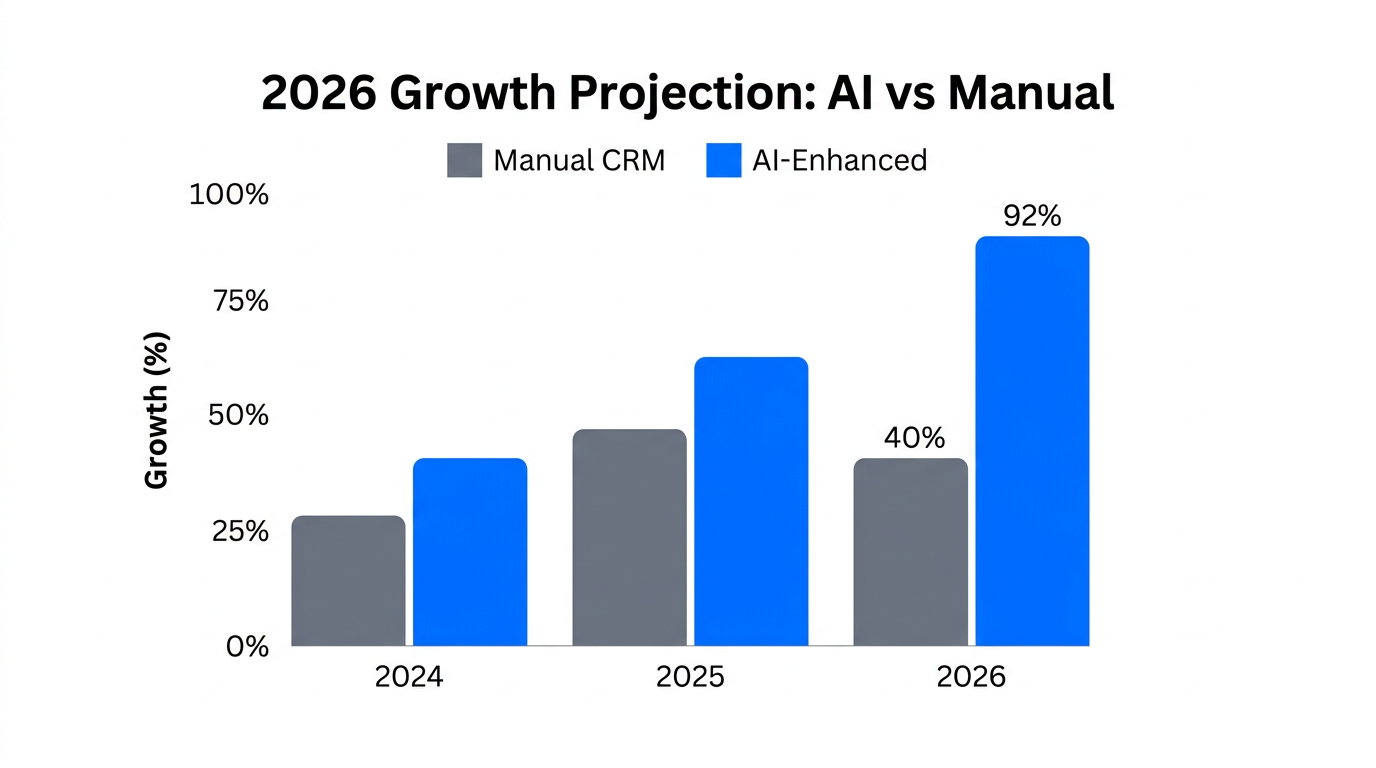
The next frontier of influencer crm workflow automation is predictive analytics. In 2026, 59% of marketers are already using AI in their operations, according to market research data. By integrating an open-source AI framework like PostHog with your CRM, you can forecast which creators will drive the highest ROI based on historical interaction data.
Building the Predictive Model
Your CRM already stores historical data: which creators were sent which products, and how many sales resulted from their unique discount codes. By feeding this data into a predictive module, your system can assign a "Success Probability Score" to new creators before you even reach out. This helps in:
- Budget Allocation: Investing more in creators with high predicted conversion rates.
- Risk Mitigation: Identifying "red flag" patterns that correlate with low engagement or high fraud risk.
- Scaling: Automatically identifying micro-influencers who share similar traits with your top-performing "power users."
Common Implementation Mistakes to Avoid
Customizing an open-source system offers infinite possibilities, but it also presents several traps that can derail your marketing operations. Data hygiene is the most critical factor here. As noted by Vested Marketing, many teams fall into the "Just-in-Case Field Trap," where they add dozens of custom properties that never actually get used.
1. Cluttered Database Syndrome
Adding 50+ custom fields makes the CRM unusable for the actual talent managers. Stick to fields that support a specific KPI. If you aren't going to report on "Influencer's Favorite Color," don't make it a mandatory field. Simplicity drives adoption.
2. Ignoring Native Features
Don't waste developer hours building a custom email engine inside SuiteCRM when it already has a powerful native one. Always check the base CRM functionality before writing custom code. This reduces technical debt and makes future upgrades much easier.
3. The Migration Mess
Never migrate "dirty" data from spreadsheets without a thorough cleansing process. If you have duplicate creator handles or outdated email addresses, your automation will fail, and your Instantly or Lemlist outreach sequences will bounce, damaging your domain reputation.
"Data ownership is the ultimate luxury in 2026. If you don't own your creator relationships, you don't own your brand's future."
Conclusion: Scaling Your Strategy with Open Source
Building a custom influencer management system in 2026 is no longer a luxury—it's a necessity for brands that want to achieve sustainable ROI. Whether you choose the ERP-integrated power of Odoo CRM or the module-building flexibility of SuiteCRM, the goal remains the same: centralizing your data to drive better decisions.
By defining clear influencer entities, automating your gifting workflows, and integrating real-time performance APIs, you can replicate the success of brands like Iceland, which saw a 70% spike in product popularity by shifting to a data-driven micro-influencer model. Remember to start small, prioritize data hygiene, and always test your modules in a sandbox environment before going live.
For teams looking to accelerate their discovery and vetting before syncing data into their custom CRM, platforms like Stormy AI provide the essential AI-powered search engine needed to fuel a high-volume creator pipeline. Combine the discovery power of AI with the infrastructure of an open-source CRM to dominate the influencer marketing space this year.