In the fast-paced marketing landscape of 2026, the divide between high-growth brands and laggards isn't just about budget—it's about AI integration at the leadership level. As Dharmesh Shah, the visionary CTO and founder of HubSpot, often emphasizes, AI isn't just a tool you use; it is an amplifier of human capability. We are no longer in the era of 'man vs. machine.' Instead, we have entered the era of 'You to the power of AI.' For a modern CMO, this means moving beyond basic prompts and into the realm of AI-driven decision making, where ChatGPT serves as a 24/7 strategic sparring partner with a 'PhD in everything.'
The 4 Stages of AI Evolution: From Generation to Orchestration
 17:19
17:19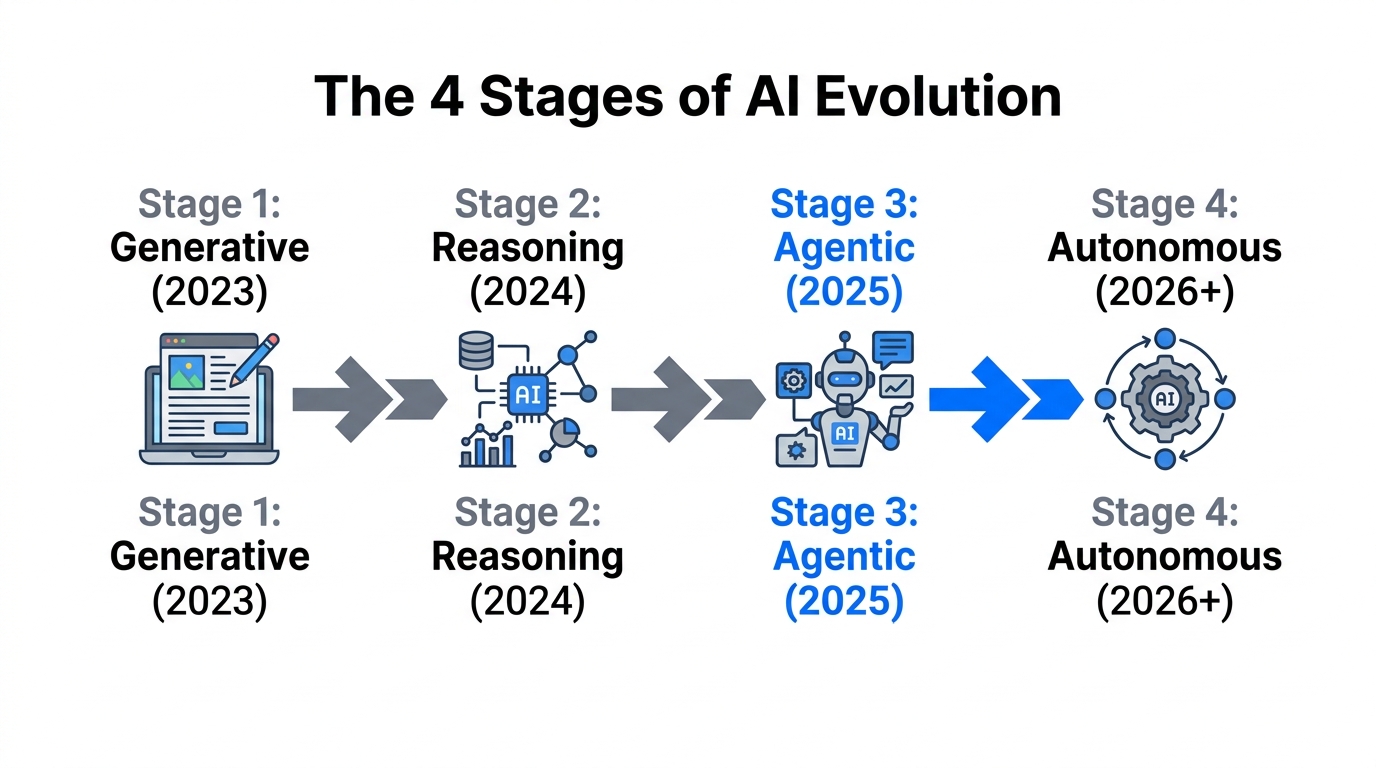
To lead a marketing organization in 2026, you must understand where the technology sits on the maturity curve. Dharmesh identifies four distinct stages of AI evolution that have transformed how we approach growth. Most teams are stuck in Stage 1, while the market leaders are already experimenting with Stage 4. Marketing leadership 2026 requires moving up this stack to build a sustainable competitive advantage.
| Stage | Core Capability | 2026 CMO Use Case |
|---|---|---|
| 1. Generation | Creating content (text, image, video) | Producing 1,000 personalized ad variants for Meta Ads Manager. |
| 2. Synthesis | Summarizing and analyzing data | Distilling 500 customer interview transcripts into five core product themes. |
| 3. Automation | Executing repetitive workflows | Using platforms like Stormy AI to discover and outreach to 50 creators daily on autopilot. |
| 4. Orchestration | Managing multiple AI agents | Deploying a 'growth squad' of agents that monitor Google Ads and adjust budgets in real-time. |
The transition from synthesis to orchestration is the biggest unlock of this year. While Stage 1 and 2 save time, Stages 3 and 4 create scale. When you move into orchestration, you aren't just giving the AI a task; you are giving it a high-level goal and letting it manage the 'army of agents' required to achieve it.
"The right mental framework you should have is you to the power of AI. It is an amplifier of your capability, unlocking things you were never able to do before."
Strategic Sparring: The CMO’s Secret Weapon
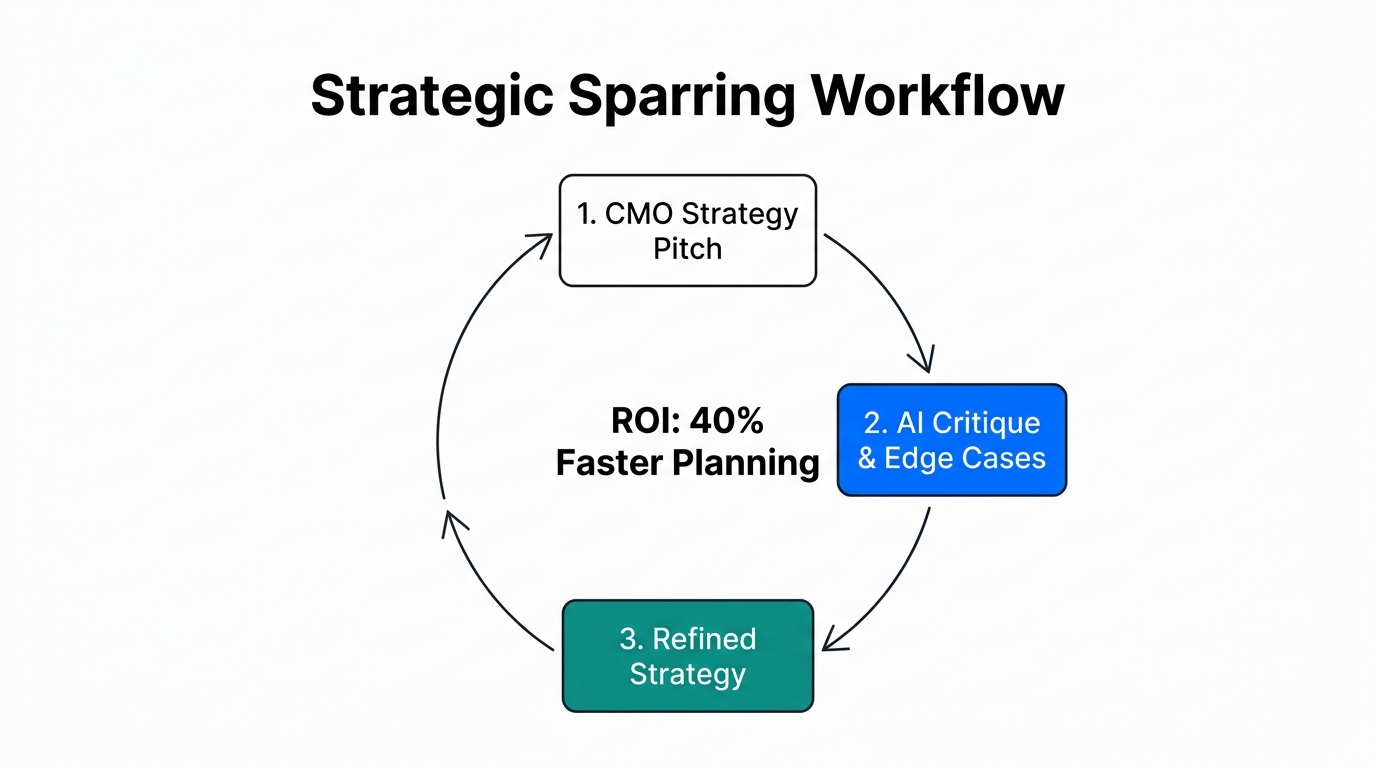
One of the most profound ChatGPT growth hacks shared by Dharmesh is the concept of 'strategic sparring.' Before a CMO walks into a boardroom or a strategy session with human teammates, they should spend 30 minutes 'sparring' with an LLM. This isn't about getting a finished answer; it's about pressure-testing your own logic.
By treating ChatGPT as an 'intern with a PhD in everything,' you can ask it to play the role of a skeptical CFO, a competitor’s CEO, or a disgruntled customer. You can upload your quarterly financials and ask, 'What are the three biggest risks in this growth plan that I am overlooking?' This allows for a distilled level of thought that makes your final execution far more potent. AI-driven decision making ensures that by the time you meet your team, you've already filtered out the surface-level ideas.
Tool Calling 101: Connecting AI to the Real World
21:30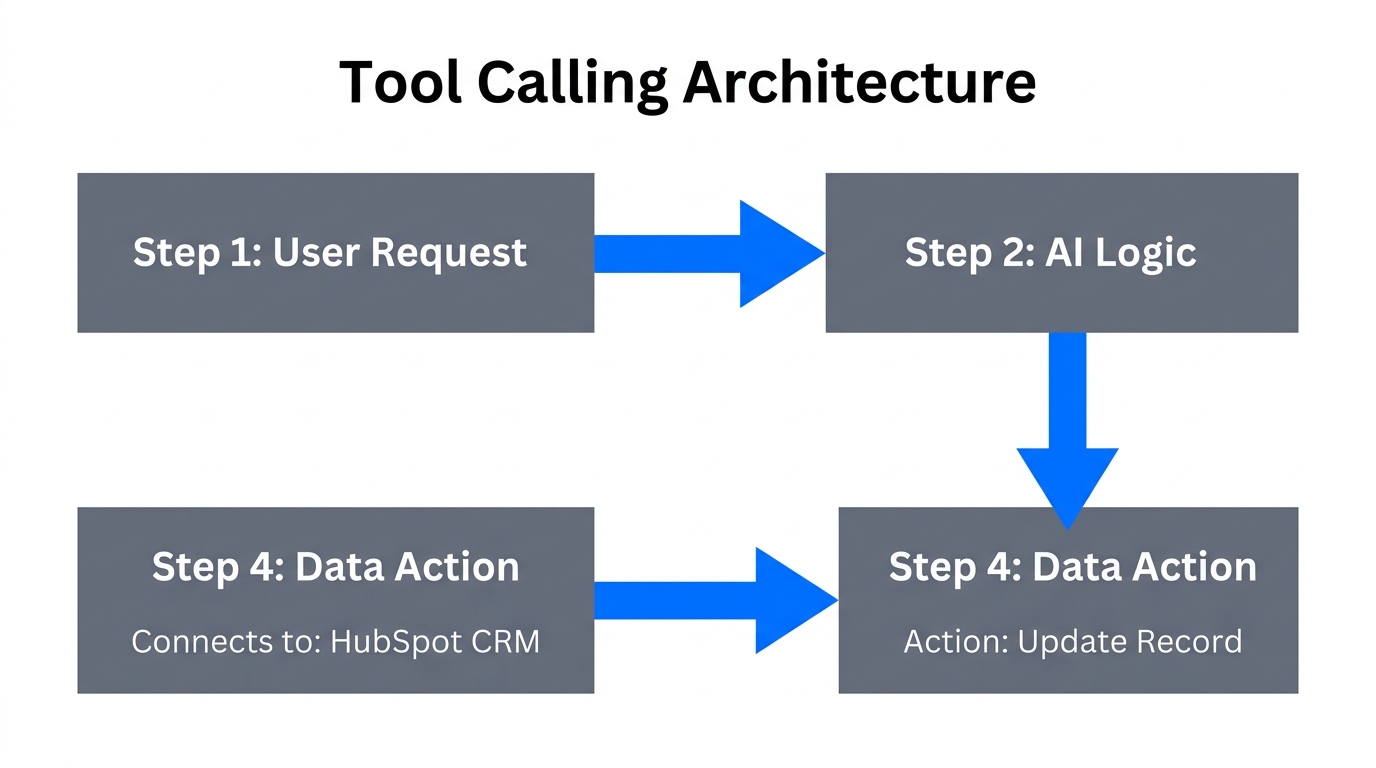
A common complaint among leaders is that AI is 'stuck in the past' because of training data cutoffs. However, in 2026, the breakthrough is Tool Calling. This allows the LLM to effectively 'step out' of its static brain and interact with live tools like search engines, stock market feeds, and even your company’s CRM.
Think of it as giving your intern a badge that lets them into the 'back room' of your data. Through tool calling, you can ask ChatGPT to:
- Analyze the correlation between your Apple Search Ads performance and current weather patterns.
- Look up historical stock valuations for competitors and cross-reference them with their latest product launches on LinkedIn.
- Run complex mathematical calculations that would normally break a standard chatbot's logic.
By leveraging tools like Agent.ai or custom MCP (Model Context Protocol) connectors, CMOs can build a dynamic intelligence engine. This shifts the AI from being a 'stochastic parrot' to a functional executive assistant with real-time market awareness.
Overcoming the 'Stochastic Parrot' Myth
Many critics argue that AI isn't 'really thinking'—that it’s just a probability-driven pattern matcher, or a 'stochastic parrot.' Dharmesh Shah pushes back on this, noting that if the output requires what we would traditionally call 'thought' and 'creativity,' then the distinction is irrelevant. For a CMO, what matters is the manifestation of ideas.
Creativity is often limited by our technical skills. You might have a brilliant vision for a video campaign, but if you can't use CapCut or Adobe Premiere, that idea stays trapped in your head. In 2026, AI lowers the barrier to entry for manifestation. Whether it's generating high-fidelity character art for a mobile game or drafting complex code for a landing page on Framer, AI allows human creativity to scale beyond individual technical limitations.
"AI increases creativity because it increases the percentage of ideas in our heads that we can actually manifest in the world, regardless of our raw technical skills."
The Frontier of the Impossible: Building Your 2026 Moat
36:58How do you build a moat around your startup when everyone has access to the same AI models? The answer lies in the 'Frontier of the Impossible.' This involves identifying tasks that AI *sort of* does well today, but not perfectly. By building workflows around these 'frontier' tasks now, you position your brand to ride the exponential curve as the models improve.
For example, sourcing and managing 1,000 micro-influencers used to be an 'impossible' task for a small team. Today, using an AI search engine like Stormy AI, you can find creators across TikTok and YouTube using natural language prompts and automate the entire outreach sequence. What was a month-long manual process is now a 20-minute setup. The 'moat' isn't the AI itself; it's the proprietary data, community, and relationships you build while using the AI to handle the heavy lifting.
From Tools to Teammates: The Hybrid Organization
32:29The final lesson from the HubSpot AI strategy is a shift in organizational design. We are moving toward 'hybrid teams' where carbon-based life forms (humans) and digital teammates (agents) work side-by-side. As a leader, you must begin to think about:
- Agentic Onboarding: How do you 'train' your AI agents on your brand voice and internal documents using RAG (Retrieval-Augmented Generation)?
- Performance Reviews for Bots: How do you measure the ROI of your automated outreach or AI-generated creative?
- Recruiting for Digital Workers: Selecting the right frontier models like OpenAI's GPT-5 or Anthropic's Claude for specific tasks.
In 2026, the CMO's role is less about managing people and more about orchestrating intelligence. By using ChatGPT daily, you develop the 'muscle memory' needed to spot these opportunities before your competitors do. Whether you are analyzing a book on copywriting or managing a $30 billion market cap, the principle remains: the AI is your intern, but you are the architect.
Conclusion: The 2026 CMO Playbook
The evolution of AI is no longer a future prediction—it is a present reality. To stay ahead, you must treat AI as a core teammate. Start by 'sparring' with ChatGPT every morning, embrace tool calling to give your AI access to live data, and look for ways to move from simple content generation to agentic orchestration. Platforms like Stormy AI are already making this possible for influencer marketing, allowing you to scale human-to-human relationships with machine efficiency. The future belongs to those who view themselves not as being replaced by AI, but as being amplified by it. Get in the tool, every single day.