Inside the Claude Code GTM Strategy: How Anthropic Reached $2.5B ARR in 2026
Explore the Claude Code GTM strategy that propelled Anthropic to $2.5B ARR in 2026. Analyze enterprise AI adoption, agentic systems, and the Series G funding impact.
The speed of the AI market in 2026 has redefined every law of enterprise software growth. While the early 2020s were defined by the rapid ascent of SaaS, the mid-2020s belong to agentic systems. At the forefront of this shift is Anthropic’s Claude Code, which has just crossed a monumental milestone. In less than a year, Claude Code has transitioned from a developer-centric CLI tool into a powerhouse driving a massive portion of Anthropic’s $14 billion total ARR. By focusing on deep logic and autonomous orchestration rather than simple code completion, the Claude Code GTM strategy has effectively outpaced the early growth velocity of even ChatGPT.
The Financial Velocity: Anthropic Revenue 2026
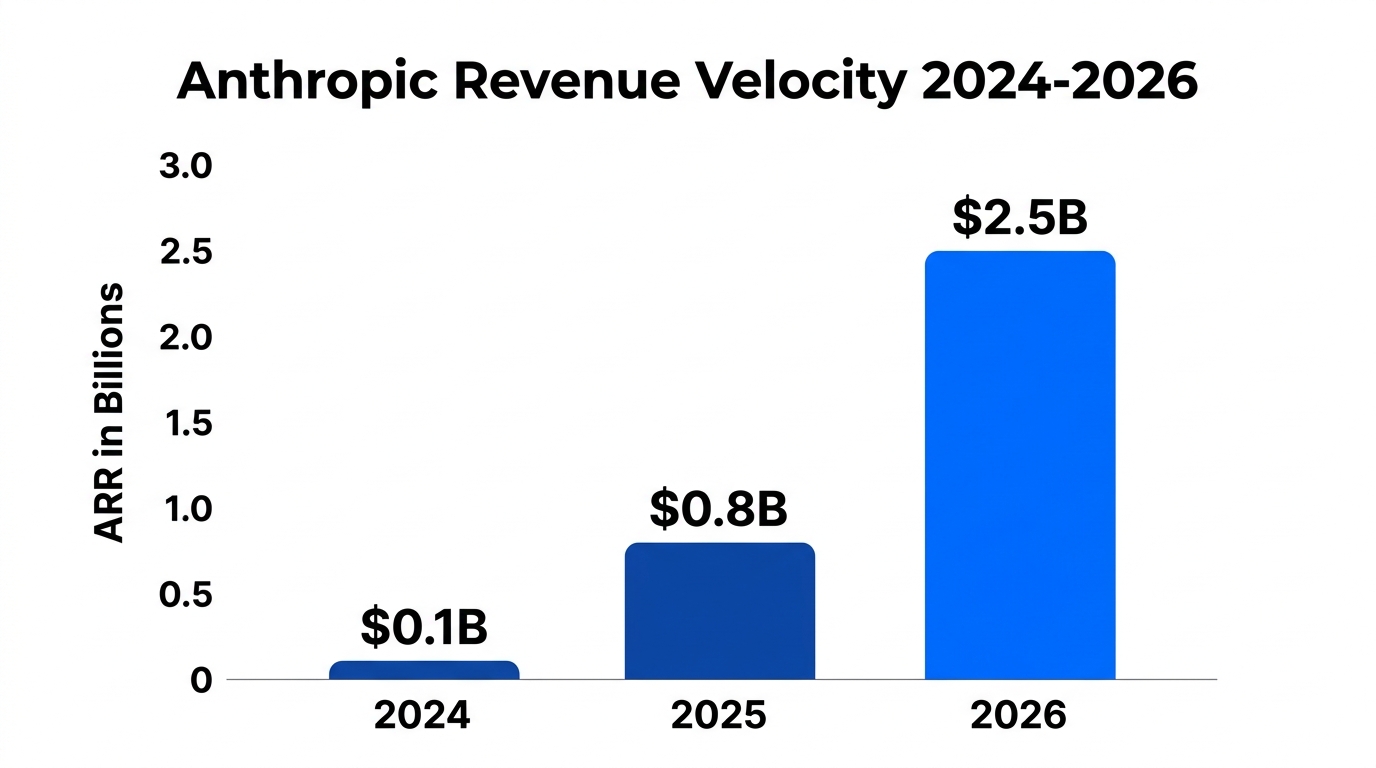
As of February 2026, Claude Code has reached an estimated $2.5 billion Annual Recurring Revenue (ARR) run-rate. What is most striking is the velocity of this climb; it achieved the initial $1 billion ARR milestone in just six months. This represents a faster adoption curve than the consumer-focused launch of LLMs in late 2022. According to recent market data from Gartner research, business subscriptions for Claude Code quadrupled in the first two months of this year alone.
"The move from autocomplete plugins to agentic software engineering systems is no longer a trend—it is the standard for 2026 enterprise infrastructure."
From Autocomplete to Agentic Systems: A Positioning Pivot
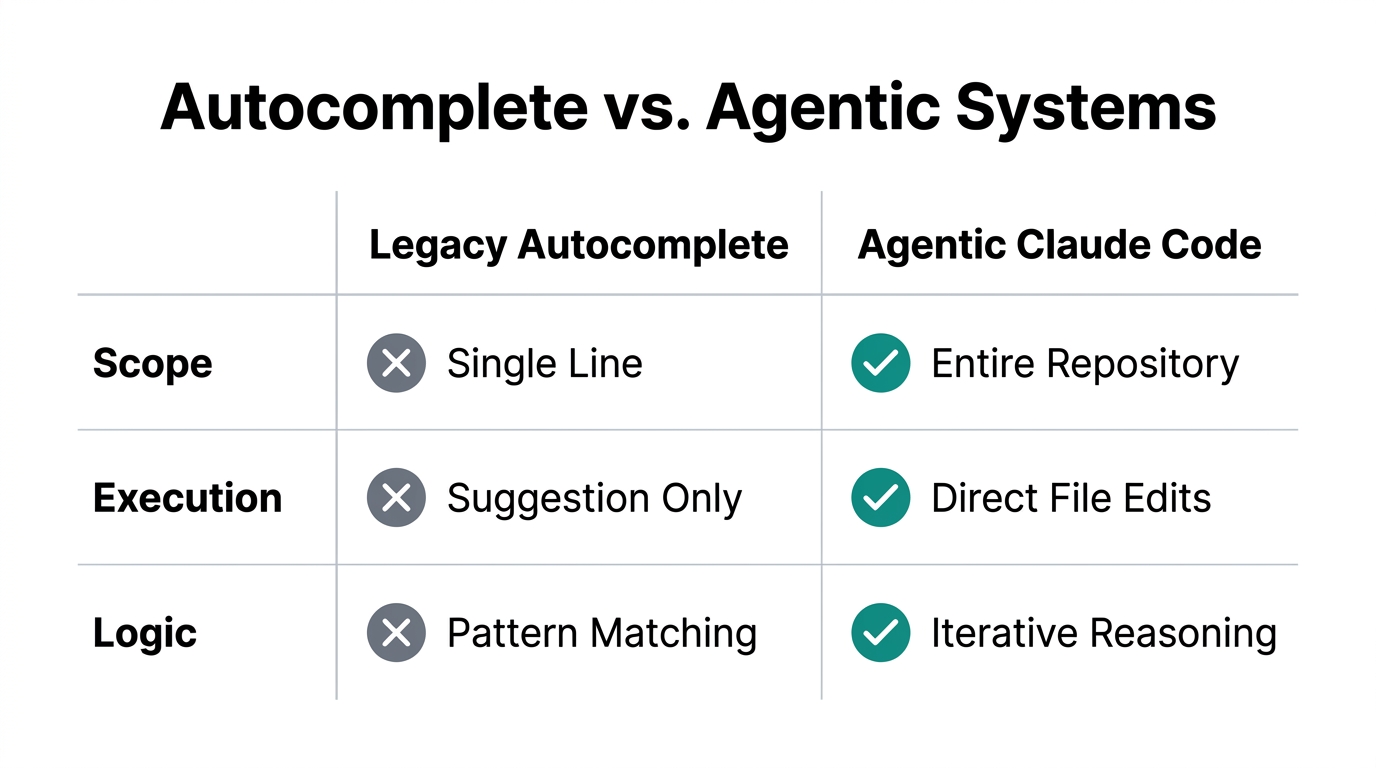
The core of the Claude Code business model lies in its market positioning differentiator. While early tools like GitHub Copilot dominated the "autocomplete" era, Claude Code has positioned itself as a "Senior Engineer" agent. Instead of merely suggesting the next line of code, it handles multi-file refactors, complex architectural shifts, and autonomous testing. This shift is reflected in the way 57% of organizations now use 'Agent Teams'—parallel sub-agents that collaborate to maintain systems with minimal human intervention.
| Feature | Claude Code | Cursor | GitHub Copilot |
|---|---|---|---|
| Primary Interface | Terminal / CLI Native | AI-Native IDE | IDE Extension |
| Logic Depth | Highest (Multi-file) | High (Visual Diff) | Moderate (Boilerplate) |
| Ecosystem | MCP & Tool Access | VS Code Library | GitHub Integration |
| Best For | Architectural Refactors | Daily Coding | Standardization |
This focus on logic depth is why companies like Rakuten have reported implementing complex vector extraction methods in as little as 7 hours with 99.9% numerical accuracy, a task that would traditionally take days of human labor. Senior developers have shifted from writing code to orchestrating intent, utilizing Claude's Model Context Protocol (MCP) to connect the agent to local databases, Slack, and Notion.
The $100M Partner Network and Enterprise AI Adoption
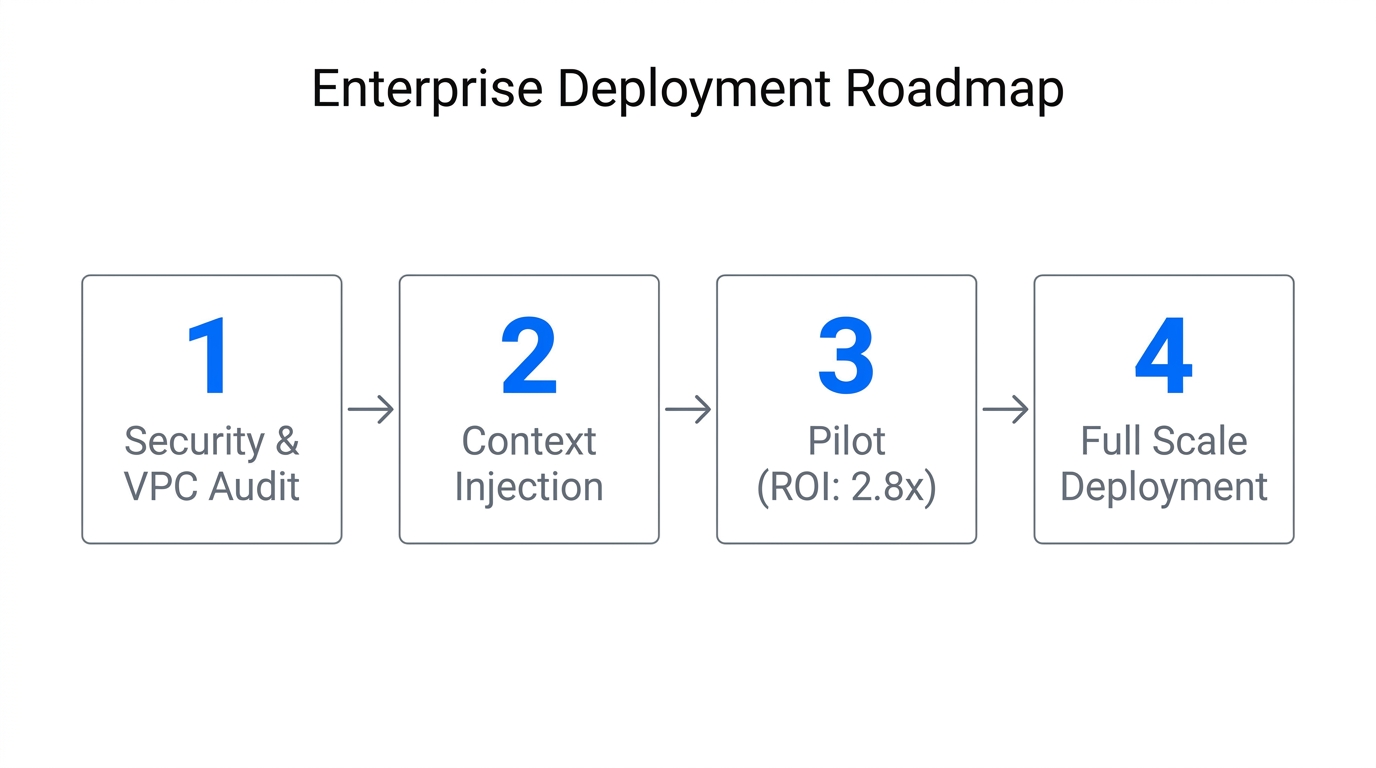
Anthropic realized early that for Claude Code to win the enterprise, it needed more than just a great API. In late 2025, they launched the Claude Partner Network, a $100 million initiative to certify Managed Service Providers (MSPs) and consultants on Claude Code deployments. This network has been instrumental in navigating the security and integration hurdles that often stall enterprise AI adoption.
A prime example of this strategy in action is Deloitte, which executed a massive rollout to 470,000 employees to automate internal documentation and code maintenance. By leveraging certified partners, Anthropic can ensure that large-scale deployments stay within the guardrails of corporate compliance. This ecosystem-first approach has helped Anthropic secure over 300,000 business customers as of late 2025.
"Developer ROI is no longer measured in lines of code, but in the cost per incremental Pull Request—a metric Claude Code has optimized to a 4:1 ratio."
Expanding the User Base: The Role of 'Channels'
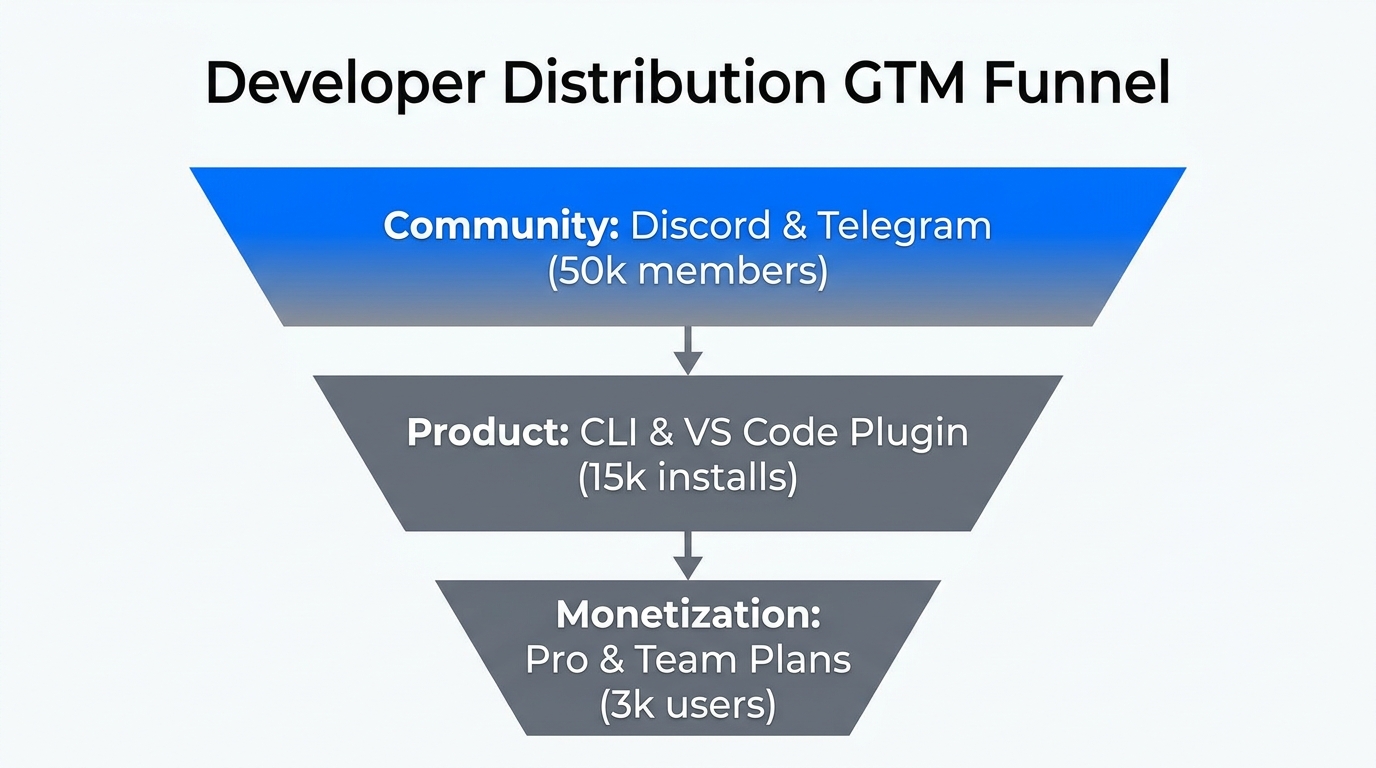
In March 2026, Anthropic disrupted the traditional IDE-locked workflow by launching Claude Code 'Channels' on Discord and Telegram. This allows for what many are calling "asynchronous partnership." A developer can kick off a complex migration task via a mobile terminal or chat app, and receive a notification when the code is finished and passed all automated tests. According to VentureBeat, this move expanded Claude’s footprint beyond the traditional engineering desk, making "Action AI" accessible to GTM teams and non-technical stakeholders.
For instance, marketing teams are now using Claude Code to build programmatic SEO engines and data scrapers without needing a dedicated engineering sprint. While engineers focus on the core product, GTM teams use tools like Stormy AI to discover creators and then use Claude-powered scripts to manage the data pipeline between their CRM and social analytics.
Strategic Evaluation: Series G and a $380B Valuation
The financial backbone of this GTM strategy was solidified in February 2026 with Anthropic’s Series G funding round. Raising $30 billion at a $380 billion valuation—led by Microsoft and Nvidia—gave Anthropic the capital necessary to scale its infrastructure and context window capabilities. This valuation reflects a belief that the AI agent market share will eventually swallow a significant portion of the traditional software services market.
This capital infusion has also allowed Anthropic to maintain a competitive pricing model, even while dealing with the high costs of long-context requests. Practitioners must still be wary of the "200K Token Trap": under current Sonnet 4.6 pricing, input costs can double to $6 per million tokens if the context window exceeds 200,000 tokens.
The Trust Gap: Security and Failures in the Agent Era
Despite the massive growth, the Claude Code GTM strategy faces a significant Trust Gap. A March 2026 report found that coding agents, including Claude, produced security issues in 87% of Pull Requests when no specific security guidance was provided. Furthermore, a high-profile "cybersecurity flash crash" occurred on February 20, 2026, when the launch of Claude Code Security (an autonomous scanner) caused an 8-10% drop in stocks for legacy security firms like Cloudflare, as investors feared AI would automate away their business models.
Specific vulnerabilities like CVE-2026-25723 highlighted that even advanced agents can be tricked into bypassing file-write restrictions via piped terminal commands. This serves as a warning for enterprise leaders: as you scale AI adoption, the focus must shift from pure coding speed to robust guardrails and human-in-the-loop verification.
"The future of software is not just AI-written; it is AI-orchestrated. The winner is the platform that the developer trusts to handle the context of the entire business, not just the code."
Conclusion: The Playbook for 2026
Anthropic’s journey to a $2.5B ARR run-rate with Claude Code is a masterclass in agent-first GTM strategy. By moving beyond the IDE, building a $100M partner ecosystem, and positioning its model as a methodical architect rather than a simple assistant, Anthropic has captured the high-value end of the enterprise AI market. For businesses looking to follow suit, the takeaway is clear: standardization, orchestration, and trust are the new metrics for success in the age of agentic software engineering. Modern growth teams are already integrating these agents with tools like Stormy AI to ensure their influencer and content operations scale at the same velocity as their codebase.