The search landscape has officially fractured. As of early 2026, the era of the "ten blue links" has been replaced by a sophisticated ecosystem of conversational responses and autonomous agents. With the official launch of ChatGPT Search Ads in February 2026, brands are no longer just competing for a spot on a page; they are competing for a mention in a private dialogue. This shift toward Generative Engine Optimization (GEO) and agentic search distribution marks the most significant change in digital marketing since the invention of the smartphone. If your 2026 strategy still relies solely on traditional click-through rates, you are essentially invisible to the 800 million weekly active users on ChatGPT.
The Playbook for ChatGPT Search Ads: Targeting High-Intent Conversations
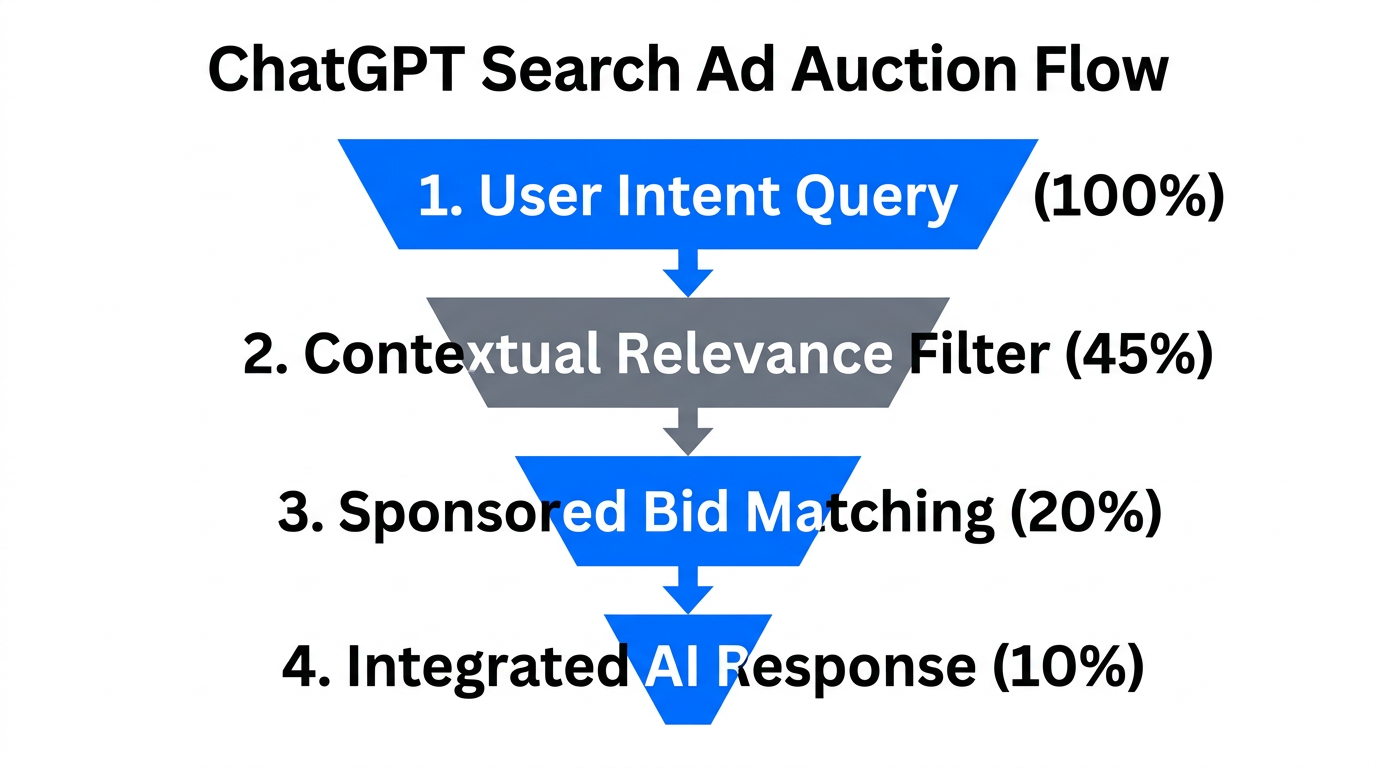
OpenAI’s entry into the ad market on February 9, 2026, fundamentally changed how we think about search intent. Unlike traditional Google Ads, which target keywords, ChatGPT Search Ads optimization focuses on the context of a rolling conversation. These ads appear beneath AI-generated responses, primarily on the Free and "Go" tiers. With a premium entry price of a $60 CPM, according to recent market analysis from major ad buyers, these placements are designed for high-value conversions rather than mass-market awareness.
To succeed here, marketers must pivot toward "Answer-First" ad copy. ChatGPT users are looking for immediate solutions. Data shows that AI search visitors convert 4.4 times better than traditional organic visitors because the AI has already vetted the relevance of the result. When setting up your campaigns in 2026, focus on query clusters that involve comparison or recommendation, such as "What is the best CRM for a 10-person agency?" or "Show me sustainable fashion brands in New York."
"The average AI search visitor is worth 4.4x more because the AI has already 'vetted' the result for the user before they click."
| Feature | Traditional Search Ads | ChatGPT Search Ads (2026) |
|---|---|---|
| Primary Driver | Keyword Bidding | Conversational Context |
| Placement | Top of SERP | Inline/Bottom of Dialogue |
| Cost Model | CPC (Variable) | High CPM ($60+) |
| User Intent | Informational/Navigational | Transaction/Recommendation |
Optimizing for 'Agentic Search': Appealing to Autonomous AI Agents
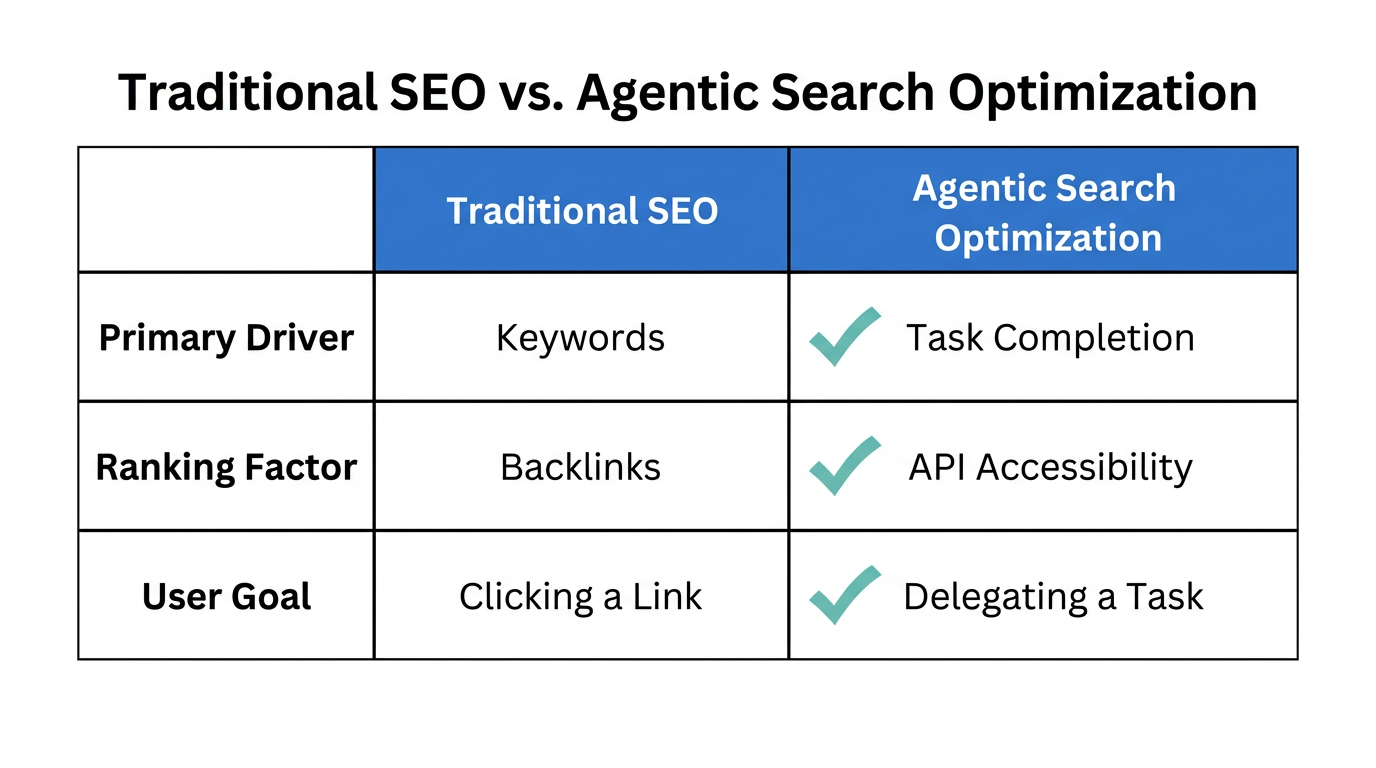
We have entered the era of the "Agentic Search," where AI agents from OpenAI, Anthropic, and Apple perform searches on behalf of the user. In this environment, your website is no longer being read by a human; it is being indexed and synthesized by a machine that makes decisions for the human. To be the preferred choice for these agents, brands must adopt a zero-click search strategy that prioritizes structured data and canonical clarity.
A critical technical requirement in 2026 is the adoption of the llms.txt standard. Similar to robots.txt, this file—located at /llms.txt—provides LLM crawlers with a simplified, markdown-friendly version of your most important content. According to technical documentation on AI crawling, sites that provide these structured files see a significant boost in citation frequency. Furthermore, the "3-Month Freshness Rule" is now in full effect; content older than 90 days sees a sharp decline in agentic citations, making quarterly content refreshes a mandatory SEO task.
The Apple-Google Gemini Alliance: iPhone-Driven Distribution
In January 2026, the partnership between Apple and Google was solidified, integrating Gemini 3 technology directly into the core of iOS. This "Apple Intelligence" ecosystem means that for 2 billion iPhone users, Siri is now a generative agent capable of deep research. For local businesses and service providers, Apple Intelligence marketing is now the primary driver of foot traffic and bookings.
To win in this ecosystem, your brand's Entity Mapping must be flawless. AI engines map the relationship between your brand, your verified social profiles, and your niche authority. Using sameAs schema properties to link your website to trusted entities like LinkedIn or professional directories is essential. Research from Arcadian Digital suggests that Siri's redesigned "World Knowledge" engine prioritizes brands that have a cohesive entity footprint across the web.
Multimodal SEO: Winning Citations in Voice and Visual AI
Search engines in 2026 are no longer text-only; they are multimodal. They synthesize text, video transcripts, and image data simultaneously to provide a comprehensive answer. To stay competitive, multimodal SEO tips now center on the accessibility of non-text assets. This means providing full, high-quality transcripts for every video and using detailed ImageObject schema for every visual.
AI Overviews, which now reach 2 billion monthly users, often pull visual data to accompany their text summaries. If your video content is hosted on YouTube, ensure your captions are manually edited and include the core statistics you want cited. The Princeton GEO Framework highlights that including concrete statistics (e.g., "39.4%" instead of "nearly 40%") can lead to a 39% boost in AI citations.
"In 2026, visibility is no longer only achieved through Google rankings, but through optimization for AI systems. GEO and AEO are the new pillars." — Aleyda Solis
Combating the 'Zero-Click Crisis': Why Brand Authority Trumps Traffic
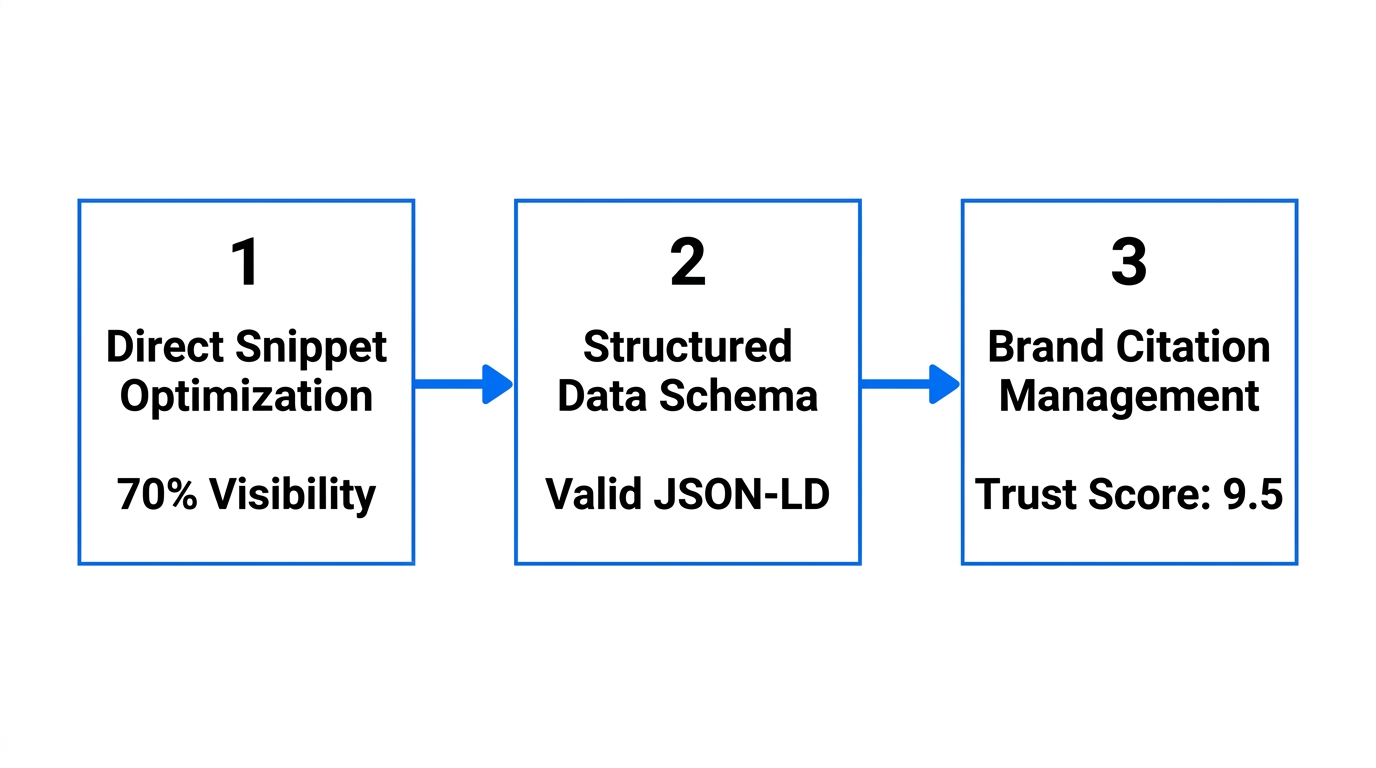
The numbers are stark: nearly 70% of searches in 2026 result in zero clicks. The AI provides the answer directly on the results page, leaving the user with no reason to visit your site. This has led to the "Invisible Crisis," where brands rank on Page 1 but are never actually visited. To survive, you must shift your focus from generating traffic to generating Share of Voice within the LLM responses themselves.
Referral traffic from AI platforms like Perplexity AI and ChatGPT may be lower in volume, but it converts at an average of 14.2%—nearly 5x higher than traditional search. This means that even if you only get 100 clicks from an AI citation, they are worth 500 clicks from a standard search result. Building a brand that an AI "recommends" requires high E-E-A-T (Experience, Expertise, Authoritativeness, and Trustworthiness). Google's February 2026 Double Core Update specifically targeted "thin AI content," rewarding sites that offer real-world expertise and unique data.
Conclusion: The New Hierarchy of Distribution
As we move through 2026, the marketing funnel has been compressed. Discovery, vetting, and decision-making often happen entirely within a single AI prompt. To stay relevant, brands must move beyond keywords and embrace agentic search distribution. By mastering ChatGPT Search Ads, optimizing for multimodal citations, and building a brand entity that AI agents trust, you can turn the zero-click crisis into a high-conversion opportunity. Platforms like Stormy AI can assist in this transition by helping you find the right creators to build the external validation and citations that AI engines crave. The future of search isn't about being found—it's about being chosen by the machine.