Building the Humanity Moat: Scaling Brand Trust in the Age of AI and Synthetic Personas 2026
Discover the Humanity Moat brand strategy for 2026. Scale brand trust using human-led marketing content, avoid AI creative fails, and leverage synthetic personas.
As we navigate through the mid-point of 2026, the marketing landscape has undergone a tectonic shift. What was once an experimental add-on in 2024 has become foundational infrastructure today. The global AI in marketing market reached a staggering $47.32 billion in 2025, and with 88% of marketers now using AI daily, we have reached a point of saturation. But with this efficiency comes a new, unforeseen challenge: the "Sameness" Problem.
When every brand uses the same Large Language Models (LLMs) to generate copy, the same diffusion models for creative, and the same automation for outreach, the results begin to feel hollow. Consumers in 2026 are increasingly allergic to "AI slop"—content that is technically perfect but emotionally bankrupt. To survive, forward-thinking brands are building a Humanity Moat: a strategy that emphasizes human expertise and "un-AI-able" traits to maintain brand trust and emotional resonance.
The Ghosts in the Machine: Learning from 2025’s Creative Backfires
To understand why the Humanity Moat brand strategy is vital today, we must look back at the high-profile AI creative fails case studies of 2025. Last year, iconic brands like McDonald’s and Coca-Cola faced massive public backlash for AI-generated holiday ads. Consumers described the visuals as "creepy," "soulless," and "visually uncanny."
These failures proved that while AI can replicate pixels, it still struggles to capture the emotional warmth and nuance of the human experience. As noted by Prism Digital, these campaigns fell directly into the "Uncanny Valley," creating a visceral rejection from the very audience they were meant to charm. This has led to a significant trust gap; currently, only 38% of consumers feel positive about AI-driven brands.
"AI is the engine of speed, but humans are the brakes of trust. In 2026, marketing isn't about being seen, it's about being believed." — Nathan Yeung, Wesley Clover.
The Humanity Moat: Turning Human Expertise into a Competitive Advantage
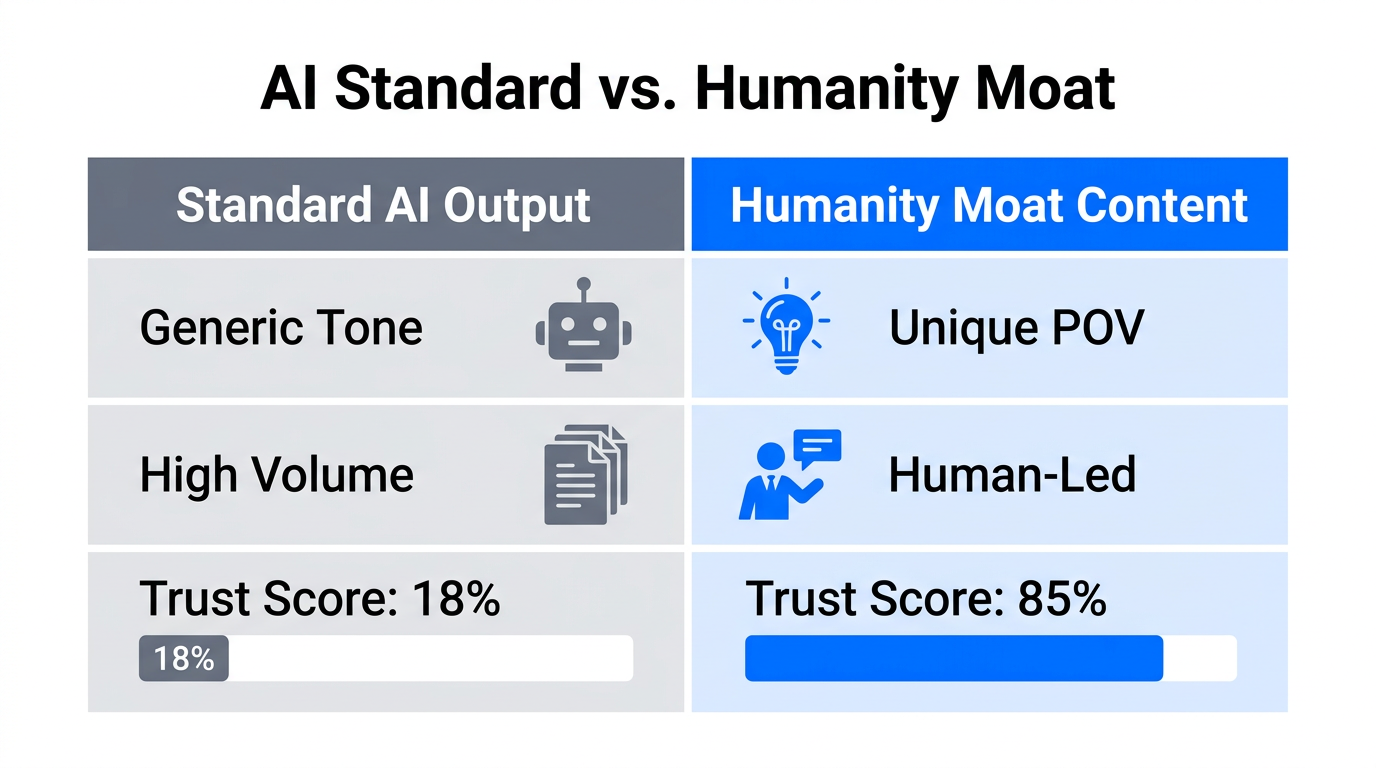
The Humanity Moat is built on three specific pillars that AI cannot easily replicate: original research, employee-led content, and deep emotional resonance. Instead of using AI to replace the human element, top-tier brands use it to amplify human ingenuity.
For example, human-led marketing content involves putting real employee faces and expert opinions at the forefront of the brand on platforms like LinkedIn. In an era where sponsored citations in AI search results are the new normal, having a real person voice a contrarian take or a unique insight is what gets a brand cited by engines like Perplexity and SearchGPT.
- Original Research: Conduct proprietary surveys and data analysis using tools like SurveyMonkey that LLMs haven't been trained on yet. This makes you a primary source for both humans and AI search engines.
- Expert Quotes: Leverage the "Humanity First" branding seen in Anthropic's 2026 rise, where nuanced writing and ethical safety became a market differentiator.
- Authentic UGC: Platforms like Stormy AI have become essential for this strategy, allowing brands to source genuine human creators who can provide the warmth that synthetic models lack.
Synthetic Personas for Marketing: Testing Without the Risk
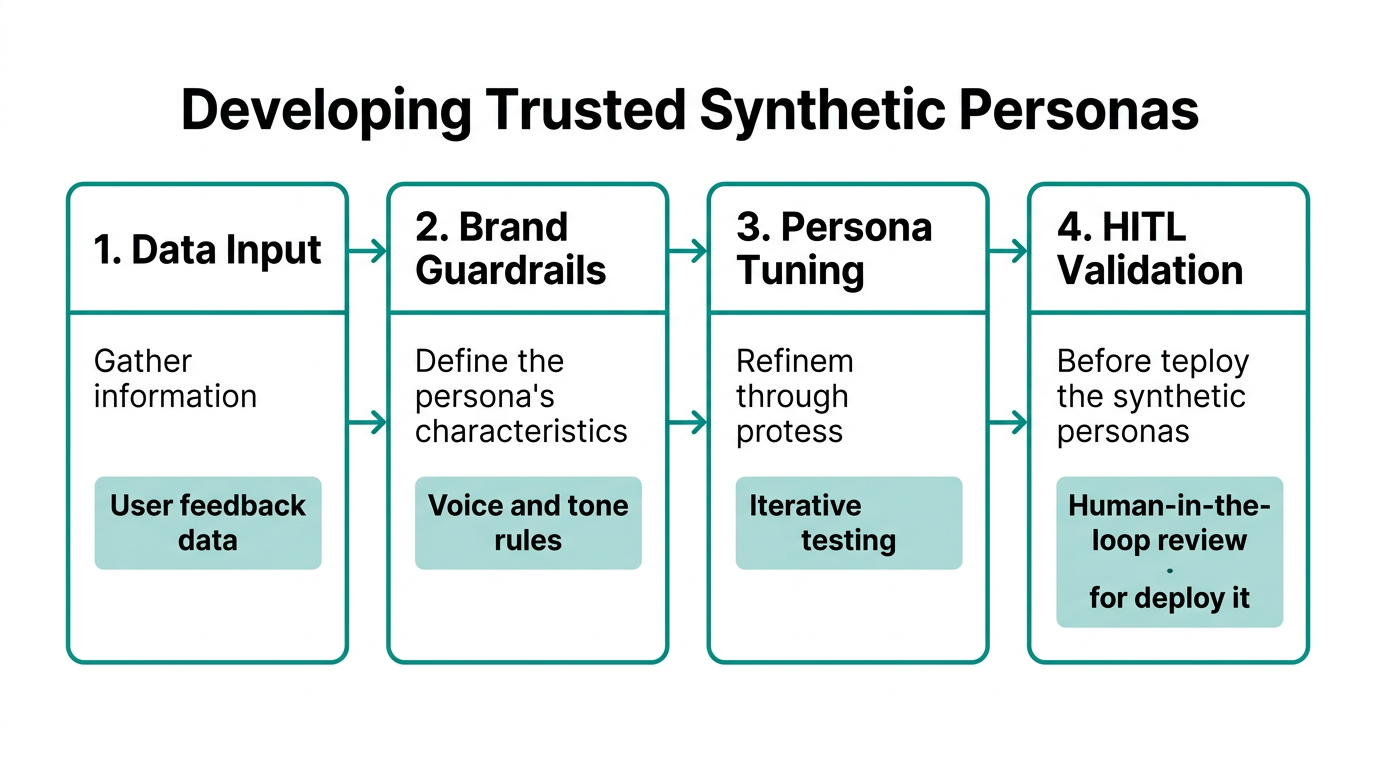
While the output must be human, the testing phase has become incredibly efficient thanks to Synthetic Personas for marketing. These are AI-simulated audience segments based on real data used to test campaign messaging before a single dollar is spent on paid media.
By using Model Context Protocol (MCP) standards, brands can now connect their CRM data directly to these personas. This allows for hyper-fast iteration. If a Synthetic Persona representing a "budget-conscious millennial parent" rejects a campaign hook, you can rewrite it in minutes rather than weeks. This has contributed to a 37% reduction in customer acquisition costs (CAC) for early adopters in 2026.
| Feature | Traditional Audience Testing | Synthetic Persona Testing (2026) |
|---|---|---|
| Speed | 2-4 Weeks | Real-time |
| Cost | High (Focus groups/Pilot ads) | Low (Token-based) |
| Data Privacy | Risk of PII exposure | Secure (Sovereign AI/RAG) |
| Iterative Capacity | Limited | Infinite |
Implementing HITL 2.0: From Creators to Editors-in-Chief
The role of the marketing team is fundamentally changing. We have moved from "Marketers using AI" to "Marketers managing AI agents." This is the era of Human-in-the-Loop (HITL) 2.0. In this model, the human team no longer spends their time drafting social posts or writing first drafts of blogs. Instead, they act as Editors-in-Chief of AI-driven outputs.
The workflow typically involves an Agentic Workflow using tools like Zapier Central, Gumloop, or Relevance AI. An agent researches competitive gaps, another drafts a baseline post, and the human enters the process at the final 20% to add "Human-led hooks," emotional nuance, and factual verification. This prevents the "13-Hour Irony" reported by Forbes, where marketers previously spent more time "prompt wrangling" than they saved in production.
"The winning model is 'Human + AI.' Think of AI as a junior copywriter who never sleeps, but still needs a senior editor." — Meghan Keaney Anderson, Jasper.
GEO: The Successor to SEO in 2026
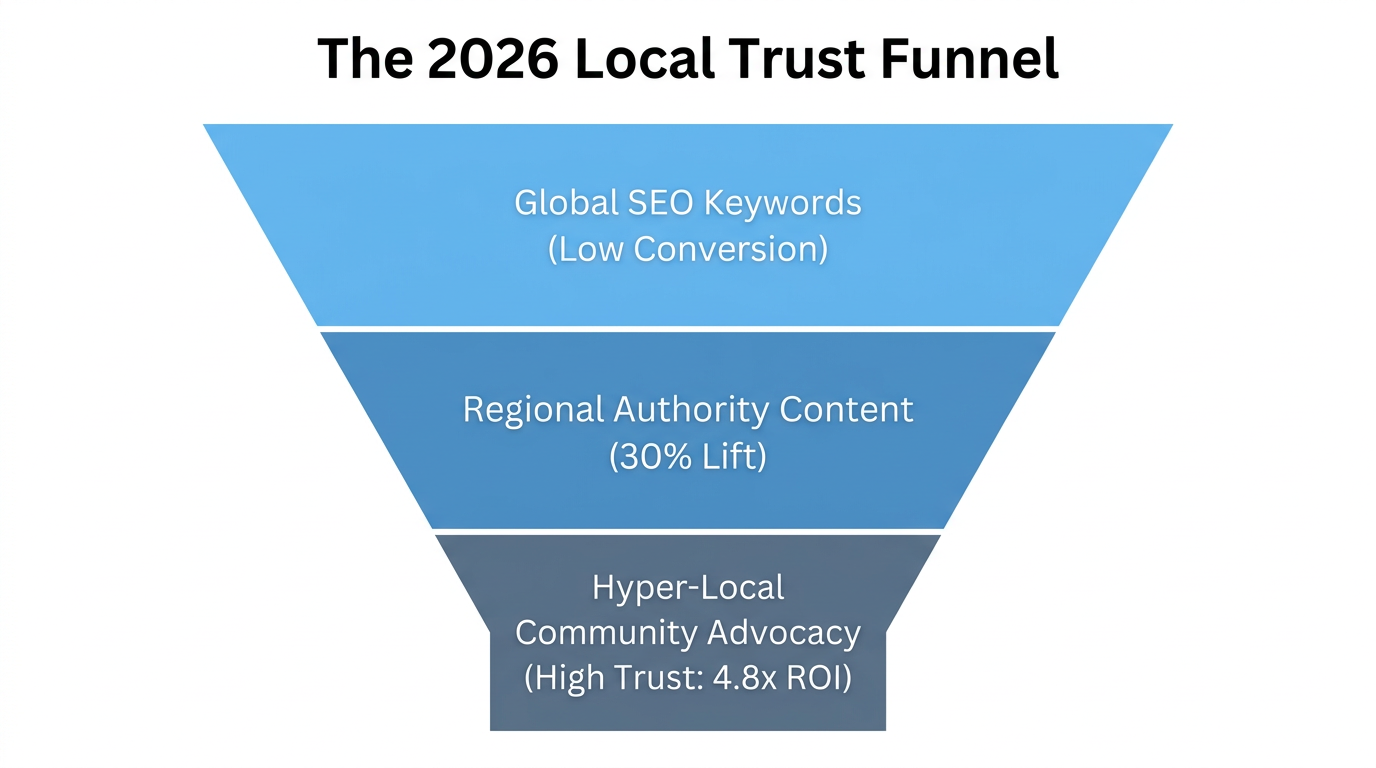
By the end of 2026, traditional search volume is predicted to decline by 25% as users shift to generative answers. This has necessitated the shift from SEO (Search Engine Optimization) to GEO (Generative Engine Optimization). To rank in 2026, you don't optimize for keywords; you optimize for citation-worthy expertise.
Data from Onely shows a startling GEO Conversion Paradox: while organic click-through rates (CTR) on informational queries have dropped by up to 79%, the traffic that does click through from an AI citation converts at 27%. This is a 12.9x improvement over traditional SEO leads. The AI has already done the "veting" for the user, delivering a high-intent prospect to your doorstep.
Conclusion: The Human Advantage
In the AI brand trust 2026 landscape, the brands that win will be those that use AI to be more productive, but use humans to be more persuasive. By building a Humanity Moat—leveraging original data, expert voices, and authentic human creators through platforms like Stormy AI—you ensure your brand remains a primary source of truth in an automated world.
Stop trying to out-output the AI. Instead, out-think it. Use synthetic personas to test your brilliance, use agentic workflows to handle the drudgery, and use your humanity to build a moat that no algorithm can ever cross.