Building High-Conversion Systems: How Claude Code Scales Programmatic Marketing and Landing Pages
In 2026, programmatic SEO with Claude Code is revolutionizing acquisition. Learn how to automate landing page deployment and competitor tracking for 300% ROI.
The era of "Chatbot Marketing" is officially dead. In 2026, the industry has undergone a radical transformation from passive AI assistants to agentic command-line interfaces (CLIs) that don't just write copy—they build the infrastructure that delivers it. As of early 2026, a staggering 64% of high-growth marketing teams have integrated tools like Claude Code into their core operations to manage everything from automated landing page deployment to real-time API orchestration. This isn't just about efficiency; it's about moving at the speed of the algorithm.
The Rise of the Agentic Marketing Stack
By 2026, the transition to agentic AI—tools capable of taking autonomous action—has fundamentally restructured marketing budgets. The global AI in marketing sector has ballooned to an estimated $45.8 billion, driven largely by the shift from generative content to generative systems. Marketers are no longer just asking Claude to write a blog post; they are using Claude Code to build bespoke marketing scripts that monitor Google Ads performance, refactor local codebases, and push site updates without opening a single Jira ticket.
"The 'Big Ops' era is here. Marketers aren't just using tools; they are using agents like Claude Code to build their own bespoke marketing stacks on the fly."
According to Gartner Marketing Practice 2026 research, companies implementing these agentic workflows report a 35% reduction in technical debt. This allows teams to pivot their technical SEO strategy or landing page architecture in hours rather than weeks. The gap between a creative idea and its technical execution is finally closing.
Scaling from One to 500: Programmatic SEO with Claude Code
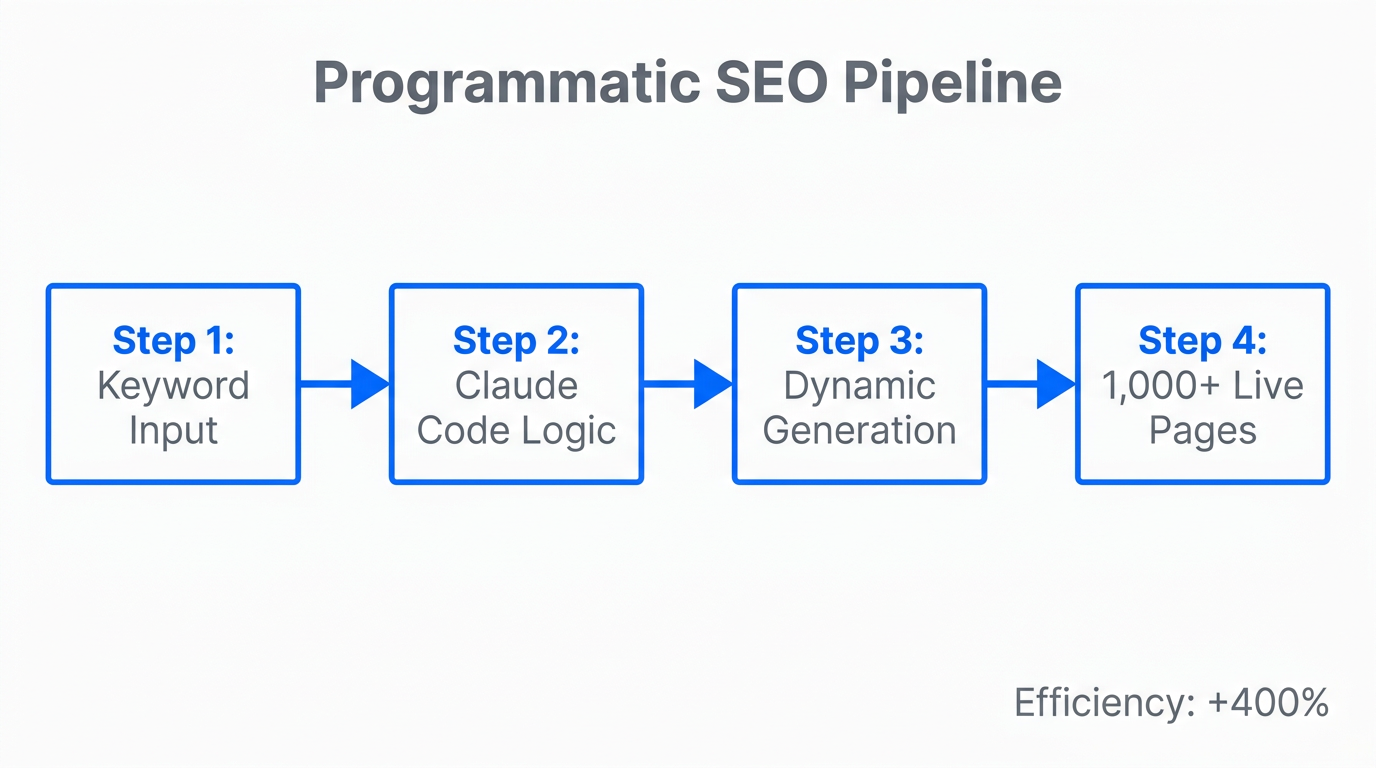
The most lucrative application of this technology in 2026 is programmatic SEO with Claude Code. Consider the case of NeoBank, a fintech startup that used the CLI agent to automate the creation of 500 hyper-personalized landing pages targeting specific demographic niches. Traditionally, a campaign of this scale would require a month of coordination between design, engineering, and SEO teams. With Claude Code, they reduced the time-to-market from four weeks to just two days.
By connecting Claude Code to their local filesystem and Vercel deployment pipeline, the team could issue commands like: "Scan our product features JSON and generate 500 React components optimized for Gen-Z financial literacy keywords." The results were staggering: NeoBank saw a 22% increase in conversion rates because the pages were precisely tailored to the search intent of each micro-niche. This is the power of automated landing page deployment at scale.
To ensure these pages felt authentic, the team integrated influencer-driven social proof. By using Stormy AI, they could instantly identify the right micro-influencers for each of those 500 niches, programmatically pulling creator metrics and handles into their landing page templates to drive trust and conversions.
Real-Time Strategy: Competitor Tracking Automation
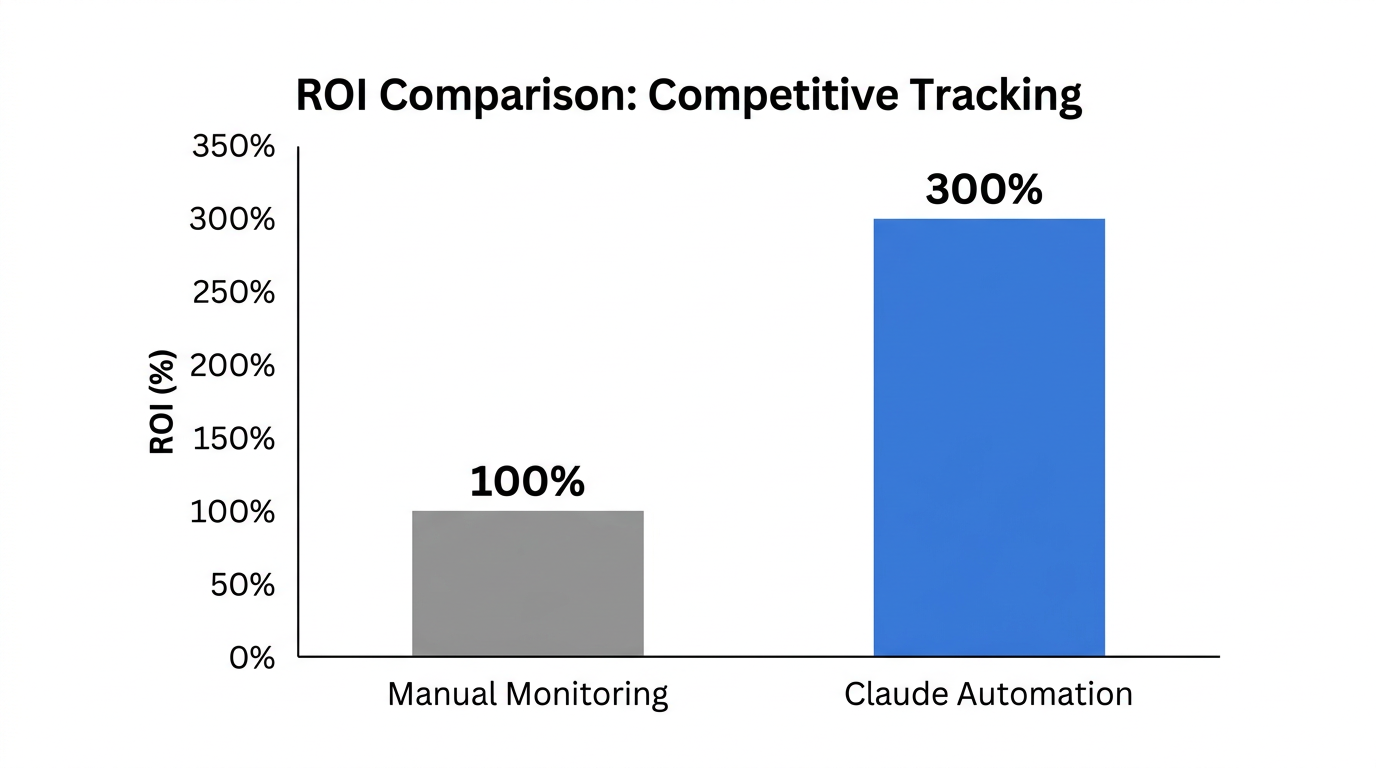
In 2026, competitive intelligence is no longer a quarterly report; it’s a real-time data stream. With the release of Claude 4.5/4.6, competitor tracking automation has reached a new level of sophistication. The CLI agent now features autonomous web-navigation, allowing it to browse competitor sites, extract pricing structures, and identify positioning shifts the moment they happen.
Marketers are using Claude Code marketing scripts to build early-warning systems. For example, a Python script deployed via Claude Code can scrape a competitor’s pricing page every Monday, analyze the delta in their "Enterprise" tier pricing, and automatically suggest a counter-offer for your own sales team. As reported by developers following the latest agentic trends, this "robot that builds robots" approach is what separates the market leaders from the laggards in the 2026 landscape.
"Claude Code is about moving from 'AI as an assistant' to 'AI as a colleague' that can actually execute the technical drudgery that slows down creative teams."
| Feature | Claude Code (CLI) | ChatGPT Plus (Web) | Legacy Python Scripts |
|---|---|---|---|
| Execution | Runs local commands | Chat only | Manual coding needed |
| Context | Sees whole project | File-by-file upload | Hard-coded logic |
| Marketing Use | Systems & Automation | Ideation & Copy | Stable Infrastructure |
| Speed | Instant CLI execution | Slow UI lag | High setup time |
Bridging the Gap: Building Bespoke Marketing Stacks
The primary friction in modern marketing isn't a lack of data; it’s the fragmentation of APIs. In 2026, the "Marketer-Developer" role has emerged as the standard. These professionals use Claude Code to bridge disparate tools—connecting HubSpot, Shopify, and Stripe without waiting for a 6-month engineering roadmap.
By leveraging the Model Context Protocol (MCP), Claude Code can act as an orchestration layer. It can write a script to monitor Google Search Console for ranking drops, then automatically use a tool like Firecrawl to audit the affected pages and apply a /fix command to repair broken schema markup or optimize meta-tags. This level of self-healing infrastructure is why McKinsey's State of AI research highlights that high-maturity teams are achieving 1.5x higher revenue growth and a 300% ROI within their first six months of deployment.
Governance, Security, and Preventing 'Agent Fatigue'
With great power comes significant risk. In 2026, "Agent Fatigue" and security vulnerabilities have become top-tier concerns. Reports on AI security reveal that a growing number of organizations experienced an AI agent security incident in the past year. A common disaster: an agent given write access to a CRM accidentally deleted thousands of leads due to a prompt injection from a malicious customer email.
To mitigate these risks, marketing teams must implement strict governance:
- Permission Sandboxing: Restrict Claude Code to specific directories (e.g.,
/marketing-assets/) and never give it root access to production databases. - The Plan-First Rule: Always run commands with the
--planflag to review the agent's intended actions before execution. - Centralized Logging: Use centralized billing and MCP server sharing to ensure every agentic action is auditable.
The 2026 Practitioner’s Playbook: Getting Started
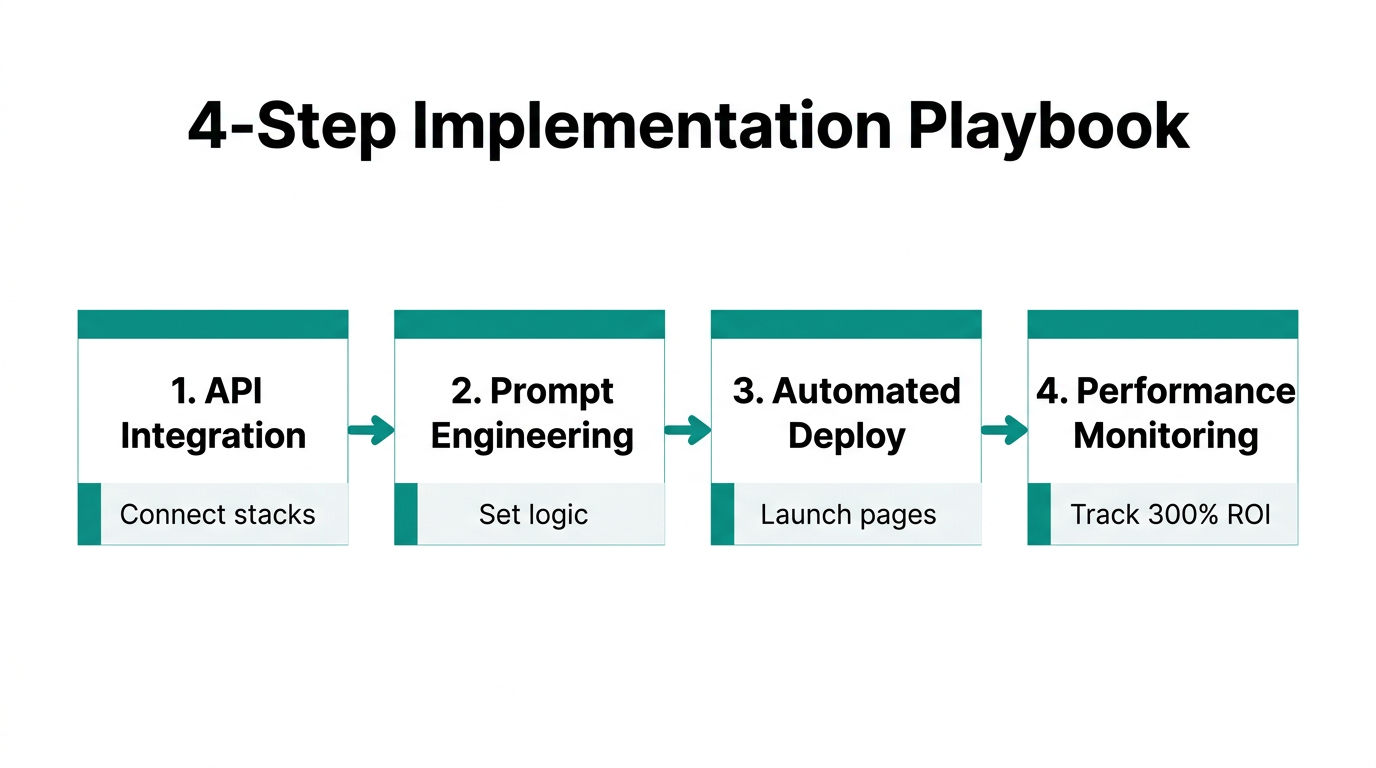
If you're ready to move past basic prompting and start building systems, follow this tactical playbook for setting up your agentic marketing workflow.
Step 1: Environment Setup
Install the latest version of Node.js and the Anthropic CLI. Run npm install -g @anthropic-ai/claude-code. You will need a Claude Pro or Team Premium subscription to access the CLI's full power in 2026.
Step 2: Initialize Your Marketing Repository
Navigate to your marketing folder in the terminal and type claude. Start by indexing your assets: "Read our brand_guidelines.pdf and index all local .css files to ensure brand consistency."
Step 3: Deploy an Agentic SEO Audit
Use this specific command to find low-hanging fruit: claude "Scan my /blog directory, identify pages missing meta-descriptions, and write them based on the H1 tags." For higher impact, connect your CLI to the Stormy AI API to fetch real-time engagement data on creators you've featured in those posts, allowing the agent to update the post's social proof automatically.
Step 4: Automate Competitor Tracking
Run: claude "Write a python script that scrapes [Competitor URL] for pricing changes and emails me a summary every Monday via my SendGrid API." Claude will write, test, and offer to deploy this script for you.
"In 2026, the best marketers are those who can speak 'Agent.' It’s not about coding; it’s about orchestrating the code."
Conclusion: The Agentic Advantage
The bottom line for 2026 is simple: If you aren't using a CLI-based agent for your technical marketing execution, you are overspending. Modern growth teams are using programmatic SEO with Claude Code to achieve 300% ROI by cutting out the middleman and moving directly from strategy to deployment. Whether it's automated landing page deployment or complex competitor tracking automation, the future of marketing belongs to those who build systems, not just content. Start small, govern strictly, and let your agents handle the technical drudgery so you can focus on what actually moves the needle: strategy and human connection.