Building Automated GTM Workflows for B2B Growth with Copy.ai
Learn how to build autonomous B2B GTM workflows with Copy.ai. Increase revenue by 400% using AI-driven lead generation and automated content distribution in 2026.
In 2026, the gap between growth teams that scale and those that stagnate isn't defined by head count, but by workflow orchestration. We have moved past the era of "chatting with AI" to generate a single blog post. Today, leading B2B organizations are deploying autonomous GTM (Go-To-Market) agents that handle lead scoring, journey mapping, and multi-channel distribution without human intervention. According to recent data, the global AI in marketing market is projected to reach $46.49 billion this year, representing a massive shift toward operational orchestration. If your team is still manually drafting emails and scheduling posts, you are already behind.
Transitioning from Simple AI Writing to GTM AI Workflows
For years, tools like Copy.ai were viewed primarily as writing assistants. However, as of 2026, the platform has pivoted into a full-scale GTM AI infrastructure. The difference is fundamental: simple AI writing requires a prompt to generate text; GTM AI integrates with your data stack to execute a business process. This transition is essential, as 92% of marketers now use AI in their day-to-day roles, according to the latest Salesforce State of Marketing report.
Instead of a human marketer deciding which leads to target, GTM workflows now use autonomous agents to audit a CRM, identify high-intent signals, and trigger personalized content across LinkedIn and email simultaneously. This "Agentic AI" model allows agencies and in-house teams to deliver 25–45% higher ROI than traditional manual firms for data-structured campaigns.
"The middle is disappearing. Content is merging to look identical, so the advantage shifts back to high-end 'taste'—knowing which 9 out of 10 AI ideas to delete."
The 2026 Playbook: Increasing Email-Attributed Revenue by 400%

The most lucrative application of Copy.ai in 2026 is the hyper-segmentation of sales outreach. A mid-market SaaS company recently demonstrated the power of this by replacing a three-person content team with one AI Architect using Copy.ai workflows. The result? They increased email-attributed revenue by 452% over eight months by generating 2.3 million unique email variations every month, as documented by SendXmail.
To achieve these results, growth teams are moving away from "one-size-fits-all" templates. They are building automated content distribution pipelines that pull data from ad platforms like Google Ads and TikTok Ads Manager to inform the copy. This ensures that every touchpoint in the buyer's journey feels tailored to their specific industry and pain point.
Integrating Voice-of-Customer (VoC) Data with Fathom and Copy.ai
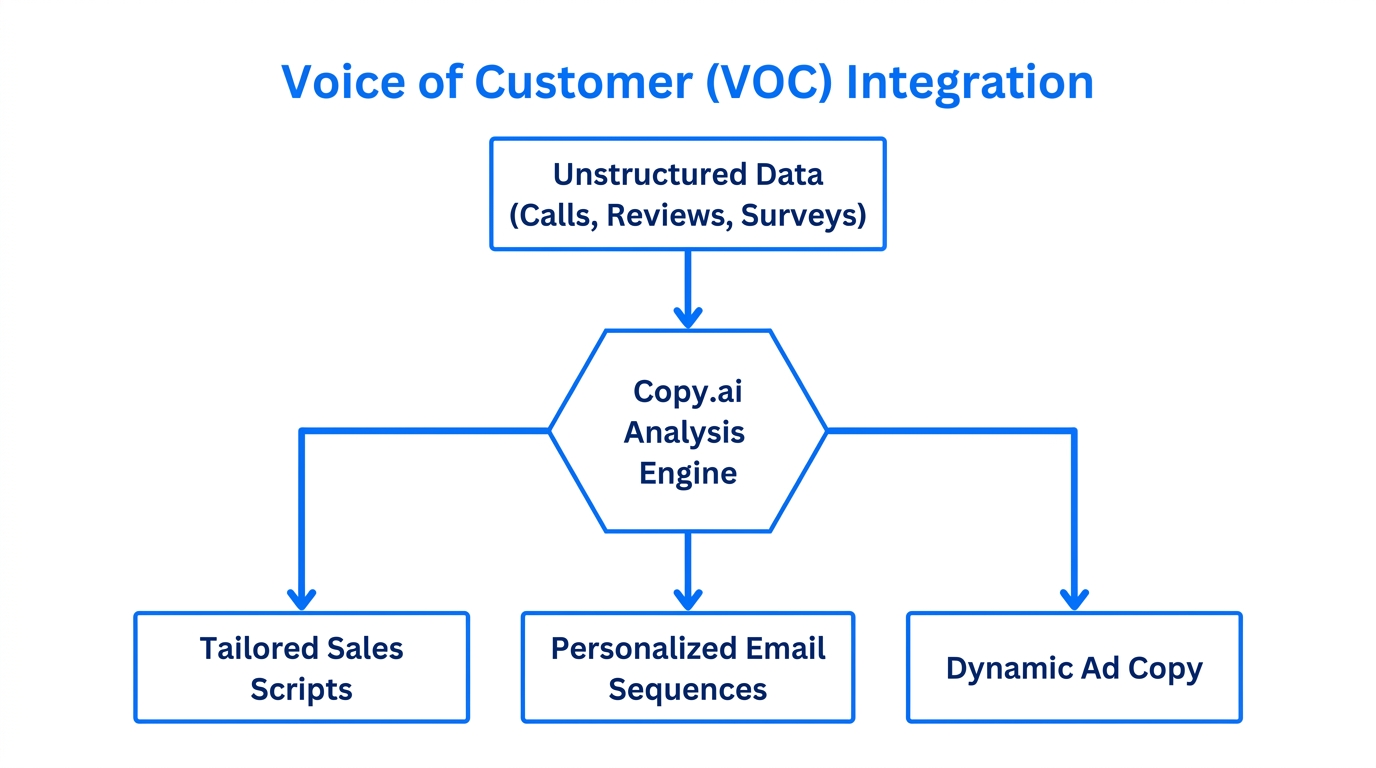
The biggest risk of automation is losing the "human soul" of your brand. In 2026, the best growth teams combat this by feeding real human conversations into their AI agents. By integrating meeting recorders like Fathom with Copy.ai, you can extract exact phrases and emotional triggers directly from sales calls.
The VoC-to-Asset Playbook:
- Data Ingestion: Record all customer-facing calls using Fathom.
- Extraction: Use an AI agent to extract "Voice of Customer" phrases—the specific way they describe their problems.
- Workflow Trigger: Feed those phrases into a Copy.ai workflow via Zapier or n8n.
- Asset Generation: Automatically generate LinkedIn posts, case studies, and ad variations that use the customer's exact language.
This "Human-in-the-loop" model ensures that your AI-driven lead generation doesn't sound like a machine. When your outreach uses the exact vocabulary your prospects used last Tuesday, the conversion rates jump significantly, often reducing CPA by as much as 37%.
Agent-to-Agent Commerce: Optimizing for AI Assistants
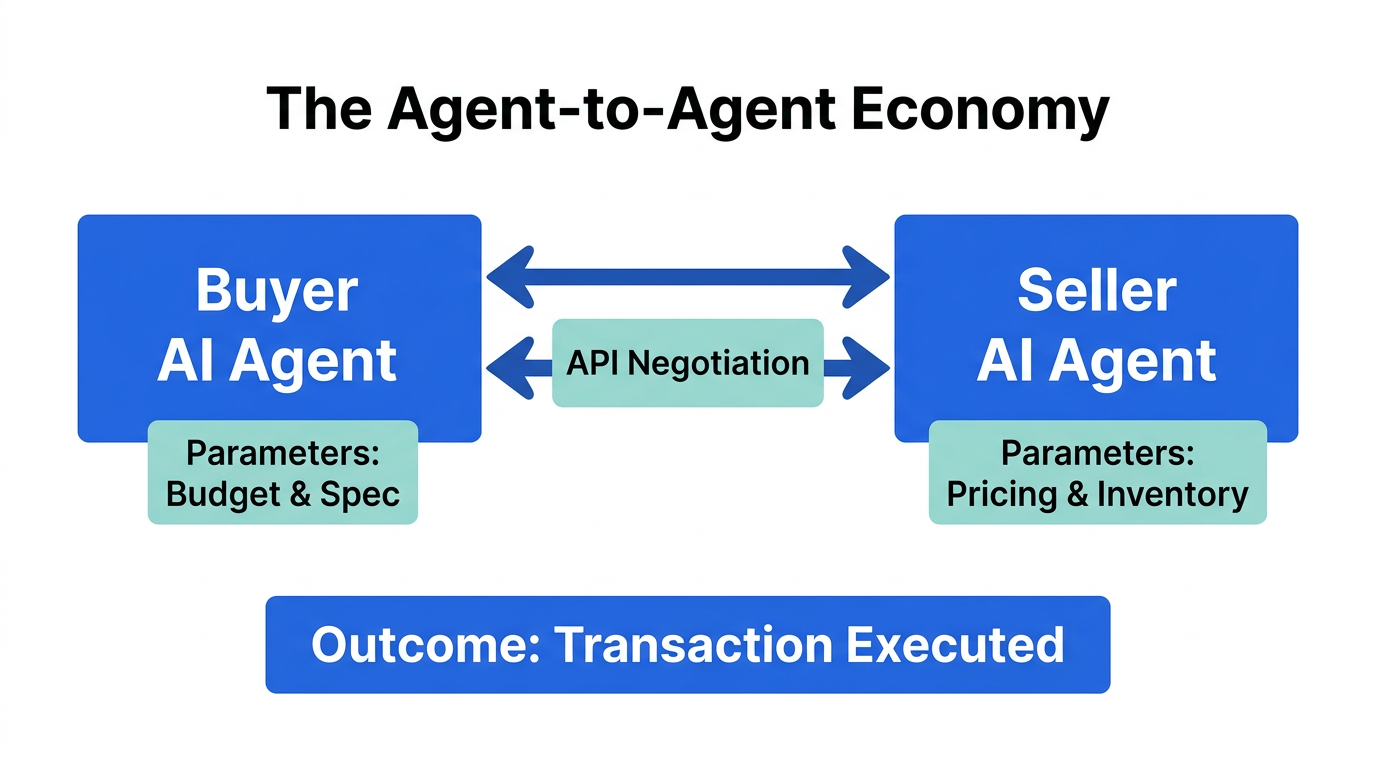
A transformative trend in 2026 is Agent-to-Agent (A2A) commerce. Marketing is no longer just about reaching humans; it's about reaching other AIs. As consumers increasingly use personal AI assistants to research products, agencies are focusing on Generative Engine Optimization (GEO) over traditional SEO. This means optimizing your technical documentation and APIs so that a ChatGPT or Perplexity agent chooses your brand during an automated search.
"Marketers are playing checkers while data companies are playing chess. The winners are connecting data, not just collecting it."
Research from MarTech.org suggests that brands relying solely on "blue link" SEO are seeing traffic drops of up to 58%. To stay visible, your GTM workflows must ensure your brand mentions are frequent and authoritative across the web. In the realm of creator marketing, for instance, tools like Stormy AI help brands maintain this visibility by identifying and outreaching to the right human advocates who can fuel these AI datasets with positive brand mentions.
2026 GTM Tech Stack: AI-First vs. Traditional

The choice of tech stack determines your execution speed. In 2026, the execution speed for AI-first teams is often 48 hours, compared to 2-6 weeks for traditional agencies.
| Feature | AI-First GTM (Copy.ai + Ecosystem) | Traditional GTM Model |
|---|---|---|
| Content Volume | Near-infinite via agents | Limited by headcount |
| Lead Personalization | Hyper-segmented (1:1 scale) | Generic personas (1:Many) |
| CRM Integration | Native & Real-time AI-powered data flows | Manual entry & batch updates |
| Cost Efficiency | 30-50% lower base costs | High monthly retainers |
Conclusion: The Autonomous Future
Building automated GTM workflows with Copy.ai is no longer a futuristic experiment—it is a 2026 survival requirement. By moving from static content production to autonomous sales and marketing orchestration, B2B brands can achieve scale that was previously impossible. Whether you are using Synthesia for personalized video at scale or leveraging Stormy AI to find and vet creators to amplify your message, the goal remains the same: use AI to scale the human insights that matter.