B2A Marketing: How to Optimize Your Brand for the OpenClaw CRM Ecosystem in 2026
Learn how to master B2A marketing strategy in 2026. Optimize your brand for OpenClaw CRM agents to ensure autonomous sales discovery and machine-readability.
In 2026, the marketing landscape has undergone a seismic shift that few predicted five years ago. We have moved beyond the era of optimizing for search engines (SEO) and even beyond optimizing for social algorithms. We are now firmly in the era of Business-to-Agent (B2A) marketing. The primary consumer of your brand's data is no longer just a human browsing on a smartphone; it is an autonomous AI agent like those powered by the OpenClaw framework. If your brand isn't discoverable by these digital intermediaries, you effectively don't exist in the modern sales pipeline.
The Rise of the Agent Economy: Why B2A Matters
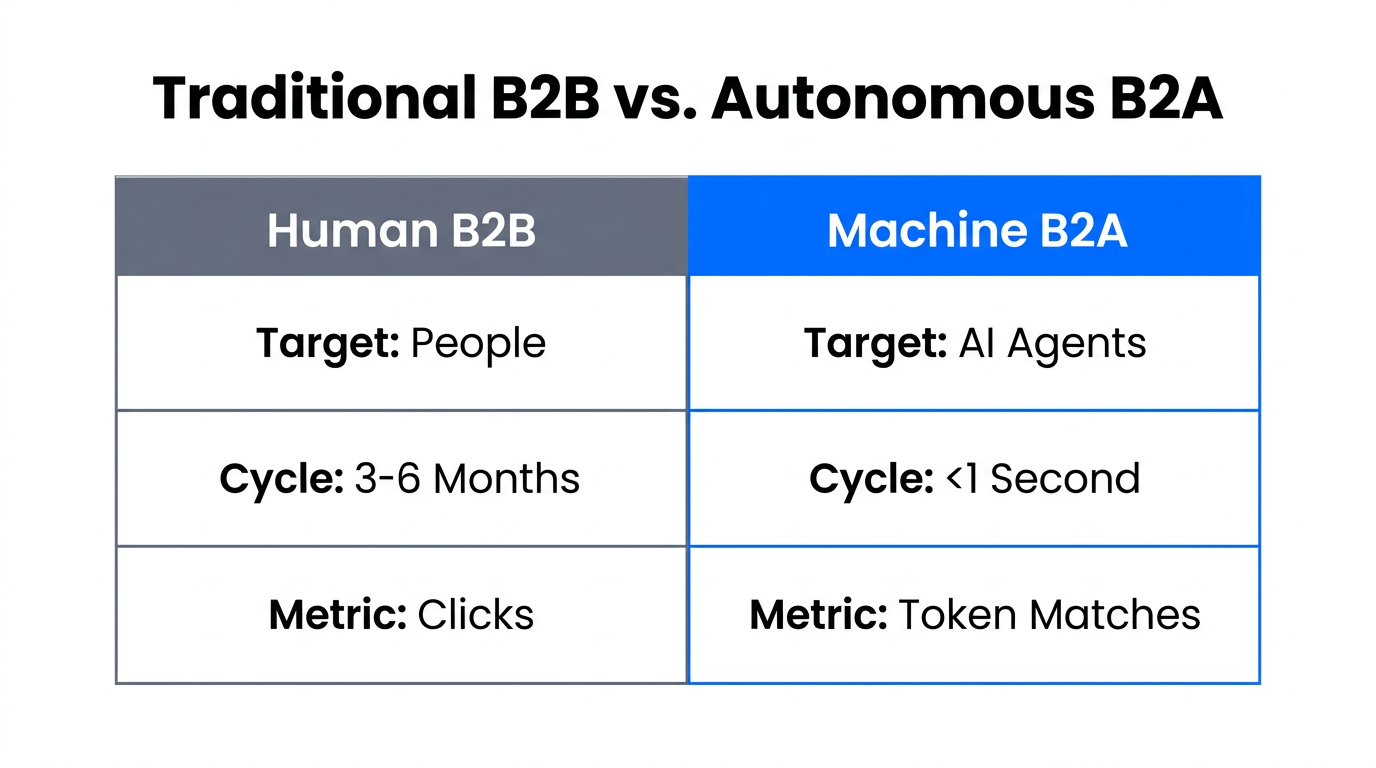
The growth of the OpenClaw ecosystem has been nothing short of explosive. By March 2026, the OpenClaw GitHub repository surpassed 270,000 stars, eclipsing legacy projects like the Linux kernel in terms of adoption velocity. This isn't just a developer trend; it represents a fundamental change in how commerce functions. According to CARMA, OpenClaw saw over 1.5 million global mentions in a single month this year, with a massive surge in businesses deploying OpenClaw CRM instances to manage their operations.
"OpenClaw is the single most important release of software probably ever. It marks the shift from training-side demand to inference-side demand for the entire global economy." — Jensen Huang, CEO of Nvidia
For marketers, this means your 2026 marketing plan must target agents, not just humans. Agents are now performing multi-step research and CRM tasks 3.5x faster than humans, according to the latest Stanford AI Index. When a purchasing manager tells their OpenClaw CRM agent to "find the best influencer marketing platform for our Q3 campaign," the agent doesn't scroll through Instagram; it parses structured data, evaluates API endpoints, and checks reputation scores across decentralized ledgers.
Structuring Brand Data for Machine Readability
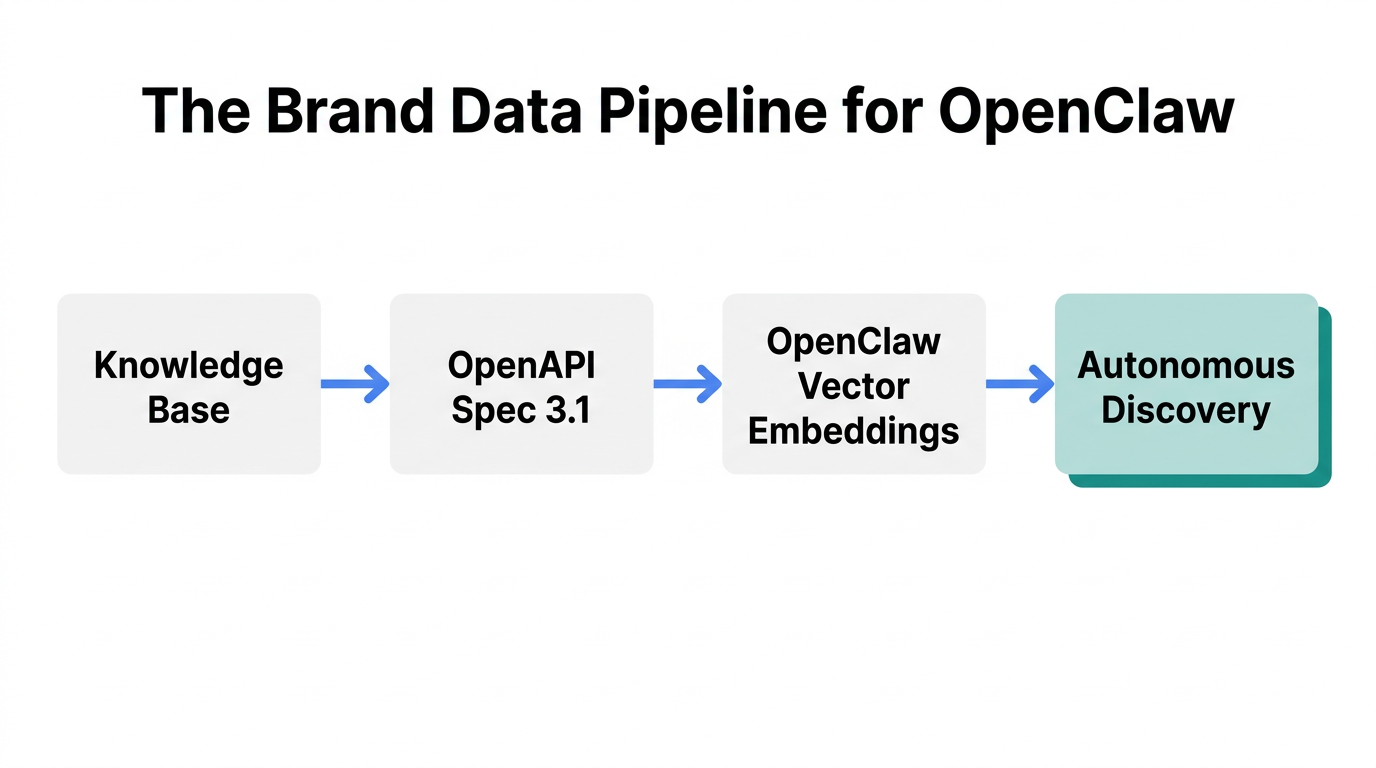
To win in a B2A world, your brand must be more than just "visible"; it must be "integrable." This requires a radical shift in how we present information. In 2026, the OpenAPI specification has become the most important marketing document your company owns. By providing a clear, well-documented API, you allow OpenClaw agents to "understand" your service offerings without human intervention.
The 'Skill File' Workflow
The core of OpenClaw CRM agent optimization lies in the "Skill File" workflow. This involves generating an OpenAPI spec for your services and ensuring it is compatible with the config.yml structure used by most agentic systems. When an agent discovers your site, it looks for a /.well-known/ai-agent.json or similar manifest that tells it how to interact with your sales funnel. Without this, the agent may pass you over for a competitor that offers a seamless machine-to-machine interface.
- Standardize your endpoints: Ensure your product catalogs and pricing are available via JSON.
- Isolate System Access: Use tools like Docker to create secure sandboxes for agents to test your services.
- Document for Inference: Use natural language descriptions within your API documentation to help LLMs understand the intent behind each function.
| Feature | Traditional CRM (e.g., Folk) | OpenClaw CRM (2026 Standard) |
|---|---|---|
| Cost | $20–$40/user/month | $10–$20/month for the whole team |
| Discovery | Manual Search | Autonomous Agent Discovery |
| Data Ownership | Cloud-Hosted (SaaS Tax) | Local-First (Self-Hosted) |
| Task Speed | Human Speed | 3.5x Faster (Agentic) |
Local-First SEO: Navigating the 'Unclouding' Trend
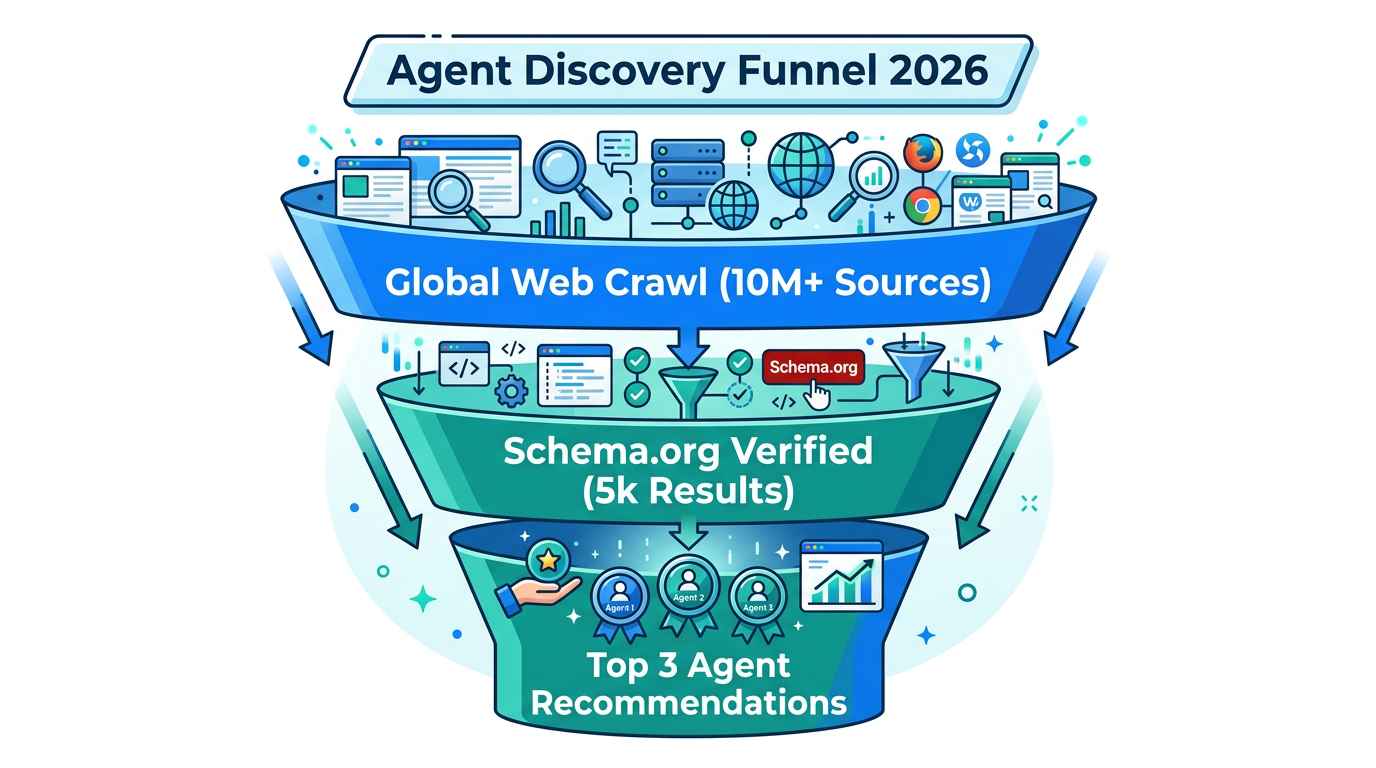
A massive trend in 2026 is "unclouding"—businesses moving their CRM data back to local machines or private virtual servers to avoid privacy risks. Platforms like Hostinger and DigitalOcean now offer one-click OpenClaw deployments. This shift means traditional SEO isn't enough; you need Local-First SEO.
Local-First SEO is the practice of ensuring your brand is indexed by the local discovery algorithms used by private OpenClaw instances. Since these agents often run behind firewalls, they rely on trusted middleware layers and decentralized directories to find new vendors. If you are targeting influencers, for instance, platforms like Stormy AI provide the exact type of structured, high-quality data that autonomous agents crave when vetting creators for a campaign.
"The AI that actually does things—not just generates text—is the one that will control the wallet in 2026." — Peter Steinberger, Founder
Agents often prioritize autonomous sales discovery based on latency and data proximity. Using high-performance infrastructure like Tencent Cloud Lighthouse, which offers dedicated instances for 24/7 bots, ensures that your brand’s responses to agent queries are near-instantaneous. In the B2A economy, speed is a ranking factor.
Middleware Intelligence: Bridging the Gap
OpenClaw is increasingly acting as a "middleware layer" between high-intent chat channels and legacy sales pipelines. We are seeing brands use OpenClaw to monitor WhatsApp and Telegram for leads, qualify them using internal SOPs stored in Notion, and then automatically update deal stages in a CRM.
For your B2A marketing strategy, this means you should focus on being present where these agents "listen." This includes:
- Verified Communication Channels: Ensure your brand has a presence on messaging platforms that agents can scrape or integrate with.
- Structured Knowledge Bases: Use tools like Supabase for local-first storage that an agent can query via SQL or vector search.
- Tiered Model Routing: To keep costs low for the agents discovering you, offer a "lite" version of your data for models like Claude Haiku or GPT-4o-mini, reserving heavy-duty processing for final deal reasoning.
Case Studies: Brands Mastering Autonomous Discovery
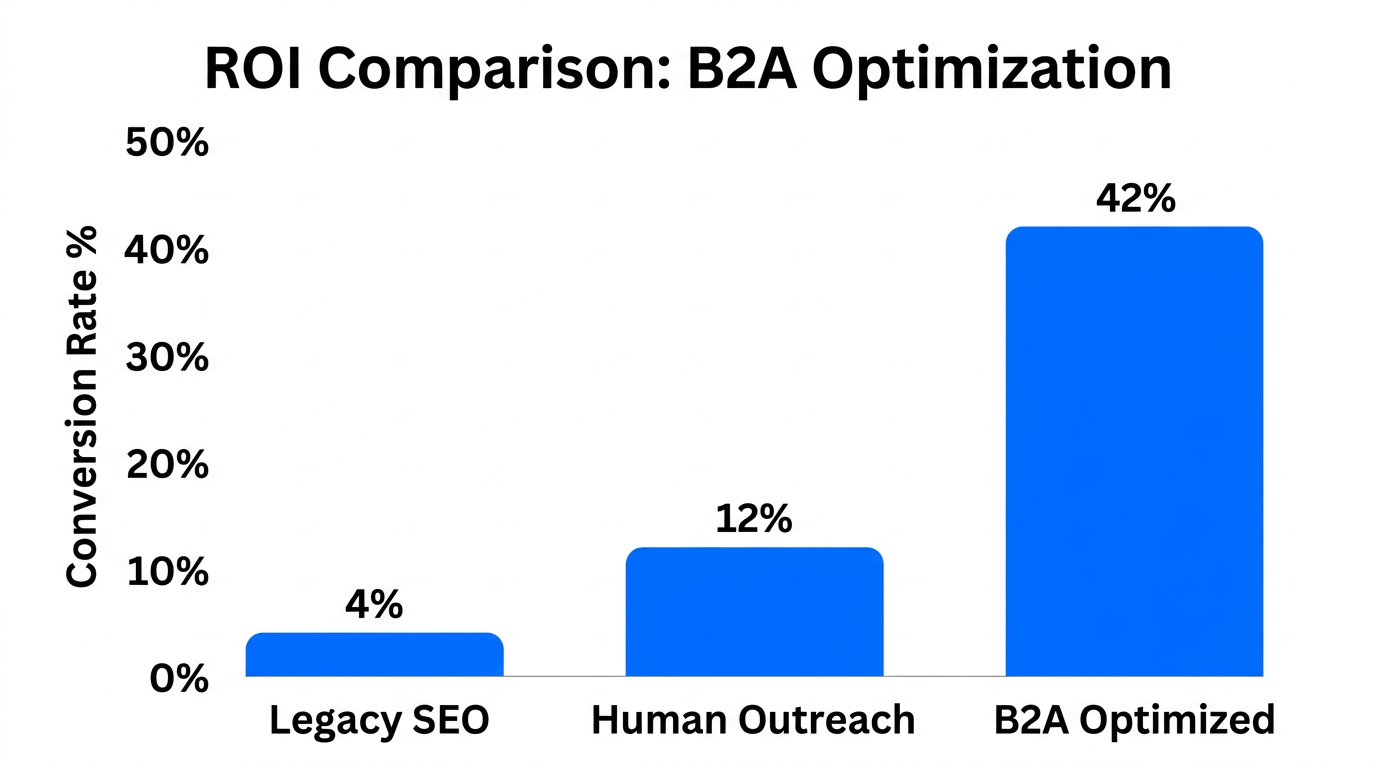
Several forward-thinking companies have already pivoted to an agent-first model. In the real estate sector, brands like Homie have packaged OpenClaw for professionals, integrating with Follow Up Boss to handle lead follow-up without human intervention. By making their listings "agent-readable," they’ve seen a 40% increase in lead conversion rates.
Another example is DenchClaw, a local-first CRM that uses AI to summarize notes and manage contacts autonomously. Brands that provide high-quality documentation to DenchClaw’s user base are naturally prioritized by the agent when a user asks for a recommendation. This is organic growth in the agentic age.
Even for influencer marketing, the workflow has changed. Smart brands now use Stormy AI's autonomous agents to discover and outreach to creators while they sleep. By the time the marketing manager logs in, the agent has already found 50 influencers, vetted them for fake followers, and sent personalized emails—all powered by the same agentic logic that drives OpenClaw.
"The future of marketing is about being the most helpful resource for a robot that is trying to solve a human's problem."
Conclusion: Your 2026 B2A Playbook
As we move further into 2026, the brands that win will be those that treat AI agent marketing as a core pillar of their growth strategy. It is no longer enough to have a pretty website; you need a robust, machine-readable infrastructure that respects the autonomy of the buyer's agent.
To optimize for the OpenClaw CRM ecosystem, start with these three steps:
- Audit your machine-readability: Can an agent find your pricing, features, and contact info via a simple API call?
- Implement Local-First Content: Publish data that can be easily ingested into a user's private OpenClaw instance.
- Leverage Agentic Tools: Use platforms like Stormy AI to automate your own outreach, keeping pace with the agents that are now patrolling the digital marketplace.
The agent economy is here. It’s time to stop marketing to the eyes and start marketing to the algorithms.