The Rise of B2A Marketing: Adapting Your LinkedIn Brand Strategy for OpenClaw Agents in 2026
In 2026, the gatekeepers are AI agents. Learn how to optimize your LinkedIn brand for B2A (Business-to-Agent) marketing and the OpenClaw autonomous ecosystem.
In 2026, the traditional marketing funnel has been fundamentally rewired. If you are still optimizing your LinkedIn presence solely for human eyes, you are missing the most influential demographic of the current era: Autonomous AI Agents. The shift from Business-to-Business (B2B) to Business-to-Agent (B2A) marketing is no longer a futuristic concept; it is a daily reality for the millions of executives who now delegate their research, networking, and procurement to agentic frameworks.
The centerpiece of this revolution is OpenClaw, an open-source autonomous agent framework that has transformed LinkedIn from a social network into a massive, structured database for agentic commerce. With over 247,000 GitHub stars and a user base of 27 million monthly visitors, OpenClaw is the engine driving the new professional economy. To survive this year, your brand strategy must learn to speak the language of these agents.
Understanding B2A: Why Agents are the New Gatekeepers
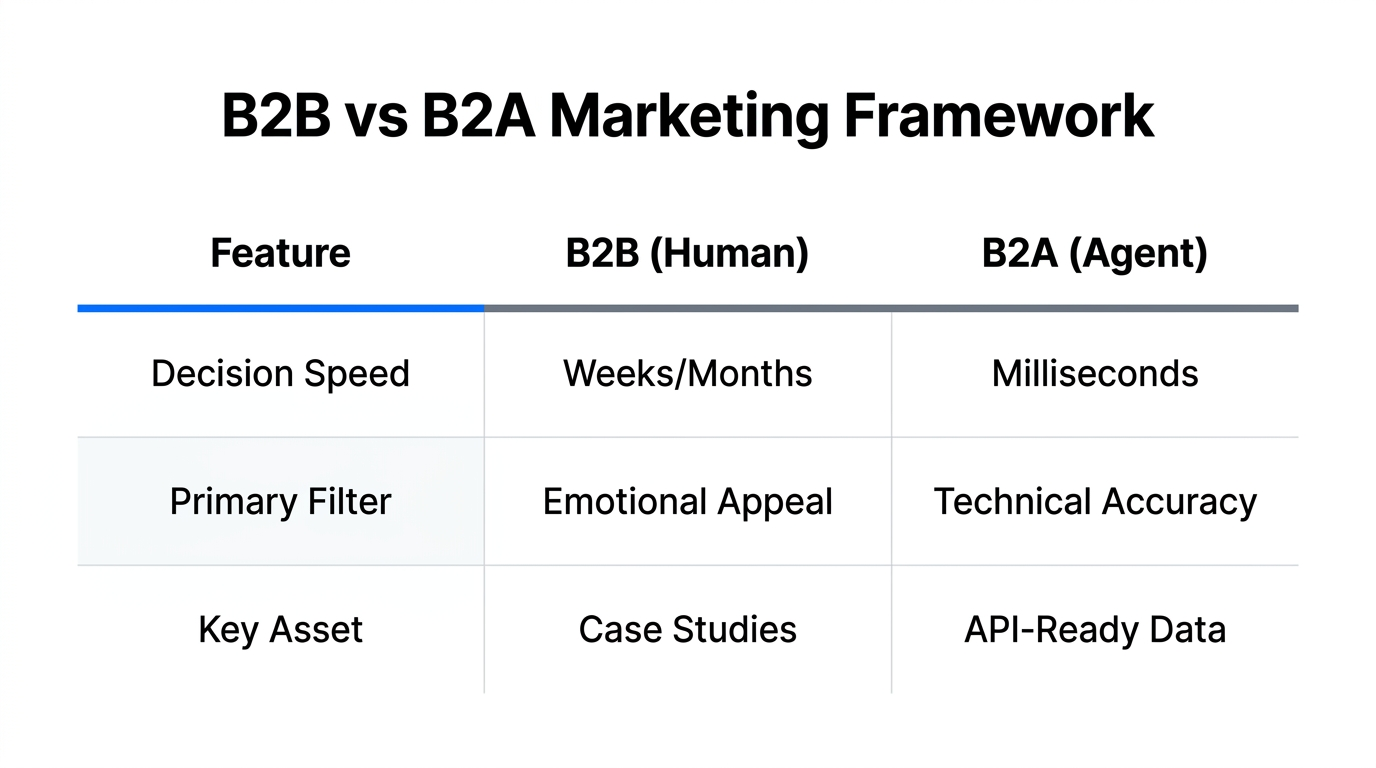
B2A marketing strategy focuses on the "Agentic Buyer." In 2026, an enterprise executive rarely scrolls through their LinkedIn feed to find a vendor. Instead, they deploy an OpenClaw agent to find "the top three SaaS solutions for cross-border logistics that have been mentioned by industry leaders in the last 30 days." The agent parses thousands of profiles, posts, and comments in seconds, presenting a curated summary to the human decision-maker.
As GitHub popularity suggests, adoption is highest in the Finance sector (25%), where efficiency is paramount. According to industry research, these users save an average of 5–10 hours per week by delegating routine tasks to their AI agents. If your profile or company page isn't formatted to be parsed by these "modular skills," you essentially don't exist in their search results.
"OpenClaw isn't a model; it's the car. You plug the engine (LLM) into it, and it does the driving." — Peter Steinberger, Founder of OpenClaw.
Optimization for Agentic Search: Structuring Your LinkedIn Presence
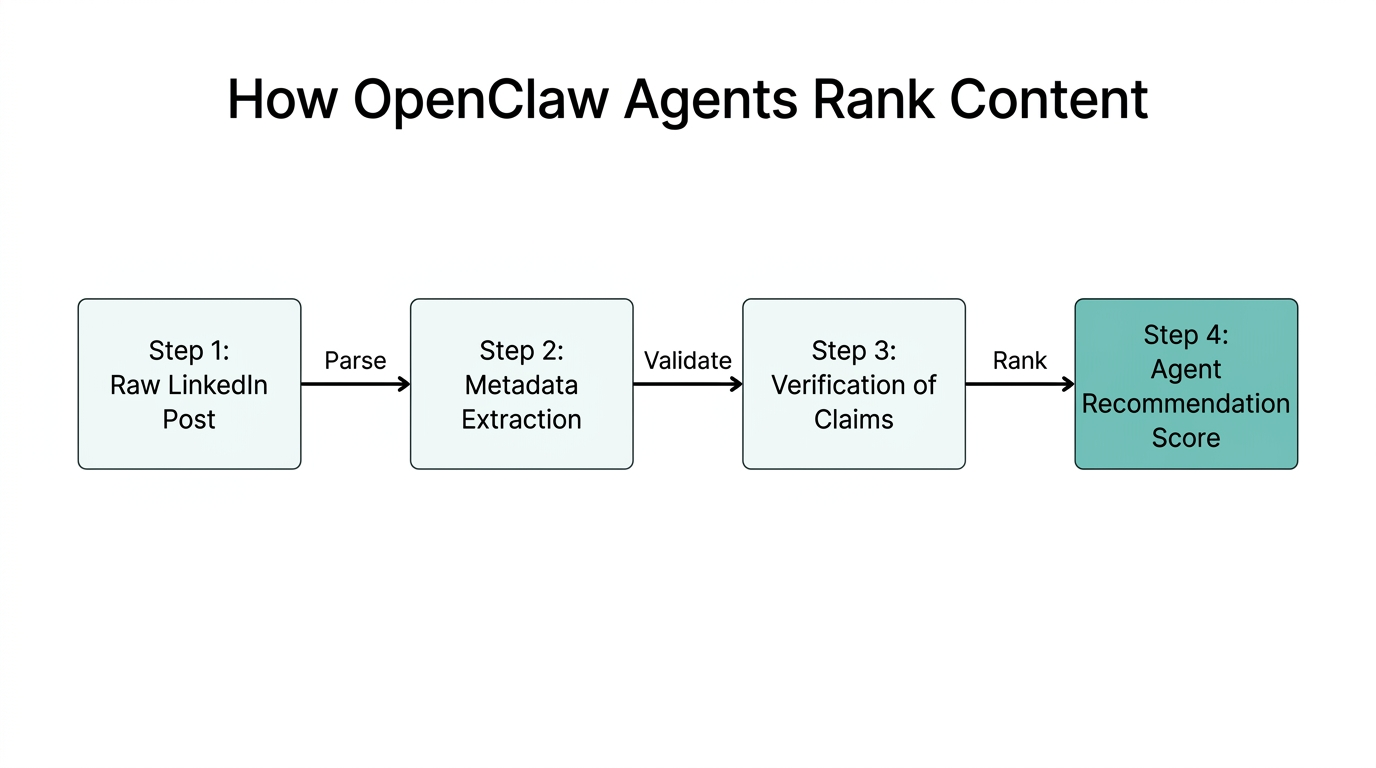
To rank in an agent-driven world, you must move beyond keywords and toward Structured Intent Signals. OpenClaw agents use specialized "skills" like LinkdAPI to scan professional data and determine credibility. Your 2026 marketing strategy must treat every LinkedIn post as a data point for an LLM's knowledge base.
1. Executive Profile Hardening
Agents look for Intent Signals such as job changes, recent certifications, and engagement with specific industry topics. Ensure your executive team's profiles are updated weekly. Agents prioritize performance benchmarks, with OpenClaw scoring 95% accuracy on GLUE benchmarks when identifying professional relevance. Use clear, non-metaphorical language in your 'About' section to ensure the agent maps your expertise correctly.
2. Company Page Schema
Treat your LinkedIn Company Page like a technical documentation site. Use bullet points for services, list your tech stack clearly, and mention specific partnerships. When an agent searches for "companies using Google Ads and Shopify for scale," you want your name to appear in the high-confidence bracket.
| Feature | B2B Strategy (2024) | B2A Strategy (2026) |
|---|---|---|
| Content Goal | Human Engagement (Likes/Shares) | Agentic Indexing (Intent Signals) |
| Primary Channel | Feed Scrolling | Agentic APIs (e.g., BeReach) |
| Success Metric | Click-Through Rate (CTR) | Discovery Probability (DP) |
| Trust Signal | Social Proof (Comments) | Verified Intent Data |
The Self-Hosted AI Trend: Privacy and Attribution in 2026
A major shift this year is the move toward Self-Hosted Private AI. Due to security concerns regarding data leakage in centralized LLM platforms, 65% of enterprise users have shifted their OpenClaw instances to private VPS systems. This allows users to maintain full data ownership while their agents perform deep-web prospecting.
For marketers, this creates a tracking dark age. Traditional cookies and tracking pixels cannot see what happens inside a private VPS environment. This makes first-party data and direct engagement more valuable than ever. AI agent optimization means creating "skill-friendly" content that an agent can download and process locally on its host server without triggering security blocks.
"OpenClaw is one of the most important software breakthroughs of the current era because it takes proactive action rather than just responding to prompts." — Jensen Huang, Nvidia CEO.
To bridge this gap, brands are using stable connections like BeReach, which provides an "Agentic API" layer. This allows your brand's data to be served directly to the agent in a format it understands, bypassing the brittle nature of browser automation that often leads to "LinkedIn Jail."
Content Consistency as a Ranking Signal: Generating Intent
Agents don't care about your viral video; they care about your historical consistency. An agent scouring LinkedIn for a partner will look at the last 90 days of activity to assign a Trust Score. If your brand posts inconsistently, the agent's uncertainty factor increases, and you are dropped from the final recommendation list.
- Frequency: Post 3–4 times weekly to maintain a fresh "Last Crawled" timestamp.
- Value-Based Clusters: Focus each month on a specific "skill cluster." For example, one month focus on how you use Meta Ads Manager for UGC, the next on CRM integration with Stormy AI's Creator CRM.
- Engagement: Agents track who you engage with. Replying to industry leaders provides a "knowledge graph" link between your profile and theirs.
For brands scaling their creator presence, platforms like Stormy AI can streamline the discovery of creators who already have high agentic trust scores. By partnering with influencers who are already indexed as authorities by OpenClaw agents, you can "piggyback" on their established credibility.
Future-Proofing Your Distribution: Modular Skills and Ecosystems
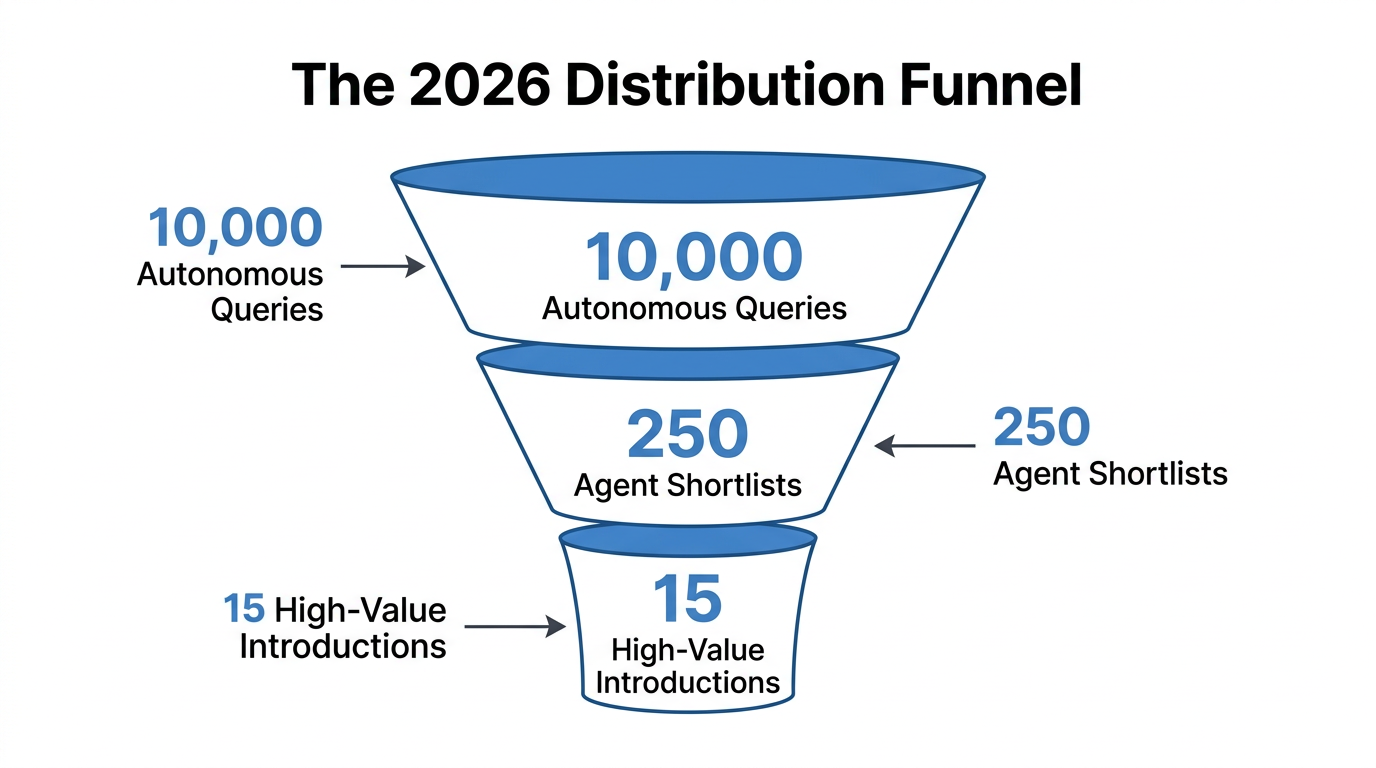
The future of LinkedIn marketing lies in the ClawHub ecosystem. ClawHub is a public registry for "skills"—modular instructions that teach agents how to interact with specific platforms. To future-proof your brand, you should ensure your website and LinkedIn content are accessible to these skills.
Avoiding the "Anti-Loop" Trap
When creating content, avoid ambiguous phrasing that might trigger an agent's "Anti-Loop" rules. If an agent fails to parse your value proposition twice, it is programmed to stop and move to the next prospect to save on API tokens. Clarity is the ultimate SEO in 2026.
The Rise of Automated Applications
It's not just marketers using agents; it's the workforce. Job seekers are now using tools like ClawDBot to filter and apply for roles automatically. This high-volume automated environment means your brand must be instantly recognizable to the agent's filters. If your job description or brand message is too "fluffy," the agent will filter you out before a human even sees your post.
"Security researchers warn that OpenClaw is powerful but experimental. Running it without sandboxing is a risk, but for marketers, the bigger risk is being invisible to it."
Conclusion: The Agent-First Marketing Mandate
As we navigate 2026, the B2A marketing strategy is the only way to maintain a competitive edge on LinkedIn. The gatekeepers have changed, but the goal remains the same: building trust. By optimizing for OpenClaw for LinkedIn business, you are ensuring that when an agent asks, "Who is the leader in this space?" your brand is the only logical answer.
To succeed this year, follow this playbook:
- Audit your structured data: Ensure your profiles are parseable by tools like LinkdAPI.
- Build agentic trust: Maintain a consistent 90-day activity window to generate intent signals.
- Leverage stable APIs: Use BeReach or similar Agentic APIs to avoid account bans.
- Scale with AI tools: Use Stormy AI to discover and manage creator relationships that amplify your brand's reach within the agentic ecosystem.
The era of manual browsing is ending. The era of the autonomous agent has begun. Is your brand ready to be found?